Friends enjoying a joint poolside during a warm golden hour sunset

Herb

How to Buy Weed in Goa: India’s Cannabis Beach Culture & What Tourists Should Know

There is no legal way to buy cannabis in Goa. Ganja and charas are prohibited under India's NDPS Act, and enforcement has intensified. Here is what tourists need to know.

Here are the essential facts about buying weed in Goa: there is no legal way to do it. Cannabis is a prohibited substance under India’s NDPS Act of 1985, and both ganja (dried flower) and charas (hashish) are criminal offenses, with penalties that scale up to 10 to 20 years imprisonment for commercial quantities. Goa is not a special exception, and local media have reported arrests of foreign nationals for drug offenses, though Herb could not independently verify specific figures from an official source. If you want weed in Goa legally, that option does not exist.

What follows covers the legal framework, the history behind Goa’s cannabis reputation, what tourists actually encounter on its beaches today, the cannabis alternatives that exist legally elsewhere in India, and the specific risks to understand before you arrive.

Goa’s reputation as a cannabis-friendly destination runs decades deep: the Anjuna flea market, the full moon beach parties, the thick smell of charas drifting across Arambol at sunset. But the traveler who arrives in Goa in 2026, expecting that reality, is working from outdated intelligence. Enforcement has intensified, and the gap between the mythology and the current legal environment has rarely been wider. Knowing the real answer to “how to buy weed in Goa,” which is that you cannot do so legally, can save you from serious legal consequences.

  • Cannabis (ganja and charas) is strictly illegal in Goa under India’s NDPS Act of 1985. No tourist exemption exists.
  • Penalties range from up to one year imprisonment for small quantities to 10 to 20 years for commercial quantities.
  • Bhang, a traditional cannabis-leaf preparation, is treated differently from ganja and charas under the NDPS Act, but Goa has no authorized bhang shops. Some other Indian states regulate bhang through state excise systems.
  • Local media reported a sharp year-over-year rise in Goa drug seizure values and arrests of foreign nationals in 2025; Herb could not independently verify these figures from an official government source at publication time.
  • Products labeled “CBD” should not be assumed legal unless sold through a licensed pharmacy or official regulated channel with valid documentation.
  • Goa Police warns tourists not to encourage touts or dubious persons and to buy drugs only from authorized licensed pharmacies. Treat unsolicited drug offers as both a legal and a safety risk.
  • The Goa cannabis beach culture described in older travel blogs reflects a historical era that has significantly changed under modern enforcement.

Cannabis is fully illegal in Goa. India’s NDPS Act of 1985 prohibits the production, manufacture, possession, sale, purchase, transport, and consumption of ganja and charas throughout the country. Goa operates under this federal law with no state-level carve-out for recreational use, medical use, or tourist possession.

Here is how the law defines the relevant substances:

  • Ganja. The flowering or fruiting tops of the cannabis plant, excluding seeds and leaves when not accompanied by the tops. Illegal under the NDPS Act.
  • Charas. The separated resin of the cannabis plant, whether crude or purified, including hashish and hashish oil. This is the substance most commonly sold in Goa through informal channels. Also fully illegal.
  • Bhang. Preparations made from cannabis leaves and seeds, not the flowering tops. The NDPS Act excludes bhang from its definition of cannabis, which creates a legal distinction that matters in some Indian states, though not in Goa.

The practical upshot: if a cannabis product contains the flower or resin of the plant, it is illegal in Goa. Goa has no recreational cannabis market and no tourist cannabis exemption. Visitors should not assume medical access to cannabis products unless they have verified product-specific legality through official Indian regulatory channels.

For a country-level overview of cannabis law across India, Herb’s India guide covers the full national picture, including which states regulate bhang.

To understand what you encounter in Goa today, it helps to understand how the state built its reputation. Goa’s association with cannabis is rooted in a specific moment in Western counterculture history.

Goa was liberated from Portuguese colonial rule in 1961. In the years that followed, the new Indian state attracted little international tourism, until Western travelers began arriving in the late 1960s, many following the overland hippie trail from Europe through Turkey, Iran, Afghanistan, and India.

They chose Goa for the beaches, the low cost of living, and the welcoming local population. The administrative apparatus had not yet organized around drug enforcement. Anjuna Beach became a particular focal point, and cannabis moved freely through traveler networks, with hash from Kashmir, Afghanistan, and Nepal circulating alongside locally grown ganja.

By the early 1970s, Anjuna had become one of the most famous cannabis destinations in the world. The Anjuna flea market functioned as both a social hub and an informal marketplace. Full moon parties began around the mid-1970s, with portable sound systems and improvised stages on the beach.

The charas of choice often came from Himachal Pradesh, particularly the Kullu Valley, where a potent hand-rolled resin became synonymous with Goa’s beach scene in traveler lore.

The NDPS Act of 1985 changed the legal framework fundamentally, turning a cultural gray zone into an explicitly criminalized one. Enforcement was initially inconsistent, and travelers through the late 1980s and 1990s reported that the beach culture remained relatively open despite the prohibition on paper.

The 2000s brought more sustained enforcement, partly driven by Goa’s growing association with harder-drug trafficking and the government’s push to rebrand the state as a family tourism destination. By the 2010s, the open culture had largely moved underground or disappeared. The Anjuna flea market still runs every Wednesday, and the beaches are still beautiful, but the cannabis scene that defined Goa in a generation’s imagination now exists primarily in memory and cultural myth.

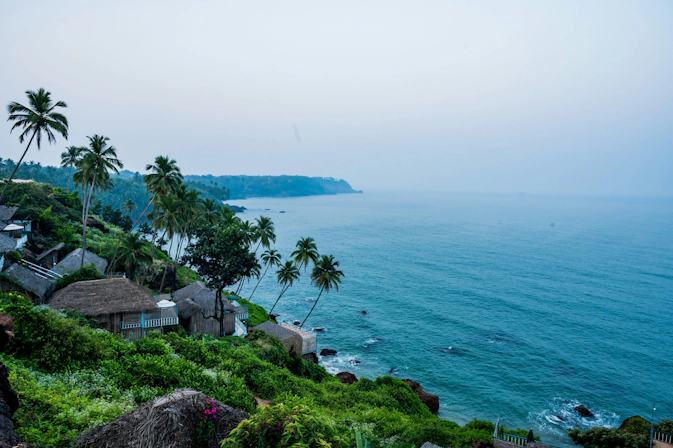
North Goa’s beaches, including Anjuna, Arambol, Vagator, Baga, and Calangute, still carry cultural associations with cannabis. Travelers sometimes report noticing the smell on certain stretches, and forums include accounts of being approached by vendors. But the operational reality in 2026 is more complicated and more dangerous than those accounts suggest.

  • Police presence has intensified. North Goa beach areas are subject to regular patrol. Goa Police has made drug enforcement a stated priority and warns tourists directly to avoid touts and to buy drugs only from authorized licensed pharmacies.
  • The people offering cannabis are not always who they appear to be. Goa Police specifically warns tourists not to encourage touts or dubious persons. Treat unsolicited drug offers as both a legal and a safety risk.
  • Foreign tourists face real scrutiny. There is no preferential treatment for visitors, no “tourist fine,” and no informal resolution system that reliably works in a foreign national’s favor.
  • The cultural scene has changed. The large outdoor raves and free-form beach parties of earlier decades are largely gone, replaced by a commercial beach club scene and quieter private gatherings. For cannabis travel guides covering destinations with legal, tourist-accessible markets, the contrast with Goa is stark.

Bhang is one of the oldest cannabis traditions in the world, a preparation made from cannabis leaves rather than flowers or resin, consumed as a drink, food, or paste. It has been integral to Hindu religious practice for centuries, associated with Shiva worship and the festival of Holi.

The NDPS Act excluded bhang from its definition of cannabis because bhang uses leaves and seeds rather than the psychoactive flowering tops. This means bhang preparations fall outside federal prohibition, and individual states can regulate bhang under their own excise laws.

Some Indian states regulate bhang through state excise systems, with government-licensed shops in certain cities. Availability varies by state and city, so travelers should verify with the relevant state excise department before assuming legal access. Rajasthan is often cited as the most tourist-accessible state for legal bhang, and Varanasi in Uttar Pradesh has a long-standing bhang tradition near the ghats. Confirm current, licensed availability through official state excise sources.

Goa’s Excise Duty Act treats bhang as an “intoxicating drug,” alongside ganja and charas, for state excise purposes. No government-authorized bhang shops operate in Goa as of 2026. Tourists who try to apply “bhang is legal” reasoning from another state to Goa will find it does not hold under local law.

Bhang’s psychoactive potency is generally lower than smoking ganja or charas, because cannabis leaves contain less THC than the flowering tops. A bhang lassi typically produces a mild to moderate effect with a slow onset of one to two hours and a duration of several hours. First-time users frequently misjudge dosage because of the delayed onset.

India permits certain cannabis and hemp-derived products only under specific regulatory pathways, and legitimate products are hard to find in Goa’s tourist areas. The picture is nuanced:

  • Hemp seed foods. Hemp seed, hemp seed oil, and hemp seed flour may be sold as food when they comply with FSSAI standards, and cultivation for hemp seeds must comply with the NDPS Act.
  • Medicinal cannabis-derived products. These may require appropriate drug or AYUSH licensing. Travelers should not assume products labeled “CBD” are legal unless sold through a licensed pharmacy or official regulated channel with valid documentation.
  • The Goa reality. Head shops, beach vendors, and informal stalls selling items labeled “CBD” or “hemp” are unregulated. Their products may not meet legal composition requirements, may not carry proper licensing, and their sellers likely do not hold required permits. Purchasing from unlicensed vendors carries legal exposure.

The most important point for any cannabis-curious traveler: enforcement in Goa is not becoming more relaxed.

Local media reported that Goa drug seizure values rose sharply between 2024 and 2025, from roughly ₹9.91 crore to ₹78.48 crore, and that 32 foreign nationals were arrested for drug offenses in 2025. Herb could not independently verify these specific figures from an official public government source at publication time, and presents them as media reporting rather than confirmed government data. Even so, the direction is consistent with Goa Police’s stated enforcement priorities and public advisories.

Indian law allows cannabis cultivation for limited industrial purposes such as fiber or seed when permitted under government rules, but that does not create any legal recreational access for tourists.

Key enforcement points for 2026:

  • Active beach zones. North Goa beach areas (Anjuna, Arambol, Vagator, Baga) see active enforcement.
  • Plainclothes operations are reported in tourist-facing areas.
  • Severe penalties. NDPS offenses can carry severe penalties, and commercial-quantity cases carry mandatory minimum sentences. Bail can be difficult, especially in more serious cases.
  • Visa impact. A drug-related arrest can affect future India visa applications and applications elsewhere that require criminal-record disclosure.

India’s NDPS Act uses a quantity-based penalty structure. Understanding the thresholds matters, because the gap between a “small quantity” and a “commercial quantity” is narrower than many tourists expect.

  • “Rigorous imprisonment” in India means imprisonment with hard labor, a harsher penalty than the phrase suggests to many Western readers.
  • The charas threshold is low. One hundred grams is roughly the weight of a large bar of soap, so even a modest personal amount can reach the small-quantity threshold.
  • Bail can be difficult. Goa Police describes NDPS offenses as non-bailable, and bail may be difficult in practice, especially for serious or larger-quantity offenses. Travelers should not assume quick release after arrest.
  • No nationality exemption. Foreign nationals are subject to the same NDPS provisions as Indian citizens. Your embassy can be notified and can assist with legal representation, but criminal liability is not reduced by passport.

Goa Police specifically warns tourists not to encourage touts or dubious persons and not to buy drugs except from authorized licensed pharmacies. Treat unsolicited drug offers as both a legal and a safety risk. Travelers commonly report the following patterns, which underscore why engaging at all is risky:

  • Offer-then-report. A vendor offers cannabis, completes a transaction, and then contacts police or demands a payment to stay silent. Either outcome is bad, since paying marks you as a target and formal arrest triggers the penalty structure.
  • Fake plainclothes police. Individuals posing as plainclothes officers “discover” cannabis, sometimes planted, and demand cash. Legitimate officers can be asked to proceed to the nearest uniformed police station; anyone who refuses while claiming to be police should be treated with extreme caution.

How to protect yourself:

  • Decline all unsolicited offers of cannabis or hash clearly and immediately.
  • Do not negotiate or linger in conversation after an offer.
  • Request a uniformed station. If someone claims to be plainclothes police, ask to speak at the nearest uniformed police post.
  • Secure your passport in a hotel safe.
  • Save consulate contacts in your phone before arriving.

Goa’s beach geography matters for understanding where cannabis cultural associations are strongest and where enforcement is most concentrated.

  • Anjuna. The original hippie-trail beach, where cannabis associations remain strongest culturally and where tourists are most frequently approached. Enforcement is also high.
  • Arambol. The northernmost major tourist beach, popular with long-stay backpackers and yoga visitors, with a more visible informal scene historically.
  • Vagator and Chapora. Home of Chapora Fort and historically tied to the trance scene, with a younger traveler crowd.
  • Baga and Calangute. The most commercialized North Goa beaches, heavily policed and dominated by package and family tourism.
  • Palolem (South Goa). A photogenic, resort-oriented beach with silent-disco events and a quieter, family-friendly feel.
  • Agonda (South Goa). Remote and largely undeveloped, an Olive Ridley turtle nesting beach with a very different atmosphere.

South Goa carries far less cannabis mythology than the north, and travelers seeking a beach experience without those associations typically prefer it.

  • Avoid paraphernalia. Do not carry rolling papers, pipes, grinders, or similar items that could be misidentified, even if you do not intend to use cannabis. These can be used as grounds for a search.
  • Know the uniform. Goa Police officers in uniform wear khaki. If someone claims to be plainclothes, ask to proceed to the nearest uniformed police post.
  • Keep distance from open use. If you witness open cannabis use near a beach, move away, since proximity during a sweep can complicate your situation.
  • Protect your documents. Keep copies of your passport and visa separate from the originals.
  • Know your consular rights. If arrested, you can notify your consulate. It cannot override Indian law or secure your release, but it can help you find legal representation and contact your family. Save the consulate’s emergency number before your trip.

India offers more legally accessible cannabis-adjacent experiences than many tourists realize, though not in Goa.

The most substantive legal option is licensed bhang in states that regulate it through their excise systems, such as Rajasthan and Uttar Pradesh. Licensed shops display a State Excise Department license, issue receipts with license numbers, and sell only bhang preparations rather than ganja or charas. Availability varies by city, so verify current licensed shops through official state excise sources before relying on access.

If you want hemp-derived products during your India trip, look for products sold through licensed pharmacies or official regulated channels, with documentation confirming composition and licensing. Do not assume informal “CBD” products are legal. These regulated products are wellness-grade with minimal psychoactive effect and are not recreational cannabis equivalents.

For travelers drawn to Goa’s counterculture associations, the scene has evolved into yoga and meditation retreats, sound healing and breathwork, cacao ceremonies, and Goa Trance music events at licensed venues. For a fuller picture of destinations where legal cannabis tourism is accessible, Herb’s travel guides cover the global landscape. Stay informed with Herb’s cannabis news for updates across Asia.

Goa’s cannabis story is one of the most compelling in travel history, a small coastal state that became a global counterculture destination because of its beaches, its climate, and a window in the 1960s and 1970s when the culture outpaced the law. That window closed decades ago. In 2026, cannabis is illegal in Goa, enforcement is intensifying, and the gap between mythology and reality has rarely been wider. Here is how to navigate it:

  • Want Goa’s beaches, culture, and nightlife? Go. Goa is an excellent destination for yoga, music, food, and coastal beauty. Leave cannabis out of the equation and you will have a memorable trip.
  • Want a legal cannabis-adjacent experience in India? The destination is a state that licenses bhang through its excise system, such as Rajasthan, not Goa. Verify licensed shops through official state sources.
  • Want legal cannabis destinations beyond India? Herb covers cannabis travel globally, with guides built on current law rather than historical reputation.
  • Still undecided? Understand that the risk in Goa is not theoretical. Foreign nationals face genuine legal exposure under one of the world’s stricter narcotics laws, and active scam operations exist specifically to exploit tourist curiosity. The honest answer to “how to buy weed in Goa” is that you cannot, legally.

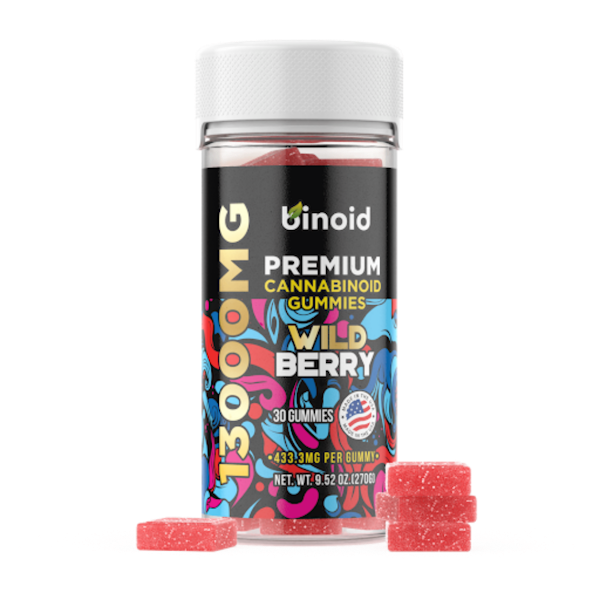
Herb Recommended Products:

READ MORE