Herb
How to Buy Weed in Hawaii: Dispensaries, Medical-Only Laws & What Tourists Should Know |
04.01.2026Understanding Hawaii's medical-only cannabis system, how tourists with valid medical cards can access dispensaries through the 329 Program, and the key laws, costs, and island-by-island realities to know in 2026
You just booked a trip to Hawaii and want to know if you can buy cannabis when you get there. Or maybe you are a resident wondering whether the rules have changed. Either way, you are not alone. “How to buy weed in Hawaii” is one of the most common cannabis questions people ask about the islands, and the answer is more nuanced than most people expect.
Buying weed in Hawaii is a legal process available exclusively through the state’s medical cannabis program, known as the 329 Program, which requires a valid medical marijuana card to purchase from one of the 8 licensed dispensary companies operating locations across the islands. Recreational cannabis remains illegal in Hawaii as of 2026, but tourists with out-of-state medical cards have a clear path to legal access.
Whether you are a resident looking to get your first card or a visitor planning ahead for your trip, this guide breaks down everything you need to know, from the application process and dispensary locations on every island to penalties, pricing, hemp product rules, and where legalization efforts actually stand right now.
Hawaii is a medical-only cannabis state. It has been since 2000, when it became one of the first states in the country to establish a medical marijuana program under HRS Chapter 329.
Here is how it breaks down:
The key takeaway: you need a medical card to buy cannabis legally in Hawaii. Period. There is no gray area, no recreational dispensary, and no “just walk in and buy it” option.
For anyone exploring cannabis laws by state, Hawaii sits in a unique position: progressive enough to have had medical cannabis for over two decades, but still resistant to full legalization.
The cannabis landscape in Hawaii shifted meaningfully in 2025 and early 2026, even though recreational legalization stayed off the table. Here is what changed:
Expanded qualifying conditions and lower costs (HB 302 / Act 241, 2025)
Hemp crackdown (HB 1482, effective January 1, 2026)
Legalization bills stalled (again)
These changes mean the medical program is now more accessible and affordable than ever, but the walls around it are also higher. If you want legal cannabis in Hawaii, the 329 card is the only way.
Browse Herb’s strain database to find what is available before your dispensary visit.
Yes, tourists can buy weed in Hawaii, but only if you already hold a valid medical cannabis card from your home state, territory, or the District of Columbia.
Hawaii does not have a reciprocity program that accepts out-of-state cards directly. Instead, you need to register through the Out-of-State Patient (OSP) 329 Registration system.
Featured Snippet: Tourists can legally buy cannabis in Hawaii by registering their valid out-of-state medical marijuana card through Hawaii’s OSP 329 Registration system at medmj.ehawaii.gov. The fee is $49.50 (non-refundable), the card is valid for up to 60 days, and approval typically takes 3-5 business days. You must have a state-issued ID from the same state as your medical card.
This process is straightforward, but planning ahead is essential. Don’t wait until you land in Honolulu to start your application. Getting your home-state card and completing the Hawaii registration before your trip saves time and stress.
Check out Herb’s dispensary finder to research locations before your visit.
Minor patients can also apply for the out-of-state program, but they require a caregiver who is a parent, guardian, or legal custodian with a valid government ID from the same state as the minor’s medical card.
For Hawaii residents, the path to a 329 card got significantly easier and cheaper in 2025.
For a 1-year card, the doctor certification fee is capped at $105 (under HB 302 / Act 241) and the state registration fee is $38.50, bringing the total to roughly ~$143.50. For a 2-year card, the doctor certification cap is $210 and the state registration is $77.00, for a total of about ~$287.00. You can find the latest fee details on the DOH application page and the fee schedule page.
Hawaii’s qualifying condition framework expanded in 2025 under HB 302. The DOH qualifying conditions page lists the traditional enumerated debilitating conditions, which include:
Beyond these, the DOH now states that patients may be certified for other medical conditions determined as appropriate by a Primary Treating Medical Provider. This broadened provider-discretion provision makes the program far more accessible than before, as conditions like anxiety, depression, and insomnia may now fall within a provider’s judgment. If you deal with chronic pain or sleep issues, this expanded framework may work in your favor.
Check out Herb’s cannabis guides for more on medical cannabis programs across the country.
Hawaii has 8 licensed dispensary companies operating approximately 24 retail locations across all four major islands. The number of retail locations has been expanding, with each licensee permitted to open multiple storefronts. Here are the key locations. Always confirm current details directly with the DOH dispensary pages linked below, as locations and hours can change.
Oahu has the most dispensary options, which makes sense given that it is the most populated island and the center of Hawaii’s tourism industry.
Noa Botanicals (4 locations): The largest chain on Oahu and one of the most tourist-friendly options, especially their Waikiki location.
Cure Oahu (3 locations)
Aloha Green (4 locations)
Tourist tip: If you are staying in Waikiki, Noa Botanicals on Royal Hawaiian Ave is one of the most convenient dispensaries in the state. It is walkable from most major hotels and resorts.
Maui Grown Therapies (3 locations)
Pono Life Sciences Maui (2 locations)
The Big Island has strong dispensary coverage relative to its geography, with two competing chains each operating three locations.
Hawaiian Ethos (3 locations)
Big Island Grown (3 locations)
Hawaiian Ethos hours vary by location (generally 9:00 AM or 10:00 AM to 7:00 PM). Check the DOH Big Island page for current schedules.
Green Aloha
Hours: Mon-Sun, 9:00 AM – 6:00 PM
Note for island hoppers: Kauai has only one dispensary chain. If you are visiting Kauai, confirm current hours and stock before making the trip. Dispensary selection is more limited on the smaller islands.
Oahu has 3 dispensary companies (Noa Botanicals, Cure Oahu, Aloha Green) with 11 retail locations. The best option for tourists is Noa Botanicals Waikiki. Maui has 2 companies (Maui Grown Therapies, Pono Life Sciences Maui) with 5 locations, with Pono Life Kihei being a solid pick for visitors. Big Island has 2 companies (Hawaiian Ethos, Big Island Grown) with 6 locations, and Hawaiian Ethos Kona is a good tourist choice. Kauai has 1 company (Green Aloha) with 2 locations, with Green Aloha Kapaa being the go-to.
Use Herb’s dispensary finder to check availability and get directions to dispensaries near you.
Hawaii dispensaries carry a full range of medical cannabis products. Here is what you will find on the shelves.
Dispensary prices in Hawaii tend to run higher than mainland states due to the isolated market, limited competition, and transportation costs between islands. Here are some general ranges to give you a ballpark (keep in mind that prices are dynamic and vary by island, dispensary, and potency):
Flower typically runs $14-$27 per gram, $25-$50 per eighth, and $280-$400 per ounce. Pre-rolls go for about $11-$20. Vape cartridges are usually $50-$80, while edibles range from $30 to $100+. RSO runs about $20-$40 per gram, tinctures $30-$100+, and concentrates $50-$100 per gram.
Some dispensaries offer competitive pricing and loyalty programs, and it is always worth asking about patient discounts when you visit.
If you want to research popular strains before visiting, Herb’s strain database includes terpene profiles, THC/CBD content, and community reviews to help you pick the right product for your needs.
This is where a lot of visitors get tripped up. Having a valid 329 card and purchasing legally from a dispensary does not mean you can consume cannabis wherever you want.
That is it. Seriously.
Under HRS §329-122, consumption is prohibited in:
Policies vary by individual property. Some hosts are cannabis-friendly; many are not. Always check the listing’s house rules before consuming. If the listing does not mention cannabis, ask the host directly before booking. Some vacation rental platforms have specific cannabis policies, so read the fine print.
No. Even with a valid medical card, you cannot transport cannabis between Hawaiian islands. HRS §329-122 explicitly states that allowable interisland transport does not include transport by qualifying patients, caregivers, out-of-state patients, or their caregivers. Inter-island flights pass through federal airspace, and cannabis remains federally illegal. This means if you are island-hopping, you need to purchase at a dispensary on each island separately.
This is one of the most commonly misunderstood rules, and violating it can have serious consequences. TSA agents at Hawaii airports operate under federal regulations, and discovery of cannabis can result in referral to local law enforcement.
Hawaii’s penalty structure is tiered by amount and gets serious quickly above the decriminalized threshold.
Possession of up to 3 grams is classified as a violation (non-criminal) and carries a $130 fine with no jail time under HRS 712-1249. From 3 grams to 1 ounce, it becomes a petty misdemeanor with up to 30 days jail and/or a $1,000 fine (HRS 712-1249). 1 ounce to 1 pound is a misdemeanor carrying up to 1 year jail and/or a $2,000 fine (HRS 712-1248). 1 pound or more is a felony with up to 5 years jail and/or a $10,000 fine (HRS 712-1247).
Concentrates are treated more harshly under Hawaii law. Less than 1/8 oz is a misdemeanor (up to 1 year, $2,000 fine). 1/8 oz to 1 oz is a felony (up to 10 years, $25,000 fine). 1 oz or more is also a felony (up to 20 years, $50,000 fine).
Use or possession is a violation with a $500 fine. Delivery to a minor is a felony carrying up to 10 years and a $25,000 fine.
The decriminalized threshold is only 3 grams, roughly the weight of three standard pre-rolls. That is one of the lowest thresholds in the country. Do not assume that decriminalization means casual possession is risk-free. For context, NORML tracks state penalties and ranks Hawaii’s threshold among the strictest.
On a related note, Hawaii passed HB 132 in 2025, which modified and expanded an existing pilot project concerning certain arrest records under HRS 712-1249, making it somewhat easier to address old cannabis-related records, though this is narrower in scope than a full expungement overhaul.
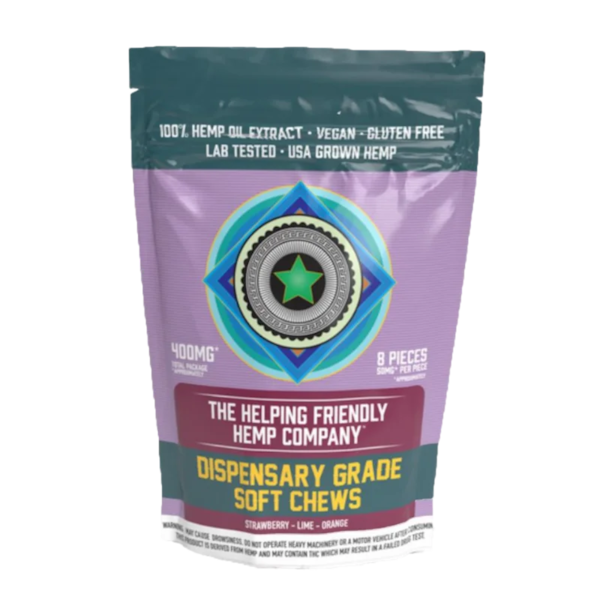
If you are thinking about sidestepping the medical card requirement with hemp-derived THC products, it is not that simple. Hawaii regulates hemp products more tightly than most states.
Compliant manufactured hemp products are legal in specific forms, each with its own THC limits:
Under HB 1482 (signed July 2, 2025, effective January 1, 2026):
The enforcement environment is getting stricter, not more relaxed.
Bottom line: There is no reliable hemp workaround in Hawaii. If you want legal THC in meaningful amounts, get a medical card.
Stay up to date with cannabis law changes as regulations continue to evolve across every state.
A lesser-known aspect of Hawaii’s cannabis program is the expanded caregiver system. Under Act 046, SLH 2025, caregivers can now grow cannabis for up to 5 patients (previously limited to just 1). This is a significant change for patients who cannot cultivate on their own.
Key caregiver details:
This expansion opens up more options for patients who prefer home-grown cannabis over dispensary purchases, particularly on islands with fewer retail options.
As of March 2026, the answer is: not anytime soon.
The 2026 legislative session saw several legalization efforts, and none of them crossed the finish line:
The Senate also did not advance an expansion of the existing decriminalization law that would have raised the 3-gram threshold, meaning the status quo remains.
The Hawaii House of Representatives has been a consistent obstacle to cannabis reform. In 2025, Rep. Chris Todd introduced a rare floor motion to recommit a legalization bill that had already survived two committee votes, effectively killing it. The pattern of House resistance continued into 2026.
The Senate has shown willingness to pass limited measures, but has not been able to overcome House opposition.
Realistically, recreational cannabis is unlikely in Hawaii before 2027 at the earliest. Even then, it would require a significant shift in House leadership or composition. Meanwhile, states across the country continue to move forward with legalization, putting pressure on Hawaii to follow. The ACLU of Hawaii and the Marijuana Policy Project both continue to advocate for reform.
For now, the medical program is expanding access in ways that partially fill the gap. With qualifying conditions now open to provider discretion and costs capped by law, the 329 card is more accessible than at any point in the program’s 26-year history.
Whether you are a tourist or a resident, here are some practical considerations for navigating cannabis in Hawaii.
Hawaii’s cannabis situation is a paradox: the state was an early pioneer of medical marijuana, yet it remains one of the last blue states to resist recreational legalization. The 2025-2026 reforms made the medical program more accessible and affordable than ever (broadened provider discretion for qualifying conditions, capped fees, telehealth approvals, expanded caregiver cultivation), but the path to adult-use sales is blocked by a House that is not budging.
For tourists, the out-of-state registration process is simple if you plan ahead. Get your home-state card, apply online before your trip, and you can legally purchase from licensed dispensaries across the islands. For residents, the cost of entry has never been lower at roughly $143.50 per year.
The bottom line: if you want legal cannabis in Hawaii, the 329 medical card is your one and only option. There are no hemp workarounds, no recreational shops, and no shortcuts.
Explore Strains on Herb to find the right products before your next dispensary visit, whether you are in Waikiki, Kona, or anywhere in between.
Find dispensaries nearby | Shop Deals Near You | Read the Full Guide
Yes, but only through the medical program. You need a valid medical cannabis card from your home state, then register for a temporary Hawaii 329 card ($49.50) at medmj.ehawaii.gov. Your card is valid for up to 60 days, and you can apply up to 60 days before your trip.
No. Recreational marijuana is fully illegal as of March 2026. All major legalization efforts in the 2026 session stalled before becoming law. Possession of 3 grams or less is decriminalized ($130 fine), but that is not the same as legal.
For residents, approximately $143.50 per year ($105 max doctor fee + $38.50 state registration). For a two-year card, the total is about $287. For out-of-state visitors, the temporary registration fee is $49.50 (on top of whatever your home-state card costs).
You must already have a valid medical cannabis card from your home state, territory, or DC. Then apply online at medmj.ehawaii.gov with your medical card and a matching state-issued ID. Pay the $49.50 fee and allow 3-5 business days for processing. You will receive a digital card by email.
No. Cannabis consumption is prohibited in all public places, including beaches, parks, sidewalks, and hiking trails. It is only legal in private residences on private property that is not designated smoke-free.
Hawaii has 8 licensed dispensary companies operating approximately 24 retail locations: Noa Botanicals, Cure Oahu, and Aloha Green on Oahu (11 locations); Maui Grown Therapies and Pono Life Sciences Maui on Maui (5 locations); Hawaiian Ethos and Big Island Grown on the Big Island (6 locations); and Green Aloha on Kauai (2 locations). Check the DOH dispensary page for the latest details.
Herb Recommended Products:
READ MORE