Herb
How to Buy Weed in Melbourne: Victoria’s Cannabis Laws & Australia’s Decriminalization Patchwork |
07.24.2026Recreational cannabis is illegal in Victoria, but medicinal cannabis is available with a prescription. Here's how Victoria's laws actually work.
If you’re searching for where to buy recreational weed in Melbourne, here’s the reality: you can’t, at least not legally. Victoria maintains a prohibition on recreational cannabis, with real financial and criminal penalties depending on quantity and circumstances. However, medicinal cannabis offers a legitimate pathway for patients whose doctor considers it clinically appropriate, and understanding your options means knowing exactly how Victoria’s laws work within Australia’s varied state-by-state landscape. Whether you’re exploring cannabis strains for therapeutic purposes or just want to understand your legal standing, here’s what’s actually current as of this writing, checked 23 July 2026.
No, not for recreational use. Recreational cannabis possession, use, and cultivation remain illegal throughout Victoria under the Drugs, Poisons and Controlled Substances Act 1981. Medicinal cannabis is legal with a valid prescription, and Victoria doesn’t restrict this to a fixed list of qualifying conditions; a doctor or nurse practitioner can prescribe it when they consider it clinically appropriate.
Victoria’s Cannabis Cautioning Program allows police discretion to issue a caution instead of pursuing charges for eligible small-quantity personal possession, but this is diversion from prosecution, not legalization, and it isn’t a guaranteed outcome.
Victoria sits in the middle of Australia’s cannabis policy spectrum: more restrictive than the ACT’s decriminalization model, less severe than Queensland’s maximum penalties for trafficking.
Recreational cannabis falls under the Drugs, Poisons and Controlled Substances Act 1981. Possession, use, cultivation, and trafficking all carry penalties, though Victoria’s cautioning system offers discretionary leniency for eligible minor first-time cases.
Medicinal cannabis operates under federal Therapeutic Goods Administration (TGA) regulation, combined with Victorian state oversight through the Office of Medicinal Cannabis Victoria. Victoria was an early adopter, passing legislation to allow access in 2016.
Victoria’s penalty structure for recreational cannabis scales with quantity, and it’s important to keep the general possession offense separate from the more serious trafficking offense, since they carry very different maximum penalties:
One Victorian penalty unit is currently A$209.10 as of 1 July 2026; this value adjusts annually, so treat the dollar figures as approximate and check the current rate for anything time-sensitive.
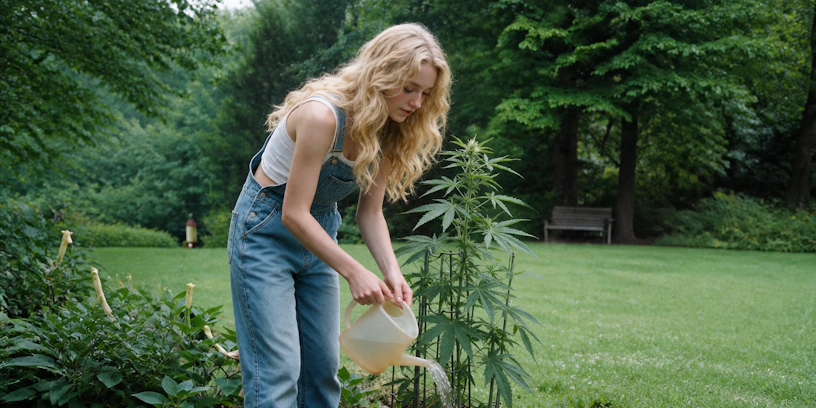
Home cultivation remains illegal in Victoria regardless of quantity; even a single plant is an offense, including for medicinal cannabis patients without separate lawful authorization. This contrasts with the ACT, where residents can grow a limited number of plants for personal use.
Australia has no uniform national cannabis policy, so crossing a state line means encountering a different legal framework entirely.
The Australian Capital Territory (ACT) has gone further than any other Australian jurisdiction, decriminalizing limited adult possession and home cultivation rather than fully legalizing a commercial market. Since January 31, 2020, adults there can possess up to 50 grams of dried cannabis or 150 grams fresh, and cultivate two plants per person, capped at four plants per household. Sale and supply remain illegal in the ACT, so it’s a decriminalized-possession model, not a legal retail market.
South Australia uses expiation notices, on-the-spot fines for minor cannabis offenses that avoid a criminal conviction, keeping minor possession out of the court system while maintaining prohibition.
Victoria uses its Cannabis Cautioning Program to divert eligible small-quantity personal possession away from criminal charges, generally involving drug counselling, with no fixed cap on how many times a person can be cautioned under current police guidance.
Western Australia requires people caught with 10 grams or less to complete a Cannabis Intervention Requirement, including mandatory counselling.
Understanding your specific state’s rules matters before you travel with or use cannabis anywhere in Australia, since assumptions from one state don’t transfer to another.
If you have a condition that hasn’t responded adequately to conventional treatment, medicinal cannabis may be worth discussing with a healthcare provider.
Victoria doesn’t maintain a restricted list of qualifying conditions. A doctor or nurse practitioner can prescribe medicinal cannabis when they consider it clinically appropriate, subject to applicable regulatory requirements. Conditions commonly associated with prescriptions include chronic pain, sleep disorders, anxiety and stress-related conditions, epilepsy and other neurological conditions, cancer-related symptoms, and multiple sclerosis symptoms, though approval always comes down to an individual clinical decision rather than an automatic qualification.
Not every pharmacy stocks medicinal cannabis, so it’s worth checking ahead. Some clinics operate an integrated model combining consultations with an on-site dispensary, such as Trueleaf Clinics & Dispensary in Prahran, which offers same-day collection for in-stock items, Australia-wide delivery, and brand-agnostic prescribing without long-term contracts. Beyond dedicated cannabis clinics, many standard pharmacies now stock medicinal cannabis products; ask your local pharmacist about availability or ordering.
Your doctor will recommend a format based on your condition:
CBD-only products generally cost less monthly than THC-containing products, though exact pricing varies by product and prescriber. Since medicinal cannabis isn’t PBS-subsidized in Victoria, patients cover the full cost.
Understanding product types and consumption methods helps you communicate more effectively with a healthcare provider, whether you’re a prospective patient or just want to understand the space.
Consumption methods differ in onset and duration: inhalation (vaporization) has the fastest onset, within minutes, and shortest duration; oral products like oils, edibles, and capsules have a slower onset, generally 30 to 90 minutes, and longer duration; sublingual administration falls in between; topicals stay localized with minimal systemic absorption.
Strain and product categories are traditionally split into indica, sativa, and hybrid, though current understanding increasingly emphasizes cannabinoid and terpene profiles over these categories. THC-dominant products carry stronger psychoactive effects and are often discussed for pain or nausea; CBD-dominant products are non-intoxicating and often discussed for anxiety or inflammation; balanced THC: CBD ratios may offer a middle ground. Herb’s strain guides and terpene resources can help you understand these distinctions before a consultation.
Australia’s cannabis landscape continues to shift, though full recreational legalization faces real hurdles at both the federal and state levels.
In March 2025, a Victorian parliamentary committee recommended that the government consider an expungement scheme for prior convictions tied to any future personal-possession or cultivation reform; this was a committee recommendation, not enacted legislation, it didn’t specify a 30-gram threshold, and the Victorian Government subsequently did not support the committee’s central decriminalization recommendation. There’s ongoing political advocacy for broader reform, and public polling shows solid support for medicinal access alongside growing, though not universal, support for recreational reform.
More likely near-term developments include continued adjustments to cautioning programs and diversion options, expanded medicinal cannabis accessibility, and further driving-law reforms for medicinal patients. Herb’s news coverage is a reasonable way to track these developments as they happen, since this is an actively moving area of law.
General guidelines for medicinal patients: start with the lowest effective dose and increase gradually as recommended, keep products in their original packaging with pharmacy labels, store them securely away from children and pets, track effects and report back to your prescriber, and be aware of possible interactions with other medications.
Public use. Victoria Health advises against smoking medicinal cannabis specifically, and smoking or vaping is prohibited in designated smoke-free and vape-free places, similar to tobacco restrictions. There isn’t a blanket rule confining all prescribed medicinal-cannabis use to a private residence; the actual restrictions are tied to specific smoke-free/vape-free locations and administration method rather than location generally. Carry your prescription documentation when transporting products, and if you’re traveling interstate, verify your destination state’s specific requirements rather than assuming Victoria’s rules travel with you.
Since March 1, 2025, Victoria has allowed a magistrate to decide not to cancel a driver’s licence for a first THC-presence offense involving lawfully prescribed medicinal cannabis, provided statutory criteria are met, including that the driver wasn’t impaired at the time. This is narrower than it might sound: it’s a magistrate’s discretionary option regarding licence cancellation, not a defense to the underlying offense, and you’d typically need to go to court to present your case. Other penalties may still apply regardless of the licence outcome, and this is distinct from Tasmania’s separate medical defense framework, so don’t assume the two states work the same way.
For general health guidance related to cannabis use, Healthdirect can be reached at 1800 022 222.
Navigating Australia’s cannabis landscape means keeping up with rules that vary by state and change over time. Herb offers a strain database, product education, how-to guides, and industry news covering legalization developments across Australia and globally.
For Australians specifically, Herb’s educational content can help you understand what questions to ask a healthcare provider and what product types might suit your needs, whether you’re a prospective medicinal patient or simply want to understand the space accurately.
Victoria’s cannabis laws are more nuanced than a simple “legal or illegal” answer, and the details matter for both recreational risk and medicinal access.
No. Recreational cannabis possession, use, and cultivation remain illegal throughout Victoria. The Australian Capital Territory has decriminalized limited adult possession (up to 50 grams dried or 150 grams fresh) and cultivation (two plants per person, four per household), but that’s decriminalization, not full recreational legalization, since sale and supply remain illegal there too. In Victoria, eligible small-quantity possession may result in a police caution rather than charges, but this is discretionary diversion, not legalization.
Book a consultation with a GP or a specialized medicinal cannabis clinic, bringing documentation of your medical history and prior treatments. Your doctor assesses whether medicinal cannabis is clinically appropriate; there’s no restricted list of qualifying conditions. If appropriate, your doctor handles the TGA approval process, which typically takes about two business days. Telehealth consultations commonly start around $79 to $99, with in-person appointments potentially eligible for a partial Medicare rebate.
There’s no legal possession limit, since all recreational possession is illegal, but penalty severity scales with quantity. Up to 50 grams can carry a maximum fine of five penalty units (currently about A$1,045.50); 50 to 250 grams with proven personal use can carry up to 30 penalty units or one year’s imprisonment; 250 grams or more is a traffickable quantity, where the general possession offense can carry up to 400 penalty units or five years, while an actual trafficking conviction is separate and more serious, carrying up to 15 years and/or 1,800 penalty units. For medicinal patients, your prescription governs how much you may lawfully possess.
No. Home cultivation is illegal in Victoria regardless of quantity, including for medicinal cannabis patients without a separate lawful authorization; even a single plant is an offense. This differs from the ACT, where limited personal cultivation is decriminalized. All medicinal cannabis in Victoria must be obtained through a licensed pharmacy with a valid prescription.
They vary significantly by state. Victoria offers discretionary cautioning for eligible small-quantity possession; Queensland’s trafficking offense can carry up to life imprisonment as of a May 2023 change; South Australia uses expiation fines to avoid a criminal record for minor possession; and the ACT has decriminalized limited personal possession and cultivation, though not sale or supply. If you’re caught with cannabis anywhere in Australia, contacting a legal aid service or community legal centre promptly is the best way to understand your specific situation.
This guide is for informational and educational purposes only and does not constitute legal advice. Victorian and Australian cannabis laws checked as of 23 July 2026 and are subject to change; confirm current details with official state sources or a qualified legal professional.
Herb Recommended Products:
READ MORE