
ashim d silva
How to Buy Weed in Tanzania: Cannabis Laws and Tourist Guide 2026
Cannabis is illegal across both mainland Tanzania and Zanzibar, with no verified medical, CBD, or tourist exception. Penalties are severe, and the two jurisdictions run on separate laws.

Buying weed in Tanzania is illegal and carries some of Africa’s harshest penalties. Cannabis is treated as a controlled narcotic substance under mainland Tanzania’s Drug Control and Enforcement Act (Cap. 95 R.E. 2023). On the mainland, cultivation and dealing with cannabis plants carry imprisonment of not less than 30 years, while certain personal-use provisions carry penalties up to three years, and trafficking penalties scale with quantity up to life imprisonment for more than 100 kg. Zanzibar has its own separate drug legislation, so its penalties should not be assumed identical to the mainland. No verified consumer-facing exception was found for tourists, medical users, or CBD.
That legal reality sits alongside a stark paradox. Beach sellers in Zanzibar present cannabis as a casual part of island life. Social media frames it as an undiscovered corner of Africa’s cannabis culture. Travel forums discuss it alongside Thailand or Amsterdam. None of that picture is accurate, yet Tanzania is simultaneously one of the world’s largest cannabis producers. Bangi, as cannabis is locally known, grows across multiple regions from the southern highlands of Iringa to the lake zone of Kagera. The gap between supply and law is staggering.
This guide covers what travelers and researchers actually need to know: the law in plain language, the enforcement reality in 2026, the cultural context behind the contradiction, and what the risk looks like on the ground. Tanzania remains among the most restrictive cannabis jurisdictions in East Africa, with no verified recreational, medical, or industrial hemp framework in the sources reviewed.
Key Takeaways
magdalena kula manchee
- Cannabis (bangi) is fully illegal across Tanzania. On the mainland, cultivation and dealing with cannabis plants can carry imprisonment of not less than 30 years, while trafficking penalties scale with quantity up to life imprisonment.
- Zanzibar has its own drug-control legislation, separate from the mainland. Cannabis remains illegal there, and the penalties should be treated as distinct from mainland penalties.
- Tanzania is paradoxically one of the world’s largest cannabis producers, with cultivation documented across multiple regions including Iringa, Kagera, Morogoro, Arusha, and Tanga.
- A reported drop in cannabis-specific seizures within Tanzania’s 2025 narcotics totals could reflect enforcement priorities, reporting differences, evasion tactics, or production trends. The available sources do not establish a single cause.
- A peer-reviewed study reported neighborhood and demographic variation in perceived cannabis availability in Dar es Salaam, with figures cited between 37% and 75% depending on group.
- No official legalization, decriminalization, medical cannabis, or hemp proposal appears in the government sources reviewed.
- Herb does not encourage cannabis purchase in jurisdictions where it is illegal.
Is Weed Legal in Tanzania?

k15 photos
The short answer to “is weed legal in Tanzania” is an unambiguous no, and the penalties are among the most severe in East Africa. The law is strict and applies equally to nationals and foreign visitors.
Mainland Tanzania’s primary drug legislation is the Drug Control and Enforcement Act (Cap. 95 R.E. 2023), administered by the Drug Control and Enforcement Authority (DCEA). Cannabis is treated as a controlled narcotic substance under this framework. Importantly, the Act uses cannabis-specific quantity thresholds for trafficking penalties rather than treating cannabis identically to substances like cocaine or heroin for every offense.
A Strict Law With Limited Mechanisms
Tanzania offers no verified consumer-facing carve-out for cannabis:
- No verified medical cannabis program. No verified prescription pathway, licensed dispensary, or consumer medical licensing was found in the sources reviewed. The Act does contain limited permit and licensing mechanisms for controlled substances in professional or scientific contexts, so the law should not be described as having zero exceptions of any kind.
- No verified CBD exception. No regulation carving out hemp-derived CBD products was found in the sources reviewed, so CBD should be treated as exposed to the same framework as cannabis.
- No verified industrial hemp framework. Tanzania’s cannabis and hemp legal status shows no verified hemp legislation in the sources reviewed.
The law applies equally to Tanzanian nationals and foreign visitors. Embassies have very limited ability to intervene in drug prosecutions.
Mainland Tanzania Penalties at a Glance
| Offense | Reviewed Penalty Range |
|---|---|
Personal-use / use provisions | Penalties up to three years in certain personal-use and use provisions, including fines |
Possession | Depends on quantity and context; small-quantity personal-consumption possession is handled under a separate provision from trafficking |
Trafficking (not more than 100 kg) | Imprisonment of not less than 30 years |
Trafficking (not more than 100 kg) | Imprisonment of not less than 30 years |
Trafficking (more than 100 kg) | Life imprisonment |
Cultivation / dealing with cannabis plants | Imprisonment of not less than 30 years |
Possessing manufacturing equipment | Life imprisonment plus a fine of not less than TZS 200 million |
Under mainland Tanzania law, small-quantity possession intended for personal consumption is punished under a separate provision, while trafficking or dealing triggers far harsher penalties, including at least 30 years or life imprisonment, depending on quantity. The law places the burden on the accused to prove a small quantity was for personal consumption rather than sale or distribution.
The Act defines trafficking broadly, covering selling, supplying, storing, transporting, carrying, or delivering cannabis, as well as organizing or financing any of those activities. A driver carrying cannabis for a dealer can be treated as a trafficker.
Why Tanzania's Cannabis Paradox Matters in 2026
Tanzania presents one of the starkest contradictions in global cannabis policy: a country that is both a major producer and an enforcer of life-imprisonment penalties.
Tanzania Is One of the World's Largest Producers
Despite criminalization, cannabis cultivation is deeply embedded in Tanzania’s rural economy. The DCEA has documented active cultivation across multiple regions:
- Southern Highlands: Iringa, Ruvuma, Rukwa
- Northern Zone: Arusha, Manyara, Kilimanjaro, Tanga
- Lake Zone: Kagera, Shinyanga, Mara
- Eastern: Morogoro
- Central: Tabora
These regions benefit from favorable growing climates, forest cover that conceals cultivation, and proximity to transportation routes. Cannabis takes four to five months to mature and is grown in small plots by subsistence farmers for whom it represents a more reliable cash income than many legal crops.
This creates a fundamental tension: large numbers of Tanzanians participate in the cannabis economy in some capacity, while the legal framework imposes a minimum 30-year sentence for cultivation and dealing.
2025: Record Seizures, Falling Cannabis Numbers
Tanzanian media reported large-scale DCEA seizures in 2025, including figures described as among the country’s highest, though annual totals should be confirmed against DCEA directly. Between July and September 2025, the authority reported seizing more than 33 tonnes of narcotics and arresting 940 suspects.
Analysts noted a drop in cannabis-specific seizures within the overall narcotics total for 2025. A reported drop like this could reflect changes in enforcement priorities, differences in reporting, evasion tactics, or shifts in production trends. The available sources do not establish a single cause.
Stay current on East African cannabis policy developments through Herb’s cannabis news.
The Dar es Salaam Cannabis Scene

omar
Dar es Salaam, Tanzania’s largest city and commercial capital, is the country’s primary cannabis market. For anyone asking how to buy weed in Tanzania, this is where underground demand is most concentrated. A peer-reviewed study reported neighborhood and demographic variation in perceived cannabis availability in Dar es Salaam, with figures cited between 37% and 75% of adults depending on group. That research describes perception, not law, and the exact range and methodology should be verified before relying on it.
How Cannabis Reaches the City
Dar es Salaam draws supply from multiple routes:
- Southern Highland production zones: Iringa and Ruvuma are major growing regions, with product moving north via road networks through Morogoro into the capital
- Coastal and port connections: The Port of Dar es Salaam facilitates both domestic distribution and some export traffic
- Lake Zone corridor: Kagera and Mara supply products that move through Mwanza and then east toward the coast
- Cross-border movement: Regional routes feed between southern Tanzania and neighbors, including Mozambique and Malawi
What the Market Looks Like in Dar es Salaam
The cannabis market in Dar es Salaam operates primarily through informal networks:
- Neighborhood-level dealers serve established customers in urban residential areas and informal settlements
- Encrypted messaging apps and social media have become significant channels, particularly among younger buyers
- Intermediary networks often involve multiple handoffs, so a buyer may never encounter the supplier directly
- Local names vary: bangi is the standard Swahili term, ganja is understood across demographics, and kush is used for higher-quality imported or premium-cultivated varieties
Risks in Dar es Salaam
This section is informational, not a how-to guide. The risks of involvement with cannabis in Dar es Salaam are substantial:
- Legal exposure. Cannabis possession is a criminal offense, and penalties scale sharply once a situation is categorized beyond simple personal use.
- Police operations. The DCEA and Tanzania Police Force conduct regular operations, so being in the wrong neighborhood at the wrong time matters.
- Quality with no oversight. No regulatory system means no quality control, and product adulteration is documented.
- Unpredictable outcomes. Enforcement outcomes can be unpredictable, and travelers should not assume informal resolution is possible.
Zanzibar: Cannabis in the Spice Islands
humphrey
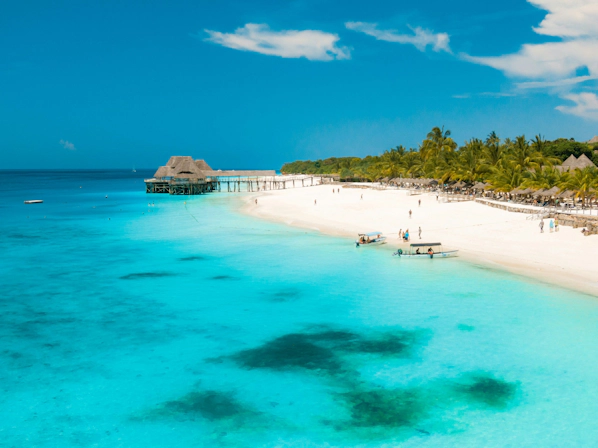
Zanzibar, the semi-autonomous island archipelago off Tanzania’s Indian Ocean coast, has a distinctive tourism economy, a complex political relationship with the mainland, and its own Government of Zanzibar. Visitors sometimes assume this semi-autonomy creates a legal grey zone. It does not.
The Legal Reality in Zanzibar
Zanzibar has its own drug-control legislation, and cannabis remains illegal there. The Zanzibar House of Representatives enacted Act No. 9 of 2009 covering narcotic drugs and psychotropic substances, including cannabis. There is no tolerance zone and no decimalization or decriminalization that travelers can rely on.
Because Zanzibar operates under a separate statute, its penalties should be stated independently of mainland Tanzania and verified against the current Zanzibar legislation before relying on any specific figure. The reviewed Zanzibar statute, for example, provides a penalty of not less than 15 years or a TZS 40 million fine or both for cultivation and dealing with cannabis and related substances, which differs from the mainland’s 30-year minimum. Cannabis possession and use remain criminal offenses in Zanzibar, but the exact penalties should be checked against the current Zanzibar Drugs Control and Enforcement Authority legislation rather than assumed to match the mainland.
The Tourist Scene and Why It Exists
Zanzibar’s international tourism industry attracts hundreds of thousands of visitors annually from Europe, the Middle East, and Asia, and has created a visible underground cannabis culture. Several social media accounts and self-styled “cannabis tours” operate in the shadows of the island market, presenting cannabis as part of a laid-back beach experience.
The reality is more complicated:
- No official or tolerated cannabis sellers exist. Anyone claiming otherwise is either taking a significant legal risk or running a scam.
- Tourist beaches attract dealers who approach visitors in areas like Nungwi, Kendwa, and Paje, but these interactions carry full legal exposure.
- The cannabis that exists on the island is unregulated. Product quality, potency, and purity are entirely unknown, and unregulated drug purchases can pose serious health risks.
Real Risks Tourists Face in Zanzibar
Foreign visitors face a particularly exposed position:
- Standard criminal penalties apply, and foreigners are not treated more leniently
- Deportation can follow any prison term served
- Potential classification as a prohibited immigrant can bar future entry to Tanzania
- Embassies can provide consular support but cannot override Tanzanian law or criminal proceedings. The UK government’s Tanzania travel advice explicitly flags drug-related risks for visitors
If you are looking for cannabis-friendly island destinations, Herb’s guides to cannabis-legal destinations cover options where the law aligns with the experience.
Bangi: Tanzania's Cannabis Culture and History

Photo by Africa Studio / Adobe Stock
Understanding cannabis in Tanzania requires understanding the word bangi and the deep cultural roots behind it.
The Word and Its Origins
“Bangi” (also spelled “bhang” in broader East African usage) entered Swahili through centuries of Indian Ocean trade, derived from the Sanskrit word bhang, which refers to cannabis preparations. The word appears in Swahili texts dating to the colonial era and likely arrived with Arab, Indian, and Persian traders who navigated the same coastal routes that built the Swahili civilization.
Other terms you may encounter in Tanzania:
- Bangi: the dominant everyday term
- Ganja: widely understood, especially in urban areas
- Kush: used for premium varieties, often of imported or hybrid origin
- Bhang: the broader Swahili and East African variant, interchangeable with bangi
- Super weed: a term that appeared in Tanzanian media coverage after the DCEA reported seizing higher-potency cannabis at the border, suggesting new genetics entering the market
Cannabis in Tanzanian History
Cannabis has a long presence in East Africa. Archaeological and ethnobotanical evidence suggests it arrived along Indian Ocean trade routes between 700 and 1000 CE, the same maritime network that linked the Swahili coast to the Arabian Peninsula, the Indian subcontinent, and Persia.
By the time European colonizers arrived, cannabis was embedded in the traditional economies and spiritual practices of multiple Tanzanian ethnic groups. The Makonde people of southeastern Tanzania have traditional associations with cannabis use, and rural communities across the southern highlands used cannabis in ritual and medicinal contexts well before colonial prohibition.
Prohibition in what was then Tanganyika was introduced under British colonial administration, following the same logic applied across the empire: cannabis use was perceived as incompatible with labor productivity and colonial order. Those colonial-era bans, updated and strengthened over later decades, form the legal architecture that exists today.
Modern Cultural Context
Contemporary Tanzanian cannabis culture reflects several intersecting forces:
- Rural economic dependence. In highland farming communities, cannabis cultivation is often described in economic, not countercultural, terms. It is a cash crop that generates income where formal employment is scarce.
- Urban youth culture. In Dar es Salaam, Arusha, and Zanzibar Town, cannabis use tracks with regional hip-hop, bongo flava, and coastal music scenes.
- Diaspora and tourism influence. Zanzibar’s international visitor economy has introduced cannabis-associated tourism from regions where the drug is legal, creating demand pressure that local underground markets attempt to serve.
- Religious associations. Small Rastafarian communities exist in Tanzania’s larger cities, though nothing comparable to Kenya’s organized Rastafarian advocacy.
No official legalization, decriminalization, medical cannabis, or hemp proposal appears in the government sources reviewed. The cultural existence of cannabis and the legal prohibition operate in two entirely separate registers.
Penalties Breakdown: What You Actually Face

Med J
Tanzania’s mainland Drug Control and Enforcement Act imposes mandatory minimum sentences that remove judicial discretion for most serious cannabis offenses. This is a critical distinction from many other legal systems: for cultivation and dealing, the floor is not less than 30 years.
Mainland Penalties Table
| Offense | Who It Covers | Reviewed Penalty |
|---|---|---|
Use | Anyone who uses cannabis | Up to three years in certain personal-use and use provisions, with fines |
Possession | Anyone found in possession | Depends on quantity and context; small-quantity personal-consumption possession handled under a separate provision |
Cultivation / dealing | Grower, landowner who permits it, seed supplier | Not less than 30 years |
Trafficking (not more than 100 kg) | Seller, transporter, storer, financier | Not less than 30 years |
Trafficking (more than 100 kg) | Same as above | Life imprisonment |
Manufacturing equipment | Possession of equipment to manufacture drugs | Life imprisonment plus a fine of not less than TZS 200 million |
How Penalties Apply in Practice
Possession is where most individuals who are caught encounter the law. Possession is interpreted broadly, so a driver transporting cannabis for someone else, a person storing it for a friend, and a consumer holding a personal amount can all fall under the framework, though prosecutors and courts consider context, and the accused carries the burden of proving a small quantity was for personal use.
The 30-year minimum for cultivation and dealing applies not just to the person doing the farming, but also to landowners who knowingly allow their property to be used, anyone who provides seeds for drug production, and anyone who assists, facilitates, or finances cultivation.
For foreigners, the criminal sentence is the beginning, not the end, of the legal consequences:
- Deportation after sentence
- Potential designation as a prohibited immigrant
- Reputational and professional consequences that follow international criminal records
Police and Enforcement: The On-the-Ground Reality
Tanzania’s formal penalties are extremely harsh, but the reality of enforcement is shaped by resource constraints and integrity challenges familiar across the region.
Corruption and Anti-Corruption Efforts
The DCEA is the primary anti-narcotics enforcement authority in Tanzania. It has formalized a cooperation agreement with the Prevention and Combating of Corruption Bureau (PCCB) specifically to address corruption as a recognized obstacle in anti-narcotics work, and public servants have been dismissed and prosecuted for facilitating drug trafficking.
At the street level, enforcement outcomes can be unpredictable, and travelers should not assume informal resolution is possible. Specific claims about set bribe amounts or systematic targeting of tourists are not made here, because they require strong, reliable sourcing. What can be said is that the unpredictability itself is the risk.
The DCEA's Enforcement Posture in 2025 and 2026
The DCEA has not softened its operational approach:
- Large-scale narcotics seizures were reported nationwide in 2025
- 940 suspects were reported arrested in the July to September 2025 operations
- Regular eradication campaigns continue in highland growing regions
- The DCEA has stated its intent to intensify operations, citing looming threats from regional drug networks
The critical takeaway: enforcement in Tanzania is not uniform or predictable. A tourist on a beach in Zanzibar, a business traveler in Dar es Salaam, and a resident of Iringa all face cannabis prohibition, but encounter it in very different ways. You cannot calculate your way out of a system where the outcome depends on which officer stops you, where, and when.
CBD, Hemp, and Medical Cannabis: No Verified Legal Pathway

RAMON SANCHEZ ORENSE
Tanzania offers no verified legal pathway for consumer cannabis-derived products. Here are the essentials every visitor should know:
- Cannabis is illegal across both mainland Tanzania and Zanzibar, and the two jurisdictions run on separate statutes.
- Cultivation and dealing on the mainland carry a minimum of not less than 30 years, one of the harshest cultivation penalties in the world.
- Mainland trafficking of more than 100 kg carries life imprisonment.
- No verified CBD or hemp consumer exception was found in the sources reviewed, so CBD should be treated as exposed to the same framework as cannabis.
- No verified medical exception, tourist allowance, or tolerance zone was found anywhere in Tanzania, including Zanzibar.
CBD
No regulation distinguishing hemp-derived CBD from cannabis was found in the sources reviewed. The safe assumption for travelers is that importing CBD oil, carrying CBD gummies purchased abroad, or possessing any cannabis-derived supplement exposes them to the same criminal framework as possession of flower. Travelers who use CBD products legally at home should leave them at home when visiting Tanzania. For a broader overview, Herb’s global cannabis law guide tracks how regulations differ by country.
Industrial Hemp
No verified industrial hemp legislation was found for Tanzania in the sources reviewed. Tanzania’s agricultural economy has not pursued hemp as a verified legal crop, despite cannabis being embedded in the same agricultural regions.
Medical Cannabis
No verified consumer medical exception, prescription pathway, or licensed producer for therapeutic cannabis use was found in the sources reviewed. The Act does include limited permit and licensing mechanisms for controlled substances in professional or scientific contexts, but that is not the same as a consumer-facing medical cannabis program. Occasional academic and civil society voices have raised medical legalization as an economic opportunity, but these discussions have not advanced within government in the sources reviewed.
Tanzania's Drug Control and Enforcement Authority (DCEA)
The Drug Control and Enforcement Authority is the primary anti-narcotics enforcement body on the mainland, operating under the Ministry of Home Affairs and established under the mainland Drug Control and Enforcement Act framework. It replaced the earlier Drug Control Commission established under the 1995 Drugs and Prevention of Illicit Traffic in Drugs Act.
The DCEA operates through nationwide field offices, border task forces, and joint operations with regional bodies, including INTERPOL and UNODC. It has formalized partnerships with the PCCB to address officer-level corruption that has historically undermined enforcement. Foreign nationals arrested during DCEA operations face the same mainland sentencing framework as Tanzanian citizens, with no consular exception.
East Africa Cannabis Comparison

HENDRIK CORNELISSE
Tanzania’s position becomes clearer in the regional context. Herb’s cannabis city guides cover dozens of destinations worldwide, and Tanzania represents the most restrictive end of the spectrum. Research published by UNODC consistently identifies Tanzania as one of Africa’s leading cannabis producers despite its strict prohibition, a paradox that is unusual in the region.
Tanzania remains among the most restrictive jurisdictions in East Africa. Legal status varies by offense and quantity in each country, so the table below should be read as a high-level snapshot to be verified against each country’s official law.
| Country | Recreational | Medical | Hemp | Key Development |
|---|---|---|---|---|
Tanzania | Illegal (life for high-volume trafficking) | No verified program | No verified framework | No verified reform activity |
Kenya | Illegal; penalties vary by offense and quantity | Limited / verify | Status should be verified via Kenya Law | Rastafarian court matter reported pending |
Uganda | Illegal | Updated narcotics law commenced April 2025; licensing claims unverified | Under review | Verify licensing against official records |
South Africa | Adult private use permitted | Partially legal | Legal framework developing | 2018 Constitutional Court ruling |
The remaining nations in the region show varied trajectories, and each should be confirmed against official sources before relying on a specific status:
| Country | Recreational | Medical | Hemp | Key Development |
|---|---|---|---|---|
Rwanda | Illegal | Illegal | Illegal | Strict enforcement reported |
Malawi | Illegal | Under reform | Legal (2020) | Cannabis Regulation Bill progressing |
Zambia | Illegal | Under review | Pilot programs | Medical cannabis study licensed |
Zimbabwe | Illegal | Licensed producers | Legal | The export-focused medical market is developing |
Cannabis Reform in Tanzania: Will the Law Change?
No official legalization, decriminalization, medical cannabis, or hemp proposal appears in the government sources reviewed, and the DCEA has publicly committed to intensifying enforcement rather than softening it.
By contrast, South Africa permits adult private cannabis cultivation, possession, and use following its 2018 Constitutional Court ruling, though retail access there remains legally complex and is not a fully legal dispensary market. Kenya has a reported Rastafarian constitutional matter, and Uganda’s updated narcotics law commenced in April 2025. Tanzania’s mainland mandatory minimums for cultivation and trafficking are not under any verified judicial review in the sources reviewed.
Nearest Legal Cannabis Destinations to Tanzania

HU CHEN
South Africa permits adult private cannabis cultivation, possession, and use under scheduling exceptions, established by the 2018 Constitutional Court ruling. Retail access remains legally complex, so it should not be described as a fully legal dispensary market. South Africa is roughly 2,500 km from Dar es Salaam.
No country bordering Tanzania has legalized recreational cannabis, and all maintain prohibition. For travelers seeking a legal private-use cannabis context in sub-Saharan Africa, South Africa is the most accessible regional option. Herb’s South Africa cannabis guide covers what visitors need to know.
Final Verdict

BEN PREATER
Tanzania’s cannabis story is built on contradiction. A plant cultivated and traded across these territories for centuries, that sustains farmers across multiple growing regions and is embedded in traditional practices from the southern highlands to the Swahili coast, is met with some of the most severe drug penalties on the African continent.
That contradiction does not make the risk disappear. It makes it stranger and more unpredictable. The underground market functions because economic necessity keeps it moving, yet the same system that tolerates cannabis farms in Iringa can imprison a tourist in Zanzibar. The law is severe, and its application is uneven. Those two facts together, not either alone, define the actual risk profile. Here is how the decision breaks down:
- Planning a trip centered on cannabis tourism? Tanzania is not the place. Cannabis is illegal across the mainland and Zanzibar, with no verified tourist, medical, or CBD exception.
- Heading to Tanzania for the safaris, beaches, and spice islands, not the cannabis? You can have an outstanding trip. Skip the illegal market entirely and enjoy Tanzania for its world-class wildlife, coastline, and culture.
- Looking for a legal private-use option in the broader region? South Africa permits adult private cannabis use, though retail access remains legally complex and should be confirmed before travel.
- Watching the regional policy arc? Tanzania is likely to remain the outlier. Several neighbors have opened partial pathways, while Tanzania shows no verified reform movement in the sources reviewed.
The honest answer to “how to buy weed in Tanzania” is that you cannot, legally. Herb strongly advises against any cannabis purchase or use in Tanzania. For guides to destinations where the law aligns with the experience, Herb’s guides section has the full picture.
Frequently Asked Questions
Is weed legal in Tanzania?
No. Cannabis is fully illegal across both mainland Tanzania and Zanzibar, which operate under separate drug-control statutes. There is no verified exception for medical use, recreational use, CBD products, or industrial hemp in the sources reviewed. On the mainland, cultivation and dealing carry imprisonment of not less than 30 years, and trafficking penalties scale with quantity up to life imprisonment.
What is the penalty for weed in Tanzania?
Penalties depend on the offense, quantity, role, and context. On the mainland, certain personal-use and use provisions carry penalties up to three years, including fines, while cultivation and dealing carry not less than 30 years. Trafficking of not more than 100 kg carries not less than 30 years, and trafficking of more than 100 kg carries life imprisonment. Zanzibar has its own statute, and its penalties should be verified separately rather than assumed to be identical to the mainland.
Is weed legal in Zanzibar?
No. Zanzibar has its own drug-control legislation, Act No. 9 of 2009, and cannabis remains illegal there. Zanzibar is not a tolerance zone. Because it runs on a separate statute, its penalties differ from those on the mainland and should be checked against the current Zanzibar legislation before relying on any specific figure.
Is CBD legal in Tanzania?
No verified CBD exception was found in the sources reviewed. Tanzanian law does not appear to carve out hemp-derived CBD from cannabis, so the safe assumption is that CBD products carry the same legal exposure as cannabis. Travelers who use CBD products legally at home should not bring them into Tanzania.
Can tourists smoke weed in Tanzania?
Legally, no. Foreign visitors face the same prohibition as nationals, plus possible deportation after any completed prison sentence, potential designation as a prohibited immigrant, and very limited consular assistance. If you are looking for destinations where cannabis is legally accessible to visitors, Herb’s legal cannabis destinations guide covers options worldwide.
Disclaimer: This article is for informational purposes only and does not constitute legal advice. Cannabis laws vary by jurisdiction and are subject to change. Always verify current regulations with official sources before traveling. Herb does not encourage the purchase or use of cannabis in jurisdictions where it is illegal.
Herb Recommended Products:
READ MORE