This article contains sponsored content. Some of the products featured are part of paid partnerships. This page explains how our process works.

Woman working out at the gym, exploring whether to use CBD before or after exercise

herb

CBD Before or After Exercise: Does It Help or Hurt Performance and Recovery?

CBD is all the rage in the wellness world, but what does the research say? Here's what the studies found about taking it before or after a workout.

Rachel Abela

November 04, 2026

Whether to take CBD before or after exercise is a question many athletes and gym-goers are quietly asking. Maybe it’s the morning after leg day, when the stairs feel like a personal attack. Maybe a teammate swears by a CBD cream, or your favorite athlete posts about it. Either way, you’re wondering if it’s worth adding to your routine, and when.

The research is small, early, and mostly unconvincing so far. That doesn’t mean CBD does nothing. It means the evidence can’t back up the big promises you’ll see on labels and social media.

Below, we break down what the studies on CBD and working out found, what to watch if you’re drug-tested, and whether CBD before or after exercise seems to matter.

Important: This article is for informational purposes only; not legal or medical advice. For adults 21+. Cannabinoid legality varies by state, and the federal hemp definition narrows in late 2026—verify your state’s laws before buying any cannabinoid products. Featured products are not FDA-evaluated and are not intended to diagnose, treat, cure, or prevent any disease.

Two people jogging together outdoors while exploring CBD before or after exercise

mathias reding

Based on current research, there isn’t enough evidence to say CBD reliably improves performance or recovery. That’s true whether you take CBD before or after exercise.

A 2024 systematic review of CBD in healthy, physically active people provides the best overview. Researchers searched three major databases through April 2024 and found 901 publications. Only seven studies fully met their criteria. Most were small, used a single dose or a few days of dosing, and tested different products and amounts.

On CBD and exercise performance, the review concluded that current evidence supports a “limited positive effect” of CBD on some performance measures, such as oxygen use and average power output. But they found limited data on strength measures, like jumps, bench press, and squats, and on recovery after exercise. They also noted that most of the studies were published between 2021 and 2024, so this is a very young field.

In other words, the claimed CBD exercise benefits you see in marketing are well ahead of the science. 

Here’s what the individual studies found, and what they suggest about taking CBD before or after exercise.

Taking CBD before working out doesn’t appear to hurt performance in the studies so far, but it hasn’t been shown to improve it either.

The endurance running pilot. In a 2022 pilot trial published in Sports Medicine – Open, nine endurance-trained men took either 300mg of CBD or a placebo 1.5 hours before exercise. They ran for 60 minutes at a steady pace, then ran to exhaustion. With CBD, the runners rated the experience as more pleasant, and their oxygen use and blood lactate went up. But their time to exhaustion didn’t change. The researchers concluded that CBD appeared to alter some responses to exercise, but that larger studies were needed.

The follow-up study. The same research group ran a larger follow-up trial, published in 2025. This study looked at 25 trained runners who took either a placebo, 50mg, or 300mg of CBD 1.5 hours before a 60-minute run. This time, the researchers concluded that neither dose appeared to change how the exercise felt. It also didn’t change endurance performance or other physiological responses.

So, what about CBD for running? Together, these two studies mentioned above suggest CBD while running doesn’t hurt performance. But there’s also no clear performance gain.

The risks: contamination and drug testing. If you use CBD while working out or competing, this part matters, especially if you’re drug-tested. The World Anti-Doping Agency (WADA) permits CBD itself, but all other cannabinoids, including THC, remain prohibited in competition. According to USADA, it’s very difficult to extract only CBD from the cannabis plant, so athletes should assume most CBD products contain a mix of cannabinoids. USADA also notes that athletes are strictly liable for any prohibited substance found in their system.

You may think you’re in the clear, but contamination is a big concern. A 2017 study in JAMA tested 84 CBD products sold online and found THC in 21% of them, with some at levels that could cause intoxication or impairment. In a 2019 commentary, researchers reported finding THC at doses above 2.5mg per day in 10 of 28 commercial CBD products from the German market. It was enough that they warned it could lead to positive doping tests.

Third-party testing helps, but it isn’t a guarantee. USADA says third-party certification reduces, but doesn’t eliminate, the chance a product contains a prohibited substance. Full spectrum products, by design, contain other cannabinoids beyond CBD, so they carry more risk for tested athletes.

The caveats: doses and who was studied. If you’re considering CBD before working out, know that most trials used fairly high doses, from 60mg up to 300mg or more, and one used 5mg per kilogram of body weight. Many products on the shelf contain far less per serving, so study results may not apply to what you actually buy. Most studies also tested small groups of healthy, active young adults, often only one sex. The results may not apply to beginners, older adults, or people with health conditions. And researchers say larger, more diverse studies are needed.

Woman practicing yoga while smoking a cannabis joint, illustrating the topic of CBD before or after exercise.

herb

Taking CBD after exercise hasn’t been shown to reliably improve recovery or muscle soreness. A few studies found small or limited effects, but most found no meaningful difference from a placebo.

Female athletes after a muscle-damaging workout. In a 2022 study, 24 female collegiate athletes took 5mg/kg of CBD or a placebo before, right after, and 10 hours after a hard leg workout. Researchers measured inflammation, muscle damage, fatigue, and performance for 48 hours. They found that CBD didn’t reduce fatigue, limit inflammation, or restore performance compared to placebo.

Recovery after strength training. A 2021 study on CBD and weight lifting tested 60mg of CBD after exercise in 16 people experienced in strength training. It was one of the few positive results. Researchers reported small but interesting effects on muscle damage and the recovery of squat performance after 72 hours. The effect sizes were small, though, at about 0.2.

Repeated dosing during a six-day training block. A 2024 study by the same research group had 17 well-trained athletes complete a six-day, high-intensity training protocol three times. After each session, they took a placebo or one of two CBD products (60mg). Neither CBD product affected performance. Though one product was linked to lower levels of muscle damage in more advanced athletes, the authors found no clear overall effects.

A CBD blend for muscle soreness. In a separate 2023 pilot study, 40 trained people took a drink containing CBD, CBG, beta-caryophyllene, BCAAs, and magnesium, or a placebo. The blend had no significant effect on objective recovery measures, sleep quality, or mood. However, it did reduce how much soreness interfered with daily activities. Because it was a blend, the effect can’t be credited to CBD alone, and this study wasn’t among the seven in the systematic review.

So, is CBD good for working out recovery? Based on these studies, the answer isn’t a clear yes. The positive findings are small, mixed, or tied to blends.

One more gap worth knowing: every study above tested CBD taken by mouth. None looked at topicals like creams and balms. For many people, a topical is less about a measurable recovery boost and more about the ritual of slowing down, stretching, and giving tired muscles some TLC.

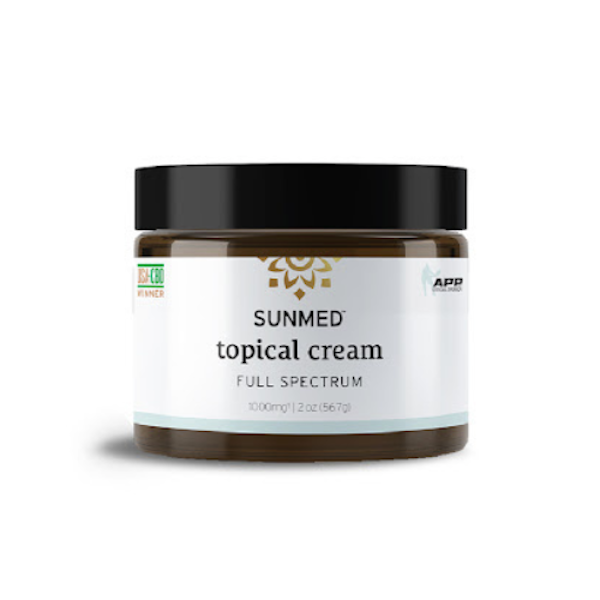
If that’s part of your cooldown, Sunmed’s Full Spectrum Topical Cream is designed for exactly that. Sunmed suggests applying a pea-sized amount to the area you’re focusing on, as needed. A little goes a long way, especially for a $160 jar. Because research on topical CBD and exercise is still missing, think of it as a feel-good addition to your routine rather than a proven recovery tool. 

Each 4oz jar holds 4,000mg of full-spectrum hemp-derived cannabinoids, blended with peppermint, arnica, and MSM for a cooling effect. When you went a bit too hard on leg day, you’ll be glad it’s part of your recovery.

Important: Laws vary by state. A narrower federal hemp definition takes effect in late 2026. Check current state and federal laws before buying.

Runners meeting on a track after exercising, illustrating the topic of CBD before or after exercise

land o lakes

The research doesn’t show that taking CBD before or after exercise is better. Neither timing has strong evidence behind it.

Here’s the bigger picture:

  • Before exercise: Taking CBD before exercise didn’t hurt running performance, and one small pilot found runs felt more pleasant. A larger follow-up found no meaningful effects on how exercise felt or on performance.
  • After exercise: One strength study found small effects on muscle damage and squat recovery. Others, including a study of female athletes and a six-day training study, found no clear benefits.
  • Across both: Most studies were small, used high doses, and tested young, healthy, active people. None directly compared taking CBD before versus after a workout.

That’s the key gap. To know whether CBD before or after exercise makes a difference, researchers would need larger studies that test the same CBD product and dose at different times, across different groups of people, over longer periods. For now, the benefits of CBD and exercise remain unproven.

If you still want to try CBD as part of your routine, a few points can help.

  • Choose third-party tested products, and check the certificate of analysis
  • If you’re drug-tested, know that full-spectrum products may contain THC and other cannabinoids banned in competition.
  • Talk to a healthcare professional first, especially if you take other medications.

For an everyday option, Sunmed’s Anytime Gummies are made with a full-spectrum hemp extract infused with live resin. Each gummy has 25mg of total hemp-derived cannabinoids, with 30 gummies per jar. For context, that’s well below the 60mg to 300mg doses used in most of the studies above. Since they’re full spectrum, they may contain trace THC, so they aren’t a fit for athletes subject to drug testing. But for anyone else seeking a restful wind-down, these gummies should be on your radar.

Curious how other athletes use cannabis? Herb’s guide to CBD in sports covers the trends, and our look at smoking weed after working out covers the THC side.

Important: Laws vary by state. A narrower federal hemp definition takes effect in late 2026. Check current state and federal laws before buying.

Frequently Asked Questions

Featured Products

Topical Cream

Topical Cream

SunmedShop Now