Clones vs Seeds vs F1 Hybrids: The Grower’s Guide to Picking the Right Start
Most grow guides treat this as a two-option debate. They're missing the most important development in cannabis genetics in a generation.
Rachel Abela
April 21, 2026
This article contains sponsored content. Some of the products featured are part of paid partnerships. This page explains how our process works.
photo courtesy of Barney’s Farm
Most grow guides treat this as a two-option debate. They're missing the most important development in cannabis genetics in a generation.
April 21, 2026
If you’ve ever gone down the clones vs seeds rabbit hole, you’ve seen the same argument play out a hundred times. One side swears by clones. The other side won’t touch anything but seeds. Both groups have a point… and both are working off an outdated map.
There’s a third option that most of these debates leave out entirely: F1 hybrid cannabis seeds. For growers who care about consistency and potency (which is most of us), F1s have quietly become the new go-to.
This guide breaks down all three. Clones, seeds, and F1 hybrids. What each one actually is, what each one is good for, and which one makes sense based on what you’re trying to do.
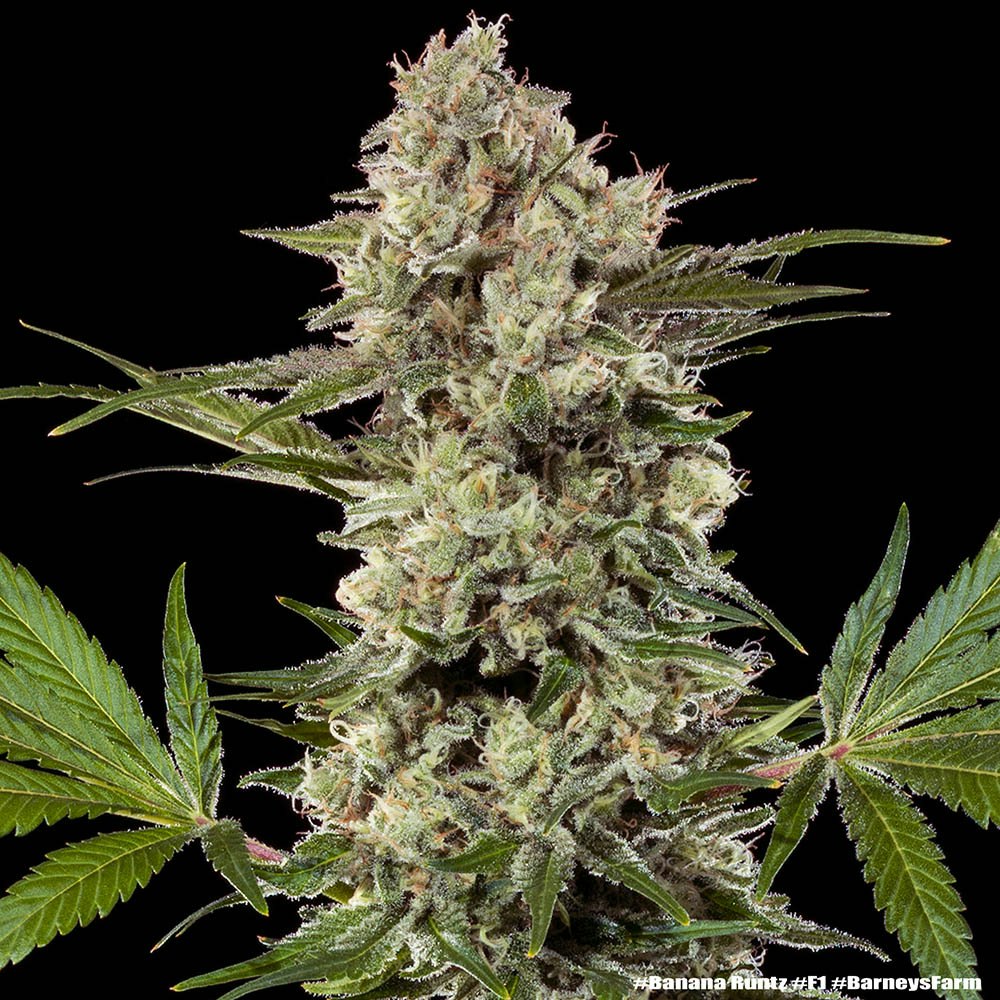
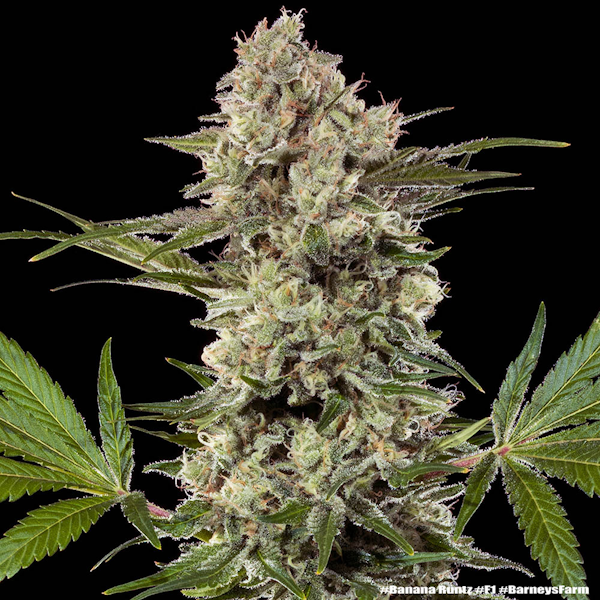
Barney’s Farm Precision F1 Hybrids redefine what growers can expect from seed: next-level consistency, exceptional growth, and elite potency, all backed by decades of expert breeding.
nicole plunkett
A clone is a vegetative cutting taken from a female mother plant. You cut, you root, you plant, and the cutting grows into a genetic duplicate of its parent. Same DNA, same everything.
That’s the whole appeal. If your mother plant is an impressive cut with the terpene profile, yield, and potency you desire, then every clone will deliver the same. This is why commercial operations and serious indoor growers lean on clones. When you’ve dialed in a winner, growing clones vs seeds means you don’t have to hunt for that winner again.
There are real trade-offs, though. You need a mother plant, which means extra infrastructure, extra space, and extra light. Whatever pests or pathogens she’s carrying (powdery mildew, spider mites) get passed straight down to every cutting. Clones also skip the taproot stage entirely, which means a weaker root system compared to a plant started from seed.
Then there’s the access problem. Depending on what state you’re in, buying clones vs seeds can mean several things. Dealing with a dispensary’s limited rotation, an unregulated gray market, or straight up no legal option at all.
And over enough generations, clones can show genetic fatigue. You’ll often see reduced vigor, less resin, and lower yields as the cut drifts from its original peak.
The honest take: clones make the most sense if you’ve already got an established indoor operation, a phenotype you love, and the infrastructure to maintain a mother. For everyone else, the logistical overhead usually isn’t worth it.
herb
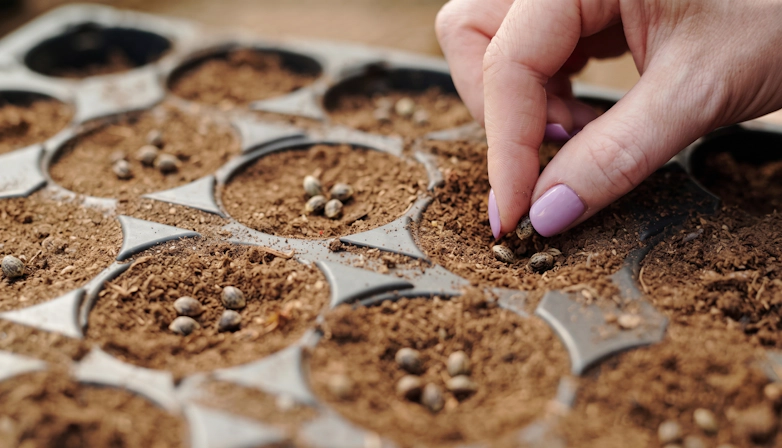
Seeds are the default starting point for most home growers. You can buy them regular (mix of male and female) or feminized (female-only). Though the industry has largely shifted toward feminized as the standard for anyone who doesn’t want to remove males midway.
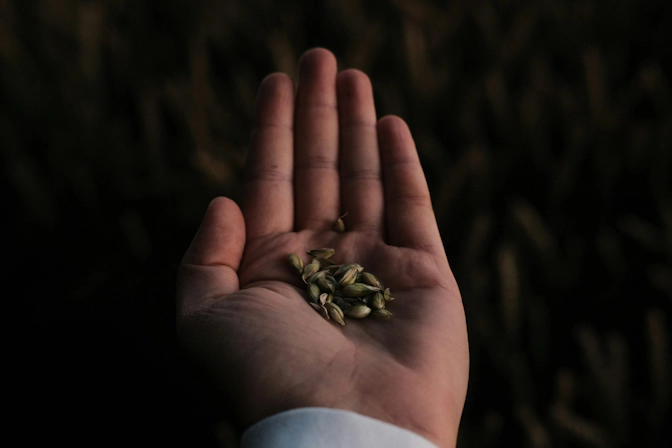
The case for seeds is strong. You get real genetic diversity, a proper taproot (which translates to a stronger plant overall), no inherited pest or pathogen baggage, and the ability to ship them pretty much anywhere. Seeds store well for years if you keep them cool and dark, which means you can build a stash and use it at your own pace. The seeds vs clones conversation almost always lands here for beginners and hobbyists—seeds are just more accessible.
The downside is variability. Even in a 10-pack of feminized seeds from a reputable breeder, individual plants can express meaningfully differently. One might be shorter and denser, another taller and airier, a third slightly more potent, all from the same pack.
This is normal, but if you’re trying to produce a consistent crop every time, it’s a factor. Germination rates also aren’t 100%, and you’re looking at a longer total cycle than you’d get with clones because you’re starting from day zero.
Feminized seeds solve the problem of male plants. They don’t solve phenotype variability. That’s the important nuance most beginners miss.
Practically speaking, for most home growers, growing from seed vs clone is the right move. Especially if you don’t have a reliable clone source or simply want to explore new genetics.
marc kleen
Here’s where the cannabis clones vs seeds conversation gets outdated.
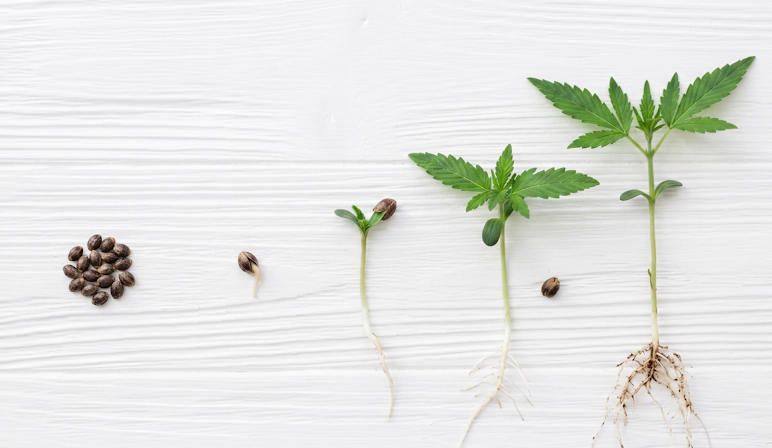
The term “F1″ is breeder shorthand for “first filial generation.” F1 hybrid cannabis seeds are the first-generation offspring of two highly stabilized, inbred parent lines. The important word there is stabilized. To produce true F1 hybrid seeds, a breeder has to spend years inbreeding two separate lines until each is genetically locked in.
That means you can predict exactly what traits each parent will pass down. Then you cross those two stabilized lines. What comes out the other side is something plant breeders have known for decades but have only recently begun sharing.
It’s called hybrid vigor. When you cross two genetically distinct, stable inbred lines, the first-generation offspring consistently outperform both parents across basically every metric—growth rate, yield, uniformity, and resilience.
Corn breeders figured this out in the 1920s. Tomato growers have been using it for generations. Personally, I only grow F1 cucumber seeds. Cannabis f1 genetics are the plant finally catching up.
So what does that mean in practice?
Compared to clones, cannabis F1 seeds skip the mother plant overhead entirely. You get a real taproot, zero pathogen inheritance, and a plant that often outperforms even your best cloned cut. No mother room eating up square footage, no HLVd (a virus that weakens cannabis plants) risk creeping in through a cutting.
Compared to regular or feminized seeds, the difference is uniformity. A pack of F1 hybrid cannabis seeds produces plants that grow at roughly the same rate, hit the same height, flower on the same schedule, and express nearly identical terpene and potency profiles.
The phenotype variability that makes feminized packs feel like a gamble? Dramatically reduced. You’re getting predictable, repeatable results across every seed.
There’s a caveat worth knowing. F1 hybrid seeds cost more per seed, and they’re a one-generation play. The offspring of an F1 (the F2 generation) won’t breed true. If you try to use F1 plants as mothers for cloning long-term or pull seeds from an F1 to grow next cycle, you lose the hybrid vigor.
That’s the whole point of cannabis F1—to deliver what the first generation does. And the first generation was designed to hit.
herb
Barney’s Farm was founded in 1986 by Derry Brett. What started as a small Amsterdam operation built on a love of genetics has since grown into a global breeding network spanning multiple continents and more than 40 Cannabis Cups.
That history matters because F1 hybridization is genuinely hard. Building the stabilized parent lines required to produce true F1 seeds takes years of careful inbreeding and selection — the kind of deep genetic work that can’t be rushed or faked. A newer seed brand simply doesn’t have the vault to pull it off at scale. Barney’s Farm does.
In April 2026, Barney’s Farm marked its 40th anniversary — and instead of just celebrating, they went back to where it all began. The milestone kicked off a phased return of some of the most popular strains in cannabis history. Northern Lights defined what indoor Indica growing could look like. Skunk #1 became a global standard for hybrid genetics that breeders still reference today. Afghan Hash lines gave the world some of the densest, most resinous plants ever grown. These weren’t just Barney’s Farm strains — they were strains that shaped the entire industry.
That same four decades of genetic depth is what powers the Precision F1 Hybrid Collection. Here’s a look at what’s currently available across their US catalog.
The flagship line. Seven F1 hybrid cannabis seeds engineered around Barney’s Farm’s decades of genetic work, each one delivering the consistency and vigor the Precision approach is built on.
Current Precision F1 releases include a spread that covers heavy Sativa, heavy Indica, and everything in between:
Lemon Cherry Gelato (with Backpack Boyz): A 60/40 Indica-leaning hybrid carrying a three-way cross of Sunset Sherbet, Girl Scout Cookies, and an undisclosed third cultivar. This one became a West Coast phenomenon before the Barney’s × Backpack Boyz partnership turned it into a seed anyone could grow. THC numbers climb up to 33%, and the nose is exactly what the name promises—lemon, cherry, creamy gelato finish.
Insane OG (with B-Real / Dr. Greenthumb): A kush-forward Indica-dominant hybrid crossing OG Kush, Bubba Kush, and Granddaddy Purple. Insane OG hits around 27% THC with a heavy gas profile and classic OG structure. B-Real’s Dr. Greenthumb brand has been in the cannabis space since the early 2000s, and this collab leans into exactly the kind of lineage his audience trusts. If you’re chasing that gassy, heavy body feel, this one’s built for it.
RS11 x Banana OG (with Doja Exclusive): An Indica-dominant hybrid that crosses RS11 (Rainbow Sherbet #11) with Banana OG, developed in partnership with California’s Doja Exclusive cultivators. THC lands in the 25–31% range, and the terpene profile layers grapefruit, banana, and subtle cherry. Indoor plants can hit 120–150 cm with yields up to 600g/m².
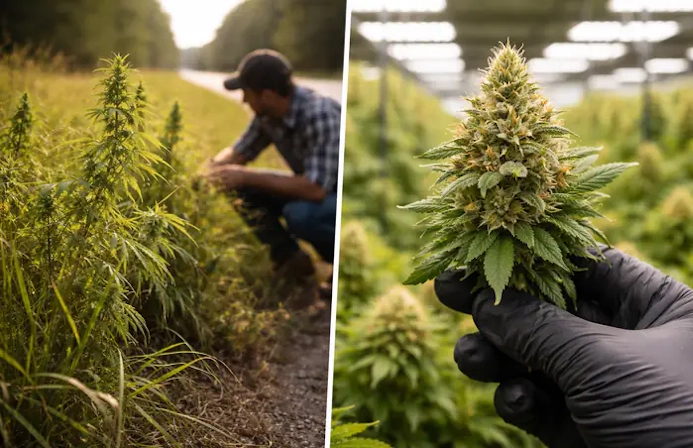
photo courtesy of Barney’s Farm
Northern Lights: One of the most important Indicas in cannabis history. Northern Lights helped define what indoor Indica cultivation looks like: short, bushy, fast-flowering, and nearly impossible to mess up. Barney’s Farm’s Northern Lights carries the stable genetics the strain is known for, which makes it a genuinely reliable pick for first-time growers or anyone who wants a low-maintenance grow.
White Widow XXL: The XXL designation tells you what you need to know. This is the iconic White Widow genetic line bred out for yield. The original White Widow put Dutch breeding on the map in the ’90s, and Barney’s Farm’s XXL version keeps the resin production and balanced hybrid effects while significantly boosting flower weight. Still relevant because it still hits.
Afghan Hash Plant: A nod to landrace genetics. Afghan Hash Plant is built on the kind of Indica heritage that gave the world hash itself. Dense, resinous, fast-flowering, and classically Indica in effect. This is the strain you want if you’re making your own hash or rosin, or if you just want a heavy-hitting nightcap plant. Barney’s Farm keeps the old-school character intact while bringing the stability modern growers expect.
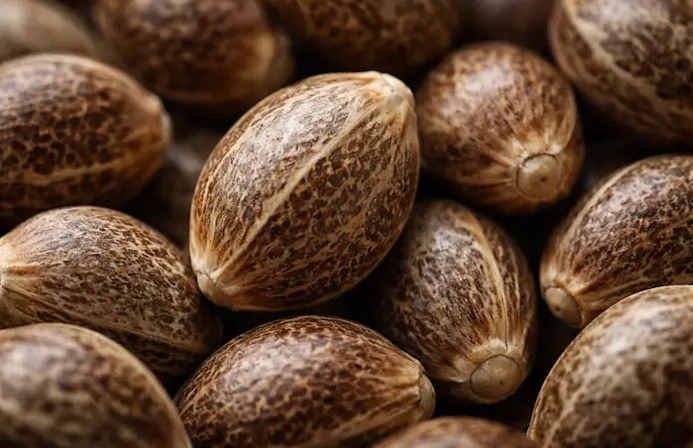
photo courtesy of Barney’s Farm
Choose Clones If:
Choose Feminized Seeds If:
Choose F1 Hybrids If:
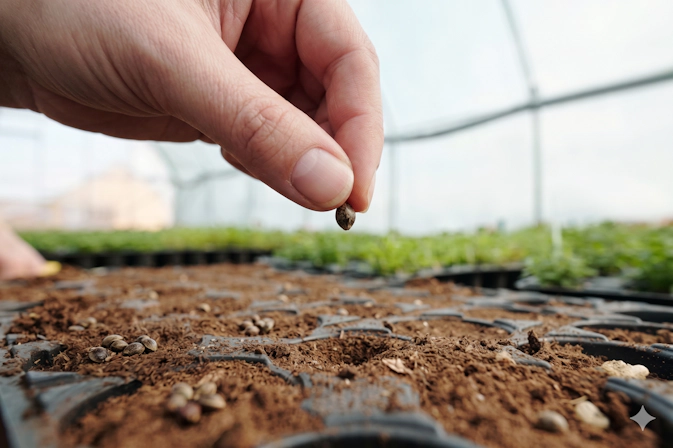
photo courtesy of Barney’s Farm
Clones are vegetative cuttings taken from a female mother plant. They’re genetic copies with a proven phenotype. Seeds are the plant’s natural reproductive output and produce new genetic individuals, with some phenotype variation even within a single pack. Clones offer consistency and speed once you have a proven cut. Seeds offer diversity, a fresh genetic start, and no inherited pest or pathogen risk.
F1 hybrid seeds are the first-generation offspring of two highly stabilized, inbred parent lines. The breeding process produces hybrid vigor: a phenomenon where first-generation offspring outperform both parents in growth rate, yield, uniformity, and resilience. In cannabis, F1 hybrids deliver more consistent plant-to-plant results than standard feminized seeds, with higher potency ceilings and faster growth.
For most serious growers, yes. F1 hybrid cannabis seeds produce more uniform plants with predictable yields, flowering times, and potency profiles compared to standard feminized seeds. You pay more per seed, but you get dramatically more consistent results across the run. The trade-off is that F1s aren’t designed for long-term cloning or seed-saving. The value is concentrated in that first generation.
It depends on your setup and goals. Seeds give you a fresh taproot, no inherited pests or pathogens, and access to genetics regardless of your state’s clone market. Clones give you a proven phenotype and a faster harvest cycle once you’ve got your mother plant dialed. Most home growers will get better results from seeds; most commercial operations with infrastructure lean toward clones.
Technically, yes, you can take cuttings from an F1 plant. But the whole design of F1 hybrid seeds is built around that first generation. Using F1 plants as mothers for a long-term clone program defeats much of the advantage, since you’re locking yourself into a single phenotype from a line engineered to deliver vigor across the whole generation. If you want repeatable F1 performance, the better move is to run F1 seeds fresh each cycle.
Barney’s Farm is one of the few breeders with the genetic infrastructure, stabilized parent lines, and track record to actually deliver on the F1 promise at scale. Their Precision F1 Hybrid collection is built on nearly 40 years of breeding work and represents the current benchmark for F1 cannabis genetics commercially available.
Clones deliver a known phenotype, guaranteed female plants, and a faster total cycle since you skip germination and the seedling stage. The advantages stack up for commercial growers and established indoor operations. The trade-offs, like mother plant infrastructure, pathogen inheritance risk, and limited state-by-state access, make clones a tougher call for home growers.
herb
For more than a decade, Herb has been a gathering place for people who love, use, and are simply curious about cannabis. What started as a small corner of the internet has grown into a community where millions come to learn, share, and stay connected to cannabis culture.
Here’s what you can tap into at Herb:
Stay connected with the Herb community by subscribing to our newsletter, following us on Instagram, and X for the latest in cannabis lifestyle and culture.