
Herb
Trichome Stages: How to Read Trichomes and Nail the Right Harvest Window
Your trichomes know exactly when to harvest. The seed-pack finish date is just a guess. Here's how to read the real signal.

Reading trichome stages is the single most reliable way to know exactly when to cut your cannabis down.
Forget the calendar. Forget the flowering time printed on the seed pack. Those are estimates. Your trichomes are the real-time truth.
Harvest too early, and your cannabinoids haven’t finished developing. The result is weak, harsh flower with a thin terpene profile. Harvest too late, and THC starts breaking down, dragging the effect toward heavy couch-lock and dulling the potency you waited months to build.
Trichomes are the only indicator that tells you what’s happening inside the plant right now. Not what should be happening on day 60. Learn to read them, and you control exactly what kind of high you harvest. Let’s break it down.
Key Takeaways

xrp relic
- Trichome stages are the most reliable harvest indicator available, more accurate than calendar days, breeder finish times, or pistil color.
- There are four trichome stages to read: clear (too early), cloudy (peak THC), amber (effect shifting toward relaxation and body weight), and deteriorating (overripe, harvest immediately).
- How to read trichomes correctly starts with identifying the right ones; only read capitate-stalked trichomes on the buds, never sugar leaves
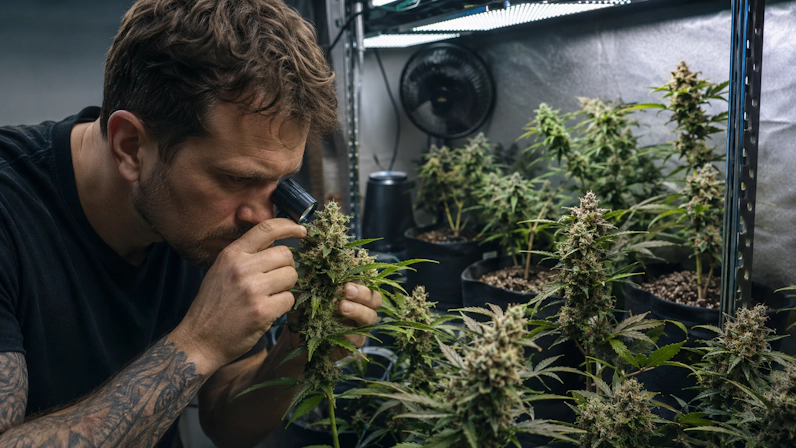
- You need at least 30x magnification to read trichomes accurately; a 100x digital or pocket microscope gives the clearest view.
- The right harvest point varies by cultivar and the effect you want.
- Start checking trichome stages daily from week 7 or 8 of flower, regardless of what the seed pack finish time claims.
First Things First: Make Sure You're Looking at the Right Trichomes

Herb
Before you read anything, make sure you’re looking at the right trichomes. There are three types on a cannabis plant, and checking the wrong ones will give you a false reading every time.
The three types of trichomes include:
- Capitate-stalked: the big, abundant, mushroom-shaped ones on your buds, packed with the most cannabinoids and terpenes.
- Capitate-sessile: smaller, low-profile heads sitting close to the surface of leaves and bracts.
- Bulbous: the tiniest ones, scattered across the plant in small numbers.
Capitate-stalked trichomes on the actual flower are your reference point. Do not read the trichomes on sugar leaves. They turn amber earlier than the ones on your buds, so they’ll trick you into harvesting before it’s ready.
So, what magnification to see trichomes on weed do you actually need? A 30x to 60x jeweler’s loupe is the bare minimum. A 100x or higher digital or pocket microscope gives you the clearest read and takes the guesswork out. Your naked eye won’t cut it.
The 4 Trichome Stages and What They Tell You About Your Weed
Trichomes move through four trichome stages in order: clear, cloudy, amber, and then deteriorating. Each one tells you something specific about the cannabinoids inside. This trichome changes chart breaks down what each stage means before we dig into the details.
| Trichome Stage | Appearance | Cannabinoid Status | THC Level | Harvest Signal |
|---|---|---|---|---|
Clear | Transparent, glass-like | Cannabinoids are still being produced | Low | Too early, do not harvest |
Cloudy/Milky | White, opaque | THC at or near peak | Peak THC | Harvest window opening; cerebral, energetic effect |
Amber | Yellow to orange-brown | THC degrading to CBN | Declining THC, rising CBN | Harvest window closing; heavier, more sedated effect |
Deteriorating | Dark, shriveled, collapsed heads | Cannabinoid degradation advanced | Significantly reduced | Overripe; harvest immediately or quality loss accelerates |
A quick note on pistil color before we get into stages.
Pistils are the orange and red hairs on your buds, and are the harvest indicator most new growers learn first. The rough rule is that when 70 to 90% of pistils have darkened and curled inward, you’re approaching the harvest window. It’s a useful early signal, and it’s visible without any magnification.
The problem is pistil color tells you about the plant’s reproductive stage, not its cannabinoid development. Stress, heat, pests, and even a light breeze can darken pistils early without any corresponding change in trichome maturity. A plant can show 80% red pistils while trichomes are still mostly clear.
Use pistil color as a prompt to start checking trichomes, not as a harvest decision on its own. When pistils are mostly darkened and curled, pick up the loupe. The trichomes will tell you whether it’s actually time.
Below are the four trichome color stages that help guide weed harvest timing:
Stage 1: Clear Trichomes
Clear trichomes mean cannabinoid production isn’t finished. Do not harvest.
Under magnification, the head and stalk look transparent and glass-like, with no cloudiness at all. The plant is still actively building THC and terpenes.
Cut now, and you waste the grow. You’ll get underpotent flower with an underdeveloped flavor, because you pulled the plug before the chemistry finished. Be patient here.
Stage 2: Cloudy, Milky Trichomes
Cloudy or milky trichomes mean THC is at or near its peak. The harvest window is opening.
The heads turn opaque white, fully filled, with no transparency left. This is the look most growers are chasing. When you see mostly milky trichomes, the plant has loaded up on THC and the racy, sharp high is at its strongest.
The effect at this stage leans cerebral, energetic, and uplifting, with lower CBN. If you want peak THC and an active head high, aim for 70 to 90% cloudy trichomes with barely any amber. That’s the target.
Stage 3: Amber Trichomes
Amber trichomes mean THC is oxidizing. The harvest window is closing.
The heads shift from white to a yellow or orange-brown color. As THC degrades, some of it converts to CBN. CBN gets blamed for the heavier, sleepier feel of late-harvested flower. Though the science on exactly how sedating CBN is on its own is still thin. What’s not in question is the overall shift: less sharp head high, and more physical weight.
Amber ratio is where you fine-tune the effect:
- 10 to 20% amber: balanced THC and CBN, a moderate body effect with a clear cerebral side.
- 30 to 50% amber: a pronounced body effect, the go-to for sleep or pain relief.
- 50%+ amber: heavily relaxing and, depending on the cultivar, creeping toward overripe.
A mix of cloudy and amber, what a lot of growers call mixed trichomes, is the sweet spot for most people. And again, sugar leaf trichomes amber faster than bud trichomes, so read the buds.
An important note here is that environmental stress can prematurely turn trichomes amber without the corresponding cannabinoid shift you’d expect from natural ripening. The most common culprits are:
- Temperature spikes above 80°F in the grow space, particularly during lights-on periods, accelerate trichome degradation rather than natural ripening.
- Light leaks during the dark cycle disrupt the plant’s photoperiod and can trigger stress responses that show up as early or uneven ambering.
- Low humidity combined with high heat in late flower dries out trichome heads faster than the cannabinoids inside them have matured.
- Physical agitation from heavy-handed defoliation or repeated handling of buds can collapse trichome heads and create a false amber reading.
Stress-induced amber looks the same under a loupe as natural amber, which is why environmental control matters as much as observation.
If you’re seeing amber earlier than expected for your cultivar, check your temperature, light seal, and humidity before concluding the plant is ready. A stable late-flower environment that’s kept at 65 to 78°F, with humidity below 50% and zero light leaks, can help keep your trichome readings accurate and your harvest window honest.
Stage 4: Deteriorating Trichomes
Deteriorating trichomes mean you’ve blown past the optimal window.
The heads turn dark brown to nearly black and look collapsed or shriveled. Cannabinoid degradation is well underway, and potency is dropping.
Harvest immediately. Every extra day now speeds up the quality loss. Heat, light stress, swinging humidity, and waiting too long all push trichomes into this stage faster. So if you see it, don’t wait.
When Are Trichomes Officially Ready for Harvest?

Herb
There’s no universal answer to when are trichomes ready. Trichome stages help give context into the cannabinoid development in the cannabis plant. The correct harvest window depends on the cultivar, the cannabinoid profile you want, and your own preference. Two growers reading the same plant can both be right and harvest on different days.
Trichome color is a directional signal, not a precise timer. The same amber reading on two different cultivars can represent two different chemical realities. Use it to steer, not as a stopwatch. Here’s the decision framework by goal:
| Grower Goal | Target Trichome Stage Reading |
|---|---|
Peak THC, energetic and cerebral high | 70 to 90% cloudy, under 10% amber |
Balanced head and body effect | Mostly cloudy with 10 to 20% amber |
Relaxing, for sleep or pain relief | 30 to 50% amber |
Maximum sedation (cultivar dependent) | 50%+ amber, near overripe |
One more variable: indica-dominant cultivars usually develop amber faster than sativa-dominant ones at the same point in flower. So a fast-ambering plant isn’t always further along, it might just be built that way.
The practical move is simple. Start monitoring your trichomes daily from week 7 or 8 of flower, regardless of the finishing time on the label. The window can open fast, and missing it is how good flower turns sedative.
How to Make Trichomes Mature Faster

Herb
You can’t dramatically speed up trichome development. Genetics set the ceiling. What you can do is dial in your late-flower environment so trichomes develop fully and don’t degrade early. So if you’re searching how to make trichomes mature faster, the real answer is supporting healthy ripening, not rushing it
You can help trichomes mature faster with the following tips:
- Light intensity and spectrum: strong, consistent light in late flower supports resin production.
- Temperature management: slightly cooler nights late in flower can encourage trichome and color development.
- Humidity reduction: lowering humidity in late flower protects resin and reduces the risk of mold.
- Final feeding and flushing: easing off nutrients near the end keeps the finish clean.
- Pre-harvest darkness: 24 to 48 hours in the dark before cutting is a common finishing step that many growers swear by.
- Light stress techniques: mild, careful stress can nudge resin output, but overdoing it backfires.
Phosphorus and potassium support resin production inside a balanced feeding program. That’s it. Healthy plant, dialed conditions, right harvest day. That’s the whole game.

avery meeker
Frequently Asked Questions
What are trichomes?
Trichomes are the tiny, frosty, mushroom-shaped glands coating cannabis buds. They produce and hold the plant’s cannabinoids and terpenes, which means they hold the THC, the flavor, and the effect. The capitate-stalked ones on your flowers are the largest and most potent, and they’re what you read to time your harvest.
What color should trichomes be at harvest?
It depends on the effect you want. For a peak-THC, energetic high, harvest when trichomes are mostly cloudy white with little to no amber. For a more relaxing, body-heavy effect, wait until 30 to 50% have turned amber. There’s no single correct color, just the one that matches your goal.
How can you increase trichomes before harvest?
Optimize your late-flower environment. Strong light, cooler nights, lower humidity, and a balanced feed with enough phosphorus and potassium. These support full resin development. Just know genetics cap how frosty a plant can get, so no technique turns a low-resin cultivar into a snowstorm.
What do trichomes look like when ready to harvest?
What do mature trichomes look like? Ready trichomes have plump, opaque, milky-white heads, often with some shifting to amber depending on your target. The heads should look full and swollen, not transparent and not yet dark or collapsed. Clear heads mean wait; dark, shriveled heads mean you waited too long.
How long do trichomes take to go from clear to milky?
Usually one to two weeks, though it varies by cultivar and conditions. This is the stretch where the plant finishes loading up on THC, so it’s worth checking daily once you spot the shift starting. Rushing it costs you potency.
How long do trichomes take to go from milky to amber?
Generally another one to two weeks after they turn fully cloudy, but again it’s cultivar-dependent. Indica-leaning plants tend to amber faster. Daily checks matter most in this window, since the effect profile changes quickly once amber starts appearing.
Do all trichomes turn amber?
No, and they won’t all turn at once. You’ll always see a mix, which is why growers harvest based on a percentage rather than waiting for every head to change. Some sugar-leaf trichomes amber well before the bud trichomes, so judge by the flower.
What magnification do you need to see trichomes on weed?
A 30x to 60x jeweler’s loupe is the minimum to read trichomes properly. A 100x or higher digital or pocket microscope gives the clearest view. Your naked eye can spot frost but can’t tell clear from cloudy from amber, which is the entire point of checking.
Do trichomes continue to ripen after harvest?
Not in any meaningful way. Do trichomes mature after harvest? Once you cut the plant, ripening essentially stops, because the living processes driving it are gone. Drying and curing change the flavor and smoothness, but they won’t push clear trichomes to cloudy. Harvest at the stage you actually want.
The Bottom Line: Stages of Trichomes and How to Read Trichomes
herb
The color of your capitate-stalked trichomes is the most accurate harvest indicator you have. It’s more reliable than a calendar, a breeder’s finish time, or pistil color. Learning how to read trichomes is the difference between flower you settled for and flower you aimed at.
Here’s a quick recap of the stages of trichomes:
- Clear means too early
- Cloudy means peak THC
- Amber means the effect is shifting toward relaxation
- Dark means overripe
Those four different stages of trichomes are your whole roadmap.
Remember that the right reading depends on the high you’re after. There’s no single correct answer, just the one that fits your goal. So start checking daily from week 7 of flower. Focus on the capitate-stalked trichomes on your buds, and use at least 30x magnification. Do that, and you’ll never guess at a harvest date again.
Herb Recommended Products:
READ MORE