Marco Vasquez
How to Buy Weed in Honduras: Laws, Penalties & 2026 Guide
Cannabis is fully illegal in Honduras with no dispensaries, no medical program, and no decriminalized threshold. Here is the complete picture before you arrive.

You cannot legally buy weed in Honduras in 2026. Cannabis is fully illegal for possession, sale, cultivation, and transportation: there are no dispensaries, no medical program, and no decriminalized personal-use threshold anywhere in the country. For travelers and consumers, Honduras has no legal pathway to buy cannabis: no dispensaries, no recreational market, and no recognized medical-marijuana access for visitors.
The gap between these strict statutes and inconsistent street-level enforcement is what creates confusion for backpackers. That gray area is exactly what this guide unpacks.
Honduras draws backpackers with its Mayan ruins, Caribbean islands, and some of the most affordable travel in Central America. For cannabis enthusiasts planning the trip, understanding how to buy weed in Honduras means understanding why there is no legal path, and why the informal gray area is not the safety net it appears to be. Whether you are passing through Tegucigalpa on a multi-country route, spending a week on Roatán’s reefs, or hiking toward Copán’s ancient temples, the cannabis question in Honduras requires more nuance than a simple yes or no.
This guide covers the law as written, how enforcement actually plays out across different cities and regions, how Honduras compares to every one of its Central American neighbors, what the U.S. State Department warns, and what harm reduction looks like for travelers who want accurate information before they go.
Herb does not encourage cannabis purchase in jurisdictions where it is illegal.
Key Takeaways

HECTOR EMILIO GONZALEZ
- Cannabis is fully illegal in Honduras in 2026: no medical program, no decriminalization, no legal dispensaries of any kind.
- First-time possession of a minimal amount considered for immediate personal use can result in internment for up to 30 days and a fine of 500 to 1,000 lempiras (roughly $20 to $40 USD). Possession above the amount considered for immediate personal use may be treated as trafficking, which carries 15 to 20 years of imprisonment and a fine of 1 to 5 million lempiras.
- Foreign nationals should not expect leniency. Honduran law includes a specific provision for foreign citizens caught under the personal-use possession article: a 5,000 to 10,000 lempira fine and expulsion from Honduran territory. The U.S. State Department also warns that travelers found with any amount of marijuana may face criminal prosecution for possession or trafficking.
- Honduras does not appear to provide a clear traveler-facing hemp or CBD exemption. Because Honduran law defines marijuana and THC broadly, travelers should avoid bringing CBD, hemp, vape, edible, or cannabis-derived products into Honduras.
- Belize and Costa Rica offer significantly more permissive legal environments for cannabis travelers in Central America.
- In 2023, Honduran forces reportedly confiscated 107.7 tons of marijuana, underscoring the country’s active anti-drug enforcement posture.
Honduras Cannabis Quick Reference

zaca photo
| Category | Details |
|---|---|
Legal Status | Fully illegal: no medical program, no decriminalization |
Personal Possession (1st offense) | Internment up to 30 days + 500 to 1,000 lempiras fine |
Foreign National Possession | 5,000 to 10,000 lempiras fine + expulsion |
Trafficking (excess quantities) | 15 to 20 years prison + up to 5,000,000 lempiras fine |
CBD / Hemp | No traveler-facing exemption; treat as prohibited |
Dispensaries | None |
Personal-Use Threshold Defined | No fixed gram threshold; determined by official legal-medical assessment |
Best Legal Alternative | Belize (decriminalized up to 10g) or Costa Rica (medical legal) |
Reform Outlook | No confirmed active legislation as of 2026 |
Why Travelers Research Honduras Cannabis Laws
Honduras gets added to backpacker itineraries for legitimate reasons: Copán Ruinas is one of the most significant archaeological sites in the Americas, the Bay Islands are among the most affordable dive destinations in the Caribbean, and overland routes through Central America almost always pass through Honduras at some point.
For cannabis enthusiasts on those routes, the confusion usually comes from a few specific sources. The Bay Islands have a Caribbean energy that feels culturally closer to Jamaica than to the interior of the country, and informal cannabis activity in the island nightlife scene is documented in travel accounts. Belize, which shares Caribbean coast geography and strong cultural connections to the region, decriminalized personal possession of up to 10 grams in 2017. And travel forums carry enough anecdotal stories about Honduras’s enforcement gray area that the country starts to sound more accessible than the law actually suggests.
The accurate picture requires holding both things at once: the law is strict, enforcement is uneven, and the combination creates unpredictable risk for travelers who treat the gray area as a reliable safety net.
Is Weed Legal in Honduras in 2026?
The direct answer: cannabis is fully illegal in Honduras for possession, sale, cultivation, and transportation, with no medical framework and no decriminalization in place as of 2026. For travelers and consumers, Honduras has no legal pathway to buy cannabis: no dispensaries, no recreational market, and no recognized medical-marijuana access for visitors.
Honduras has not followed the reform movement that has touched several of its neighbors. While Belize decriminalized personal possession in 2017 and Costa Rica legalized medical cannabis in 2022, Honduras maintains strict prohibition across all categories of use. There is no medical cannabis program, no hemp regulatory framework with practical enforcement distinctions, and no formal tolerance policy for personal consumption.
This matters practically: there is no legal way to obtain cannabis anywhere in Honduras. There are no dispensaries, no licensed delivery services, and no officially tolerated social consumption spaces.
The country’s strict prohibition is rooted in its broader anti-narcotics posture. Honduras sits at a critical juncture in Central American drug trafficking routes, and its government has historically taken a firm public stance on any drug-related activity. In 2023, Honduran security forces reportedly confiscated 107.7 tons of marijuana, underscoring the country’s active anti-drug enforcement posture. By 2024, drug-related raids had increased dramatically, with coca-related operations jumping from 29 to 81 in a single year.
The legal designation is unambiguous. Honduras classifies cannabis under its narcotics legislation alongside harder substances, without any differentiated framework for low-THC products, medical use, or research. Honduras has no medical cannabis program, no hemp regulations, and no decriminalized personal-use threshold as of 2026. Travelers arrive in a country with no legal path to cannabis of any kind.
If you are researching how to buy weed in Honduras because you expect a gray-area approach similar to what you found in other Latin American countries, understand that Honduras requires a meaningfully different level of caution.
Honduras Cannabis Penalties: What the Law Actually Says
honduras police
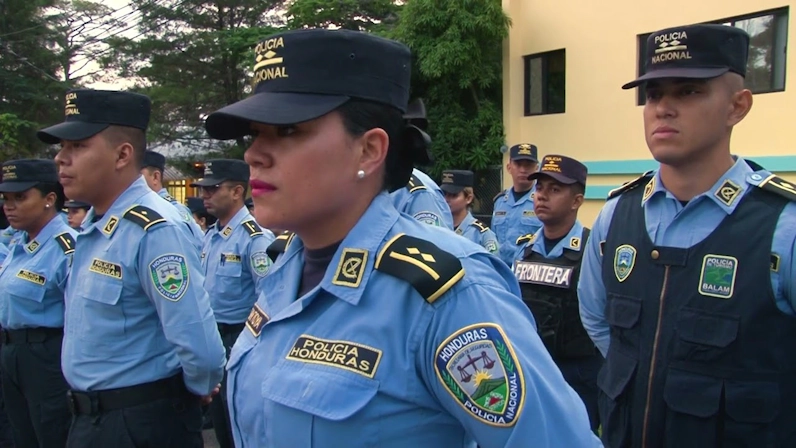
Honduras drug law sets tiered penalties based on quantity and prior offenses. Even minor possession is a criminal offense, not a civil one.
First-Time Possession
For individuals caught with small quantities considered consistent with personal use, first-time possession of a minimal amount considered for immediate personal use can result in internment for up to 30 days and a fine of 500 to 1,000 lempiras (approximately $20 to $40 USD). The law also gives authorities the option to require rehabilitation treatment for individuals identified as cannabis-dependent, treating possession as both a criminal and a public health matter, though the criminal element does not disappear.
Repeat Offenses
A second offense results in 30 to 90 days imprisonment and fines between 1,000 and 5,000 lempiras (approximately $40 to $200 USD). The escalation is significant: what might feel like a minor encounter the first time becomes a substantially more serious legal matter on a second contact with law enforcement.
Drug Trafficking
This is where Honduras drug law becomes severe by any international standard. Possession of quantities beyond what authorities deem personal use may be treated as trafficking, which carries 15 to 20 years of imprisonment and a fine of 1 to 5 million lempiras (roughly $40,000 to $205,000 USD). Honduras prisons are documented as overcrowded and harsh by international human rights organizations.
Honduran law does not set a fixed gram threshold for personal use. Whether a quantity is treated as “minimum” for immediate personal consumption depends on official legal-medical assessment and the authorities handling the case, leaving travelers without a clear bright-line protection.
Foreign Nationals
Foreign nationals should not expect leniency. Honduran law includes a specific provision for foreign citizens caught under the personal-use possession article: a 5,000 to 10,000 lempira fine and expulsion from Honduran territory. This is different from the 500 to 1,000 lempira first-time fine described for nationals. The U.S. State Department also warns that travelers found with any amount of marijuana may face criminal prosecution for possession or trafficking.
The Enforcement Gray Area

carli jeen
Enforcement of cannabis laws in Honduras is inconsistent, officer-dependent, and shaped significantly by context. But inconsistency is not the same as safety.
The gap between written law and street-level enforcement is real. Multiple travel accounts and community forums describe encounters where possession of small amounts resulted in nothing more than a brief police interaction and, in some cases, an unofficial payment. Local attitudes toward cannabis in some areas, particularly coastal resort towns, are more tolerant than the law suggests. Cannabis is present in informal nightlife scenes in several Honduran cities and on the Bay Islands.
What makes this gray area genuinely dangerous is its unpredictability. The outcome of a cannabis encounter in Honduras depends on:
- Which officer responds to the situation
- Where the encounter takes place (tourist area vs. residential neighborhood vs. near a government building)
- The quantity and form you are found with (flower vs. cartridge vs. edibles)
- Whether you are perceived as a tourist with resources or someone to make a formal example of
- Local political and enforcement climate at that specific moment
- Whether there is any suggestion of connection to distribution or trafficking
The advice that circulates consistently in backpacker communities about Honduras is this: never use cannabis publicly, never buy from strangers in tourist areas (particularly beaches), and understand that a neutral outcome in one encounter predicts nothing about the next. The gray area exists, but it is not a framework that offers travelers any reliable protection. For how cannabis enforcement compares across every country, Herb’s global weed laws guide provides the full picture.
Cannabis Pricing and Quality in Honduras

alisa matthews
For travelers who encounter cannabis in Honduras, pricing varies significantly by location and source. Street-level cannabis is among the cheapest in Central America, a direct reflection of Honduras’s position in regional trafficking corridors.
- Per gram: Under $1 USD at local rates
- Per ounce: 100 to 300 lempiras (approximately $4 to $12 USD) locally; tourists typically quoted substantially more
- Quality: Generally poor at the tourist-facing market; high-grade product is inaccessible to short-term visitors without established local contacts
The wide gap between local and tourist pricing reflects both quality differences and the exploitation risk travelers face. Tourists are often quoted significantly higher prices and typically receive lower-quality product. Better-quality varieties such as Afghani and Amnesia Haze exist in local networks but are inaccessible to short-term travelers.
Cannabis by Region in Honduras

edgard josue
The experience of cannabis presence and enforcement differs meaningfully across Honduras, and where you are traveling shapes the risk picture in practical ways.
Tegucigalpa
The capital city operates under tighter general enforcement than tourist-oriented areas. Cannabis is present in some social circles in Tegucigalpa, but the public and political environment is more conservative than on the coasts. Street purchases in the capital carry higher risk due to greater police presence, and the social environment provides less informal protection for cannabis activity than in leisure-oriented towns.
San Pedro Sula
Honduras’s industrial and commercial center has a crime environment that shapes how law enforcement operates differently than in leisure destinations. The risk profile for travelers attempting to find cannabis here is high and the social context for navigating it is limited.
Roatán and Utila
The Bay Islands are Honduras’s premier tourist destinations, and cannabis presence here is higher than in the interior, reflecting the broader Caribbean backpacker culture. Travelers should be especially cautious in Roatán and Utila. The Bay Islands are more heavily policed than some areas, and official U.S. guidance warns that any amount of marijuana can lead to prosecution in Honduras. The combination of tourist presence, informal tolerance signals, and active law enforcement creates an unusually unstable risk environment.
La Ceiba
La Ceiba, the gateway to the Bay Islands and home to a distinctive Garifuna coast culture, has a more relaxed nightlife energy than the capital. But formal enforcement risk remains real and unpredictable here as elsewhere in the country, and the relaxed atmosphere should not be read as legal tolerance.
Copán Ruinas
The archaeological zone near the Guatemalan border is a popular stop for travelers doing the Central America overland circuit. The proximity to the Guatemalan border adds a specific risk for anyone traveling the overland route: crossing into Honduras from Guatemala with any cannabis products is a serious criminal exposure on both sides of the border.
Honduras vs. Its Central American Neighbors

mario von rotz
Honduras is the most restrictive cannabis destination in Central America for tourists. Belize and Costa Rica are the only countries with formal legal or decriminalized frameworks.
More permissive frameworks:
| Country | Legal Status | Notes for Travelers |
|---|---|---|
Belize | Decriminalized up to 10g on private property | Most accessible; decriminalized since 2017; cannabis sales and trafficking remain illegal |
Costa Rica | Medical and therapeutic cannabis legal | Legal framework for medical and therapeutic cannabis and industrial hemp exists; recreational sales remain illegal; lower-risk than Honduras |
Strict prohibition countries:
| Country | Legal Status | Notes for Travelers |
|---|---|---|
Honduras | Fully illegal | No medical or decrim framework; undefined personal-use threshold |
Guatemala | Illegal | Strict prosecutorial practices; 4 months to 5 years for personal use |
El Salvador | Illegal | Strict anti-narcotics approach |
Nicaragua | Illegal | Strict prohibition, limited tourism context |
Panama | Illegal | Well-resourced police; active border enforcement |
In this spectrum, Honduras and Guatemala are the two hardest countries for cannabis tourists. Belize and Costa Rica are clearly the best options for cannabis travelers in Central America.
For travelers doing the full Central America circuit, this comparison has real itinerary implications. A traveler who plans to consume cannabis should route that activity through Belize or Costa Rica rather than Honduras. Trying to carry cannabis from a legal or tolerated environment in one country into Honduras is a serious mistake.
U.S. State Department Travel Warnings

hector emilio gonzalez
The U.S. State Department’s Honduras country information page is direct: any amount of marijuana found on a traveler will result in criminal prosecution for possession or, in some cases, trafficking. This includes vape cartridges, edibles, and organic cannabis. There are no exceptions for processed or discreet cannabis forms.
This matters because many travelers assume that processed or discreet cannabis products carry lower legal risk than visible flower. Honduran law and enforcement do not make this distinction.
The State Department also notes that Honduras prison conditions are a serious concern for anyone who becomes subject to the country’s criminal justice system. Facilities are described as severely overcrowded, and pretrial detention can extend for months even on minor charges. The broader Honduras travel advisory is currently rated Level 3: Reconsider Travel due to crime. Drug enforcement is separate from and on top of that general risk.
Airports, Borders, and Cross-Country Risk
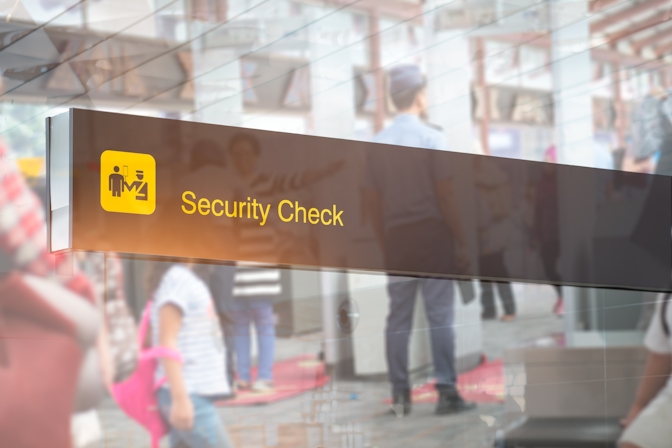
Photo by Thaspol / Adobe Stock Photo
The risk calculus changes sharply at airports and land border crossings, and travelers on overland routes through Central America need to plan specifically for this.
Possession at airports or land borders is especially risky because travelers may face customs, possession, or trafficking scrutiny. The U.S. State Department warns that any amount of marijuana, including vape cartridges and edibles, may lead to criminal prosecution in Honduras. Toncontín Airport (Tegucigalpa) and Ramón Villeda Morales (San Pedro Sula) both use drug detection.
Land border crossings present their own specific risks. The Honduras-Guatemala crossing at Agua Caliente and the Honduras-Nicaragua crossing at Las Manos are both active transit points with drug interdiction as a documented enforcement priority. Travelers doing the Central America backpacker circuit who have accessed cannabis legally in Belize or with practical tolerance in Costa Rica earlier in their trip need to account for this explicitly before approaching any Honduran border crossing.
Honduran border officials are not bound by the legal frameworks of adjacent countries. Cannabis that was legally purchased and legally carried in Belize is an illegal substance the moment it enters Honduras. For a broader picture of how cannabis enforcement works at international checkpoints, Herb’s cannabis travel guide covers risk patterns across different crossing types.
CBD and Hemp Products in Honduras

herb
Honduras does not appear to provide a clear traveler-facing hemp or CBD exemption or THC threshold comparable to jurisdictions that distinguish hemp from marijuana. Because Honduran law defines marijuana and THC broadly, and because the U.S. State Department warns that cannabis products can trigger criminal prosecution, travelers should avoid bringing CBD, hemp, vape, edible, or cannabis-derived products into Honduras unless they have verified legality with Honduran authorities.
Honduras has no hemp licensing program and no law that defines hemp by THC content. Without that framework, CBD products fall into a legal gray zone. Practically, CBD products are not widely available through mainstream retail channels in Honduras, and the legal standing of imported products is not formally established.
Travelers who rely on CBD for wellness reasons should plan accordingly and investigate whether products present any practical risk before bringing anything across a border.
A Brief History of Cannabis in Honduran Culture

d fotografia honduras
Honduras has been a significant transit country for cannabis and other narcotics moving through Central America for decades. This transit role shaped Honduras’s drug laws. Cannabis prohibition here is about stopping trafficking, not managing personal use. The country built its anti-drug framework with U.S. support, mainly in the 1980s and 1990s, and that enforcement-first approach has not changed.
Indigenous and rural communities in Honduras, particularly in the Olancho and Colón departments, have some history of cannabis cultivation. These communities operate without any legal framework and face the same enforcement exposure as anyone else under Honduran drug statutes.
The Garifuna culture along the Caribbean coast, with roots in the broader Afro-Caribbean cultural tradition, has historically had some relationship with cannabis as part of Caribbean social practices. Public discussion of cannabis reform has been limited compared to the regional conversation, reflecting both the legal environment and the influence of conservative religious and social institutions.
What Cannabis Reform Could Look Like for Honduras

herb
As of this review, Herb found no reliable evidence that Honduras has enacted medical cannabis, hemp, or decriminalization reform. Past proposals have been discussed publicly, including a 2019 bill to regulate medical cannabis cultivation that achieved initial legislative momentum but never received presidential signature, but travelers should plan around current prohibition unless official law changes.
Regional and international pressure is building, however. The Organization of American States has repeatedly called on member states to consider decriminalization approaches informed by public health evidence. Costa Rica’s successful medical cannabis program has provided a practical regional model. As the regional landscape shifts and more cannabis-friendly destinations capture a larger share of the backpacker and lifestyle tourism market, there may be economic arguments that reach Honduran policymakers.
For 2026 travel planning, however, the situation is clear: Honduras is a strict prohibition jurisdiction with no near-term reform visible. Herb’s cannabis legalization news tracks law changes across the region as they happen.
Harm Reduction: What Not to Do in Honduras

hector emilio gonzalez
The top harm reduction rule in Honduras: do not buy cannabis in tourist areas. The following guidance is practical information for travelers who want accurate risk data, not an endorsement of cannabis use in Honduras.
- Do not buy on beaches or in tourist nightlife areas. Travelers should be especially cautious in Roatán and Utila. The Bay Islands are more heavily policed than some areas, and official U.S. guidance warns that any amount of marijuana can lead to prosecution. The informal tolerance signals in tourist environments are real; the enforcement beneath them is equally real.
- Never use cannabis in public spaces. Honduras treats cannabis use with strong social stigma. Unlike many Latin American countries where discreet public use is common, here it draws attention quickly.
- Understand that small quantities are still criminal. There is no decriminalized threshold in Honduras. Whether you are cited under personal use statutes or trafficking statutes rests with the officer and prosecutor, not with you.
- Never cross any border with cannabis products. Flower, concentrates, edibles, and cartridges all carry the same legal exposure. Legal or tolerated status in Costa Rica or Belize provides zero protection at any Honduran border crossing.
- Keep a low profile in all situations. Cannabis activity that might be invisible in a tolerant environment will attract attention in Honduras.
If You Are Detained for Cannabis in Honduras
- Stay calm. Do not attempt to flee or argue. Aggressive responses escalate encounters quickly, and Honduran law enforcement has wide discretion in determining how to proceed.
- Invoke your right to consular assistance. If you are a foreign national, you are entitled to contact your home country’s embassy or consulate under the Vienna Convention on Consular Relations. Honduran authorities are required to honor this request.
- Do not sign documents you do not understand. Informal arrangements may seem like an easier path, but agreeing to unofficial payments or signing documents in Spanish without full understanding can create additional legal exposure.
- Consider travel insurance with legal coverage. Some comprehensive international travel insurance policies include legal expense coverage. Review your policy before departure and save your insurer’s emergency number with your embassy contact.
Final Verdict

hector emilio gonzalez
The direct answer to how to buy weed in Honduras is: you cannot do so legally, and the gray area offers no reliable protection. Based on our evaluation of cannabis enforcement across all seven Central American countries, Honduras ranks last for cannabis-accessible tourism. It combines undefined personal-use thresholds, trafficking sentences of 15 to 20 years that can be triggered at officer discretion, and active enforcement in tourist areas.
For travelers building a multi-country Central America route, the destination choice matters more than any other variable.
- Belize is the best destination in Central America for cannabis travelers. Possession of up to 10 grams on private premises has been decriminalized since 2017, though cannabis sales and trafficking remain illegal. The backpacker scene on the cayes and in San Ignacio reflects that legal reality, and the risk profile is the lowest in the region.
- Costa Rica has a legal framework for medical and therapeutic cannabis and industrial hemp, but recreational cannabis sales remain illegal. It is still a lower-risk destination than Honduras, and travelers should not treat it as a legal recreational market.
- For Honduras specifically: the extraordinary natural and cultural experiences at Copán, the Bay Islands, and the Caribbean coast are genuinely worth the visit. Most travelers find the country’s experiences are better and safer without the unpredictable legal risk that cannabis adds.
If your itinerary has flexibility, sequencing cannabis-accessible experiences through Belize or Costa Rica and then traveling through Honduras cannabis-free is the approach that best protects both your trip and your legal standing.
For destination-by-destination coverage of cannabis-friendly travel across Central America and beyond, read the full guide on Herb’s cannabis travel hub.
Herb Recommended Products:
READ MORE