How to Buy Weed in Panama City Beach: Florida’s Spring Break Rules and Medical-Only Market
Panama City Beach sits inside Florida's strict medical-only cannabis market, with harsh penalties for tourists and no legal recreational pathway for a typical spring break trip.
Planning a trip to Panama City Beach and wondering about cannabis access? Here’s the reality check you need: Florida operates a medical-only marijuana market with zero recreational sales permitted anywhere in the state. Whether you are a spring breaker, seasonal resident, or vacationer, understanding these laws before you arrive could save you from serious legal consequences. This guide covers everything from finding dispensaries to qualifying for a Florida medical marijuana card and the penalties that await those who try to work around the system.
Important: This article is for informational purposes only; not legal or medical advice. For adults 21+. Cannabinoid legality varies by state, and the federal hemp definition narrows in late 2026—verify your state’s laws before buying any cannabinoid products. Featured products are not FDA-evaluated and are not intended to diagnose, treat, cure, or prevent any disease.
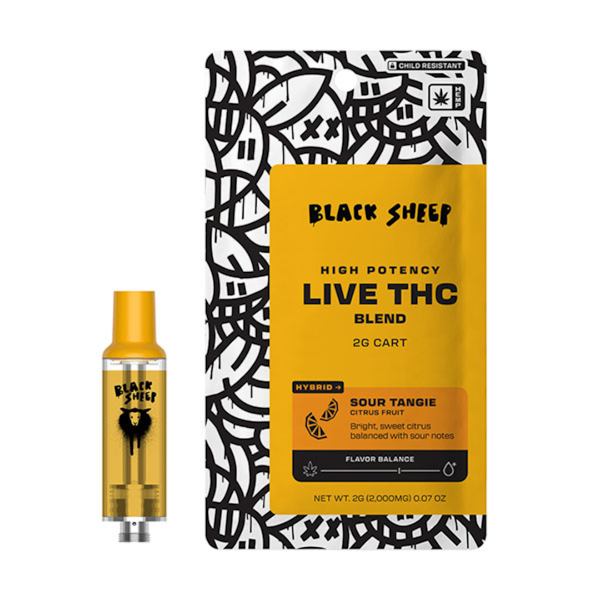
Florida keeps weed medical-only, but hemp-derived products fall under separate rules. Shoppers outside the medical program often look at carts like this one. The Black Sheep High Potency Cartridge packs 2 grams of a delta-8, THC-P, CBDA, and delta-9 blend into a 510-thread cart that fits most standard batteries.
Strains range from Pineapple Haze to Sour Tangie, each with its own terpene profile, and every batch is third-party lab-tested. Check Florida’s current hemp rules before ordering, since they’ve tightened in recent years.
Florida has no recreational marijuana sales. The November 2024 ballot measure received 55.9% support but needed 60% to pass.
Out-of-state medical marijuana cards are not recognized. Only a Florida-issued card allows a legal dispensary purchase.
A Florida medical card typically costs $227 to $303 total, combining the physician evaluation and the $75 state fee.
Application processing generally takes 7 to 21 business days, which most spring break trips do not allow for.
Possession under 20 grams without a card is a first-degree misdemeanor, carrying up to a year in jail and a $1,000 fine.
Any amount of THC concentrate, including vape cartridges, wax, or a single edible, is treated as a felony under Florida law, regardless of quantity.
Bay County has not decriminalized marijuana. Possession generally results in arrest rather than a citation.
Is Weed Legal in Panama City Beach?
ANGEL SILVA
Weed is not legal for recreational use in Panama City Beach or anywhere else in Florida. Cannabis is legal only for state-registered medical patients purchasing from licensed dispensaries. There is no tourist pathway, no decriminalized purchase option, and no timeline for that to change in the near term. For visitors without a qualifying condition and the time to complete Florida’s application process, there is no legal way to buy cannabis in Panama City Beach.
Understanding Florida's Cannabis Laws in Panama City Beach
JOEL DE VRIEND
Florida’s cannabis framework operates under strict medical-only regulations established by Amendment 2 in 2016 and codified in Florida Statute Section 381.986. Unlike neighboring states with recreational programs, Florida maintains tight controls over who can access cannabis products.
The 2024 Recreational Vote That Failed
Florida’s November 2024 ballot measure, Amendment 3, would have legalized recreational marijuana but fell short despite majority support. The initiative received 55.9% of the vote, missing the state’s constitutional requirement of 60% approval for amendments. As a result:
No recreational dispensaries exist anywhere in Florida.
All cannabis sales require valid medical documentation.
Tourists cannot purchase cannabis without qualifying for and obtaining a Florida medical card.
There is currently no confirmed timeline for a future recreational measure.
What This Means for Spring Breakers
Casual tourists have no legal pathway to purchase cannabis.
The multi-step application process does not fit a short trip.
Bringing cannabis into Florida from another state is a federal offense.
Penalties apply equally to residents and visitors.
Who Can Buy Medical Marijuana in Panama City Beach?
Access to Florida’s medical marijuana program requires meeting specific eligibility criteria established by the state’s Office of Medical Marijuana Use.
Residency Requirements
Florida accepts two categories of applicants:
Permanent residents. Must hold a valid Florida driver’s license or state ID matching their address.
Seasonal residents. Must reside in Florida for 31 or more consecutive days annually, and must provide two forms of proof, such as a utility bill, rental agreement, property deed or mortgage statement, or bank statement showing a Florida address, each no more than 2 months old.
Age Requirements
Adults 18 and older can apply independently.
Minors require recommendations from two physicians plus written parental or guardian consent, and only a registered caregiver, not the minor, may purchase or administer the product.
Individual dispensaries may set their own minimum age for entry, sometimes 21.
Qualifying Medical Conditions
A physician must diagnose and document a qualifying condition, which include:
Cancer
Epilepsy
Glaucoma
HIV/AIDS
PTSD
ALS (Lou Gehrig’s Disease)
Crohn’s Disease
Parkinson’s Disease
Multiple Sclerosis
Terminal illness, physician-certified
Chronic non-malignant pain originating from a qualifying condition
Other conditions of similar kind or class, at a physician’s discretion
Getting a Medical Marijuana Card as a Visitor
smoke honest
Obtaining a Florida medical marijuana card as a visitor is technically possible, but the process presents real practical challenges for short-term travelers.
Step 1: Establish Seasonal Residency
You will need two documents showing a Florida address, each dated within the last 2 months, such as a utility bill, rental agreement, mortgage statement, or bank statement. Hotel receipts do not qualify as proof of residency.
Step 2: Schedule a Physician Evaluation
Florida law requires an in-person evaluation for new patients. Telehealth is generally available only for established patients renewing their card. A typical evaluation lasts 30 to 60 minutes and includes a review of your medical history, a discussion of cannabis as a treatment option, and a determination of your qualifying condition. Evaluation costs generally range from $150 to $225 depending on the provider.
Panama City area physicians and clinics are widely available, with pricing in the range noted above. Confirm current locations, hours, and exact pricing directly with any office before booking, since these details change often.
Step 3: Physician Registry Entry
If approved, your physician enters your information into the state’s Medical Marijuana Use Registry the same day as your appointment. You will receive registry account credentials by email at no additional cost.
Step 4: Submit Your State Application
Apply online through the state registry portal, submitting your completed application, proof of residency, a photo taken within the last 90 days, and the application fee.
Fees:
State application fee: $75, non-refundable
Online convenience fee: $2.75
Returned payment fee: $15
Step 5: Receive Approval
Online applications typically process in 7 to 21 business days, averaging around 10 days, with mail submissions adding a few more days. Temporary approval generally allows immediate dispensary purchases, and your physical card typically mails within 1 to 2 weeks of approval. The card is valid for 1 year, with physician recertification required roughly every 210 days and an annual $75 renewal fee.
Total Cost Breakdown
Component
Low Estimate
High Estimate
Physician Evaluation
$150
$225
State Application Fee
$75
$75
Online Convenience Fee
$2.75
$2.75
Total First Year
$227.75
$302.75
Physician Evaluation
Low Estimate
$150
High Estimate
$225
The Timeline Problem for Spring Breakers
If you are visiting Panama City Beach for a typical spring break trip of 3 to 7 days, there is simply not enough time to legally obtain cannabis. Establishing seasonal residency requires 31 or more consecutive days, application processing takes at least a week, and the physician visit must happen in person. For a typical short trip, legal cannabis access is not realistically achievable.
Finding Licensed Dispensaries in Panama City Beach
For those who do qualify, Panama City Beach and the surrounding area are served by several licensed Medical Marijuana Treatment Centers, including brands such as MÜV, Sunnyside, Trulieve, and Sunburn Cannabis in Panama City Beach proper, and FLUENT, Green Dragon, Surterra Wellness, Curaleaf, and Cookies in nearby Panama City. Each offers a somewhat different product focus, from premium flower to vape and concentrate selections, and several offer online ordering, curbside pickup, or delivery. Herb’s dispensary directory can help you find current locations near you. Confirm exact addresses, hours, and current promotions directly with each dispensary, since these details change frequently.
First-Time Patient Discounts
Most Florida dispensaries offer meaningful discounts for new patients, commonly in the range of 50 to 60% off a first order and a smaller discount on the second visit. Many also offer standing discounts for veterans, seniors, and industry workers. Exact percentages vary by dispensary and current promotion, so confirm before your visit.
Types of Medical Cannabis Products Available
Photo by DEEW Shop
Florida dispensaries carry a wide range of cannabis products across several categories:
Topicals. Creams, balms, and lotions applied directly to the skin, with non-psychoactive options available.
Spring Break Rules and Cannabis Consumption
YOSI BITRAN
Spring break in Panama City Beach typically runs from late February through April, with peak activity in March, and law enforcement presence increases significantly during this window.
Enhanced Enforcement During Spring Break
Bay County and Panama City Beach typically implement heightened enforcement during peak season, including increased beach and entertainment-district patrols, more frequent DUI checkpoints, and a low-tolerance approach to public intoxication and drug possession.
Public Consumption Is Always Prohibited
Even with a valid Florida medical marijuana card, public consumption remains illegal, including on public beaches, in hotel common areas, in parking lots and vehicles, on streets and sidewalks, near schools during school hours, and on any federal property. Violations can result in a citation or arrest depending on circumstances, and medical patients risk additional consequences up to potential card issues.
Where Medical Patients Can and Cannot Consume
Ian Deneumostier / Unsplash
Where consumption is generally allowed:
Inside your own home or on your own private property.
Inside a rental, only with explicit landlord or property permission. Check lease or rental terms first.
At accommodations that explicitly permit cannabis use, ideally confirmed in writing.
Where consumption is never allowed, regardless of card status:
Any public place or space.
School property or school buses.
Correctional facilities.
Motor vehicles, even as a passenger.
A place of employment, unless the employer permits it.
Federal property, including national seashores and federally managed beach areas.
Most Panama City Beach vacation rentals prohibit smoking of any kind, and violations can mean lost deposits or eviction. If discretion matters, edibles or tinctures used strictly inside a permitted private space are a lower-risk option than smoking.
Penalties for Illegal Cannabis Possession
Florida maintains strict cannabis penalties, and Bay County has not implemented any decriminalization measures.
Possession Without a Medical Card
Amount
Charge Level
Maximum Penalty
20 grams or less
First-degree misdemeanor
1 year jail plus $1,000 fine
Over 20 grams
Third-degree felony
5 years prison plus $5,000 fine
Over 25 pounds
Trafficking
3-year mandatory minimum plus $25,000 fine
20 grams or less
Charge Level
First-degree misdemeanor
Maximum Penalty
1 year jail plus $1,000 fine
Concentrate Penalties
Florida law treats any amount of THC concentrate, including vape cartridges, wax, shatter, or edibles, as a felony offense regardless of quantity. A single vape cartridge or one THC gummy can carry the same possession charge as a much larger amount of flower.
Beyond the Immediate Penalty
A cannabis conviction can also mean driver’s license suspension, a permanent record affecting employment, housing, and education, federal financial aid disqualification, immigration consequences for non-citizens, and professional license impacts for healthcare workers, teachers, and others.
Cannabis DUI
Florida treats cannabis DUI the same as alcohol DUI. A first offense can carry up to 6 months in jail, a $500 to $1,000 fine, license suspension, and possible vehicle impoundment, with elevated felony charges if injuries or property damage are involved. Field sobriety tests and blood tests, which can detect THC for days or weeks after use, are used as evidence, and impairment determinations can be subjective.
Responsible Consumption and Safety Tips for Visitors
Herb
If you do legally obtain access, keep a few practices in mind:
Dosing. Start low, around 2.5 to 5mg THC for edibles, and wait at least 2 to 4 hours before consuming more. Florida products may differ in potency from what you are used to.
Onset times. Inhalation works within minutes, while edibles can take 30 to 120 minutes to take effect.
In vehicles. Keep products in original sealed packaging, stored in the trunk or a locked compartment, and never consume while in a vehicle, even parked. Keep dispensary receipts as proof of a legal purchase.
At accommodations. Store products securely and away from minors, and dispose of packaging discreetly.
What to avoid. Never drive under the influence, never consume in public, never share products with non-cardholders, and never attempt to bring cannabis into or out of Florida across state lines. Flying with any cannabis product, medical or not, is a federal offense because TSA operates under federal jurisdiction.
Staying Updated on Florida's Cannabis Regulations
jorge segovia
Cannabis laws change frequently, both at the state and federal level. The state’s official registry site is the best source for application status and current program rules, alongside the current Florida Statutes and local Bay County law enforcement guidance. For ongoing coverage of legal developments, Herb’s news section tracks changes that could affect access or legal status.
Final Verdict
Panama City Beach remains a medical-only cannabis market with no legal pathway to a recreational purchase, and Bay County enforces its laws fully, with arrests rather than citations for possession.
Have a qualifying condition and time to spare? A Florida medical card, at roughly $228 to $303 for the first year, opens up legal access to several nearby dispensaries.
Here for a typical spring break trip? The residency and processing timelines mean legal cannabis access is not realistically achievable in a few days.
Bringing anything from home? Don’t. Crossing state lines with cannabis, in either direction, is a federal offense regardless of your home state’s laws.
Planning to consume anywhere on this trip? Keep it strictly private, with permission, and never on the beach, in a vehicle, or on federal property.
The consequences for illegal possession are real: misdemeanor exposure for small amounts of flower, and felony exposure for larger amounts or for any amount of a concentrate, including a single vape cartridge or edible. Plan accordingly, and prioritize staying within Florida law during your visit.
Frequently Asked Questions
Can I use my out-of-state medical marijuana card in Florida?
No. Florida does not recognize medical marijuana cards from any other state and has no reciprocity agreements. Out-of-state patients must obtain a separate Florida card through the full application process, including establishing seasonal residency, completing an in-person physician evaluation, and waiting on state approval. Your home-state card provides no legal protection for possession or purchase in Florida.
What should I do if I'm arrested for cannabis possession in Panama City Beach?
Remain calm, exercise your right to remain silent beyond providing identification, and request an attorney immediately. Do not consent to searches beyond what is legally required. Contact a Florida criminal defense attorney experienced in drug cases as soon as possible, and document the circumstances of the arrest while details are fresh. Even a first-time misdemeanor charge can carry jail time, fines, and a record that affects employment, housing, and education.
Are CBD products legal to buy in Panama City Beach without a medical card?
Yes, hemp-derived CBD products containing less than 0.3% THC are federally legal and available without a medical card at convenience stores, supplement shops, and some pharmacies. Some products marketed as CBD may contain more THC than labeled, which can cause a failed drug test or legal issue, so purchase from sources that provide third-party lab testing and keep your receipts.
What happens if I'm caught with cannabis on federal beach property?
Federal property, including national seashores and certain beach areas, falls under federal jurisdiction, where cannabis remains a Schedule I controlled substance regardless of a state medical card. Possession there can result in federal charges with their own sentencing guidelines, separate from Florida state penalties, and federal convictions can affect background checks, security clearances, professional licenses, and immigration status even more severely than a state conviction.
Can I have cannabis delivered to my hotel or vacation rental?
Some Florida dispensaries offer delivery to qualified patients, but hotels may not permit delivery under their property policies, and vacation rentals vary in whether they allow it. Confirm with both the dispensary and your accommodation before arranging delivery. You generally must be present to receive it, show valid ID and your medical card, and accept the product in a private setting rather than a common area or parking lot.
This article is for informational purposes only and does not constitute legal advice. Cannabis laws vary by jurisdiction and are subject to change. Always verify current regulations with official sources before traveling. Herb does not encourage the purchase or use of cannabis in jurisdictions where it is illegal.