How to Buy Weed in Pigeon Forge: Tennessee’s Strict Laws Behind the Smoky Mountain Tourist Strip
Marijuana is illegal in Pigeon Forge, but licensed shops sell regulated hemp products. Here is what Tennessee law allows, what it prohibits, and what Smoky Mountain visitors should know.
If you’re searching for where to buy weed in Pigeon Forge, you need to understand one critical fact: marijuana remains illegal in Tennessee. Great Smoky Mountains National Park receives roughly 12 million recreation visits a year, recordingabout 11.5 million in 2025, and confusion about cannabis laws is common, especially when shops displaying “dispensary” signage line the Parkway.
Those shops can legally sell only regulated hemp-derived cannabinoid products (HDCPs) that meet Tennessee’s rules. This guide explains what is legal, what is not, and how to shop compliantly. When you travel to states with legal cannabis markets, Herb’sdispensary directory can help you find licensed options.
Important: This article is for informational purposes only; not legal or medical advice. For adults 21+. Cannabinoid legality varies by state, and the federal hemp definition narrows in late 2026—verify your state’s laws before buying any cannabinoid products. Featured products are not FDA-evaluated and are not intended to diagnose, treat, cure, or prevent any disease.
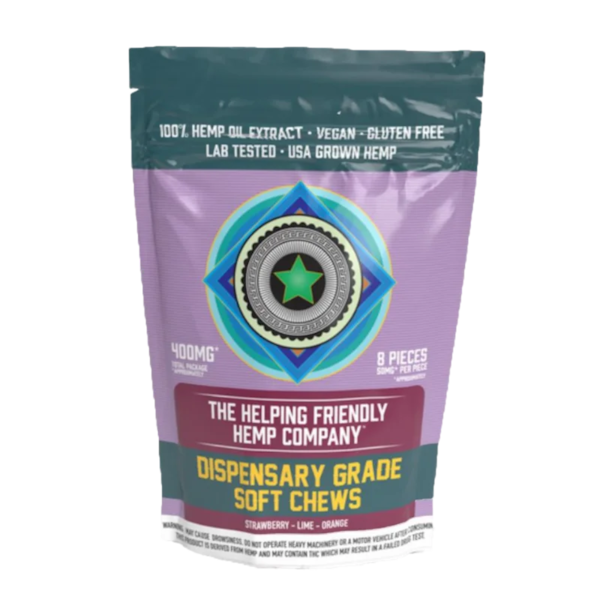
Skip the hope of “dispensary” signs on the Parkway and shop a hemp gummy with its numbers on the label. Helping Friendly’s Dispensary Grade Soft Chews pair hemp-derived delta-9 THC with CBG, for 400mg of active ingredients across an 8-count jar. Each chew can be taken whole or split in half, and the new resealable jar keeps them from melting. Flavors range from Key Lime Drop to Watermelon Wave, and every batch is third-party lab tested. Check that Great CBD Shop ships to your state before ordering.
Marijuana is illegal in Tennessee. Simple possession is generally a Class A misdemeanor, carrying up to 11 months and 29 days in jail and a fine of up to $2,500.
The Tennessee Alcoholic Beverage Commission (TABC) now licenses retail sales of hemp-derived cannabinoid products. Legacy TDA retail licenses expired June 30, 2026.
Legal hemp products must contain no more than 0.3% total THC on a dry-weight basis and meet all other Tennessee requirements.
Buyers must be 21 or older, and retail purchases must be made at a TABC-licensed establishment.
Synthetic cannabinoids and THCp are prohibited in Tennessee.
Tennessee law requires consumers to store any unconsumed HDCP in its original packaging.
The nearest adult-use cannabis dispensary is on the Qualla Boundary in Cherokee, North Carolina, but marijuana bought there is illegal under state law once you leave tribal jurisdiction.
Is Weed Legal in Pigeon Forge?
rodney truitt
No. Marijuana is illegal in Pigeon Forge and throughout Tennessee for recreational use, and Tennessee has no comprehensive state medical marijuana dispensary program. State law contains only limited exceptions involving certain low-THC CBD oil and authorized research.
What you can legally buy in Pigeon Forge are regulated hemp-derived cannabinoid products sold by TABC-licensed establishments to adults 21 and older. For anyone asking how to buy weed in Pigeon Forge: there is no legal way to buy marijuana.
Pigeon Forge and Tennessee: Understanding Cannabis Legality
brandon jean
Tennessee maintains some of the strictest cannabis laws in the southeastern United States. Despite the number of shops along the Pigeon Forge Parkway using terms like “dispensary” and “cannabis,” these businesses may legally sell only hemp-derived products that meet Tennessee’s requirements.
The confusion stems from marketing. Some retailers use dispensary-style branding, which can create false expectations for tourists arriving from states with adult-use or medical marijuana programs.
What you’ll find instead are licensed shops selling products such as:
CBD oils and tinctures. Generally non-intoxicating CBD products.
Regulated edibles and gummies. Subject to Tennessee’s per-serving and package limits.
Hemp-derived topicals. Lotions, balms, and wellness products.
Compliant beverages. Subject to Tennessee’s beverage container rules.
Understanding this distinction before you arrive prevents legal trouble and disappointment.
Is Weed Legal in Tennessee? A Deep Dive into State Regulations
steve shreve
The short answer: No. Marijuana is illegal in Tennessee, while lawful hemp is treated separately.
Possession Penalties in Tennessee
Simple possession. Generally a Class A misdemeanor, carrying up to 11 months and 29 days in jail and a fine of up to $2,500.
Larger quantities and distribution. Larger quantities and evidence of manufacture, sale, delivery, or intent to distribute can lead to felony charges. Possession does not automatically become a felony just because the amount reaches 0.5 ounce.
Repeat offenses. Prior convictions can increase the consequences.
Expungement. Some Tennessee convictions may qualify for expungement under T.C.A. § 40-32-101, depending on the offense and the individual’s eligibility. Expungement is not automatic, and not every marijuana conviction qualifies.
Understanding CBD vs. THC in Tennessee
Tennessee’s hemp-derived cannabinoid law sets detailed rules for what can be sold. The key points:
The 0.3% rule. Products with no more than 0.3% total THC on a dry-weight basis may be legal if they meet all other statutory requirements. Products above 0.3% are illegal.
Total THC calculation. Tennessee uses a total-theoretical-THC calculation that combines delta-9 THC with THCA multiplied by 0.877.
THCA. Tennessee law excludes THCA in concentrations above 0.3% from the definition of a lawful hemp-derived cannabinoid. High-THCA flower marketed under older “delta-9 only” interpretations is problematic under current law.
Delta-8 and Delta-10. Tennessee’s HDCP statute specifically covers Delta-8 THC and Delta-10 THC, but products must meet all current concentration, sourcing, testing, licensing, packaging, and serving-size requirements.
Prohibited cannabinoids. Synthetic cannabinoids and THCp are prohibited.
Who regulates hemp sales. The TABC began regulating hemp-derived cannabinoid products on January 1, 2026, and legacy TDA retail licenses expired June 30, 2026. The Tennessee Department of Agriculture continues to regulate hemp cultivation. Gas stations are no longer eligible for HDCP retail licenses, and sales are limited to TABC-licensed establishments authorized by Tennessee law.
Federal note. The federal hemp definition is changing, with a new definition scheduled to take effect on November 12, 2026. Check current federal and state rules before buying or traveling with hemp-derived products.
For a deeper look at cannabinoid differences, explore Herb’sCBD vs. THC guide.
Navigating Neighboring States: Is Weed Legal in North Carolina, Georgia, or Kentucky?
Photo by Getty
Tourists visiting the Smoky Mountains often cross state lines, so regional cannabis laws matter for travel planning.
North Carolina: Current Cannabis Status
North Carolina prohibits recreational marijuana and permits limited medical CBD oil for patients with intractable epilepsy. Under state law, possession of up to one-half ounce of marijuana is a Class 3 misdemeanor, and larger amounts carry progressively greater penalties.
The Qualla Boundary exception. The Eastern Band of Cherokee Indians permits adult-use cannabis sales to people 21 and older on the Qualla Boundary in Cherokee, North Carolina. Marijuana purchased there remains illegal under North Carolina state law once you leave tribal jurisdiction, and it is illegal in Tennessee. Do not transport it off the Qualla Boundary.
Georgia: Limited Medical Access
Georgia permits registered patients with a valid Medical Cannabis Patient Registry Card to buy authorized products from state-licensed dispensaries and qualifying licensed pharmacies. Georgia expanded its authorized product types effective July 1, 2026. Recreational marijuana remains illegal.
Kentucky: An Active Medical Program
Kentucky’smedical cannabis program is operational, with licensed dispensaries open in 2026. Recreational cannabis remains prohibited.
Stay current on state-by-state changes through Herb’scannabis news.
What About Indiana and Florida? Expanding the Legal Landscape
karl callwood
Florida's Medical Marijuana Program
Florida operates one of the largest medical marijuana programs in the country, while recreational marijuana remains illegal. Florida dispensaries serve qualified patients enrolled in the state registry, including qualifying seasonal residents who temporarily live in Florida for at least 31 consecutive days a year and meet other requirements. Ordinary visitors without Florida patient eligibility cannot buy medical marijuana.
Recent ballot initiatives for recreational legalization have not passed.
Indiana's Stance on Cannabis
Indiana has no medical marijuana program, and recreational marijuana is illegal. Possession of marijuana is a criminal offense.
Regional Comparison
Adult-use access:
Jurisdiction
Legal Status
Tourist Access
Qualla Boundary (EBCI, Cherokee, NC)
Adult-use sales under tribal law
Adults 21+; marijuana remains illegal under NC law outside tribal jurisdiction
Qualla Boundary (EBCI, Cherokee, NC)
Legal Status
Adult-use sales under tribal law
Tourist Access
Adults 21+; marijuana remains illegal under NC law outside tribal jurisdiction
Medical access:
Jurisdiction
Legal Status
Tourist Access
Tourist Access
Medical cannabis for registered patients
Registry card required
Kentucky
Medical cannabis program operational
Program eligibility required
Florida
Medical marijuana for registered patients
Permanent or qualifying seasonal residents only
Tourist Access
Legal Status
Medical cannabis for registered patients
Tourist Access
Registry card required
No comprehensive medical program:
Jurisdiction
Legal Status
Notes
Tennessee
Marijuana illegal
TABC-licensed hemp-derived cannabinoid products for adults 21+
North Carolina (state law)
Marijuana illegal
Limited CBD oil for intractable epilepsy
Indiana
Marijuana illegal
No medical marijuana program
Tennessee
Legal Status
Marijuana illegal
Notes
TABC-licensed hemp-derived cannabinoid products for adults 21+
CBD and Hemp in Pigeon Forge: What's Permitted for Tourists?
chad morehead
Despite marijuana prohibition, adults 21 and older can legally buy compliant hemp-derived products in Pigeon Forge from TABC-licensed establishments.
Legal Products Include
Generally non-intoxicating CBD products, such as oils and tinctures, that meet Tennessee’s requirements
Hemp-derived products with no more than 0.3% total THC on a dry-weight basis that meet all other state requirements
Topicals such as lotions, balms, and creams
Ingestible products with up to 15 mg of regulated hemp-derived cannabinoids per serving, subject to product-specific limits
Tennessee Product Limits
Servings. Most ingestible HDCPs are limited to 15 mg in the aggregate of regulated hemp-derived cannabinoids per serving.
Packages. Packages are generally limited to 300 mg and 20 servings, with special rules for beverage containers.
Hemp flower. Packages are limited to 0.5 ounce.
Cartridges. Limited to 500 mg.
Smokeless pouches. Limited to 6 mg each.
Prohibited Products Include
Marijuana in all forms
Products above Tennessee’s total-THC or THCA limits
Synthetic cannabinoids and THCp
Products sold by unlicensed retailers
Where to Find Legal Hemp Products
Several TABC-licensed HDCP retailers operate along the Parkway in Pigeon Forge. Before buying, check the TABC’sHDCP retailer list to confirm a shop holds a current license, and use product QR codes to review lab testing information.
When shopping in legal markets, browse Herb’sproducts catalog, and confirm any product meets Tennessee’s requirements before buying or bringing it into the state.
Pigeon Forge Tourist Attractions and Cannabis: What Visitors Should Know
Cannabis and National Parks
Marijuana possession and use are prohibited onNational Park Service property under federal law, including Great Smoky Mountains National Park. Separate park rules may also restrict smoking, vaping, impaired conduct, and specific locations, so check park regulations before your visit.
Hotel Policies on Vaping and Smoking
Many Pigeon Forge hotels and cabin rentals prohibit smoking and vaping on their properties and may impose fees under their individual policies. Check your accommodation’s rules before booking.
Public Consumption Laws
Tennessee’s Non-Smoker Protection Act restricts smoking and vaping in enclosed public places, subject to exceptions. Under the current hemp law, the relevant smoking definition also covers smoking hemp and using vapor products containing hemp-derived cannabinoids.
Happy Hippie Pigeon Forge: Exploring Local Culture (Without the Illegal Stuff)
HERB
Searches for “Happy Hippie Pigeon Forge” often reflect tourists looking for counterculture shopping. The Pigeon Forge and Gatlinburg corridor has many novelty shops selling:
Smoking accessories and glassware
Hemp clothing and lifestyle products
Novelty gifts and souvenirs
Incense, tapestries, and décor
Finding Souvenirs and Novelties
Shops along the Parkway stock smoking accessories such as glass pipes, rolling papers, and storage containers. Using them with marijuana creates legal risk.
Distinguishing Compliant Retailers in Stores
Red flags when shopping:
No TABC license. The shop does not appear on the TABC HDCP retailer list.
Missing documentation. Products lack QR codes or certificates of analysis.
Questionable products. High-THCA flower or other products that appear to exceed Tennessee’s total-THC or THCA limits.
Prohibited ingredients. Products containing synthetic cannabinoids or THCp.
No age check. Staff do not verify that you are 21 or older.
Staying Compliant: Legal Risks and How to Avoid Them in Tennessee
Herb
Consequences of Possession in Tennessee
A marijuana possession charge in Tennessee can create lasting consequences:
A criminal record that can affect employment opportunities
Potential jail time, even for a first offense
Fines of up to $2,500 for a Class A misdemeanor
Professional licensing complications
Long-term impacts on housing and travel
Some convictions may qualify for expungement, but eligibility is limited and expungement is not automatic.
Driving Under the Influence
Tennessee law prohibits driving while impaired by any substance, and Tennessee’s hemp law does not protect impaired driving involving hemp-derived cannabinoids. DUI consequences can include license suspension, required programs, potential jail time, and significant fines and court costs.
Practical Compliance Tips
Buy only from TABC-licensed establishments.
Keep products in their original packaging. Tennessee law requires consumers to store any unconsumed HDCP in its original packaging, and a violation is a Class C misdemeanor.
Keep receipts as proof of a licensed purchase.
Check the rules everywhere you travel. Do not transport marijuana bought on the Qualla Boundary into jurisdictions where it is illegal. Lawful hemp products are subject to separate state and federal rules, so verify the laws of every jurisdiction you enter.
Follow smoking and vaping rules in enclosed public places and on park property.
Never drive impaired.
For morecannabis guides covering legal compliance, Herb provides regularly updated resources.
Final Verdict
Photo by Shutterstock
Pigeon Forge is a fantastic Smoky Mountain destination, but marijuana is not legally available there. Here is how the decision breaks down:
Looking for marijuana? It is illegal in Tennessee, and simple possession is a criminal offense.
Interested in hemp products? Adults 21+ can buy compliant HDCPs from TABC-licensed establishments. Check the TABC retailer list, review QR-code lab results, and keep products in original packaging.
Considering the Qualla Boundary? Adults 21+ can buy under tribal law in Cherokee, North Carolina, but marijuana is illegal under North Carolina law outside tribal jurisdiction and illegal in Tennessee.
Visiting the national park? Marijuana is prohibited on park property, and park rules may restrict smoking, vaping, and impaired conduct.
The honest answer to “how to buy weed in Pigeon Forge” is: you cannot, legally. Compliant hemp products are the only legal option on the Parkway.
Frequently Asked Questions
Can I smoke weed legally in Pigeon Forge?
No. Marijuana is illegal in Tennessee, and simple possession is generally a Class A misdemeanor. Shops along the Parkway may legally sell only hemp-derived cannabinoid products that meet Tennessee’s requirements, including the 0.3% total-THC limit, to adults 21 and older. Tennessee’s smoke-free law also restricts smoking and vaping hemp products in enclosed public places.
What are the penalties for marijuana possession in Tennessee?
Simple possession is generally a Class A misdemeanor carrying up to 11 months and 29 days in jail and a fine of up to $2,500. Larger quantities and evidence of manufacture, sale, delivery, or intent to distribute can lead to felony charges, but possession does not automatically become a felony at 0.5 ounce. Some convictions may qualify for expungement, but eligibility is limited and not automatic.
Is medical marijuana available in Tennessee?
Tennessee has no comprehensive state medical marijuana dispensary program. State law contains limited exceptions involving certain low-THC CBD oil and authorized research. Neighboring Georgia and Kentucky have medical programs for registered patients, and Florida’s program serves permanent and qualifying seasonal residents.
What's the difference between legal hemp and illegal marijuana in Tennessee?
The distinction centers on total THC. Hemp-derived products with no more than 0.3% total THC on a dry-weight basis may be legal if they meet Tennessee’s other requirements, including THCA limits, testing, packaging, and serving sizes, and are sold by a TABC-licensed establishment. Products above those limits are illegal, and synthetic cannabinoids and THCp are prohibited. If you bring hemp products into Tennessee, confirm they meet these rules and keep them in their original packaging.
Are any neighboring states recreational cannabis legal?
No neighboring state allows recreational marijuana under state law. The Eastern Band of Cherokee Indians permits adult-use sales on the Qualla Boundary in Cherokee, North Carolina, but marijuana bought there is illegal under North Carolina law once you leave tribal jurisdiction and is illegal in Tennessee. Kentucky and Georgia operate medical programs, and recreational cannabis remains prohibited in both.
Disclaimer: This article is for informational purposes only and does not constitute legal advice. Cannabis laws vary by jurisdiction and are subject to change. Always verify current regulations with official sources before traveling. Herb does not encourage the purchase or use of cannabis in jurisdictions where it is illegal.