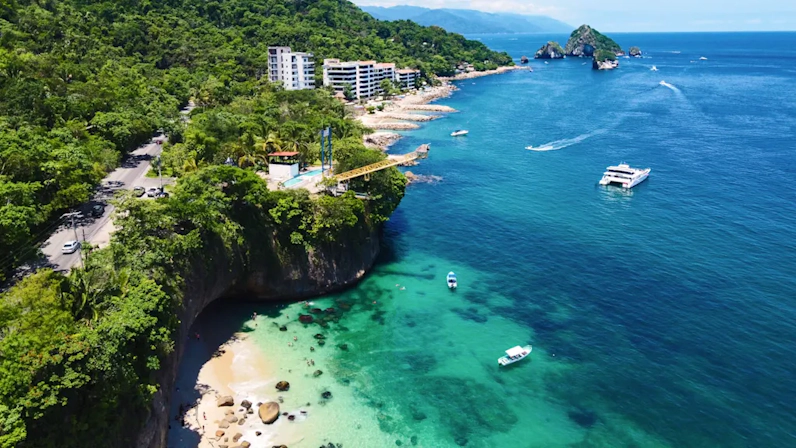
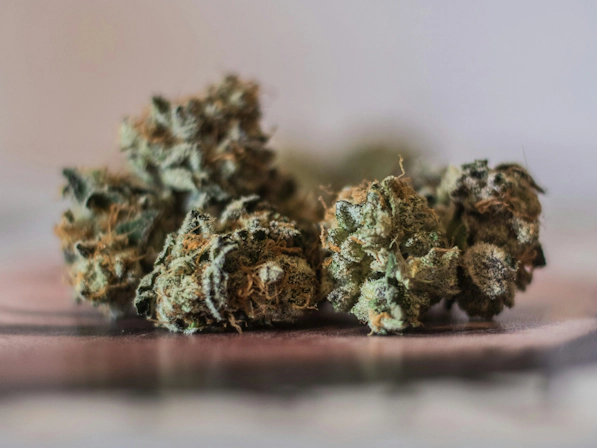
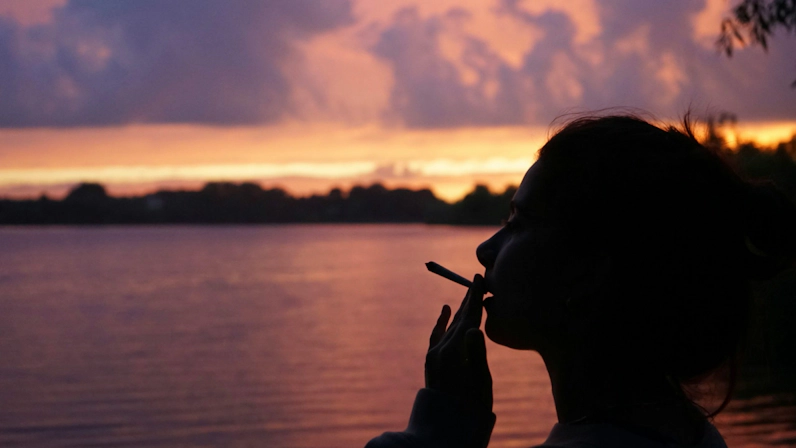
Woman smoking a joint in a dark, floral cooler under warm amber lighting.

Herb

How to Buy Weed in Puerto Vallarta in 2026: Mexico’s Pacific Coast Cannabis Scene Explained

Puerto Vallarta has no legal dispensaries and no tolerance zones. Here's what Mexico's gray zone actually means for cannabis travelers in 2026.

You have probably heard the same thing every Puerto Vallarta traveler hears before their trip: Mexico decriminalized weed, so it should be fine, right? The truth is more complicated. If you want to know about cannabis in Puerto Vallarta in 2026, you are navigating a genuine gray zone. Under Mexico’s General Health Law, prosecutors generally should not pursue criminal action against a consumer carrying up to 5 grams of cannabis for strict personal use, subject to statutory limits. But commercial cannabis sales remain completely illegal, no licensed dispensaries exist anywhere in the country, and Jalisco state (where PV is located) has none of the tolerance zones that Mexico City has experimented with.

That does not mean cannabis is absent from Puerto Vallarta. It means knowing what is actually available, where risks concentrate, and how to think about those risks clearly. The global cannabis tourism market reached $10.23 billion in 2023 and is projected to reach $23.73 billion by 2030, reflecting how many travelers now factor cannabis access into their destination planning. Puerto Vallarta attracts millions of visitors annually, and a significant number of them have exactly these questions.

This guide covers the cannabis laws in Puerto Vallarta, a neighborhood-by-neighborhood breakdown, what products exist in the gray market, risk levels by scenario, and the honest picture of what cannabis travel in PV actually looks like in 2026.

  • Under Mexico’s General Health Law, prosecutors generally should not pursue criminal action against a consumer carrying up to 5 grams of cannabis for strict personal use, subject to statutory limits. This does not create a legal retail market, does not legalize public use, and does not eliminate police risk.
  • Puerto Vallarta has no government-sanctioned tolerance zones. Unlike Mexico City, PV operates entirely through informal gray market channels with no official permission for cannabis consumption.
  • Zona Romantica is one of Puerto Vallarta’s most LGBTQ-friendly and socially relaxed neighborhoods. Some travelers describe it as more tolerant, but it is not an official cannabis tolerance zone.
  • No licensed adult-use cannabis dispensaries operate in Mexico under a nationwide recreational retail framework.
  • Bringing cannabis across the US-Mexico border in either direction is a federal crime, regardless of either country’s local laws.
  • Hotel policies vary widely. Assume cannabis smoking is prohibited unless the property explicitly allows it; violating hotel rules can lead to fees, eviction, or police involvement.

Under Mexico’s General Health Law, prosecutors generally should not pursue criminal action against a consumer carrying up to 5 grams of cannabis for strict personal use, subject to statutory limits. This is not the same as broad legalization. It should not be described as fully legal or risk-free, especially for tourists, who have less formal legal standing than Mexican residents under this framework.

No licensed adult-use cannabis dispensaries operate in Mexico under a nationwide recreational retail framework. Commercial cannabis sales remain illegal throughout the country as of 2026.

Mexico’s cannabis story has moved, but not all the way to legalization. The Supreme Court invalidated Mexico’s absolute prohibition on adult personal recreational cannabis use in 2021, but Congress has not enacted a comprehensive adult-use retail framework. Mexican adults may seek COFEPRIS authorization for personal cannabis activities following Supreme Court rulings, but the process is not a tourist retail framework and should not be treated as practical legal access for visitors.

For travelers, this means the 5-gram personal-use threshold under Article 479 of the General Health Law is the practically relevant number, and even that threshold does not eliminate police contact, coercion, or confiscation. It narrows, but does not remove, the risk.

For a detailed breakdown of Mexico’s legal landscape, Herb’s legal guide covers the full regulatory timeline. For a broader view of how Mexico’s laws apply across regions, Herb’s Mexico cannabis guide covers the national picture in full.

Cannabis activity in Puerto Vallarta falls under Jalisco state jurisdiction, which follows national law with no additional state-level provisions. Puerto Vallarta has no official local tolerance zone for cannabis consumption. Public use can draw police attention and should not be treated as legally protected.

Mexico City has experimented with designated cannabis tolerance and consumption areas, but these local arrangements are limited, subject to change, and do not create a nationwide legal retail system. Puerto Vallarta has no equivalent policy for tourists. Any cannabis consumption in PV, indoors or outdoors, exists in legal gray territory rather than with explicit government permission.

Puerto Vallarta has an active gray market cannabis scene despite having no legal retail. Unlicensed delivery services, informal networks, and street vendors have filled the gap that legalization left open, operating in the space between federal personal-use tolerance and actual retail licensing.

Some unlicensed delivery services may advertise online in Puerto Vallarta, but these are not legal dispensaries and do not operate under a regulated adult-use retail framework. Tourists should understand that purchasing from them carries legal, safety, and consumer-protection risks. There is no recourse if something goes wrong, no testing of products, and no regulatory oversight of any kind.

There are no cannabis dispensaries in Puerto Vallarta. No licensed adult-use cannabis dispensaries operate in Mexico as of 2026.

What does exist: smoke shops that sell accessories and some hemp or CBD-labeled products. The Flowers Smoke Shop in Zona Romantica is one well-known local example, described as a welcoming destination for locals and tourists, selling smoking accessories and handmade goods, not cannabis. That distinction matters because the search landscape for this topic includes businesses that appear dispensary-adjacent but are not.

Some shops may sell CBD- or hemp-labeled products, but COFEPRIS has warned about unauthorized CBD and hemp products in Mexico, so availability does not necessarily mean legal authorization or safety testing.

If you are wondering what a city with actual legal cannabis retail looks like compared to PV’s gray market, Herb’s Amsterdam guide offers a useful contrast. Anyone who tells you there is a licensed dispensary in Puerto Vallarta is either uninformed or misleading you.

Puerto Vallarta is not uniform in its relationship with cannabis culture. The city’s neighborhoods have distinct personalities that translate into meaningfully different experiences for cannabis-curious visitors.

Zona Romantica, also known as Old Town or Colonia Emiliano Zapata, is one of Puerto Vallarta’s best-known LGBTQ-friendly nightlife and hospitality districts. Some travelers describe it as more socially relaxed around cannabis, but it is not an official cannabis tolerance zone.

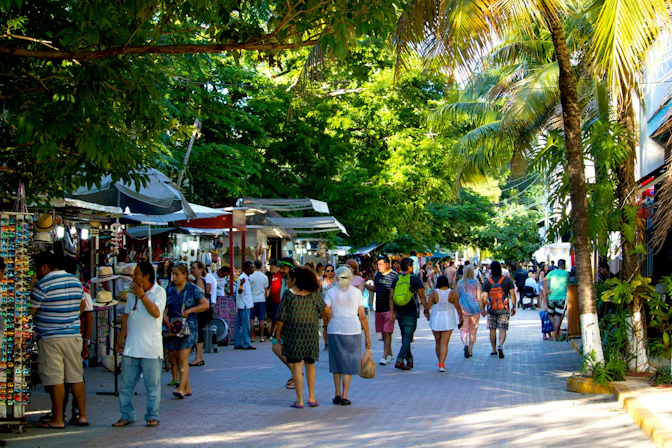
The Romantic Zone is built around cobblestone streets, classic whitewashed architecture, Los Muertos Beach, and a dense concentration of independent restaurants, bars, and boutiques. Street vendor activity in this area is more common than elsewhere in the city. The Flowers Smoke Shop is located here, reflecting the neighborhood’s orientation toward cannabis culture even if cannabis itself is not sold there.

For cannabis enthusiasts visiting Puerto Vallarta, Zona Romantica is the neighborhood most worth knowing in terms of cultural atmosphere. Herb’s Puerto Vallarta travel coverage explores more of what makes this part of the city worth exploring beyond cannabis.

Marina Vallarta is the city’s upscale enclave, built around a luxury marina with high-end hotels, golf courses, and a more conservative atmosphere than Old Town. Street-level cannabis activity is notably lower here. Hotels are more likely to enforce strict no-smoking policies, and the general environment is less tolerant of open cannabis activity.

The Hotel Zone (Zona Hotelera Norte) sits north of downtown and is the main resort strip where most package tourism happens. This is where vendors are most actively approaching tourists, often with prices that run significantly higher than other channels and with inconsistent product quality. Forum reports from travelers consistently note that beachfront cannabis purchases carry a substantial price premium. The beach setting creates pressure to buy impulsively, which tends to produce the worst value and quality in PV’s gray market.

If you are in the Hotel Zone, the practical advice is to research Zona Romantica before purchasing from the first vendor who approaches you on the beach.

Centro Historico is Puerto Vallarta’s downtown core, centered on the Malecon boardwalk and the Church of Our Lady of Guadalupe. Cannabis activity exists here but is less visible and less culturally integrated than in Zona Romantica. As you move further south from Centro toward the Romantic Zone, the environment becomes progressively more relaxed. Staying in or near Zona Romantica gives you the most culturally compatible base for a cannabis-curious trip.

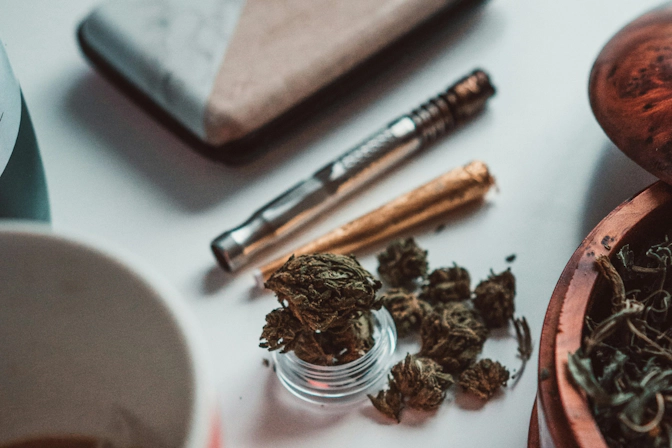
Puerto Vallarta’s gray market offers dried flowers, edibles, and pre-rolls. All are untested and unregulated, with no licensed dispensary access anywhere in Mexico. Gray market cannabis in PV spans several product types, though availability and quality vary considerably in a market with no consumer protection framework.

The most commonly available products in Puerto Vallarta’s gray market include:

  • Dried flower (most widely available; quality ranges considerably depending on the source)
  • Edibles (gummies and chocolates, primarily through unlicensed delivery services)
  • Pre-rolled joints (available from street vendors and some gray market contacts)
  • Concentrates (limited availability; not commonly offered in PV’s market as of 2026)
  • CBD and hemp-labeled products (some available through smoke shops, but COFEPRIS has warned about unauthorized products in this category)

The range exists, but the market looks nothing like what you would find in a legal retail state. There are no menu boards, no labeled THC percentages, no choice between cultivars based on terpene profiles or desired effects. Understanding how different cannabis product formats behave helps you calibrate expectations more confidently when navigating an unregulated market.

Before traveling, Herb’s strain database is a useful resource for understanding terpene profiles, THC and CBD ranges, and the effects associated with specific varieties.

No cannabis product sold through Puerto Vallarta’s gray market has been tested in a licensed laboratory. Unknown THC content means an edible labeled as a certain dose may deliver a completely different experience. The practical implication: start with considerably less than you would in a legal dispensary market, and allow more time than usual to gauge effects before consuming more. An unregulated product from an unknown source deserves more patience and caution than a tested, labeled product from a licensed retailer.

Cannabis risk in Puerto Vallarta operates on a spectrum. Understanding where different activities fall on that spectrum helps you make decisions calibrated to your actual risk tolerance.

The lowest-risk way to consume cannabis in Puerto Vallarta involves private settings and minimizing public exposure.

  • Consuming in your accommodation with windows managed and no smoke visible from the hallway (verify hotel policy first; assume cannabis is prohibited unless explicitly allowed)
  • Carrying amounts well below the 5-gram federal personal-use threshold at all times
  • Staying in Zona Romantica, where cultural norms are most relaxed
  • Using a vaporizer rather than smoking flower (less detectable, less visible, more discreet)
  • Avoiding any public consumption: streets, parks, beaches, or tourist zones

None of these approaches makes cannabis activity fully legal. They reduce practical risk to the lowest level available in this market.

  • Purchasing from beach vendors in the Hotel Zone (higher prices, lower quality, more visible transactions in public tourist spaces)
  • Consuming on hotel balconies, in beach areas, or in parks near tourist zones
  • Carrying cannabis through Centro or areas with active police patrols
  • Negotiating with street vendors in view of other tourists or authorities

Traveler and expat anecdotes often describe informal-payment demands during drug-related police encounters, but outcomes vary. Visitors should not assume the 5-gram threshold prevents detention, questioning, confiscation, or other police contact. Federal personal-use tolerance under Article 478 does not immunize you from an uncomfortable and expensive police encounter. The broader Mexico cannabis landscape explores these dynamics in detail for travelers who want to understand the full picture before making decisions.

Puerto Vallarta is not the most cannabis-friendly destination in Mexico. Understanding how it compares to other popular spots helps set expectations before you book.

DestinationTolerance ZonesPossession ThresholdTourist Risk LevelBest For
Mexico CityYes (local arrangements; subject to change)5g federal nationallyLower in designated areasMost legally adjacent experience in Mexico
Puerto VallartaNo5g federal thresholdMediumBeach travelers aware of gray market risks
CancunNo5g federal thresholdMedium-HighLess ideal; heavy tourist police in hotel zone
Los CabosNo5g federal thresholdMedium-HighNot recommended for cannabis-focused trips
TulumNo5g federal thresholdMediumFestival culture; similar gray market to PV

Mexico City has experimented with designated cannabis tolerance and consumption areas, a local arrangement that does not exist in Puerto Vallarta. These areas are limited, subject to change, and do not create a nationwide legal retail system, but they represent the closest thing to an officially acknowledged consumption space currently available in Mexico.

Beyond those arrangements, Mexico City’s Roma Norte, Condesa, and Colonia Juarez neighborhoods host a network of private cannabis clubs operating on informal models. For a full breakdown of Mexico City’s cannabis ecosystem, Herb’s Mexico cannabis guide covers all of it in detail.

Cancun and Los Cabos both carry heavy tourist police presences in their hotel zones, creating a more conservative enforcement environment than Puerto Vallarta’s Zona Romantica. Tulum has a more permissive social culture around cannabis, though the legal framework is identical to Puerto Vallarta’s: gray market, no legal retail, 5-gram federal threshold.

Travelers comparing Mexican destinations for a cannabis-friendly trip should also look beyond Mexico. Jamaica has a regulated medical and therapeutic cannabis framework and licensed operators, which is more formal than Mexico’s adult-use gray market, though it should not be described as unrestricted recreational retail. Costa Rica also lacks legal recreational dispensaries, so it should not be presented as a clean alternative for adult-use cannabis tourism. For US-based travelers who want domestic legal dispensary access, Herb’s guide to weed-friendly vacations covers the best options by state.

No. Bringing cannabis across the US-Mexico border in either direction is a federal crime under both US and Mexican law, regardless of what either country has done at the local level.

US Customs and Border Protection operates under federal law, where cannabis remains a controlled substance under the Controlled Substances Act. Mexican federal law prohibits cannabis trafficking regardless of quantity. Neither the Mexican federal personal-use tolerance ruling nor any US state legalization law changes what happens at an international border crossing.

TSA agents who discover cannabis at Mexican international airports are required to notify Mexican authorities. For a complete overview of flying with cannabis through any airport, Herb’s guide covers TSA protocols and international border risks in detail.

This is not a gray area. No amount of cannabis, no form of cannabis, and no claimed medical necessity changes the calculation at an international border. If you consume cannabis in Puerto Vallarta, consume it there and leave nothing to cross the border with.

Because Puerto Vallarta has no licensed adult-use retail, any purchase happens outside regulated channels. The only clearly lower-risk advice is to avoid buying, using, and crossing borders with cannabis.

For travelers who choose to navigate the gray market anyway, these practical considerations reduce friction:

  • Base yourself in Zona Romantica, where cultural norms are most relaxed
  • Keep quantities well below 5 grams, the personal-use threshold under federal health law
  • Consume privately: in your accommodation, not in public spaces, on the beach, or in parks
  • Verify hotel policy before consuming. Hotel policies vary; assume cannabis is prohibited unless the property explicitly allows it
  • Use a vaporizer over flower: significantly more discreet, less detectable odor
  • Leave everything behind. Bringing any amount of cannabis across the US-Mexico border in either direction is a federal crime

Starting Low and Going Slow in an Unregulated Market

Gray market cannabis products carry no tested THC content information. A product that looks like a standard edible dose may deliver a completely different experience than the same product from a regulated dispensary. Start with a fraction of what you would normally take. Give yourself twice the time you would normally wait before concluding the product is not working.

If you want to build your knowledge about cannabis dosing before traveling, Herb’s cannabis dosing guide covers how to calibrate consumption when potency information is unavailable, which is exactly the situation you face in PV’s gray market.

Puerto Vallarta is a workable option for cannabis-curious travelers who go in with accurate expectations, not a comfortable one. Here is how to think through whether it fits your trip.

  • For travelers who want the closest thing to acknowledged cannabis consumption in Mexico, Mexico City is the better choice. Its local tolerance arrangements offer the only explicitly acknowledged consumption spaces anywhere in the country, however limited and subject to change.
  • For beach travelers aware of gray market risks, Puerto Vallarta works, particularly if you stay in Zona Romantica, keep quantities well under the 5-gram personal-use threshold, and consume privately in your accommodation.
  • For travelers who want a beach destination with an actual legal framework, Jamaica has a regulated medical and therapeutic cannabis framework with licensed operators, which is more formal than Mexico’s gray market. Note that Costa Rica lacks legal recreational dispensaries and should not be treated as a clean adult-use alternative.
  • For travelers who want licensed retail dispensaries, Puerto Vallarta does not have them, and the gray market is not a substitute. North American legal states and other international legal markets are the better fit.

If Puerto Vallarta is your destination and cannabis is part of the plan: stay in the Romantic Zone, verify hotel policy before consuming anything, go slow with any gray market product, use a vaporizer over flower, and keep everything indoors and well under 5 grams. The gray market is real and navigable. The risks are manageable when you understand them before you arrive.

Explore strains to build your knowledge before you travel, so you know what to look for in any market.

Herb Recommended Products:

READ MORE