Herb
How to Buy Weed in Sri Lanka: Cannabis Culture, Ayurvedic Use & Tourist Risks |
04.01.2026Understanding Sri Lanka’s complex cannabis landscape, from its illegal recreational market and Ayurvedic medical tradition to the legal and safety risks tourists face
Every year, thousands of travelers arrive in Sri Lanka expecting the same casual cannabis culture they found in Thailand or Bali, only to discover that possession could land them in prison. Meanwhile, a government-run corporation legally sells cannabis medicines sourced from police drug seizures. If that sounds contradictory, that is because it is.
This guide breaks down everything you need to know: the laws, the 1,700-year Ayurvedic heritage, where travelers actually encounter cannabis across the island, what you are likely to find (and what you should avoid), and the very real risks involved.
No. Recreational cannabis is illegal in Sri Lanka.
But the full answer is far more nuanced than a simple no. Sri Lanka operates under a dual legal framework that simultaneously criminalizes cannabis and authorizes its medicinal use:
This contradiction is a direct product of British colonial drug policy colliding with centuries of indigenous medicinal tradition. The result: cannabis is both a crime and a medicine, depending on who is holding it and why.
For tourists and foreigners, there is no legal recreational pathway. Period.
If you are interested in how cannabis laws vary across Asia, Sri Lanka sits firmly in the “illegal but culturally embedded” category, a pattern you also see in weed laws in India and across much of South and Southeast Asia.
The Poisons, Opium, and Dangerous Drugs Ordinance is the primary statute governing cannabis in Sri Lanka. Originally enacted in 1929 under British colonial rule, it defines “hemp plant” as Cannabis sativa L. and prohibits all activities related to the plant without government authorization. Critically, this Ordinance was significantly amended in 2022, introducing a drug-specific, quantity-based penalty schedule.
Under the 2024 consolidated text of the Ordinance (reflecting the 2022 amendment), cannabis penalties are quantity-based. For possession of less than 1 kilogram, the penalty is 1 to 2 years imprisonment plus a fine. For 1 kilogram to less than 5 kilograms, it rises to 2 to 5 years. Possession of 5 kilograms to less than 100 kilograms carries 5 to 10 years, and 100 kilograms or above carries 10 to 15 years. Sale, distribution, and cultivation carry their own severe penalties that also scale by quantity under the current schedule.
A common source of confusion: Sri Lanka does have the death penalty for drug trafficking. However, cannabis is not listed in the capital punishment schedule. Under the current consolidated text, the death penalty or life imprisonment applies specifically to morphine, cocaine, heroin, and methamphetamine at 5 grams or above. For opium, the threshold is 1 kilogram or above for death or life imprisonment, with 500 grams to less than 1 kilogram carrying life imprisonment. Additionally, Sri Lanka has maintained a moratorium on executions since 1976.
That said, larger cannabis quantities still carry severe sentences, with substantial fines and considerable prison time. Enforcement is handled by the Sri Lanka Police Narcotics Bureau and the National Dangerous Drugs Control Board (NDDCB).
Effectively, no. CBD is not explicitly regulated in separate legislation, but the current drug schedules clearly cover cannabis, cannabis resin, extracts, and tinctures, which makes it likely that CBD products would be treated as cannabis derivatives. Importing, possessing, or using CBD products may result in penalties regardless of THC content.
Some sources suggest that CBD products from licensed Ayurvedic herbal shops may be an exception, but this specific carve-out could not be independently verified from official public sources.
Bottom line for travelers: Leave your CBD oils, tinctures, and medical marijuana cards at home. There is no clear legal basis for the recognition of foreign medical cannabis authorizations in Sri Lanka, and bringing these products creates real legal exposure. For context on how CBD legality varies in other markets, check Herb’s guides.
Here is where Sri Lanka’s cannabis story gets genuinely unique. While recreational use is a crime, cannabis-based medicines are legally manufactured, sold, and prescribed through the country’s Ayurvedic medical system.
This is not some theoretical loophole gathering dust in a law book. It is an active, functioning supply chain.
Madana Modaka (also written Madana Modakaya) is a legitimate Ayurvedic medicinal preparation containing purified Cannabis sativa. It is manufactured and sold by the Sri Lanka Ayurvedic Drugs Corporation (SLADC) and available through SLADC official outlets and registered Ayurvedic practitioners. (Some sources also state it is listed in the official Ayurvedic Pharmacopoeia of Sri Lanka, though this specific pharmacopoeia listing could not be independently verified from a primary source.)
Ingredients include: Cannabis sativa (purified through the traditional shodhana process), Costus root (Saussurea lappa), Ginger (Zingiber officinale), Black pepper (Piper nigrum), Long pepper (Piper longum), Ironwood flower (Mesua ferrea), Patchouli (Pogostemon heyneanus), Honey, ghee, and sugar.
Traditional uses: According to the SLADC product listing, it stimulates sexual power and appetite and relieves abdominal puffiness and dyspepsia.
Dosage: 20-30 grains, taken with milk in the morning and evening, or as directed by a physician.
This is a real, commercially available product. The SLADC lists it on their official website. It is not a tourist novelty; it is a centuries-old formulation backed by one of Sri Lanka’s longest-running medicinal traditions.
Curious about how cannabis intersects with food and wellness? Herb covers aphrodisiac cannabis edibles that draw from similar traditional knowledge.
This is perhaps the most extraordinary detail in Sri Lanka’s cannabis story, and one that no other guide covers well:
Some sources cite specific figures for 2023 Ayurvedic cannabis consumption (over 1,200 kg total, split between SLADC processing and registered practitioners), though these exact numbers could not be independently verified from primary public sources at the time of writing.
The broader narrative, that the legal medicinal supply is at least partly tied to interceptions of the illegal cannabis trade, appears to be widely reported, even if the precise mechanics and quantities remain difficult to pin down. It is a circular-looking system that only makes sense through the lens of colonial-era law layered on top of ancient practice.
Sri Lanka has a long documented history of medicinal cannabis use. Secondary literature traces this history back to the 4th century CE, making it one of the older continuously recorded traditions of cannabis medicine, though comparative claims about it being “one of the longest on Earth” are difficult to verify definitively.
The story is traditionally linked to King Buddhadasa of the Kingdom of Anuradhapura (reign 341-370 CE), who is credited in secondary and conference literature with authoring or commissioning the Sarartha Sangrahaya. This medical pharmacopoeia reportedly documented cannabis’s medicinal properties, including analgesia (pain relief), narcotic effects, and digestive stimulation. (It should be noted that while this attribution is widely repeated, strong primary sourcing for it remains limited in accessible public materials.)
Cannabis, termed ganja (referring to the flowering head) and kansa (the plant as a whole), was a component of Sri Lanka’s traditional healing systems.
From that foundation, cannabis appeared in a series of medical texts spanning many centuries. These include the Sarartha Sangrahaya (c. 341-370 CE), Yogarnavaya (pre-13th century), Prayagorathnavaliya (1232), Vaidyacintamani (1707), Glossary of Synonyms of Medicinal Plants (1798), Yogasekaraya (1894), Kolavidiya (1900), and Es Veda Potha (1908). This chronology appears in secondary literature, though the full set of dates has not been independently verified from primary sources.
A 2021 review found approximately 267 cannabis-containing formulations documented in the 21-volume Thalpathe Piliyam corpus, a major traditional palm-leaf medicine compilation. That is not a typo: 267 distinct preparations using cannabis within a single major body of traditional texts.
The Sanskrit and Sinhalese names for cannabis tell their own story. Sri Lankan texts reportedly refer to the plant using names like Virapati (“hero-leaved”), Capta (“light-hearted”), Ananda (“bliss”), Trilok kamaya (“desired in three worlds”), and Harshini (“the rejoicers”). These names appear in secondary sources, though robust primary verification for the full list and exact translations is limited.
These names reflect a relationship with cannabis that goes far beyond clinical pharmacology. The plant was understood as something joyful, heroic, and spiritually significant.
Beyond medicine, traditional sources reference cannabis used for hempen textiles and rope manufacture, as a sexual stimulant (documented across multiple Ayurvedic texts), and for various therapeutic purposes, though specific claims about historical uses like anxiety treatment are not strongly sourced in accessible public literature.
In Ayurvedic classification, cannabis is categorized as a cerebral delirient requiring purification (shodhana) before medicinal use. Some modern commentators have described this as a form of harm-reduction framework that predates modern pharmacology, though that characterization is an interpretive gloss rather than a directly verified historical framing.
For more on how cannabis history shapes modern legalization debates worldwide, Herb covers these stories regularly. If you want to understand how traditional cannabis strains compare to modern cultivars, Herb’s strain database covers origins, terpene profiles, and effects across hundreds of varieties.
The 1929 Poisons, Opium, and Dangerous Drugs Ordinance, imposed by the British colonial administration, criminalized cannabis and disrupted centuries of continuous traditional use. That single piece of legislation created the contradictory dual legal system that persists today: ancient medicine and modern crime, coexisting uneasily on the same island.
In August 2025, Sri Lanka approved its first reported legal foreign-investor cannabis cultivation project for export, marking a significant shift in how the country engages with the plant’s economic potential.
The Commissioner General of Ayurveda, Dr. Dhammika Abeygunawardena, announced that the Board of Investment (BOI) of Sri Lanka had approved 7 foreign investors (selected from 37 applicants) to legally cultivate cannabis on the island.
Key details: The project covers 64 acres in the Mirigama area, with a minimum investment of USD 5 million per investor and a mandatory bond of USD 2 million deposited with the Central Bank of Sri Lanka. Initial licenses are for 6 months (temporary), extendable based on progress. All product must be exported exclusively for pharmaceutical production and testing. Special Task Force (STF) and police protection is required on-site. (Some reports add that all cannabis plants must be imported with no local seeds permitted, and that no part of the plant may be released into the external environment, though these more specific operational details could not be independently verified in the public sources reviewed.)
What this means for tourists: Nothing, practically speaking. The BOI cultivation program is strictly export-oriented and pharmaceutical in nature. It does not change domestic cannabis law, create any legal access for visitors, or affect the Ayurvedic supply chain.
What it signals: Sri Lanka is slowly recognizing the economic value of cannabis, even as its domestic prohibition remains firmly in place. The program has drawn opposition from the Alcohol and Drug Information Centre (ADIC), and earlier reporting noted concerns from the Sri Lanka Medical Association, the College of Psychiatrists, and the College of Community Physicians, raising questions about market viability and potential diversion to domestic black markets.
Want to see how other Asian countries are navigating cannabis reform? Check out Herb’s guide to cannabis in Thailand, which went through its own dramatic regulatory shifts.
Disclaimer: This section is for informational and harm-reduction purposes. Purchasing or possessing cannabis in Sri Lanka is illegal and carries real criminal penalties for tourists. Much of the detail below is drawn from anecdotal traveler reports rather than official data, and should be treated accordingly.
Cannabis availability in Sri Lanka varies dramatically by region. What you find, and the risks you face, depend entirely on where you are.
Cannabis reportedly circulates through informal networks, particularly tuk-tuk drivers near commercial areas (including near Majestic City mall by the train tracks) and select nightlife venues. The product is described as a mix of local landrace and Kerala Ganja (imported from India), with approximate pricing around 1,000-1,500 LKR (~$3-5 USD) for around 10g of local cannabis, though black-market prices cannot be independently verified. Risk level is moderate to high, given the heavy police and military presence with frequent vehicle searches, especially at night. Police generally do not target foreigners specifically, but possession remains a genuine legal risk regardless of nationality.
Some Sinhalese phrases travelers may encounter: Ganja tienawada? (“Do you have ganja?”) and Mama ganja bonna ona (“I want to smoke ganja”).
A popular backpacker hub in the hill country where cannabis is reportedly available, but quality and origins are unreliable. Most product sold here is described as not Sri Lankan, primarily Moroccan hash and Kerala Ganja imported from India. Certain bars and restaurants (such as One Love Rasta bar) cater to a cannabis-friendly atmosphere. Tourist-oriented dealers are common, and quality is inconsistent. If you are looking for authentic Sri Lankan landrace cannabis, Ella is not where you will find it based on traveler accounts.
Hikkaduwa is widely flagged in traveler forums as the worst location for cannabis scams targeting tourists. Reports describe dealers selling overpriced, low-quality product, aggressive sellers who follow tourists and pressure repeat purchases, and rip-offs as the norm. Some tuk-tuk drivers have reportedly been known to inform police for a kickback after facilitating a purchase.
Bentota reportedly has some supply, but beach areas in general carry a higher risk of tourist-targeted scams. For comparison, buying weed in Bali carries similar scam-heavy risks in beach zones.
Kataragama is a pilgrimage town in the south with some reported informal availability through accommodations and local contacts. Thanalmalwila, a town in Uva Province, has been described as a hub for locally cultivated landrace cannabis, one of the few places where authentic Sri Lankan cannabis (as opposed to Indian imports) has been referenced in traveler reports.
For most tourists, these areas are not easily accessible, and the language and cultural barriers make casual purchasing impractical and risky.
The cultural capital is more conservative than coastal or hill-country areas. Cannabis availability is less visible, and the scene is not oriented toward tourists.
Anecdotal reports suggest pricing drops significantly outside cities and tourist zones, with some accounts citing prices as low as 500 LKR for 3-5g packets. However, access is extremely difficult for foreign visitors without local connections.
Sri Lanka’s cannabis market features three distinct product categories. Understanding them matters, both for quality and for safety.
Sri Lankan Landrace: A sativa-dominant indigenous cannabis described as having a sweet, earthy aroma with minty, spicy undertones, plus coffee and vanilla notes when properly cured. Effects are reported as an energizing head high without anxiety or paranoia, mild enough for all-day use but capable of a strong high. Locals are said to prefer landrace, believing it to be better medicine and less “chemical” than imports. Authentic landrace is reportedly rare in tourist areas, mostly found in Thanalmalwila and hidden rural cultivation sites. Regarding conservation: although it is sometimes claimed that no formal genetic or chemotype study of Sri Lankan landraces has ever been conducted, the NDDCB’s National Narcotics Laboratory has publicly listed research on variation in THC contents and identification of cannabis varieties in Sri Lanka. That said, a complete modern genomic characterization does not appear to exist, and active eradication campaigns and genetic contamination from Kerala imports remain ongoing concerns for these indigenous strains.
If you want to explore how sativa strains compare in their effects profiles, Herb’s guides break down the best options by use case.
Kerala Ganja (KG): Cannabis smuggled from Kerala, India. It is described as the most commonly available cannabis in tourist areas, especially Ella, typically sold in 10g or 20g bags at approximately 2,000-5,500 LKR. Health warning: Some traveler and harm-reduction reports flag that Kerala Ganja is sometimes spray-treated with unidentified substances to increase weight. This is a serious health concern with no way to verify product safety, though the specific adulteration claims could not be independently verified from official sources.
Moroccan Hash: Hashish imported from Morocco, occasionally referenced in backpacker zones. Less common than Kerala Ganja. Quality varies widely. For context on Moroccan hash culture, see Herb’s guide to buying weed in Morocco.
This is where the guide gets serious. The risks for tourists seeking cannabis in Sri Lanka fall into three categories, and all of them are real.
Possession is criminal regardless of nationality. There is no diplomatic immunity for minor drug offenses. Under the current quantity-based penalty schedule, even small amounts carry mandatory prison time (1 to 2 years for less than 1 kg). CBD products are likely treated as illegal cannabis derivatives, and foreign medical marijuana cards have no clear legal recognition in Sri Lanka. No legal recreational cannabis pathway exists for tourists under any circumstances. The NDDCB is the primary body overseeing dangerous drugs policy and monitoring.
Traveler reports consistently flag Hikkaduwa for aggressive dealers, rip-offs, and stalking behavior, describing it as the worst tourist cannabis experience on the island. Tuk-tuk driver sales come with reports of some drivers informing police for a kickback after facilitating a purchase. Underweight products are commonly reported, especially in tourist areas. These accounts are anecdotal but consistent across multiple traveler sources.
Kerala Ganja may contain unidentified chemical sprays according to harm-reduction reports. No quality control or laboratory testing exists on the black market. Adulterated products are reported as common, with no way for consumers to verify what they are actually smoking. The SLADC’s own supply chain has been noted to suffer from quality issues with seized cannabis; the black market is far worse by all accounts.
For an understanding of how different cannabis markets handle safety and testing, Herb covers the full spectrum.
If you are traveling to Sri Lanka, here are practical safety guidelines:
For broader harm reduction resources and cannabis safety guidance, Herb publishes regularly updated content for travelers navigating different legal landscapes.
Interested in destinations where cannabis is actually legal for travelers? Explore Herb’s guides to weed in Thailand, cannabis in Cambodia, or buying weed in Nepal for legal and cultural comparisons across the region.
Sri Lanka occupies a genuinely unique position in the global cannabis landscape. Few countries can claim centuries of documented medicinal cannabis use alongside active criminal prosecution for the same plant. The island’s extensive traditional formulations (267 documented in the Thalpathe Piliyam corpus alone), the Madana Modaka tradition, and the extraordinary detail that the legal Ayurvedic supply is at least partly sourced from police seizures paint a picture of a nation still negotiating between its ancient heritage and its colonial-era drug laws.
The 2025 BOI cultivation licenses suggest the conversation is shifting, however slowly. For now, the practical reality for tourists remains clear: cannabis is illegal, risks are real, and the quality of what is available on the black market is unreliable at best and dangerous at worst.
If you are planning a trip to Sri Lanka, the safest approach is to leave all cannabis and CBD products at home and appreciate the island’s extraordinary cannabis heritage from a historical and cultural perspective rather than a transactional one.
If this intersection of cannabis history, culture, and global law interests you, explore Herb’s cannabis news for ongoing coverage of legalization movements around the world. For destination-specific guides, browse Herb’s city guides covering cannabis laws and culture in dozens of countries.
No. Recreational cannabis is illegal under the Poisons, Opium, and Dangerous Drugs Ordinance. Under the 2022 amended law, possession penalties are quantity-based: less than 1 kg carries 1 to 2 years imprisonment plus a fine, scaling up to 10 to 15 years for 100 kg or above. However, cannabis is legally prescribed through the Ayurvedic medical system under the Ayurveda Act No. 31 of 1961. Registered practitioners can legally dispense cannabis-based medicines like Madana Modaka.
There is no legal pathway for tourists to purchase recreational cannabis in Sri Lanka. While cannabis reportedly circulates in tourist areas like Ella, Colombo, and beach towns, all purchases are illegal and carry criminal penalties. Tourists are subject to the same drug laws as Sri Lankan citizens.
Under the current quantity-based schedule, possession of less than 1 kg carries 1 to 2 years imprisonment plus a fine. From 1 kg to less than 5 kg: 2 to 5 years. From 5 kg to less than 100 kg: 5 to 10 years. 100 kg or above: 10 to 15 years. Cannabis is not listed in Sri Lanka’s death penalty schedule (which covers morphine, cocaine, heroin, and methamphetamine at 5 grams or above, and opium at 1 kilogram or above). A moratorium on executions has been in place since 1976.
Madana Modaka is an Ayurvedic medicinal preparation containing purified Cannabis sativa. It is manufactured by the Sri Lanka Ayurvedic Drugs Corporation (SLADC) and prescribed for stimulating sexual power and appetite, and for relieving abdominal puffiness and dyspepsia. It is available through SLADC outlets and registered Ayurvedic practitioners.
CBD is not explicitly regulated in separate legislation, but the current drug schedules cover cannabis, cannabis resin, extracts, and tinctures, making it likely that CBD products would be treated as illegal cannabis derivatives. Importing, possessing, or using CBD products may result in penalties regardless of THC content. Some sources suggest an exception for CBD from licensed Ayurvedic herbal shops, but this carve-out could not be independently verified. Leave CBD products at home when traveling to Sri Lanka.
Kerala Ganja (commonly called “KG”) is cannabis smuggled from the Indian state of Kerala. Traveler accounts describe it as the most commonly available cannabis in Sri Lankan tourist areas, especially Ella. It typically comes in 10g or 20g bags at approximately 2,000-5,500 LKR. Harm-reduction reports have flagged that KG is sometimes spray-treated with unidentified chemicals to increase weight, though these adulteration claims could not be independently verified from official sources.
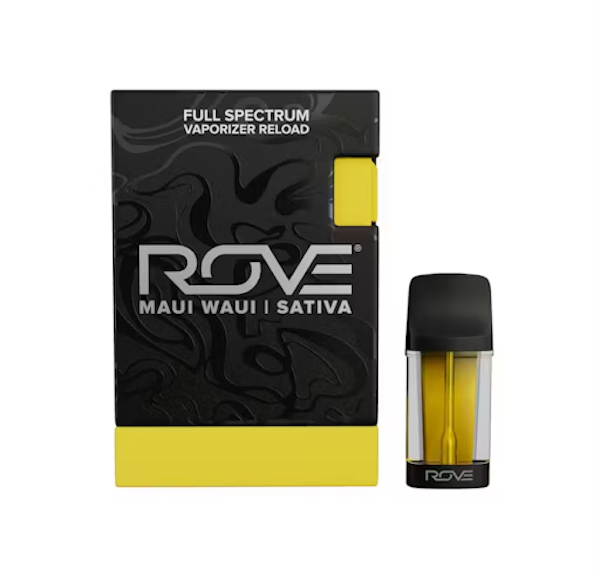
Herb Recommended Products:
READ MORE