herp
Is Live Rosin Better? Herb’s Case for Why Live Rosin Reigns Supreme
We asked, you answered, and live rosin won by a landslide. Here's whether it deserves the crown, and where live resin still holds its own.

Is live rosin better than live resin, or just more expensive? When we asked people on X to pick one concentrate for life, out of 49 votes, live rosin took 63.3% of the vote. Live resin got the remaining 36.7%.
Below, we break down the real difference between live resin and live rosin, make Herb’s case for why rosin earns its reputation, and give live resin a fair hearing too. That way, you can answer the big question for yourself: is live rosin worth it?
Live Rosin vs Live Resin: Major Differences Explained

LowTemp
The live rosin vs live resin debate comes down to one thing: how the concentrate is extracted. Everything else follows from that.
Both start in the same place. Growers take fresh cannabis and flash-freeze it within hours of harvest. Freezing locks in the terpenes and cannabinoids that would otherwise start to break down as the plant dries. That’s what the “live” in both names means.
From there, the paths split:
- Live resin uses chemical solvents, usually butane or propane, in a closed-loop system. The solvent strips the cannabinoids and terpenes from the frozen plant. It’s then purged from the final product.
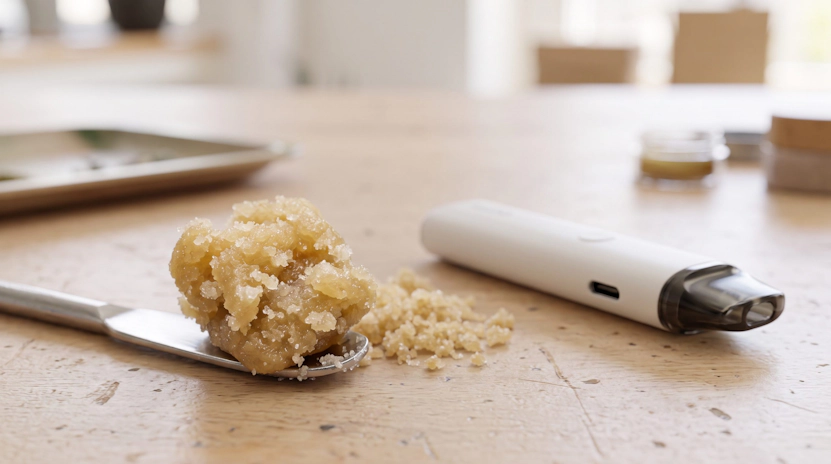
- Live rosin is solventless. Ice water and gentle agitation knock the trichomes loose, and they’re collected as bubble hash. That hash is then pressed with heat and pressure into rosin. There are no solvents anywhere in the process.
That single difference shapes purity, price, potency, and flavor. So, is live rosin better on paper? Here’s how they stack up:
| Info | Live Rosin | Live Resin |
|---|---|---|
Starting material | fresh-frozen cannabis | fresh-frozen cannabis |
Extraction | ice water, heat, and pressure | butane or propane solvents |
Solvents used | none | yes, purged afterward |
Typical yield | about 2-5% per pound | about 10-15% per pound |
Price | higher | lower |
Flavor | commonly described as more true-to-flower | rich, but can taste more processed |
Label THC | often lower | often higher |
If you’re newer to the wider world of cannabis concentrates, think of it this way: same frozen plant, two very different tools for getting the good stuff out.
So, what’s better, live resin or rosin? That depends on what you value most. Let’s start with the case for rosin.
Where Live Rosin Wins: Herb's Case for Solventless
herb
Here’s why we think the answer to “is live rosin better” is often yes, especially if flavor and purity top your list.
Purity
Live rosin is 100% solventless. There’s no chance of residual solvent because no solvent ever touches the plant. Live resin, by contrast, depends on a good purge to remove the butane or propane it was made with.
That’s the core of the solventless vs. solvent-based divide. With rosin, you’re not trusting the purge. You’re trusting ice, water, heat, and pressure.
Flavor
If you’re asking whether live rosin is better on flavor, this is where it earns its crown. It’s commonly reported to taste more true-to-flower, carrying the strain’s full terpene profile with more nuance and complexity. A good jar of rosin tends to taste like the plant it came from, not a version of it.
Solvent extraction can pull out terpenes too, and good live resin tastes great. But many consumers say rosin keeps more of the delicate top notes that make a strain distinct. If you’ve ever hit a rosin dab and tasted the exact fruit or gas you smelled in the jar, you know.
Craft and Experience
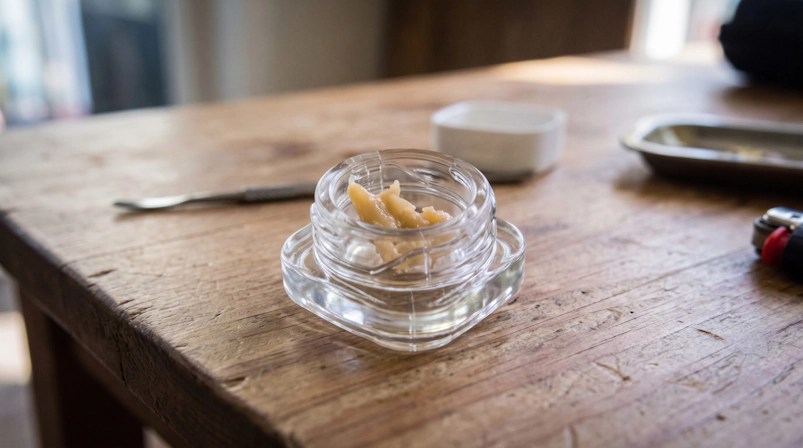
Live rosin is the closest thing you can get to the living plant when dabbing or vaping. It’s slow, low-yield, and hands-on to make. Small changes in the wash, the press, or the cure show up in the final product.
That’s why flavor-first and purity-first consumers gravitate toward it. It’s the craft beer of concentrates. You pay more, and you get a product made by people who obsess over the details.
So, Is Live Rosin Worth It?
For a lot of people, yes. If you care most about clean extraction and true-to-strain flavor, live rosin is worth it. You’re paying for a harder process and a lower yield, and many consumers say they can taste the difference.
That’s likely why our polls picked rosin. When people imagine choosing one concentrate forever, they tend to choose the one that tastes most like the real thing. Is live rosin better for everyone, though? Not quite. Here’s where live resin pushes back.
The Honest Case for Live Resin
There’s still lots of love for live resin, so let’s be fair about its benefits:
It costs less. Solvent extraction is much more efficient. Live resin commonly yields around 10% to 15% per pound of material, compared to roughly 2% to 5% for rosin. More product from the same plant means lower prices for you.
It often tests higher in THC. Solvent extraction tends to pull more cannabinoids, so live resin often shows bigger THC numbers on the label. If potency per dollar is your priority, resin usually wins.
It’s easier to find. Because it’s cheaper and faster to produce, live resin is more widely available and more consistent from batch to batch. That’s a big reason why there are so many live resin vapes on the market.
Live resin is the high-potency, better-value volume product. Live rosin is the craft, flavor-first premium product. Is live resin or rosin better? It depends on whether you’re optimizing for price and potency, or for flavor and purity.
Frequently Asked Questions
Is live rosin better than live resin?
It depends on what you value most. If flavor and purity matter most, many consumers say live rosin is better, since it’s solventless and commonly described as more true-to-flower. If you want lower prices and higher THC numbers, live resin often comes out ahead.
What is the difference between live resin and live rosin?
The difference between live resin and live rosin is the extraction method. Both start with fresh-frozen cannabis, but live resin uses solvents like butane or propane, while live rosin uses only ice water, heat, and pressure. That one difference drives most of the gaps in price, potency, and flavor.
Is live rosin worth it?
For flavor-first and purity-first consumers, it usually is. Live rosin costs more because the process is slow and yields are low, often just 2% to 5% per pound. If you mostly care about potency per dollar, live resin may be the better buy.
Is live rosin the same as solventless?
Live rosin is one type of solventless concentrate, but not the only one. When comparing live rosin vs solventless as a category, solventless also includes bubble hash, dry sift, and flower rosin. What they share is that no chemical solvents are used.
Is live rosin the same as live hash rosin?
Usually, yes, though there’s a small difference. Live hash rosin is pressed from bubble hash made with fresh-frozen plants, which is how most premium live rosin is made. When comparing live rosin vs live hash rosin, some products labeled “live rosin” may be pressed straight from fresh-frozen flower instead.
Does live rosin or live resin have higher THC?
Live resin often shows higher numbers on the label. Solvent extraction is more efficient at pulling cannabinoids out of the plant. That said, THC isn’t the whole story, and many consumers say rosin’s terpene profile shapes the experience just as much.
Which has better flavor, live rosin or live resin?
Live rosin is widely considered the more flavorful of the two. It’s commonly reported to taste closer to the original flower, with more of its delicate terpenes intact. Whichever you choose, lower temperatures help protect flavor, and Herb’s guide to vaping cannabis safely and effectively covers how to dial that in.
Herb Recommended Products:
READ MORE