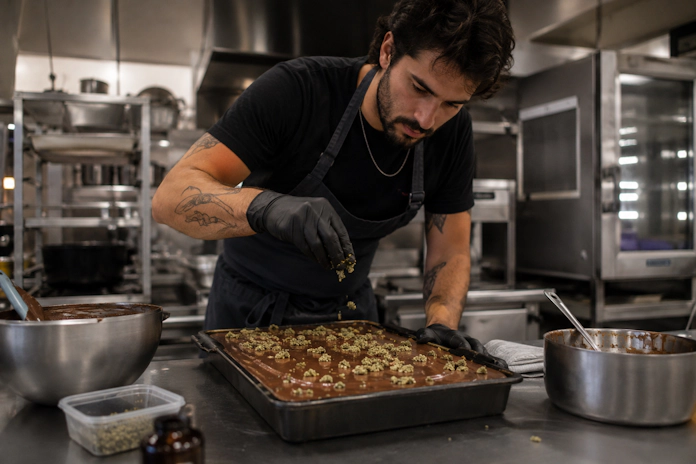
herb
The Biggest Edible Ever Consumed: Cannabis Eating World Records
From half-ton brownies to gummies containing nearly one million milligrams of THC, these colossal cannabis creations push the boundaries of infused food production

Cannabis world records exist in a unique space where culinary ambition meets manufacturing innovation—and where official recognition remains elusive. The largest verified cannabis-infused edible is an 850-pound brownie containing 20,000mg of THC, created by MariMed Inc. in Massachusetts in December 2021. Whether you’re curious about the technical challenges behind these massive creations or want to explore more reasonably sized options, Herb’s product catalog offers a wide selection of cannabis edibles from trusted brands.
Key Takeaways

herb
- The world’s largest cannabis brownie weighs 850 pounds with 20,000mg THC, created by MariMed Inc. in December 2021—more than 3.5 times larger than the previous non-cannabis brownie record
- Kosmik Brands holds the gummy record with a 286-pound creation containing 939,700mg of THC, unveiled in June 2025
- Guinness World Records refuses cannabis-related submissions involving the consumption, preparation, or use of cannabis products due to company policy, forcing the industry to document achievements through alternative channels
- Record-breaking edibles serve marketing purposes, not consumption—manufacturers use spectacle to launch brands and demonstrate technical capabilities
- A stark safety contrast exists between record products (hundreds of thousands of mg THC) and legal retail limits (5-10mg per serving)
- Cannabis edibles have ancient origins with longstanding traditions like bhang in India, connecting modern records to millennia-old practices
What Constitutes a 'Biggest Edible' World Record?

holly stratton
Defining what makes an edible “the biggest” requires examining multiple metrics that manufacturers and media outlets use to classify these achievements.
Defining 'Biggest': Weight vs. Potency

herb – binoid
Cannabis edible records typically fall into two categories:
Weight-based records:
- Total mass of the finished product
- Physical dimensions (length, width, height)
- Number of ingredients required for production
Potency-based records:
- Total THC content in milligrams
- Concentration per unit weight
- Combined cannabinoid profiles
The 850-pound MariMed brownie measured 3 feet wide by 3 feet long and 15 inches tall, requiring 1,344 eggs, 212 pounds of butter, 250 pounds of sugar, and 122 pounds of cocoa powder. This creation broke the 234-pound brownie record set in 2013 by more than 3.5 times.
The Unofficial Rules of Edible Record Attempts

felippe lopes
Without official governing bodies, the cannabis industry has developed its own verification systems:
- Documentation through trade publications like Marijuana Venture and Cannabis Business Times
- Self-certification by manufacturers with photographic and video evidence
- State regulatory body documentation for licensed facilities
- Industry event recognition and media coverage
The All-Time Largest Cannabis-Infused Food Creations
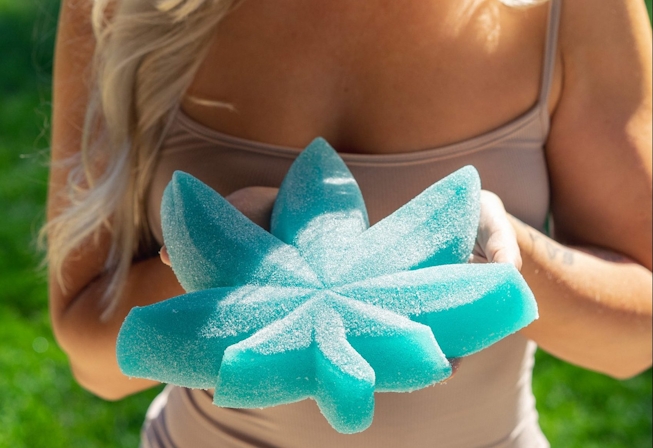
pHOTO Courtesy of BINOID
The evolution of massive cannabis edibles reflects both manufacturing capabilities and marketing ambitions within the legal cannabis space.
Chronicles of Cannabis Confections
The Record-Breaking Brownie (2021):
MariMed’s massive brownie creation generated significant media coverage—the company reported more than five billion consumer impressions—and successfully launched their Bubby’s Baked brand. Ryan Crandall, MariMed’s Chief Product Officer, stated that the product aimed to recreate “the nostalgic experience” of homemade brownies that introduced many consumers to cannabis edibles.
The Gummy Giant (2025):
Kosmik Brands shattered previous records in June 2025 with a 286-pound cannabis gummy containing 939,700mg of THC. This creation more than doubled the previous record of 135 pounds set by Good Day Farm in Missouri in 2022. The company created two identical gummies—one as a permanent monument and another divided for charity fundraising.
For those interested in making their own gummy creations at a more modest scale, check out Herb’s homemade gummies guide.
Edible Engineering: The Art and Science of Big Bites
Creating massive infused edibles presents unique technical challenges:
- Maintaining THC homogeneity throughout hundreds of pounds of product
- Ensuring consistent texture and baking across large volumes
- Meeting state seed-to-sale tracking requirements
- Managing industrial mixing equipment for proper infusion distribution
Interestingly, the largest non-cannabis gummy ever created weighed 3,800 pounds—more than 13 times larger than the cannabis record. This gap suggests cannabis manufacturers face constraints from regulations, costs, or market considerations rather than purely technical limitations.
Behind the Scenes: Crafting Gigantic Cannabis Creations
herb
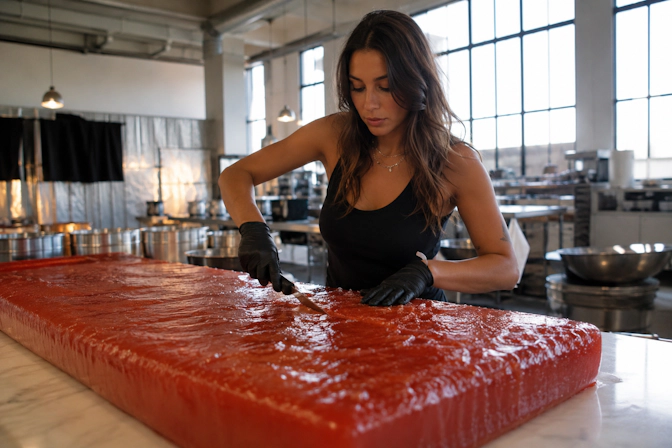
Manufacturing record-breaking cannabis edibles requires industrial-scale operations that balance food science with precise cannabinoid infusion.
Challenges of Large-Scale Infusion
Production considerations include:
- Industrial mixing equipment to ensure even THC distribution
- Batch testing samples from multiple locations within the product
- Employment of cannabis-specific food scientists
- Video documentation of production processes for verification
Testing laboratories use HPLC (High-Performance Liquid Chromatography) to measure both THC and THCA, calculating “Total THC” after decarboxylation. Potency variance tolerances are jurisdiction-specific—for example, Illinois uses an 85-115% tolerance framework, while many regulated markets apply tolerances around ±15% of labeled amounts.
The Science of High-Potency Baking
Record-breaking edibles produced in licensed facilities must still comply with state manufacturing standards:
- Products tracked through state seed-to-sale systems (METRC, BioTrack)
- Manufacturing facilities maintaining food safety certifications
- Proper disposal or destruction documentation required when necessary
- Packaging standards apply when products are packaged for consumer distribution
If you’re curious about creating your own infused creations at home, explore Herb’s recipe collection for tested formulas and techniques.
Notable Cannabis Edible World Records

Beyond brownies and gummies, the cannabis industry has produced numerous record-breaking achievements that showcase manufacturing creativity.
Official vs. Unofficial Achievements
Guinness World Records policies exclude titles involving “the consumption, preparation, or use of tobacco, cannabis, or nicotine products.” Paul Vancea, Chief Financial Officer at Kosmik Brands, addressed this limitation directly: “Guinness World Records will not touch anything cannabis related. So, unfortunately, we won’t be able to get them here to do a Guinness World Record, but it would definitely be a world record.”
This policy forces the cannabis industry to document achievements through:
- Industry trade publications
- Self-certification with extensive documentation
- Social media verification and viral coverage
- State regulatory records for licensed facilities
The Stories Behind the Edible Giants
Notable cannabis records documented by Royal Queen Seeds include:
- The 850-pound brownie (MariMed, 2021)
- The 286-pound gummy (Kosmik, 2025)
- Various joint-rolling records at cannabis festivals
- Concentrate production achievements
These records serve multiple purposes beyond spectacle—brand launches, media coverage, and demonstrations of technical manufacturing capabilities that build credibility in competitive markets.
The Safest Way to Consume Any Size Edible

Photo by Victor Moussa / Adobe Stock Photo
While record-breaking edibles make headlines, responsible consumption remains essential for any cannabis user regardless of serving size.
Understanding Your Tolerance
Many adult-use markets cap individual servings at 10mg THC (with some at 5mg) and often cap multi-serving packages around 100mg THC, though rules vary significantly by jurisdiction. These limits exist because:
- Edibles produce effects through liver metabolism, creating 11-hydroxy-THC
- Onset times range from 30 minutes to 2+ hours
- Duration of effects can last 6-8 hours
- Individual responses vary significantly based on body composition and tolerance
The Importance of Dosing for Edibles
Always start low and go slow—the contrast between record products containing nearly one million milligrams of THC and recommended serving sizes of 5-10mg illustrates why these spectacle creations exist for marketing rather than consumption.
For guidance on cannabis strains that might complement your edible experiences, Herb’s strain database offers detailed profiles and effect information.
Community and Culture Around Edible Feats

Photo courtesy of Antonioguillem / Adobe Stock Photo
Cannabis edible records connect to a broader cultural history that spans millennia and continues evolving today.
The Social Aspect of Big Edibles
The history of cannabis edibles includes ancient traditions like “bhang”—cannabis-yogurt drinks with longstanding use in India, still consumed during festivals today. North Africa developed traditional cannabis confections known as “majoun” (cannabis jam), while the Alice B. Toklas Cookbook popularized “Hashish Fudge” in Western culture in 1954.
In the 1980s, Mary Jane Rathbun, known as “Brownie Mary,” became famous for baking cannabis brownies for AIDS patients in San Francisco. This compassionate tradition influenced today’s record attempts, many of which include charitable components.
Community Reactions to Record-Breaking Bites
Record attempts generate significant community engagement:
- Social media sharing and viral content creation
- Industry pride and manufacturing credibility
- Tourism and destination appeal for dispensaries
- Charitable partnerships and fundraising opportunities
Kosmik Brands partnered with HeroGrown, a veterans cannabis advocacy nonprofit, to use portions of their record gummy for fundraising purposes—demonstrating how spectacle can serve community benefit.
The Future of Giant Cannabis Edibles
herb
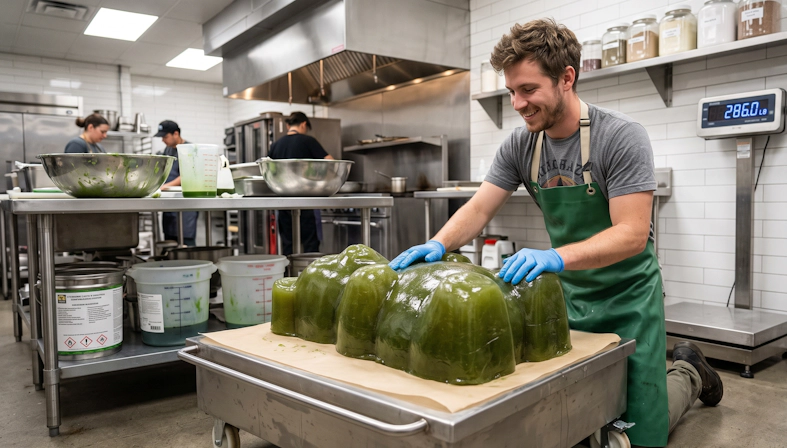
As regulations evolve and manufacturing technology advances, cannabis edible records will likely continue growing in ambition and scale.
Predicting the Next Edible Breakthrough
Current trends in cannabis manufacturing include:
- Nano-emulsion technology for faster-acting edibles
- Precision dosing developments
- Botanical terpene additions for entourage effects
- Luxury and craft positioning similar to fine chocolate
- Celebrity-branded edible lines
These innovations may eventually translate to record attempts, with manufacturers pushing boundaries of both size and sophisticated cannabinoid delivery.
How Legalization Impacts Edible Innovation
Changes in federal cannabis policy could alter the landscape of cannabis records, though specific outcomes remain uncertain. Potential impacts might include standardized national testing protocols, consolidated manufacturing opportunities, and shifts in industry oversight—though these would depend on the nature and scope of any policy changes.
Stay updated on legalization developments and industry trends through Herb’s news section, where cannabis policy changes and market innovations receive regular coverage.
Why Herb Is Your Source for Cannabis Culture

Photo by taira42 / Adobe Stock
Herb serves as the go-to resource for cannabis enthusiasts seeking both entertaining content and practical education. Whether you’re fascinated by record-breaking edibles or want to make your own cannabutter at home, Herb provides trusted guidance backed by years of cannabis journalism and a community of 14 million passionate members.
From strain guides to dispensary locations, Herb offers everything you need to explore cannabis culture responsibly and confidently.
Frequently Asked Questions
Why doesn't Guinness World Records recognize cannabis achievements?
Guinness maintains a policy excluding all records related to the consumption, preparation, or use of cannabis, tobacco, or nicotine products. The cannabis industry has responded by developing alternative verification systems through trade publications, industry events, and self-documentation with extensive photo and video evidence.
What happens to record-breaking edibles after the record is set?
Since these products far exceed legal potency limits for retail sale, they cannot enter normal commercial channels. Manufacturers typically divide record products into legal serving sizes for charity fundraising, destroy them with proper documentation, or maintain portions as permanent displays. State seed-to-sale tracking systems require documentation of all cannabis products, including those created for demonstration purposes.
Could someone actually consume an entire record-breaking edible?
Absolutely not safely. The 286-pound gummy contains 939,700mg of THC—equivalent to nearly 94,000 standard 10mg servings. Even the 850-pound brownie’s 20,000mg of THC represents 2,000 standard doses. These products exist exclusively for marketing and spectacle, with manufacturers explicitly stating they’re not intended for individual consumption.
How do manufacturers ensure consistent THC distribution in massive edibles?
Large-scale infusion requires industrial mixing equipment, specialized cannabis-infused oils or butter preparations, and extensive quality testing. Manufacturers sample multiple locations throughout the product to verify homogeneity and employ food scientists with cannabis-specific expertise. The AFDO Cannabis Manufacturing Standards provide guidelines for consistent production, though scaling to record-breaking sizes introduces unique challenges not covered by standard protocols.
Are there cannabis eating competitions similar to hot dog contests?
Unlike traditional competitive eating events, cannabis consumption competitions would face significant legal and safety barriers. The delayed onset of edible effects (30 minutes to 2+ hours) makes real-time competition impractical, and the health risks of extreme THC consumption prevent legitimate organizations from sanctioning such events. Record attempts focus on creation rather than consumption for these reasons.
Herb Recommended Products:
READ MORE