Keep the Flower, Lose the Flame: Smokeless September Is Here
Storz & Bickel's Smokeless September asks you to drop the lighter for 30 days. Here's what the research says about vaping vs smoking flower.
Rachel Abela
September 13, 2026
This article contains sponsored content. Some of the products featured are part of paid partnerships. This page explains how our process works.
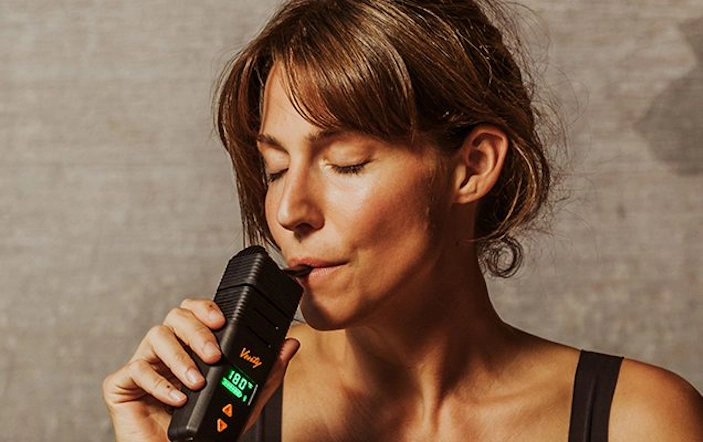
Photo Courtesy of storz & bickel
Storz & Bickel's Smokeless September asks you to drop the lighter for 30 days. Here's what the research says about vaping vs smoking flower.
September 13, 2026
Alternatives to smoking weed have existed for years, and yet the flame never really went anywhere. There’s a reason for that.
Think about how much of cannabis culture lives in the mechanics. Breaking up flower by hand. The grinder. Rolling something halfway decent and being quietly proud of it. Passing a joint to the left because a song told us to in 1982. Smoking is the part everybody remembers.
Which is exactly why Storz & Bickel’s Smokeless September Challenge is an interesting ask. Spend 30 days with the plant and without combustion.
They’re challenging you to change the method, not the moment. Nobody’s asking you to quit anything or reinvent your evening. Just swap the heat source and pay attention to what changes.
Important: This article is for informational purposes only; not legal, medical, or professional advice. For adults 21+. Featured products are not FDA-evaluated and are not intended to diagnose, treat, cure, or prevent any disease.
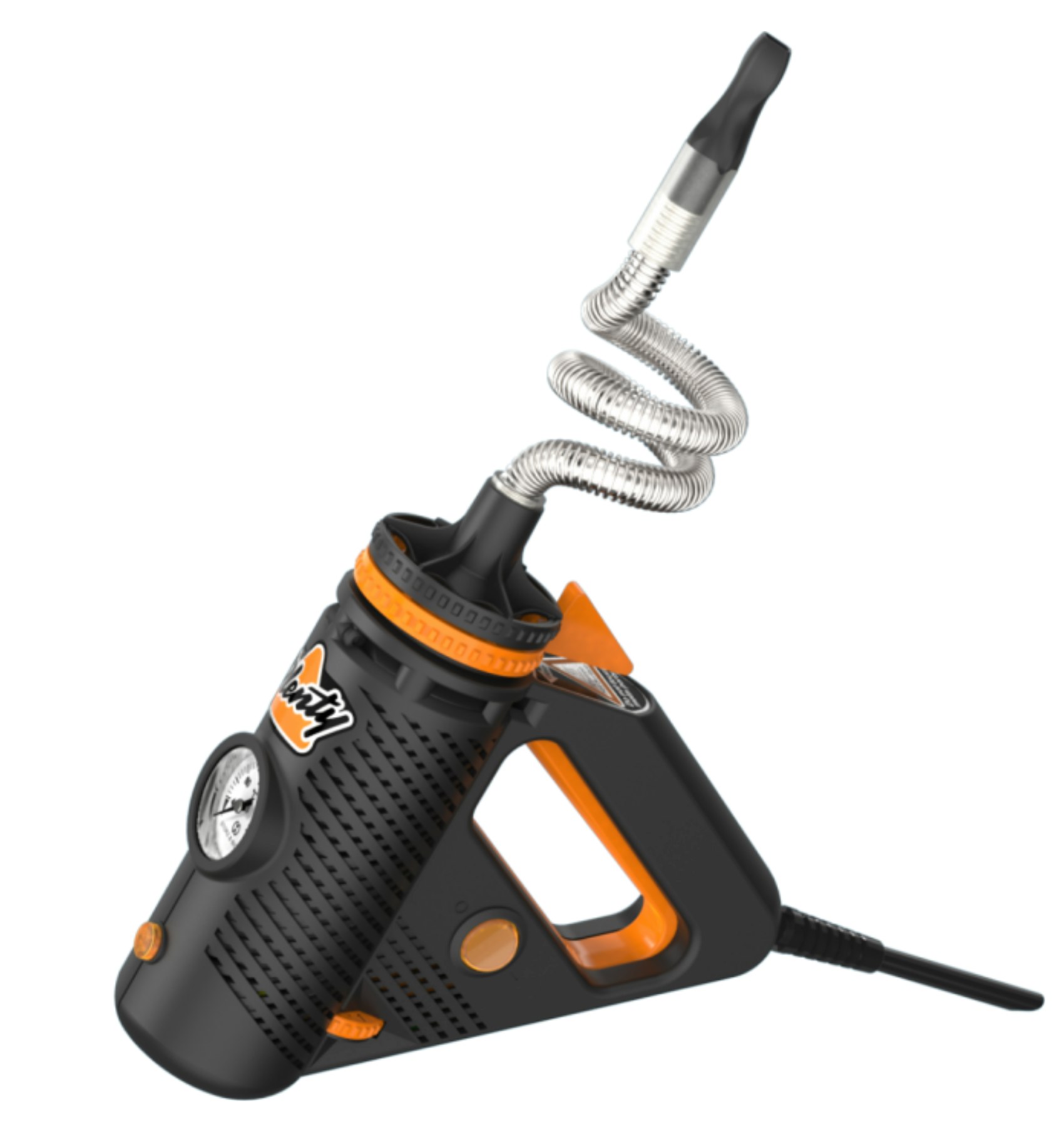
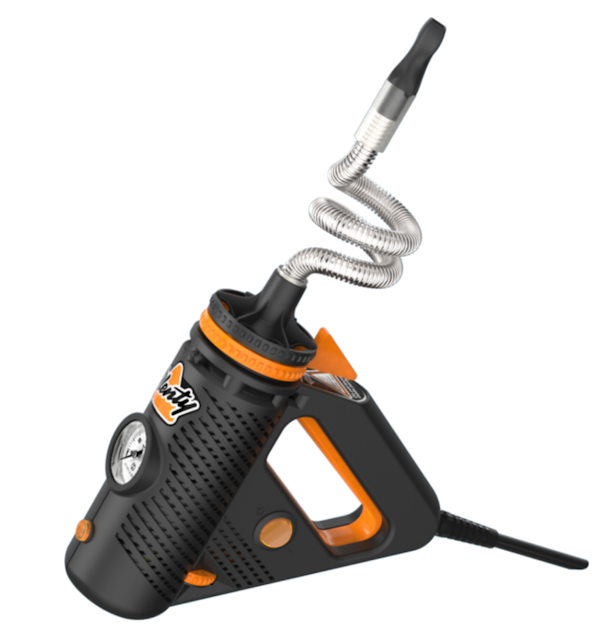
Want to lose the flame without losing the session? The PLENTY is our top pick for Smokeless September. Its generous 3.4 cm³ chamber is built for longer flower sessions, while the stainless-steel cooling coil helps deliver cooler, smoother vapor.
Seven temperature settings let you dial between flavor and denser vapor, making it an easy at-home swap when you want to keep the flower and the ritual—just without combustion.
Save an extra 10% on the PLENTY with code SMOKELESS.
Storz & Bickel’s Smokeless September Challenge is a 30-day combustion-free reset. Put down the lighters and matches for the month, switch to a dry herb vaporizer, and track what changes.
Storz & Bickel suggests paying attention to the differences you’d actually notice day-to-day:
Odor. Vapor dissipates faster and lingers less in fabric and hair than smoke does. For anyone with roommates, neighbors, or a landlord, this difference alone is often the whole selling point.
Flavor. Combustion burns off a lot of what makes a strain taste like itself. Terpenes are volatile and start boiling off well below the temperature a flame produces, so vaporizing lets more of that character actually reach you — expect notes you may never have picked up through smoke.
Harshness. Hot smoke is hot smoke. Vapor at 356°F arrives softer and carries less particulate, and most people feel the difference on the throat within the first few draws.
Respiratory comfort. This is the one regular smokers tend to notice most—how your chest and lungs feel a week or two in, especially first thing in the morning. It’s also the change that’s hardest to un-notice once you do. A 2026 narrative review also compared the respiratory and cardiovascular effects of smoking versus vaping cannabis, and the picture is mixed. Vaping was found to reduce exposure to combustion-related toxicants compared with smoking, but more on that further down, because it needs a deeper explanation.
How the ritual feels. Some people find loading a chamber and dialing in a temperature more satisfying than rolling. Some find it fussy. That’s the genuinely personal variable, and the main thing 30 days are actually for.
Experimenting across temperatures. A joint or bowl has one setting: burning. A vaporizer lets you apply different temperature ranges—cooler for flavor and a lighter head, or hotter for denser vapor and a heavier hit. The same flower, tuned to the session.

Herb
Dry herb vaping is the closest like-for-like swap. Same flower, same terpenes, same jar you already own, minus the fire. Every other option changes the experience significantly.
The full breakdown of smoking alternatives for weed, quickly:
So, what is an alternative to smoking weed that still feels like smoking weed? That’s the whole reason this campaign is built around vaporizers.
Storz & Bickel has been doing this longer than almost anyone. They were the first manufacturer to produce medically certified cannabis vaporizers, and the VOLCANO has been used in published research since it launched in 2000. Here are three devices up for the challenge:
The PLENTY is the one for people who want volume. It has an unusually wide 3.4 cm³ filling chamber, a stainless steel helix cooling coil that drops draw resistance to almost nothing, and an air jet reaching up to 30 liters a minute. Temperature runs from 266°F to 396°F across seven levels on a thumbwheel. Plus, there’s a physical thermometer on the front and an automatic shutoff behind it. Heat-up takes about 4.5 minutes at 356°F. It’s $199.20, down from $249, with a two-year warranty. Use code SMOKELESS for an extra 10% off the PLENTY.
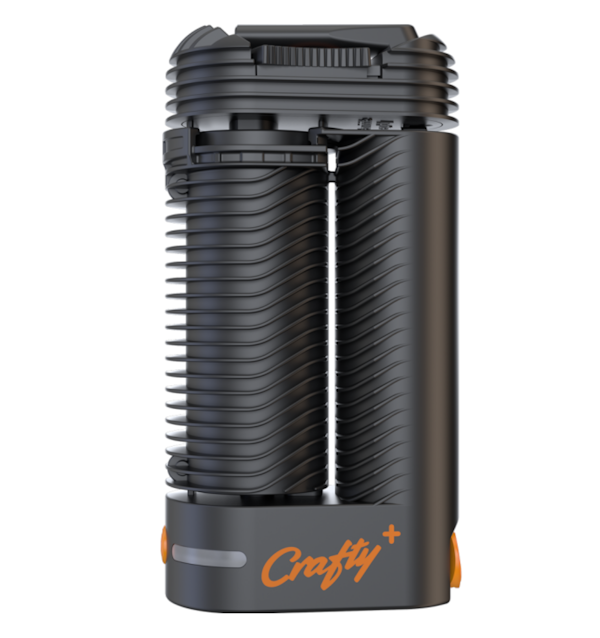
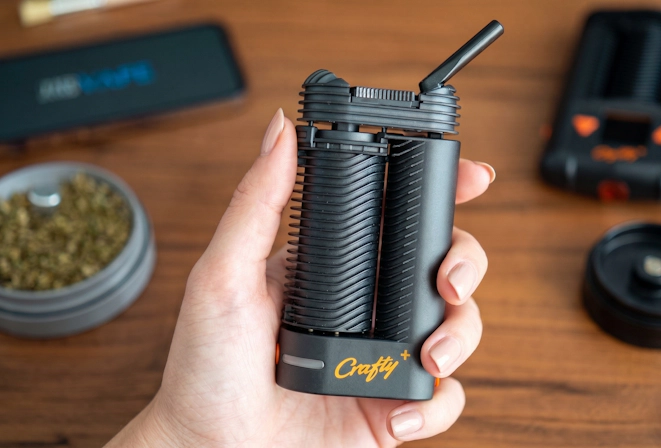
The CRAFTY+ is the portable workhorse. At 135g, it slips into a pocket, and it’s ready in about a minute. One button gets you three preset temperatures, with a Booster and Superbooster adding 27°F on a double-click. Pair it over Bluetooth, and the S&B web app lets you set the temperature to the exact degree anywhere from 104°F to 410°F. Medical-grade PEEK with a ceramic-coated 1.4 cm³ chamber. Currently $223.20, down from $279. Use code SMOKELESS for an extra 10% off the CRAFTY+.
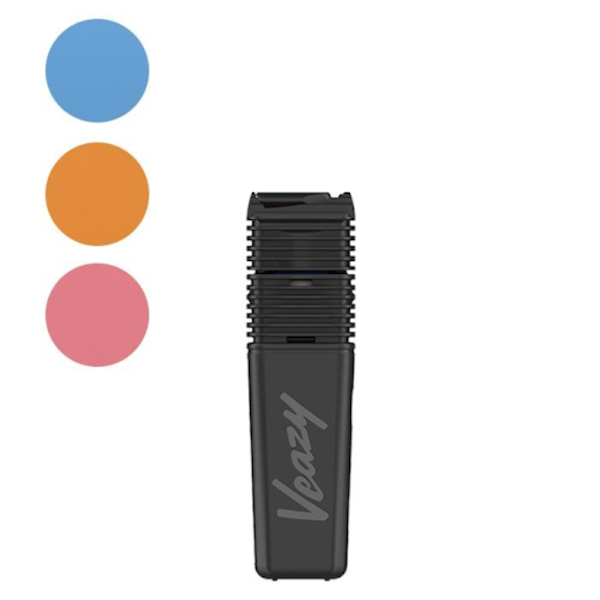
The VEAZY is the newest and smallest device S&B has made. 134g, ready in roughly 40 seconds, and available in four colors: Alluring Black, Charming Pink, Inspiring Orange, and Dynamic Blue. Same patented heating, same app control, same 1.4 cm³ ceramic chamber and PEEK build. $249.
All three use S&B’s patented combination of convection and conduction heating. Expect dense vapor from the first draw.
Important: Laws vary by state. A narrower federal hemp definition takes effect on November 12, 2026. Check current state and federal laws before buying.
Herb
No, not universally. Dry herb vaping avoids intentional combustion and appears to reduce exposure to certain toxins, but neither method is risk-free. Which one is better depends on what you’re optimizing for.
Here’s how they compare.
How it works. Smoking burns plant material at temperatures well over 600°F, producing smoke plus everything combustion creates as a byproduct. Dry herb vaping heats flower to roughly 340°F to 410°F. It’s hot enough to release cannabinoids and terpenes as vapor without igniting the material.
Flavor and aroma. Vaping wins this one, and it’s not close. Terpenes have low boiling points, so fire destroys a lot of them before they reach you. At controlled temperatures, you get closer to what the strain actually smells like in the jar. Lower temperatures favor flavor, higher temperatures favor vapor density.
Harshness. Vapor is generally reported as easier on the throat than smoke. The PLENTY’s cooling coil exists specifically for this reason.
Odor. Vapor is fainter and clears faster. It doesn’t eliminate smell, but the difference in a small apartment is significant.
Effects and experience. Many people report vaporized flower feeling clearer or more defined, though this is subjective and varies by person and temperature. Onset is fast, similar to smoking, since both are inhaled.
Temperature control. Only vaping offers it, and it’s the underrated part. A joint has one temperature: burning. Being able to run 340°F for flavor and 400°F for something heavier changes your relationship with the same flower.
Convenience and maintenance. Smoking needs papers and a lighter. Vaping needs charging and cleaning. Neither is zero effort; they’re just different chores. Skip the cleaning and vapor quality drops off noticeably, which is why S&B keeps flagging it.
Ritual. Honestly a toss-up, and the point of a 30-day trial. Rolling is meditative for some people. Others find grinding, loading, and dialing in a temperature just as satisfying. Plenty of dry herb vaping myths exist mainly because people tried a cheap device once and wrote off the category.
That 2026 narrative review summarized recent evidence on both methods, and the findings cut in both directions.
Vaping cannabis was found to reduce exposure to combustion-related toxicants compared with smoking. But both methods increased heart rate and blood pressure, and both altered immune responses in the lungs.
The review also noted a clear association between THC vaping and vaping-associated lung injury, and links between vaping and increased respiratory symptoms. On the long-term questions people most want answered, meaning COPD, lung cancer, heart attack, and stroke, the evidence remains limited and inconclusive.
Two things worth flagging about that. First, it’s a narrative review, which synthesizes existing literature rather than generating new data. It’s useful, but not a final verdict.
Second, “THC vaping” in the research often covers cartridges and oil pens, which are a different product category from dry herb vaporization entirely. The lung injury cluster that made headlines was traced largely to additives in illicit cartridges, not to heated flower.
If you’re weighing devices, our breakdown of dry herb vapes versus carts covers why that distinction matters. Our concentrate versus dry herb comparison goes even further.
So, are dry herb vapes safe? Not in any absolute sense, and nobody should tell you otherwise. Inhaling anything into your lungs carries risk. The framing here is harm reduction.
For people who are going to inhale cannabis regardless, dry herb vaporization likely lowers exposure to some toxins compared with joints and bowls. Storz & Bickel cites research finding reductions of up to 99% in compounds like benzene and acetaldehyde when comparing vaporization to joint smoke.
But lower risk doesn’t mean no risk.
For flavor, odor, and control, yes, fairly decisively. On health, it looks like a reduction in some exposures rather than a clean bill of health. And for ritual, that’s the thing you can only settle by trying it, which is more or less the entire premise of the challenge.
If you want to go all in on the format, the VOLCANO Classic and Hybrid comparison covers the desktop end of the range.
Use code SMOKELESS for an extra 10% off, valid on the CRAFTY+ and PLENTY only. The VEAZY is excluded. Worth also keeping an eye on where the hemp rules land before December, since consumable products on shelves may shift.

Photo Courtesy of storz & bickel
Smokeless September is a good experiment precisely because it doesn’t ask for much. Thirty days, same flower, different heat source, and pay attention.
Of all the best ways to consume cannabis without smoking, dry herb vaping is the only one that keeps the ritual intact. Edibles, tinctures, capsules, and topicals all work, but they change the experience rather than preserve it. If you like smoking and want a good alternative to smoking weed rather than a replacement for the whole habit, this is the swap.
On the health question, the evidence supports vaporization as a lower-exposure option than combustion. But inhalation is not risk-free either way. If you consume for medical reasons or have respiratory concerns, talk to a doctor before changing anything.
Everything else you find out by doing it. Drop the lighter for a month and see what you notice.