
Elsa Olofsson
Women Now Use More Cannabis Than Men: What This Means for the Industry
For the first time in decades of tracking, young women have surpassed men in cannabis use—and the industry is scrambling to catch up.

For decades, cannabis culture followed a familiar script. Men used more cannabis, used it more often, and largely defined how the industry looked, sounded, and sold itself. Products, branding, and even legalization messaging were built around a male consumer who treated cannabis as recreation first.
That script has quietly flipped.
Recent national and peer-reviewed studies show a clear and accelerating shift in who uses cannabis—and how often:
- Women aged 19–30 now report higher past-year cannabis use than men, marking the first time this has occurred in the nearly 50-year history of the Monitoring the Future study (2023 data).
- The Monitoring the Future panel series, which has tracked substance use since 1976, shows that women’s 12-month and 30-day cannabis use rates have risen faster than men’s over the past decade.
- The most pronounced increases appear in young adulthood and middle adulthood.
- Men aged 35–50 still report higher overall cannabis use, a pattern that has remained consistent for more than ten years.
The trajectory is clear: women and cannabis use are increasingly connected, particularly among younger generations who may just drive the market for decades to come.
Beyond a Usage Shift: New Motivations Revealed

Crystalweed
Researchers find that one main factor that drives the gender shift when it comes to young women consuming more cannabis than men is motivation.
Studies published in the Journal of Psychology of Addictive Behaviors suggest that women use cannabis more often to cope with stress, anxiety, or negative emotions. Men, on the other hand, tend to use cannabis for fun, to get high, or to boost already-good moods.
Put simply, men are chasing positive emotions, while women are escaping negative ones.
This distinction matters because the motivation shapes the relationship with the substance and desire for the overall use.
When cannabis functions as entertainment, it becomes more optional. But when cannabis functions as a coping mechanism, it can easily become embedded in daily life. Research also shows that women generally experience anxiety and mood disorders at higher rates than men. If cannabis helps manage those conditions, it makes sense that women would feel more consistently drawn to its effects.
Legalization has also reduced stigma and increased accessibility. As cannabis becomes normalized, the social barriers that may have kept women from participating are fading.
Walking into a licensed dispensary—brightly lit, regulated, and staffed by trained employees—is fundamentally different from navigating the illicit market. And that matters for consumer behavior, especially for those who prioritize safety.
More Ways Women and Men Experience Cannabis Differently
The differences between men vs women’s cannabis use go beyond motivation. A study published in the Journal of Cannabis and Cannabinoid Research surveyed 2,374 cannabis users and found telling patterns in consumption methods, effects, and even withdrawal symptoms.
Consumption methods: Men gravitated toward joints, blunts, vapes, and concentrates. Women preferred pipes and oral administration methods, such as edibles.
Effects while high: Men were more likely to report increased appetite, improved memory, enthusiasm, altered time perception, and heightened musicality. Women were more likely to report loss of appetite and, interestingly, a desire to clean.
Withdrawal symptoms: Men reported insomnia and vivid dreams during breaks from cannabis. Women reported nausea and anxiety.
These data points are extremely helpful in explaining why women and cannabis have developed such a unique relationship. They inform product development, marketing, and retail strategy. If women and cannabis have a different dynamic than men and cannabis—different methods, different effects, different needs—then the cannabis industry needs to respond accordingly.
Why the Cannabis Industry Can’t Ignore Women Anymore
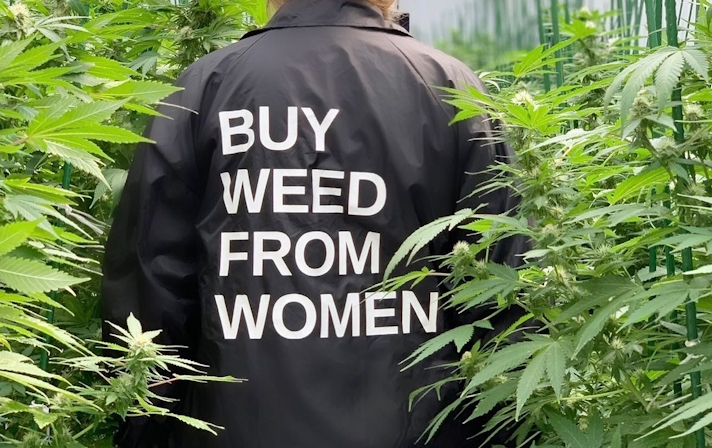
BWFW
The financial stakes make the demographic shift impossible to dismiss.
According to Statista, the U.S. cannabis market is projected to reach $47 billion by 2026 and climb to $55.43 billion by 2030. Legal cannabis contributed roughly $149 billion to the U.S. economy in 2025 and supports more than 425,000 full-time equivalent jobs.
With that scale, knowing who actually drives purchasing decisions becomes a business imperative, and increasingly, the answer is women.
A Reuters report notes that major cannabis retailers are already refocusing shelf space toward products popular with female consumers, including edibles, tinctures, topicals, and beverages. These categories align with the consumption preferences found in the research: oral administration and methods that don’t involve smoking.
“Creating new products or rebranding may seem like sunk cost, but with women making over 80% of purchasing decisions in the U.S., it’s not just smart, it’s necessary,” Lauren Carpenter, CEO of dispensary chain Embarc, told Reuters.
Tatiyana Brooks, co-founder of cannabis data firm GetCannaFacts, shares the same sentiment: “Women are more likely to purchase from the industry’s legal market than their male counterparts, making them practical targets with long-term capital benefits.”
The Bottom Line

Herb
For the first time in history, young women are using cannabis more than young men. Most women are using cannabis to cope, and most men are using it to have fun. Those different motivations create different relationships with the plant, different consumption patterns, and different opportunities for the cannabis industry.
The market is projected to grow by tens of billions of dollars over the next several years. A big portion of that growth will be driven by women and cannabis purchases—female consumers who see cannabis not as entertainment, but as an essential part of managing daily life. The industry is starting to catch on. The question now is whether it can adapt fast enough to meet the moment.
Herb Recommended Products:
READ MORE