Herb
How to Buy Weed in Bermuda: Decriminalization, Medical Access & Tourist Guidelines |
05.10.2026Cannabis is decriminalized for possession under 7g in Bermuda, but tourists cannot buy, import, or legally consume it. Here's what travelers need to know.
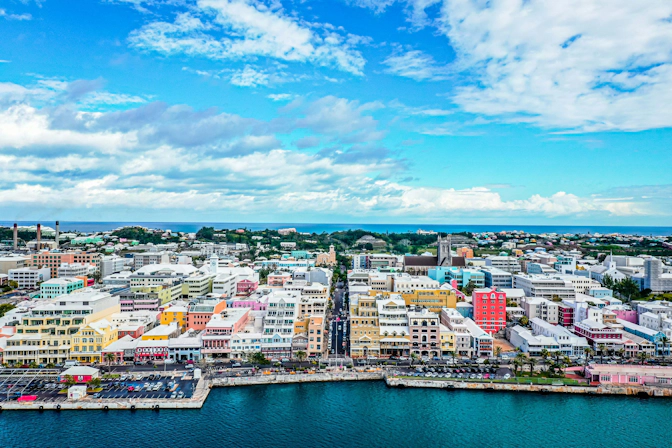
Bermuda is one of the most visually striking island destinations in the Atlantic: pink-sand beaches, warm turquoise water, and a culture that runs deeper than its postcard reputation. If you are a cannabis enthusiast planning a trip there, you may have heard that Bermuda came surprisingly close to going fully legal just a few years ago. That news cycle was real. The House of Assembly passed a bill. Then it was blocked.
The short answer on how to buy weed in Bermuda in 2026: you cannot. There is no licensed recreational market, no dispensary, no legal place to purchase cannabis on the island. Possession of small amounts has been decriminalized since 2017, but that is a very different thing from legalization. For tourists specifically, enforcement at ports of entry is active and carries real financial consequences.
This guide breaks down exactly where the law stands, what decriminalization actually means on the ground, how medical access works, what tourists face if caught, and why Bermuda came so close to becoming a fully legal destination in 2022.
The question makes sense. Bermuda’s House of Assembly passed the Cannabis Licensing Act 2022 on March 25, 2022, with government support and after prior consultation documents cited public support for cannabis reform. News outlets reported that Bermuda was on the verge of legalization. Then the process stalled. The Senate rejected the bill, and it later reached the Governor through Bermuda’s constitutional process. The Governor first reserved assent and later received a UK instruction not to assent to the bill as drafted.
If you searched “how to buy weed in Bermuda” expecting to find dispensaries, that news cycle is why. The House passed the bill. The market never opened.
Several years later, the situation remains: no dispensaries, no legal retail access, active enforcement at airports and cruise ship ports. The government is still working toward reform, but the constitutional constraints that blocked the 2022 bill have not been resolved.
For cannabis travelers, this matters practically: Bermuda is not a destination where legal access is part of the experience yet. The coverage below reflects the reality on the ground so you can plan accordingly.
Cannabis is not legal for recreational use in Bermuda. Possession of up to 7 grams has been decriminalized since 2017, but buying, selling, growing, and importing cannabis all remain illegal, with no dispensaries operating on the island.
In 2026, possession of small amounts remains decriminalized, meaning you will not receive a criminal conviction for carrying up to 7 grams, but that is not the same as legality. Purchasing, consuming, cultivating, and importing cannabis of any amount remains unlawful under Bermuda’s Misuse of Drugs Act.
What “decriminalized” means in practice: if a police officer finds you with 7 grams or less, they can confiscate the cannabis. You will not face criminal charges for that amount alone. What it does not mean: that you are free to smoke in public or private places, buy from any source without legal risk, or bring cannabis into the country through customs.
Bermuda’s government states that smoking cannabis remains illegal in both public and private places, even though simple possession of 7 grams or less has been decriminalized. That language comes directly from the Government of Bermuda public awareness fact sheet.
The distinction matters, especially for visitors. The 7-gram threshold removes criminal offences for simple possession only. It does not legalize importation, consumption, cultivation, supply, or trafficking. Decriminalization does not protect customs enforcement when entering the island with cannabis.
The bottom line: you cannot legally buy recreational cannabis in Bermuda. You cannot legally import it. And while small-amount possession is decriminalized, the island actively enforces drug laws, particularly at ports of entry.
Bermuda’s shift toward a more measured cannabis policy began in December 2017, when the Misuse of Drugs (Decriminalisation of Cannabis) Amendment Act came into force. The legislation removed criminal sanctions for possession of cannabis up to 7 grams for personal use.
Before this amendment, even minor cannabis possession could result in a criminal record, potentially affecting employment, travel, and residency. The 2017 law was a meaningful step for residents. A follow-on set of regulations in 2023 created a pathway to expunge older cannabis possession convictions from criminal records, a social equity measure that community advocates had pushed for over several years.
However, the 2017 Act came with explicit clarifications from the government. In a ministerial statement, Bermuda’s government noted that the law does NOT make it legal for a person to consume, cultivate, traffic, or import cannabis in any quantity. Police retain the authority to seize any amount of cannabis found on a person, regardless of whether criminal charges will follow.
What this looks like for tourists and visitors: decriminalization provides essentially zero practical protection at the border. If you arrive with cannabis, you are importing a controlled substance. The 7-gram threshold applies to possession on the island, not to the act of importation itself.
One significant secondary consequence worth knowing: if you are a Bermuda resident caught with cannabis in circumstances that trigger formal legal proceedings, you risk being placed on what locals call the “stop-list,” a travel restriction that limits your ability to leave the island until the matter is resolved. This is a real and significant consequence that goes beyond any fine.
Bermuda’s decriminalization was a harm-reduction measure, not an opening of cannabis culture on the island. It stopped well short of creating any legal pathway to purchase or consume.
Since a 2016 Supreme Court ruling, patients have been able to apply for personal authorization to possess and import medical cannabis in Bermuda. The ruling opened a pathway for patients to make personal applications for importation and use, but Bermuda still lacks a domestic dispensary-based medical cannabis system.
In practice, the access pathway has remained narrow and bureaucratic. Individual patients who qualify must apply through the government to import their own cannabis products from overseas suppliers. That limit was later increased substantially, allowing approved medical patients to import up to 2,000 grams annually. While the improvement in quantity was significant, the application process still requires navigating government approvals, medical documentation, and identifying a licensed international supplier willing to export to Bermuda.
The practical steps for a Bermuda resident seeking medical cannabis access:
A Royal Gazette analysis from March 2025 highlighted growing momentum behind developing a domestic medical cannabis production and export sector as a more practical and sustainable path for Bermuda, rather than relying indefinitely on a patient-import model.
For tourists or short-term visitors, there is no practical legal access pathway. Foreign medical cards or prescriptions do not authorize visitors to bring cannabis into Bermuda. The pathway is designed for Bermuda residents with an established domestic physician relationship and the ability to complete a multi-step government application process.
Bermuda’s House of Assembly passed the Cannabis Licensing Act 2022 on March 25, 2022. The bill passed the House 18 to 6. It was then sent to the Senate, where the vote tied on March 30, 2022, and the bill was rejected. The bill later reached the Governor through Bermuda’s constitutional process after repeated Senate rejection. The Governor first reserved assent in May, and the UK later instructed the Governor not to assent to the bill as drafted in September 2022.
The Governor stated concern: the Cannabis Licensing Act conflicted with Bermuda’s obligations under international drug control treaties, specifically the United Nations drug conventions to which the United Kingdom is a signatory. Since Bermuda is a British Overseas Territory, those treaty obligations extend to the island even though Bermuda’s elected government had chosen a different direction.
For Bermudians, the 2022 episode crystallized a tension that exists throughout the British Overseas Territories: locally elected governments have real legislative power, but that power encounters limits when it conflicts with UK constitutional authority or international obligations.
Discussions about how to craft legislation that could survive royal assent have continued, with various approaches being explored, including a narrower medical-focused bill that might navigate the constitutional constraints more successfully. The fundamental question remains: can Bermuda reach full adult-use legalization within the constraints of its constitutional relationship with the UK, or does that require the UK itself to revise its position on those UN treaty obligations?
Bermuda’s earlier regulated cannabis policy framework stated that the proposed scheme was influenced by models from Canada and small Caribbean island jurisdictions. Understanding what the 2022 bill contemplated gives a clear sense of where Bermuda is headed if and when legalization eventually passes.
The proposed framework contemplated adult access, with eligibility set at 21 and possession limits tied to Bermuda’s 7-gram threshold. The bill outlined seven license categories to cover the full supply chain:
Each applicant could hold only one retail license. License fees were intended to be kept accessible to allow underserved communities to participate, and prior cannabis convictions would not automatically disqualify applicants.
A cannabis regulatory authority would have been established to oversee regulation and advise the minister responsible for drug prevention policy. From a tourism standpoint, a legal Bermuda market would have been a meaningful draw. The island’s visitor economy is significant, and a legal cannabis framework, similar to what exists in Jamaica or Puerto Rico, would have added a new dimension to the visitor experience. That market does not exist yet. But the legislative blueprint is already drafted and waiting.
The first and most important thing for any cannabis enthusiast visiting Bermuda to understand: you are arriving in a jurisdiction with active drug enforcement and real consequences for violations.
Bermuda has robust entry enforcement that specifically targets drug importation.
At L.F. Wade International Airport, all arriving passenger bags pass through a customs inspection process that includes drug-detecting dogs. There is no minimum amount that guarantees you will slip through undetected.
Cruise ship arrivals face identical enforcement attention. Bermuda Customs teams board arriving vessels and conduct inspections of passenger cabins and luggage.
The consequences for tourists caught importing cannabis include:
For non-US citizens, a foreign cannabis-related conviction may create US immigration or admissibility complications. US federal law also continues to treat marijuana as a controlled substance at the border.
Cannabis is listed among the prohibited and restricted goods on the Government of Bermuda customs website. There are no carve-outs for personal-use amounts, for medical prescriptions from other jurisdictions, or for travelers from legal states or countries.
CBD products in Bermuda occupy a genuine grey area, and the regulatory environment as of 2026 remains unresolved.
Bermuda Customs defines hemp as cannabis sativa (or any part thereof) with a THC content of not more than 1%. Products meeting this definition are technically permitted under the hemp classification. However, that definition explicitly excludes food products containing cannabinoids, including edibles. A CBD gummy or cannabis-infused food product does not qualify under the hemp carve-out, regardless of its THC content.
The grey area became publicly visible in April 2024, when a Bermuda CBD retailer urged customers to purchase stock amid legal confusion about THC products available on store shelves. Questions sent to Bermuda’s government about the legal status of those products went unanswered, according to Royal Gazette reporting. The situation highlighted that even the government has not clearly resolved what is and is not permitted in the CBD product category.
The practical guidance for travelers: do not bring CBD products from overseas without checking THC content and packaging carefully. The import and sale of cannabinoid products remains legally unsettled. Travelers should not assume CBD products can be brought through customs without risk.
Bermuda’s government states that smoking cannabis remains illegal in both public and private places, even though simple possession of 7 grams or less has been decriminalized. The Misuse of Drugs Act prohibition on consumption was not altered by the 2017 amendment.
There is no designated consumption space anywhere on the island. No cannabis-friendly accommodation, no cannabis events, no lounges or social clubs where legal consumption takes place. Bermuda’s decriminalization was a narrow policy change focused on reducing criminal penalties for personal possession. It was not a broader shift in how cannabis culture is accommodated.
For residents, consumption generally happens privately, away from public view. For tourists, there is no legal space to consume, even if you were somehow in possession of cannabis on the island.
Bermuda sits in a genuinely complex position relative to other island destinations that cannabis travelers often visit. The contrast in cannabis access is striking.
| Destination | Possession Limit | Dispensaries | Tourists Can Buy? | Medical Program |
| Bermuda | 7g (decriminalized) | None | No | Residents only via import authorization |
| Jamaica | 56g (decriminalized) | Yes (licensed herb houses) | Yes | Yes |
| Barbados | 14g (decriminalized) | Limited (medical only) | No | Yes |
| Aruba | No legal threshold | None | No | No |
| Puerto Rico | Medical legal | Yes (medical dispensaries) | Yes (with US medical card) | Yes (robust) |
| Cayman Islands | Illegal | None | No | No |
Jamaica remains the most accessible option in the broader region for cannabis enthusiasts. Possession was decriminalized in 2015, and licensed herb houses operate in tourist areas, allowing visitors to legally purchase and consume in designated spaces.
Barbados decriminalized cannabis possession in 2019 and has taken steps toward a regulated recreational market, including provisions for home cultivation.
Puerto Rico has a fully operational medical cannabis market accessible to visitors with qualifying US state medical cards, with licensed dispensaries operating across the island.
Aruba maintains full prohibition with no legal access for tourists.
Cayman Islands, also a British Overseas Territory like Bermuda, maintains stricter prohibition and has not decriminalized possession, making it the most restrictive of the major island destinations in the region.
By regional comparison, Bermuda has moved beyond strict prohibition through decriminalization, but it lags behind Jamaica, Puerto Rico, and other destinations in terms of practical access. The UK’s instruction not to assent to the 2022 bill placed Bermuda on a slower trajectory than most of its regional neighbors.
If legal cannabis access is part of your next trip, Jamaica remains the strongest Caribbean option for visitors. Read the full guide for destinations where legal access is already part of the experience.
Despite the 2022 setback, the push toward cannabis reform in Bermuda has not stopped. The Progressive Labour Party, which holds the government, committed in its 2025 platform to reviewing and updating cannabis-related guidance, regulations, and oversight, seeking a balance between the limits of the British framework and safe, responsible adult cannabis use. That phrasing is intentionally calibrated around the constitutional constraint the Governor invoked in 2022.
A Royal Gazette analysis from March 2025 highlighted the growing argument that developing a domestic medical cannabis production and export sector offers Bermuda a more achievable near-term path than full adult-use legalization. A domestic medical cannabis industry could generate meaningful economic activity without necessarily running into the same UN treaty objections that blocked the 2022 bill. If successful, it would also build the regulatory infrastructure that adult-use legalization would eventually require.
The expungement framework established in 2023 also signals continued legislative attention to cannabis reform as both a social justice and an economic issue. These are not the moves of a government that has given up on the topic.
What would need to happen for Bermuda to eventually have retail cannabis: legislation crafted specifically to address the UK’s treaty concerns, likely framing legalization through a medical or harm-reduction lens first. Whether a UK governor would assent to a more narrowly framed medical bill remains to be seen, but the political will on the Bermuda side is clearly present.
For cannabis enthusiasts, Bermuda is worth watching over the next few years. The will to reform is real. The path is more clearly defined now than it was before 2022. And a legal market, when it eventually arrives, will arrive somewhere genuinely beautiful.
Bermuda is not a cannabis travel destination in 2026. Here is how to think about your options depending on what you are looking for.
The island is beautiful, the political will for reform is genuine, and the story is not finished. It is just not a cannabis destination right now.
Find dispensaries nearby to browse regulated cannabis products, compare menus, check deals, and shop from verified retailers in your area.
No. Bermuda’s government states that smoking cannabis remains illegal in both public and private places. The 2017 decriminalization law removed criminal penalties for possessing up to 7 grams, but it did not make consumption legal in any setting. There are no designated public or private consumption spaces operating legally on the island.
If customs officers or drug-detection dogs find cannabis in your luggage at L.F. Wade International Airport, you face immediate legal consequences. Fines for tourists caught importing cannabis have ranged from $2,000 to $5,000 or more, and you may be required to appear in court before you are permitted to leave the island. For non-US citizens, a foreign cannabis-related conviction may create US immigration or admissibility complications.
Since a 2016 Supreme Court ruling, patients have been able to apply for personal authorization to possess and import medical cannabis. Qualified residents can apply to import cannabis products with a physician’s recommendation and government authorization, with an annual importation limit of up to 2,000 grams for approved patients. However, there is no domestic dispensary or retail network. Tourists and short-term visitors have no practical legal access pathway, and foreign medical cards or prescriptions do not authorize visitors to bring cannabis into Bermuda.
Bermuda’s House of Assembly passed the Cannabis Licensing Act 2022 on March 25, 2022, but the Senate rejected it on March 30. The bill later reached the Governor through Bermuda’s constitutional process. The Governor first reserved assent and later received UK instruction not to assent to the bill as drafted, citing concerns that it conflicted with Bermuda’s obligations under United Nations drug control treaties to which the UK is a signatory. Subsequent discussions have focused on crafting legislation that can address those treaty concerns while still moving cannabis policy forward.
Jamaica is significantly more permissive. Cannabis was decriminalized in Jamaica in 2015, and licensed herb houses operate in tourist areas, allowing visitors to legally purchase and consume cannabis in designated spaces. Jamaica also has a formal medical cannabis licensing framework. Bermuda, by contrast, has decriminalized possession but has no legal retail market of any kind and no designated consumption spaces. Bermuda’s government states that smoking cannabis remains illegal even in private places. For a cannabis-friendly Caribbean experience, Jamaica is the more accessible choice in 2026.
Herb Recommended Products:
READ MORE