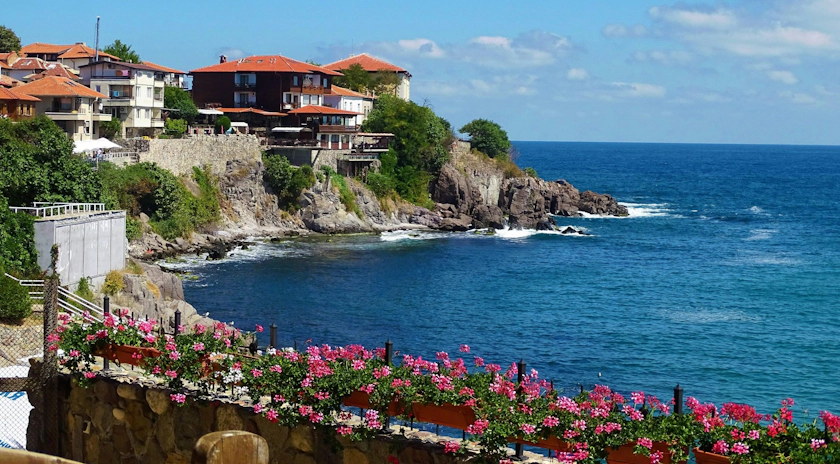
neven myst
How to Buy Weed in Bulgaria: Sofia, Sunny Beach and Some of Europe’s Harshest Laws |
08.28.2026How to Buy Weed in Bulgaria: Sofia, Sunny Beach and Some of Europe’s Harshest Laws
Bulgaria treats cannabis as a List I high-risk narcotic with real prison exposure. Here is what the law says, what CBD rules actually allow, and why you should not try.

If you are searching for how to buy weed in Bulgaria, this article will save you from a potentially catastrophic mistake. While a growing number of European countries have relaxed cannabis policy, Bulgaria has moved in the opposite direction, keeping cannabis in the category of narcotic substances prohibited outright for human and veterinary medicine.
The enforcement picture backs that up. Bulgarian authorities run large-scale drug operations nationwide, including in Sofia and along the Black Sea coast near Sunny Beach, with multi-hundred-kilogram seizures reported regularly.
Before you consider any cannabis-related activity during a trip to Sofia or Sunny Beach, use resources like Herb’s cannabis guides to understand where cannabis is actually legal. Bulgaria is not one of those places, and the gap between what travelers assume and what the Criminal Code says is wide enough to end a holiday in a detention cell.
Key Takeaways
- Cannabis is illegal in Bulgaria for both recreational and general medical use, and there is no dispensary-style access of any kind.
- Unauthorized possession of a high-risk narcotic under Criminal Code Article 354a(3) carries one to six years’ imprisonment plus a fine of BGN 2,000 to BGN 10,000.
- Article 354a(5) provides a separate minor-case route punishable by a fine of up to BGN 1,000, which is still a criminal conviction rather than an administrative penalty.
- Bulgaria adopted the euro on January 1, 2026 at the irrevocable rate of BGN 1.95583 to EUR 1, so lev figures in the Criminal Code now convert to euro amounts.
- Cannabis sits in List I of high-risk substances prohibited for medical and veterinary use, the same list as heroin. Cocaine is separately classified in List II.
- Unauthorized cultivation is a distinct offense generally carrying two to five years’ imprisonment plus a fine, not automatic trafficking penalties.
- A low THC reading does not by itself make a CBD product lawful to sell or import. Product category and intended use both matter.
- The US State Department warns travelers that bringing marijuana, cannabis, CBD products, or derivatives into Bulgaria may result in arrest and detention.
Is Weed Legal in Bulgaria?

herb
No. Cannabis is illegal in Bulgaria for recreational use, and the country operates no general medical cannabis program. There is no decriminalized personal-use threshold, no tolerance policy, and no legal purchase route.
Bulgarian law handles cannabis through two instruments working together: the Law on Control of Narcotic Substances and Precursors, which classifies substances, and the Criminal Code, which sets penalties.
- Classification. Cannabis is listed in List I, covering plants and substances presenting a high degree of risk to public health and prohibited for use in human and veterinary medicine. Heroin is also in List I. Cocaine is separately classified in List II, which covers high-risk substances that do have medical or veterinary applications.
- Possession. A criminal offense. There is no administrative personal-use category equivalent to the fine-only systems used in some EU states.
- Cultivation. A criminal offense with its own statutory provision, separate from distribution.
- Distribution. A criminal offense with substantially higher penalty bands, escalating with quantity and with organized involvement.
- Medical use. No general program exists, and no patient can lawfully obtain cannabis flower or ordinary THC products in Bulgaria.
The frequently repeated claim that Bulgaria treats cannabis identically to both heroin and cocaine is not quite right. The accurate version is that cannabis shares List I with heroin, which is strict enough on its own.
Penalties for Cannabis Offenses in Bulgaria

deny hill
This is where most travel content goes wrong, usually by flattening several distinct provisions into one alarming number. Here is the actual structure.
- Unauthorized possession of a high-risk narcotic. Article 354a(3) provides imprisonment of one to six years plus a fine of BGN 2,000 to BGN 10,000.
- The minor-case provision. Article 354a(5) creates a separate route for cases legally classified as minor, punishable by a fine of up to BGN 1,000. This is not a decriminalization threshold and it is not automatic. It remains a criminal conviction, and whether a case qualifies is a legal determination made in the proceedings, not a guarantee a traveler can rely on. Bulgaria’s national drug reporting shows hundreds of convictions each year under this provision, so it is a real part of the system rather than a theoretical one.
- Unauthorized cultivation. Sowing or growing cannabis in violation of the statutory rules is a distinct offense generally carrying two to five years’ imprisonment and a fine in the BGN 5,000 to BGN 10,000 range, subject to the precise facts and applicable provisions. Small personal grows should not be described as automatically attracting trafficking penalties, but two to five years is still a serious criminal exposure.
- Distribution and trafficking. Article 354a sets several defined bands rather than an open-ended range. For high-risk narcotics, the basic distribution offense generally carries two to eight years plus a fine, with substantially higher punishment for aggravated circumstances, and separate organized-crime provisions carrying their own ranges.
- On the currency. Bulgaria adopted the euro on January 1, 2026 at the irrevocable conversion rate of BGN 1.95583 to EUR 1, and the euro has been the sole legal currency since February 2026. Statutory lev figures convert accordingly, so a BGN 10,000 maximum reads as roughly EUR 5,113.
- Additional consequences. A conviction produces a permanent criminal record with long-term travel and employment effects, and non-Bulgarian citizens may face immigration consequences. Court proceedings can take months, language barriers complicate defense, and consular officials cannot override Bulgarian law or secure release.
Cannabis Enforcement in Sofia

anton atanasov
Sofia may read as a relaxed European capital, but the operational record does not support that reading.
- Large-scale seizures are routine. In November 2025, Sofia police reported seizing 150 kg of marijuana in a single operation with two suspects detained.
- Storage and distribution networks are targeted. In late October 2025, a raid on a Sofia drug storage facility was reported to have seized narcotics valued at around BGN 1 million, with dozens detained and several charged with distribution.
- Sustained operations continue year-round. A January 2025 nationwide operation running over several days resulted in 170 suspects detained across the country.
- Street purchases carry compounding risks. Product composition is unknown and may include adulterants, there is no recourse if you are simply robbed of your money, and no consumer protection of any kind exists in an illegal market.
Public reporting demonstrates substantial and continuing drug policing in Bulgaria. It does not establish a documented policy of surveilling tourists specifically, and this guide does not claim one. The point is simpler: enforcement is active, and being a visitor does not place you outside it.
Sunny Beach and the Black Sea Coast

holidayswithaerlingus
Sunny Beach draws large numbers of visitors each summer for the Black Sea and the nightlife. The party atmosphere carries no legal weight whatsoever.
The Burgas region, which includes Sunny Beach, sees significant enforcement activity. In July 2025, authorities reported seizing nearly 400 kg of marijuana through the General Directorate for Combating Organised Crime, in an operation coordinated across multiple prosecutor’s offices.
Practical considerations before you make a decision on a beach holiday:
- Resort areas are not exempt zones. The same Criminal Code applies in Sunny Beach as in Sofia, with identical penalty bands.
- Nightlife districts see police activity. Bar and club areas are policed like any other public space.
- Consular assistance has hard limits. An embassy can help ensure fair treatment under local law. It cannot override Bulgarian statutes or secure your release.
- The downside is asymmetric. A few hours of recreation weighed against a criminal conviction in an EU member state is a poor trade at any exchange rate.
Medical Cannabis and Cannabinoid Medicines in Bulgaria

jogphotos
Bulgaria does not operate a general medical cannabis program. Patients cannot obtain cannabis flower, and there is no prescription pathway comparable to Germany, Greece, or the UK.
That said, one common claim in travel guides is wrong. It is not accurate to say no cannabinoid medicine is authorized in Bulgaria.
- EU-authorized cannabinoid medicines exist. Epidyolex, a prescription medicine whose active substance is cannabidiol, holds a centralized EU marketing authorization for specific seizure disorders, valid throughout the European Union including Bulgaria.
- This is not a cannabis program. An authorized pharmaceutical for defined epilepsy indications is a very different thing from patient access to cannabis products, and it creates no route to obtaining THC products in Bulgaria.
- Foreign medical cards carry no weight. A medical cannabis card or recommendation issued in another country provides no legal protection in Bulgaria.
- Do not travel with cannabis medicines. The US State Department specifically warns that bringing marijuana, cannabis, CBD products, or derivatives into Bulgaria may result in arrest and detention. Patients should discuss legal alternatives with their physician before traveling.
CBD in Bulgaria: Why "Under 0.2%" is Not a Rule You Can Rely On

Herb
The widely repeated formula that any CBD product under 0.2% THC is automatically legal in Bulgaria does not hold up, and relying on it is exactly how a well-intentioned traveler ends up in trouble.
- The hemp threshold has changed. Bulgaria’s hemp-growing regulation was amended in 2023 to refer to cannabis plants containing less than 0.3% THC for specified permitted agricultural uses. That is a cultivation rule, not a general consumer-product allowance.
- Product category determines legality. Whether a finished CBD product may lawfully be marketed depends on what it is and what it is for. In the food sector, CBD extracts and isolates are treated under EU law as novel foods, and the European Commission’s novel food materials continue to classify them that way. A low THC concentration alone does not establish that a CBD food or supplement can lawfully be sold.
- Import is a separate question again. The US State Department advises travelers that it is illegal to bring marijuana, cannabis, CBD products, or derivatives into Bulgaria, and warns of arrest and detention. Whatever the domestic retail picture looks like, do not carry CBD products across the border.
- CBD flower carries a practical risk on top of the legal one. Hemp flower is visually indistinguishable from illegal cannabis, and resolving the question in the field is not something a traveler controls.
- Shops selling CBD are not proof of compliance. Sofia has retail outlets marketing CBD oils, cosmetics, and supplements, some using cannabis-themed branding. The presence of a shop does not establish that every product in its catalog satisfies Bulgarian and EU food, cosmetics, or medicines requirements, and none of these retailers sell THC-containing cannabis, which remains unavailable legally anywhere in the country.
For a broader view of how cannabinoid rules differ between markets, Herb’s cannabis news coverage tracks regulatory changes as they land.
How Bulgaria Compares Across Europe
Bulgaria sits at the restrictive end of a continent that has moved considerably in the other direction. These comparisons are summaries of complex frameworks, and each should be verified before you plan travel around it.
| Country | Broad Position | Visitor Reality |
|---|---|---|
Bulgaria | Illegal; List I high-risk narcotic | No legal access of any kind; criminal exposure for possession |
Malta | Personal use and home cultivation reformed | Association-based supply is residency-linked, not a visitor retail market |
Germany | Adult possession and private cultivation legalized within statutory limits since April 2024, with non-commercial cultivation associations | Association membership is residency-based; visitors should verify current rules |
Czech Republic | Reformed effective January 1, 2026 for adults 21 and over, with defined home and outside-home possession limits and limited personal cultivation | Reform is recent and conditions apply; verify before relying on it |
Portugal | Personal possession decriminalized since 2001 | Decriminalization is not legalization, and there is no recreational retail market |
Netherlands | Tolerated coffeeshop system | Established access, though municipal rules vary and some cities restrict non-resident entry |
Spain’s cannabis association situation is frequently described as a straightforward club system for visitors. It is legally complex, varies by region, and has been subject to constitutional litigation, so it should not be treated as a nationwide lawful retail route.
For travelers interested in destinations where access is actually lawful, Herb’s coverage of Portugal’s cannabis scene and its guides section are better starting points than anything Bulgaria offers.
Practical Advice for Travelers to Bulgaria
The safest approach is complete avoidance. Beyond that, a few practical steps reduce the chance of an avoidable problem.
Before departure:
- Empty your luggage of everything cannabis-related, including CBD oils, gummies, vapes, and topicals.
- Understand that a foreign prescription is not protection. Medical cannabis authorizations from other countries carry no legal weight in Bulgaria.
- Research the destination properly. Herb’s learning resources cover how legal frameworks differ between markets.
- Tell someone your itinerary. Standard travel practice, and more useful than people expect.
During your trip:
- Decline offers without engaging. Walk away rather than negotiating or explaining.
- Avoid situations where drugs are present. Proximity complicates matters even where you are not the person in possession.
- Keep your embassy’s contact details accessible. Your home country’s foreign ministry publishes current emergency contact information.
- Do not assume small amounts are administrative. Bulgaria handles possession through the Criminal Code.
If something goes wrong:
- Request consular assistance immediately and ask for a local criminal defense lawyer.
- Do not sign documents you cannot read. Request translation before signing anything.
- Expect the process to take time. Investigations and proceedings are not quick.
- Understand what consular help is. Embassies can help ensure fair treatment under Bulgarian law. They cannot override it.
Why Herb Helps You Stay Informed About Global Cannabis Laws

HERB
Traveling as a cannabis consumer means dealing with dramatically different legal landscapes between countries that sit a two-hour flight apart. Herb provides the resources needed to make informed decisions about where and how to engage with cannabis lawfully.
- Strain guides. Understand the products available in legal markets before you arrive in one.
- Cannabis news. Follow changing laws worldwide as reforms land and as restrictions tighten.
- How-to guides. Work through consumption methods and practical travel considerations.
- Legal market coverage. Research licensed dispensaries in jurisdictions where retail access exists.
- Community insight. Compare notes with a large community of consumers navigating the same questions.
Understanding where cannabis is illegal matters as much as knowing where it is permitted. Herb’s approach emphasizes legal compliance and harm reduction rather than encouraging risk.
Final Verdict

neven myst
Bulgaria is an excellent destination for mountains, monasteries, Black Sea coastline, and some of the best value in Europe. Cannabis is not part of what it offers. Here is how the decision breaks down:
- Planning a trip around cannabis access? Choose somewhere else. Bulgaria has no legal route, and possession sits squarely in the Criminal Code.
- Assuming small amounts are handled administratively? They are not. The minor-case provision under Article 354a(5) is a criminal disposition, not a decriminalized threshold, and it is not guaranteed.
- Thinking of bringing CBD? Do not. The State Department warns explicitly against bringing CBD products or derivatives into Bulgaria, and a low THC reading does not resolve the question.
- A patient who relies on cannabinoid medicine? Speak to your physician before traveling. An EU-authorized cannabidiol medicine exists for specific epilepsy indications, but that is not a general access route and not something to improvise at the border.
- Going for the beaches and the food? You can have an outstanding trip. Skip the illegal market entirely and enjoy Bulgaria for what it actually is.
- Already in trouble? Request consular assistance and local legal counsel immediately, and sign nothing you cannot read.
For destination guides to places where cannabis access is legal and clearly regulated, Herb’s guides section offers helpful, up-to-date information.
Frequently Asked Questions
Is cannabis legal for recreational use in Bulgaria?
No. Cannabis is illegal in Bulgaria for recreational purposes, and the country recognizes no decriminalized personal-use threshold. Cannabis is classified in List I of high-risk narcotic substances prohibited for use in human and veterinary medicine, the same list that includes heroin. Unauthorized possession is handled criminally rather than administratively, and there has been no meaningful political movement toward reform.
What are the penalties for possessing cannabis in Bulgaria?
Under Criminal Code Article 354a(3), unauthorized possession of a high-risk narcotic carries one to six years’ imprisonment plus a fine of BGN 2,000 to BGN 10,000. Article 354a(5) provides a separate route for cases legally classified as minor, punishable by a fine of up to BGN 1,000, though that remains a criminal conviction rather than an administrative penalty and is not something a traveler can count on. Bulgaria adopted the euro on January 1, 2026 at BGN 1.95583 to EUR 1, so these lev figures now convert to euro amounts.
Can tourists access medical cannabis in Bulgaria?
No. Bulgaria does not operate a general medical cannabis program, and no patient can lawfully obtain cannabis flower or ordinary THC products there. Medical cannabis cards or recommendations from other countries carry no legal weight. EU-authorized cannabinoid medicines do exist, including a prescription cannabidiol medicine for specific seizure disorders, but that is a pharmaceutical authorization rather than a cannabis access route.
Is CBD legal in Bulgaria?
It depends on the product, its composition, and its intended use. There is no reliable universal rule that any CBD product under a given THC percentage is automatically lawful. Bulgaria’s hemp-growing regulation was amended in 2023 to refer to a below-0.3% THC threshold for specified agricultural uses, which is a cultivation rule rather than a consumer-product allowance, and CBD extracts and isolates are treated as novel foods under EU law. Separately, the US State Department warns travelers not to bring CBD products or derivatives into Bulgaria.
How do Bulgaria's cannabis laws compare to other European countries?
Bulgaria sits at the restrictive end of the continent. Germany legalized defined adult possession and private cultivation within statutory limits from April 2024 alongside non-commercial cultivation associations. The Czech Republic reformed its law effective January 1, 2026 for adults 21 and over. Malta reformed personal use and home cultivation, Portugal has decriminalized personal possession since 2001, and the Netherlands operates its tolerated coffeeshop system. Bulgaria maintains full prohibition with criminal penalties and no medical program, which makes it an outlier among EU member states.
This article is for informational purposes only and does not constitute legal advice. Cannabis laws vary by jurisdiction and are subject to change. Always verify current regulations with official sources before traveling. Herb does not encourage the purchase or use of cannabis in jurisdictions where it is illegal.
Herb Recommended Products:
READ MORE