emiel molenaar
How to Buy Weed in Curacao: 2026 Cannabis Laws & the Dutch Connection
Understanding Curaçao's strict cannabis laws, why Dutch coffeeshop culture does not apply, and what tourists should know before trying to buy weed on the island

Wondering how to buy weed in Curacao? You are not the first tourist to ask, and here is the honest answer: recreational cannabis is illegal in Curaçao, and there is no general public or tourist retail access. There is no coffeeshop system, no tolerance policy, and no legal gray area for visitors.
If you are picturing Amsterdam-style coffeeshops overlooking the Caribbean Sea in Willemstad, you are not alone, and you are not the first tourist to land in Curaçao with that exact misconception. Curaçao is a constituent country of the Kingdom of the Netherlands, but when it comes to cannabis policy, the two could not be further apart.
The famous Dutch gedoogbeleid (tolerance policy) that lets you walk into a coffeeshop in Amsterdam and purchase up to five grams of cannabis without prosecution does not extend a single mile beyond the European Netherlands.
This guide covers everything you need to know about Curacao cannabis laws, how enforcement actually works on the ground, what the real penalties look like, whether CBD is an option, and how Curacao compares to every other island in the marijuana Dutch Caribbean landscape. We are not here to judge, just to make sure you understand the full picture before you step off that plane at Hato International.
Key Takeaways
cole marshall
- Recreational cannabis is illegal in Curacao, and there is no public retail access for locals or tourists. So is weed legal in Curacao? For any practical tourist purpose, no.
- Curaçao’s legal framework does contain limited medical/prescription and license-based exceptions under the Opium Ordinance, but these do not create any consumer or tourist pathway.
- Possession of even a single joint can lead to arrest, fines, and imprisonment.
- Curaçao does not use the Netherlands’ hard-drug/soft-drug model. Cannabis is separately regulated but can still carry very severe penalties.
- The Netherlands’ coffeeshop tolerance policy does not apply to Curacao or any other marijuana Dutch Caribbean island.
- CBD products appear to be available through some Curaçao pharmacies and retailers, but the exact regulatory status of specific products and THC thresholds should be verified locally.
- Do not assume your CBD product is legal to bring into Curaçao; check the local rules before travel.
- Curacao already has a government-published medicinal-cannabis licensing framework under the Opium Ordinance, and Parliament considered a new Opiumlandsverordening in 2024.
Looking for legal alternatives? If you are searching for weed Willemstad Curacao or other island options, check out Herb’s Jamaica cannabis guide for a legal alternative instead.
How to Buy Weed in Curacao: Is It Even Legal?
jorgen hendriksen
For tourists and the general public? No.
Recreational cannabis is illegal in Curaçao, and there is no dispensary system or consumer retail access:
- Recreational use: Illegal
- Medical use: Curaçao’s Opium Ordinance (Opiumlandsverordening) does contain medical/prescription and license-based exceptions. The law addresses prescriptions for controlled substances in articles 3 and 3a, allows pharmacists and authorized physicians to handle certain substances for medical purposes, and provides an own-medical-use exception for lawfully obtained substances in certain circumstances. However, there is no broad public medical marijuana program, no dispensary network, and no tourist access.
- CBD and hemp products: CBD products appear to be available through some pharmacies and retailers on the island, but the regulatory details should be verified locally before relying on them.
- Cultivation: Illegal with criminal penalties for unlicensed individuals, though the government publishes a license application for medicinal cannabis/cannabis research activities.
- Importation: Marijuana is clearly illegal to import. Do not assume any cannabis or CBD product is legal to bring across the border without checking the local rules first.
Your US medical marijuana card, Canadian cannabis prescription, or European medical cannabis license has zero practical standing in Curacao for tourist purposes. Bringing even a small amount of cannabis, including edibles, vape cartridges, or tinctures, through Hato International Airport can result in arrest and criminal charges on arrival.
For travelers who searched how to buy weed in Curacao and want to explore destinations where cannabis is actually accessible, Herb’s city guides covers dozens of locations with varying levels of legality and access.
Why Curacao Is Not Amsterdam: The Dutch Connection Explained

This is the single most important thing every tourist needs to understand about how to buy weed in Curacao, or rather, why you cannot: being part of the Kingdom of the Netherlands does not mean Dutch drug tolerance extends to Curacao.
How the Kingdom of the Netherlands Works
The Kingdom of the Netherlands consists of four constituent countries:
- The Netherlands (European), including Amsterdam, Rotterdam, The Hague
- Curaçao, autonomous since 2010
- Aruba, autonomous since 1986
- Sint Maarten, autonomous since 2010
Each constituent country has its own government, its own legislature, and, crucially, its own domestic policy on drugs. The Kingdom Charter (Statuut voor het Koninkrijk der Nederlanden) establishes shared defense and foreign affairs, but criminal law and drug enforcement are domestic matters left to each country.
The Gedoogbeleid Stays in Europe
The Netherlands’ famous gedoogbeleid (tolerance policy) allows licensed coffeeshops to sell small quantities of cannabis, up to five grams per person, per transaction, without criminal prosecution. This policy was formalized in the 1976 revision of the Dutch Opium Act and applies exclusively to the European Netherlands.
The key word is “tolerance.” Cannabis is technically still illegal in the Netherlands under the Opium Act. The gedoogbeleid is a prosecutorial discretion policy, the Public Prosecution Service simply chooses not to prosecute coffeeshops and consumers who follow strict rules.
It was never written into the Kingdom Charter, and it was never extended to Curaçao, Aruba, or Sint Maarten.
Why the Confusion Persists
Every year, tourists arrive in Willemstad expecting to find a Caribbean version of Amsterdam’s coffeeshop scene. The logic seems reasonable: same kingdom, same flag, same passport color. But the reality is that Curaçao has its own parliament (Staten van Curaçao), its own criminal code, and its own drug enforcement priorities, which lean heavily toward strict prohibition for recreational use.
This confusion is compounded by the fact that Curaçao’s legal system is architecturally based on Dutch law. The court structures, procedural rules, and legal traditions are Dutch in origin.
But the substance of drug policy, what is tolerated, what is prosecuted, what is punished, is entirely Curaçao’s own decision.
If you want to experience legal cannabis within the Kingdom of the Netherlands, the European Netherlands remains your only option. Herb has a comprehensive Amsterdam guide that covers coffeeshop culture, purchasing rules, and what to expect.
Curacao Cannabis Laws: What the Statutes Actually Say
bent van aeken
Curacao cannabis laws are among the strictest in the Caribbean for recreational users. The island’s national criminal legislation treats cannabis as a controlled substance. Unlike the Netherlands, which distinguishes between “soft drugs” (cannabis, hashish) and “hard drugs” (cocaine, heroin, MDMA) under Schedule I and Schedule II of the Dutch Opium Act, Curaçao does not use the hard-drug/soft-drug framework. Cannabis is separately regulated under the Opium Ordinance, but it can still carry very severe penalties.
Key Legal Points
- No quantity threshold for tolerance. There is no “personal use” amount that police will overlook. Even a fraction of a gram triggers the law.
- Cannabis is separately categorized but severely penalized. The Opiumlandsverordening places cannabis-related substances under article 4, distinct from the article 3 substances, but article 11 gives cannabis offenses statutory maxima that can match those for harder drugs.
- Cultivation is a separate criminal offense for unlicensed individuals. Growing even a single cannabis plant without a license carries criminal penalties.
- Distribution and trafficking carry escalated sentences. Selling, transporting, or facilitating cannabis sales results in significantly harsher penalties.
- Import and export are treated as international drug trafficking. Bringing cannabis across Curaçao’s borders, even from the Netherlands where purchase is tolerated, is a serious criminal offense.
The Opium Ordinance (Opiumlandsverordening)
Curacao’s primary drug legislation is the Opiumlandsverordening (Opium Ordinance), which mirrors the structure of the Dutch Opium Act but without the tolerance provisions. This ordinance establishes the list of controlled substances, defines prohibited activities (possession, cultivation, sale, transport, import, export), and sets penalty ranges for violations.
The ordinance grants law enforcement broad authority to search, seize, and arrest in drug-related matters. The U.S. State Department notes that drug laws in Curaçao are enforced rigorously.
Penalties for Weed in Curacao: What You Actually Face

aruba police
Penalties for cannabis offenses in Curacao are severe by Caribbean standards and significantly harsher than what you would face for the same conduct in the Netherlands.
Penalty Overview
Possession of any amount can result in arrest, fines, and imprisonment. Even a single joint is sufficient for arrest and criminal charges. Cultivation without a license brings criminal charges and potential imprisonment. Sale and distribution carry extended imprisonment and heavy fines. Import and export are treated as international drug trafficking with severe prison sentences. Possession with intent to distribute triggers escalated trafficking charges.
What "Severe" Looks Like in Practice

aruba police
The exact sentence depends on quantity, circumstances, and whether aggravating factors are present. But here is what makes Curaçao’s approach particularly harsh for tourists:
- Official sources say drug laws are enforced rigorously. Do not assume you will receive a verbal warning or that police will simply confiscate your stash and let you walk. The official tourism site makes clear that even small amounts are punishable.
- Detention during an investigation is possible, and bond is not available once imprisoned. According to the U.S. State Department, local law allows detention during an investigation with a judge’s approval, and persons imprisoned in Curaçao do not have the option of posting bond.
- Criminal record follows you home. A drug conviction in Curaçao creates a criminal record that can affect your ability to travel internationally, apply for certain jobs, and obtain security clearances.
- Serious immigration consequences. A conviction can have significant immigration consequences, potentially including deportation. Foreign nationals should not assume this risk is hypothetical.
Impact on Future Travel
A drug arrest in Curacao, even without conviction, can create lasting complications. Many countries, including the United States, ask about arrests (not just convictions) on visa applications and border crossing forms. An arrest record in a Kingdom of the Netherlands territory could surface in international law enforcement databases and create entry difficulties for years. Travelers should be aware of these potential downstream consequences.
Weed Willemstad Curacao: Tourist Enforcement on the Ground
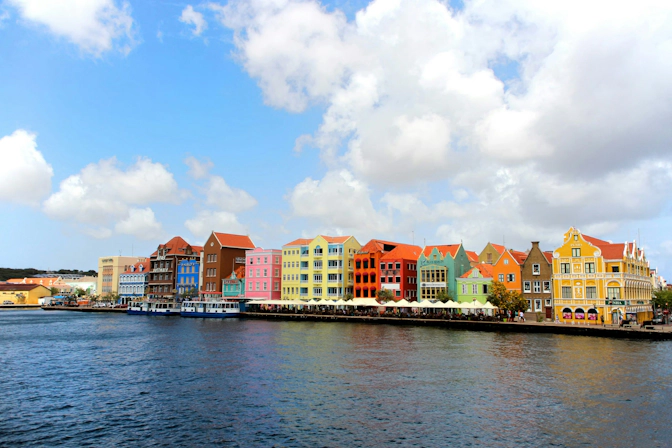
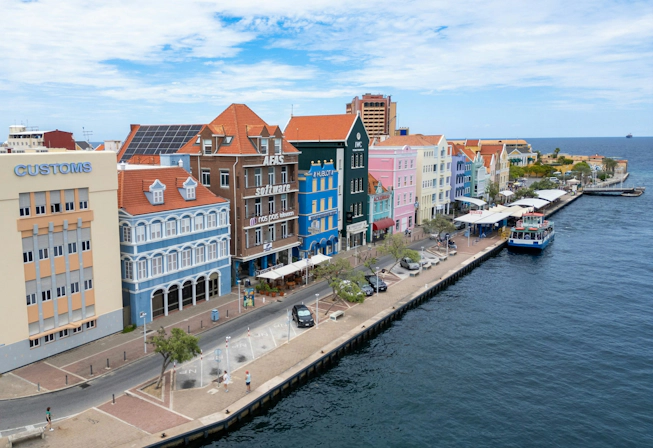
Willemstad is Curacao’s capital and its primary tourist hub. The colorful Handelskade waterfront, the floating Queen Emma Bridge, and the Punda and Otrobanda districts attract hundreds of thousands of visitors annually. In 2025, stayover arrivals alone hit a record 788,000. Here is how cannabis enforcement actually plays out in the places tourists spend their time.
Airport and Port Enforcement
Hato International Airport (CUR) and the cruise terminal in Willemstad both have drug enforcement operations. The official Curaçao tourism site explicitly warns visitors about the island’s drug policy. Drug enforcement at ports of entry is standard, and cruise ship passengers are not exempt. If you are arriving by air or sea, expect that enforcement infrastructure is in place.
Street-Level Enforcement
In Willemstad’s tourist districts, particularly Punda, Pietermaai, and the beach areas like Mambo Beach and Jan Thiel, police maintain a visible presence. Cannabis use in public is not treated with a “look the other way” approach, and you should assume that drug laws could be enforced at any time in any public setting.
That said, Curaçao is not a police state. Officers are generally professional and interaction with tourists is usually courteous. But if cannabis is found, on your person, in your rental car, or in your vacation rental, expect the law to be applied fully.
The "It's Fine, Everyone Does It" Myth
You will find forum posts and travel blogs where people claim cannabis is easy to find and that nobody cares. Some tourists do use cannabis in Curaçao without consequence. But survivorship bias is a poor legal strategy. The tourists who got arrested, detained, fined, and deported are not writing upbeat travel reviews, they are dealing with lawyers and criminal records.
The risk-reward calculation is straightforward: anyone researching how to buy weed in Curacao should know that the island offers world-class diving, stunning beaches, incredible food, and vibrant culture. Adding a drug arrest to that itinerary is not worth it.
Can You Buy CBD in Curacao?

Kelly Sikkema / Unsplash
CBD is the one relative bright spot in Curacao’s otherwise restrictive cannabis landscape, but even here, the picture is less clear-cut than you might hope.
What Appears to Be Available
CBD products appear to be available through some Curaçao pharmacies (Botikas) and retailers. Current retail listings on the island show multiple CBD products and brands being sold by more than one seller, including pharmacy groups and wellness retailers. For more on CBD and its uses, check out Herb’s strain guides. However, the current legal and regulatory status of specific products, brands, and THC thresholds should be verified locally before you rely on any particular product being available or legal.
The official tourism site confirms that pharmacies (“botikas”) operate across the island and sell prescription and over-the-counter medicines. Ask your hotel concierge for the nearest Botica, or search for “botica” in Willemstad or your resort area.
What You Should Not Do
- Do not assume your CBD product is legal to bring into Curaçao. The official customs guidance is clear that marijuana and other illegal drugs are serious offenses. While a blanket ban on every CBD formulation is not explicitly confirmed by current official sources, the safe move is to check the local rules before traveling with any CBD product.
- CBD flower or smokable products are a much riskier category than processed oils or capsules. Exercise extreme caution.
- Leave any uncertainty at home. If you are not sure whether your specific product is legal to bring in, do not bring it. Purchase locally instead.
Practical Advice
If you use CBD for wellness purposes and want to maintain your routine while visiting Curaçao, your safest option is to purchase from a licensed Botica on the island rather than attempting to bring your own. Leave any unused CBD products behind when you depart, as traveling with products purchased locally can still create complications at your destination’s customs.
Is Medical Marijuana Legal in Curacao?

Photo Courtesy of NuggMD
Not in the way most tourists mean. Is weed legal in Curacao for medical purposes? There is no public medical marijuana program, no dispensary network, no medical cannabis card system, and no way for tourists to access cannabis-based treatments.
However, calling it “illegal for all purposes” would be inaccurate. Curaçao’s Opium landsverordening does contain limited medical/prescription and license-based exceptions. The law addresses prescriptions for controlled substances, allows pharmacists and authorized physicians to handle certain substances for medical purposes, and the government publishes a license application for medicinal cannabis and cannabis research activities including cultivation, production, manufacture, import, export, sale, delivery, transport, and possession under license.
What this means in practice:
- Your home country’s medical card will not help you here. US state medical marijuana cards, Canadian prescriptions, and European medical cannabis authorizations have no practical standing in Curaçao for tourist access.
- No dispensaries exist for the general public or tourists.
- No qualifying conditions list. Since there is no consumer-facing program, there is no list of conditions that would qualify a patient for retail access.
- The license-based framework is for regulated commercial operations, not individual tourist consumption.
For patients who depend on medical cannabis for chronic conditions, the practical advice is to consult your physician about alternative medications for the duration of your trip. Do not attempt to bring medical cannabis products through Curaçao customs.
Herb’s cannabis news regularly covers developments in international medical cannabis legalization, including Caribbean nations, if you want to stay updated on potential changes.
How Curacao Compares: Marijuana Dutch Caribbean Island by Island

david hertle
All six marijuana Dutch Caribbean islands prohibit recreational cannabis, but the details vary significantly from island to island. Here is how they compare as of 2026.
Dutch Caribbean Cannabis Laws Comparison
Curaçao is a constituent country where recreational use is illegal. Medical access exists only through limited prescription and license-based exceptions in the Opium Ordinance, not through any public program. CBD appears to be available through some pharmacies. The government already has a medicinal cannabis licensing framework, and Parliament considered a new Opiumlandsverordening in 2024.
Aruba is a constituent country and leads the region in terms of progressive policy. It has legalized CBD products containing less than 0.2% THC and established formal oversight through its Ministry of Public Health. Recreational cannabis remains illegal, but Aruba is the only Dutch Caribbean island with a clear regulatory framework for cannabis-derived products.
Sint Maarten is a constituent country where recreational use is illegal, but it is the one to watch. Sint Maarten moved well beyond initial 2022 discussions: in 2024, the government formally established a National Cannabis Legalization Committee through ministerial regulation. In March 2026, Parliament publicly announced a committee meeting on a proposed cannabis regulatory model. Nothing has been enacted yet, but the political machinery is actively moving.
Bonaire is a special municipality of the Netherlands, meaning Dutch law technically applies directly, and yet it does not benefit from the gedoogbeleid. Dutch tolerance explicitly does not extend to the BES islands (Bonaire, Sint Eustatius, Saba). Recreational, medical, and CBD use are all illegal. Getting caught with cannabis in Bonaire carries the same consequences as in Curaçao.
Saba is a special municipality of the Netherlands. Recreational, medical, and CBD use are illegal. The Island Council has previously requested that Dutch tolerance policy be extended to Saba, but The Hague denied the request.
Sint Eustatius is a special municipality of the Netherlands. Recreational, medical, and CBD use are illegal. No decriminalization proposals have been advanced
Key Observations
Aruba leads the region. It remains the only Dutch Caribbean island with a formal framework for any cannabis-derived product beyond Curaçao’s limited licensing provisions.
Bonaire is the biggest surprise. Despite being a special municipality where Dutch law technically applies directly, there is no tolerance. Zero.
Sint Maarten is the one to watch. With a formal legalization committee and active parliamentary discussion in 2026, it is further along than any other Dutch Caribbean territory in terms of working toward regulated access.
For a broader view of Caribbean cannabis laws, Herb’s guide to cannabis in Jamaica covers one of the few islands where cannabis is partially decriminalized for personal use.
The Medicinal Cannabis Framework: What Could Change

Photo by Valerii Honcharuk / Adobe Stock
Is weed legal in Curacao going to change? The situation is more nuanced than a simple “pending bill” narrative.
What Already Exists
Curaçao already has a government-published medicinal cannabis licensing framework under the Opium Ordinance. This framework includes applications for licenses covering cultivation, production, manufacture, import, export, sale, delivery, transport, and possession. Fee schedules are published. This is not hypothetical, it is an existing administrative mechanism.
Separately, the Staten van Curaçao (Parliament) had a June 2024 agenda item for a new Opiumlandsverordening 2024, signaling continued legislative attention to the framework.
What This Does NOT Change for Tourists
- Recreational use remains illegal. The existing licensing framework and any new legislation focus on regulated commercial operations, not domestic consumption.
- Tourists would not gain access. There is no pathway being created for visitors to purchase or consume cannabis on the island.
- Personal cultivation remains illegal for unlicensed individuals.
Current Status (2026)
The picture is more developed than “a pending bill that has not passed.” Curaçao has an existing licensing framework, an updated Opium Ordinance (2024), and ongoing parliamentary engagement with the topic. Political support exists, particularly given the economic diversification argument. But none of this translates into tourist access, and travelers should plan based on current law, not anticipated changes.
Safety Tips for Tourists in Curacao
stephen pedersen
Whether or not you have any interest in cannabis, these safety tips will help you navigate Curacao’s drug enforcement landscape.
Do
- Leave all cannabis products at home. This includes edibles, vape cartridges, tinctures, and topicals. For CBD, check the local rules before attempting to bring any product across the border.
- Purchase CBD locally if you want it, from a licensed Botica, not from a street vendor.
- Know your rights. If approached by police, remain calm, cooperate, and ask to contact your embassy or consulate if you are detained.
- Keep your embassy’s number saved. The US Consulate General in Curaçao can be reached at +599 9 461-3066. Canadian citizens should contact the Canadian Embassy in The Hague.
- Carry identification. Curaçao law requires visitors to carry valid identification at all times.
Do Not
- Do not assume Amsterdam rules apply. They categorically do not.
- Do not buy from street dealers. Beyond the legal risk, there is no quality control and no recourse if something goes wrong.
- Do not consume in public. Even in remote beach areas, enforcement is possible and the consequences are real.
- Do not transport cannabis between islands. Moving cannabis from one island to another, even within the Dutch Caribbean, is treated as international drug trafficking.
- Do not store cannabis in your rental car or vacation rental. Property owners can be implicated, and the resulting complications extend well beyond your vacation.
If You Are Approached by Someone Selling
Decline politely and move on. Anyone researching how to buy weed in Curacao should understand that engaging with street dealers is the riskiest move you can make. The simplest protection is disengagement.
Alternatives: Where Cannabis Is Actually Legal in the Caribbean
rock staar
If cannabis access is a priority for your trip, there are Caribbean destinations where it is either legal, decriminalized, or tolerated. Here are the most accessible options as of 2026:
Jamaica
Jamaica is the most cannabis-accessible Caribbean destination. It decriminalized possession of up to two ounces of cannabis in 2015 under the Dangerous Drugs (Amendment) Act. Rastafari practitioners can use cannabis legally for sacramental purposes. Tourists can purchase small quantities from licensed herb houses (dispensaries) after obtaining a medical permit, often through a quick on-site consultation. Read Herb’s full Jamaica cannabis guide for details.
US Virgin Islands
The USVI decriminalized possession of up to one ounce of cannabis in 2014 and legalized medical cannabis in 2019. In January 2023, Governor Albert Bryan Jr. signed the Virgin Islands Cannabis Use Act, legalizing recreational cannabis for adults 21 and older, allowing possession of up to two ounces. Commercial sales infrastructure is still being developed, but personal possession and use are legal.
Trinidad and Tobago
Trinidad decriminalized possession of up to 30 grams of cannabis in 2019. Cultivation of up to four plants for personal use is also permitted. However, no commercial sales framework exists.
St. Kitts and Nevis
A landmark 2019 High Court ruling found that marijuana prohibition violated citizens’ constitutional rights to freedom of religion and privacy. Following that ruling, the government passed the Freedom of Conscience (Cannabis) Act in 2023, permitting adults to possess up to 56 grams of cannabis (or 15 grams of cannabis resin) for personal use and cultivate up to five plants at home.
Bermuda
Bermuda decriminalized possession of up to seven grams of cannabis in 2017. While commercial sales remain illegal, personal use in private carries no criminal penalty.
For comprehensive guides to these and other destinations, explore Herb’s guides to cannabis in Thailand, weed in Barcelona, or browse the full library of cannabis city guides.
Final Verdict
steven phillips
Do not try to buy weed in Curacao. The law is clear for recreational users, enforcement is rigorous, and the consequences, criminal charges, imprisonment, potential deportation, and a permanent record, are not worth the risk.
The Dutch connection is a trap for the uninformed. Curacao shares a kingdom with the Netherlands, but it shares nothing of Amsterdam’s cannabis tolerance. Treat Curacao the way you would treat any country where recreational cannabis is strictly prohibited: leave your products at home, do not buy from street vendors, and do not assume that a tropical setting means relaxed enforcement.
If CBD is important to your routine, buy it locally from a licensed Botica once you arrive. If recreational cannabis is important to your vacation, choose a different destination: Jamaica, the USVI, or even the European Netherlands offer legal or decriminalized options.
Curacao is a stunning island with world-class diving, vibrant architecture, incredible cuisine, and genuine warmth. Enjoy it for what it is. For cannabis-friendly travel options, explore Herb’s full collection of destination guides and cannabis news to find a place that matches both your travel dreams and your lifestyle.
Frequently Asked Questions
Is weed legal in Curacao?
Recreational cannabis is illegal in Curacao, and there is no public retail access for tourists or residents. Curaçao’s Opium Ordinance does contain limited medical/prescription and license-based exceptions, and the government has a published licensing framework for medicinal cannabis operations, but none of this creates any form of consumer access. There is no tolerance policy, no coffeeshop system, and no legal gray area for visitors. Possession of any amount, including a single joint, can result in arrest, fines, and imprisonment.
Can I bring my medical marijuana card to Curacao?
Your medical marijuana card or prescription from your home country has no practical standing in Curacao for tourist access. While the Opium Ordinance contains limited medical/prescription exceptions, there is no consumer-facing medical cannabis program. Attempting to bring cannabis products through customs can result in drug trafficking charges. Consult your physician about alternative medications for the duration of your trip.
Is CBD legal in Curacao?
CBD products appear to be available through some pharmacies (Botikas) and retailers on the island. However, the exact regulatory status of specific products, brands, and THC thresholds should be verified locally. You should not assume that your CBD product is legal to bring into Curaçao from abroad. The safest approach is to purchase locally from a licensed pharmacy.
Why doesn't Curacao have coffeeshops like Amsterdam?
Curacao and the Netherlands are separate constituent countries within the Kingdom of the Netherlands. Each sets its own domestic drug policy. The Dutch gedoogbeleid (tolerance policy) that permits coffeeshops is a Dutch domestic policy that applies only within the European Netherlands. Curacao’s parliament chose a different approach for recreational use: strict prohibition.
What happens if I get caught with weed in Curacao?
You face arrest, criminal charges, potential imprisonment, and fines. Cannabis can carry very severe penalties despite being separately categorized from harder drugs. Tourists are not exempt, and a conviction can have serious immigration consequences, potentially including deportation. A drug arrest in Curacao can also create lasting complications for international travel.
Can I smoke weed on the beach in Curacao?
No. Cannabis use is illegal everywhere in Curacao for recreational purposes: beaches, hotels, vacation rentals, public spaces, and private residences. There is no location where recreational cannabis consumption is legally permitted.
Is Curacao going to legalize weed?
Curacao already has a government-published medicinal-cannabis licensing framework under the Opium Ordinance, and Parliament considered a new Opiumlandsverordening in 2024. But this framework targets regulated commercial operations, not domestic recreational or tourist access. Recreational cannabis is unlikely to be legalized in Curaçao in the near term.
How does Curacao compare to Aruba for cannabis?
Both islands prohibit recreational cannabis. However, Aruba is more progressive: it has legalized CBD products containing less than 0.2% THC and established formal oversight through its Ministry of Public Health. Curaçao has a licensing framework for medicinal cannabis operations and CBD appears to be available through some pharmacies, but it lacks the kind of clear, formal CBD regulatory framework that Aruba has established.
Herb Recommended Products:
READ MORE