
roman lopez
How to Buy Weed in Guadalajara: Mexico’s Second City and the Legalization Limbo 2026 |
09.01.2026How to Buy Weed in Guadalajara: Mexico’s Second City and the Legalization Limbo 2026
Mexico has no adult-use retail market, but almost every rule you have read about permits, plant counts, and the 5-gram line is wrong. Here is the actual legal picture.

Guadalajara sits at the center of one of the most confusing cannabis situations in the Western Hemisphere. Adults can seek authorization for personal recreational self-consumption, yet Mexico has no federally authorized commercial adult-use retail system. For anyone researching cannabis access in Mexico’s second city, understanding this legalization limbo is not optional. Whether you are a resident exploring authorized pathways or a visitor wondering about your options, this guide breaks down what the law actually says.
The gap between what circulates online and what the sources support is unusually wide here. Plant-count limits from a bill that never became law get quoted as permit rules. A statutory reference quantity gets described as a legal ceiling. An industrial-use provision becomes a CBD retail permission slip. Each of those errors leads a reader somewhere they should not go.
Below you will find what the Supreme Court’s declaration actually authorized, why the 5-gram figure works differently than almost every guide claims, how the medical framework treats international travelers, and what the CBD rules genuinely require.
Key Takeaways
- Mexico does not have a federally authorized commercial adult-use cannabis retail system, and recreational self-consumption authorizations do not permit sales.
- COFEPRIS reaffirmed on July 7, 2026 that the Supreme Court did not rule on marijuana decriminalization and that applicable conduct remains regulated under existing law.
- There is no eight-plant household limit in the operative framework. That figure comes from a 2021 legislative proposal that was never enacted.
- Article 479 of the General Health Law still lists 5 grams as its statutory personal-use quantity, but Supreme Court decisions in 2022 and on February 4, 2026 held that exceeding it cannot automatically foreclose a personal-use analysis.
- Mexico’s medicinal cannabis regulation contains specific provisions for international passengers, whether Mexican residents or foreigners, carrying qualifying cannabis medicines for treatment.
- A THC concentration at or below 1% does not by itself make a CBD product lawfully marketed. COFEPRIS revoked its 2018 commercialization guidelines in 2019 for exceeding the governing law.
- Canada’s travel advisory warns that Mexican cannabis laws and enforcement are unclear and that travelers could be arrested or extorted for possession, use, or transport.
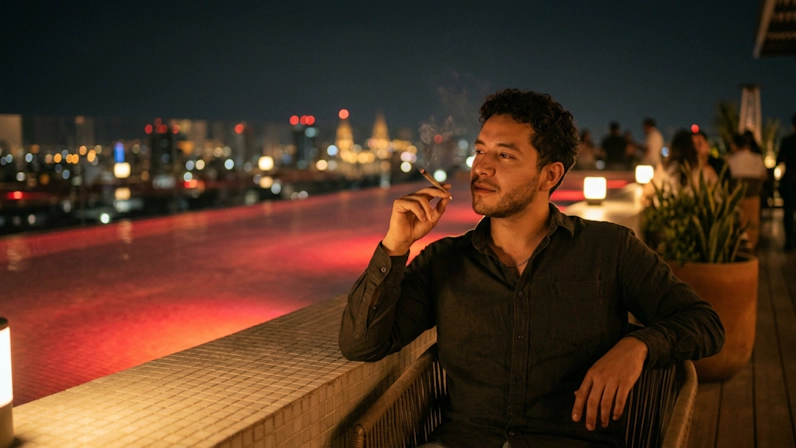
Is Weed Legal in Guadalajara?
Herb
Not in the sense of being able to buy it. Mexico does not currently have a federally authorized commercial adult-use cannabis retail system, and recreational self-consumption permits do not authorize cannabis sales.
What the Supreme Court did through Declaratoria General de Inconstitucionalidad 1/2018 was invalidate the absolute administrative prohibition on adult recreational self-consumption and direct that adults may receive authorizations covering activities such as sowing, cultivation, harvesting, preparation, possession, and transportation for personal recreational use. The Court expressly excluded commercialization, sale, supply, transfer, and distribution.
COFEPRIS restated the boundary on July 7, 2026, clarifying that the Supreme Court did not rule on marijuana decriminalization and that applicable conduct remains regulated under existing law. That single sentence undoes most of what circulates in travel content about Mexico.
What operates under separate frameworks:
- Cannabis medicines. Mexico’s 2021 medicinal cannabis regulation governs Materia Prima, Derivados Farmacológicos, and Medicamentos de Cannabis, with controlled prescribing, dispensing, and authorization requirements. Authorized pharmacies, drugstores, and other establishments may dispense registered cannabis medicines.
- Qualifying industrial derivatives. Article 245 provides that products containing cannabis derivatives at 1% THC or less with broad industrial uses may be commercialized, exported, and imported provided they comply with applicable health regulation.
So the accurate statement is narrower than “every commercial sale is illegal” and much narrower than “possession is decriminalized.” Adult-use commerce is unauthorized. Regulated medicines and qualifying derivatives sit under their own rules.
The 5-Gram Figure: Not a Ceiling, Not a Floor

herb
This is the correction most likely to change how a reader behaves.
- The statutory reference exists. Article 479 of the General Health Law continues to list 5 grams of cannabis as its personal-use quantity, and Article 478 provides for non-prosecution in qualifying circumstances.
- The Court narrowed its effect in 2022. The First Chamber held unconstitutional the portion of Article 478 that prevented consideration of personal consumption merely because possession exceeded five grams.
- And again in 2026. On February 4, 2026, the Supreme Court ruled that automatically criminalizing possession simply because it exceeds five grams was unconstitutional in the case before it, requiring courts to consider the objective and personal circumstances in determining whether possession was genuinely for personal consumption. The Court expressly said this did not legalize cannabis or abolish the possession offence.
- Neither shorthand is accurate. “Up to five grams is legal” overstates the protection. “Over five grams is automatically a crime” overstates the exposure. Possession remains regulated and potentially prosecutable, with case circumstances materially affecting the analysis.
Recreational Self-Consumption Authorizations: What Is and Is Not Established
roman lopez
Several widely repeated details about the permit process do not hold up against the sources.
- No eight-plant limit. The operative framework does not establish an eight-plant-per-household cap. That number appeared in a 2021 legislative proposal that was never enacted into a governing nationwide framework. COFEPRIS’s July 2026 statement describes authorized sowing, cultivation, harvesting, preparation, possession, and transport without stating a plant-count cap.
- No established nationality requirement. The Supreme Court’s declaration states that the health authority must issue recreational self-consumption authorizations to adult persons. Herb could not locate a current primary source establishing Mexican citizenship, permanent residency, or an INE-only identification requirement as a substantive prerequisite. Do not infer a nationality restriction from administrative paperwork.
- Procedural specifics are unverified. Claims that all applicants must attend in person in Mexico City, that processing routinely takes 30 to 90 days, or that the Jalisco state regulator invariably redirects applications to Mexico City are not supported by a current COFEPRIS procedure or official form. A January 2026 official program document does refer to state authorities carrying out notifications of recreational-cannabis authorizations issued by COFEPRIS, indicating state involvement in the process.
- Transport is within scope. The Supreme Court specifically includes transport among the activities an authorization may cover, so blanket warnings never to move cannabis across Mexican state lines misstate the framework. That said, do not transport cannabis unless you clearly understand the scope of any authorization you hold, and recognize that airports, international borders, and other controlled settings create additional legal and enforcement risk.
On public consumption, the ruling requires authorizations to specify that use may not harm third parties and may not occur in front of minors or in public places where third parties have not consented. That is more specific than a universal prohibition, and separate civic, public-order, smoking, or venue rules may also apply.
For current procedure, consult COFEPRIS directly rather than relying on republished summaries.
Medical Cannabis and International Travelers

bhargava marripati
The medical framework is where the original coverage went furthest wrong, and where the correction matters most to a patient.
- It is a controlled pharmaceutical regime. Cannabis medicines and pharmacological derivatives are regulated under Mexico’s medicinal cannabis framework, with special controlled-prescription rules, dispensing controls, and establishment requirements including sanitary licensing, responsible personnel, and controlled records. “Pharmaceutical-grade” is not the operative legal classification.
- International passengers are addressed directly. Article 32 of the 2021 regulation covers international passengers, whether Mexican residents or foreigners, who require cannabis medicines for treatment, providing that they must present the relevant medical prescription or, where applicable, authorization issued by the competent authority of their country of origin.
- An import permit mechanism exists. The regulation establishes a route under which COFEPRIS may issue a prior sanitary import permit for cannabis medicines for personal medical use, subject to documentation including a prescription.
- A foreign recommendation is not a purchase right. None of the above means a foreign cannabis recommendation authorizes a Mexican pharmacy to dispense to you. Domestic prescribing and dispensing are tightly controlled through special prescriptions.
The practical instruction: do not bring recreational cannabis or unapproved cannabis products into Mexico. If you travel with a qualifying prescribed cannabis medicine, confirm the documentation and any authorization requirements with COFEPRIS before departure.
On providers, this guide does not name clinics or prescribers. A website, social profile, or storefront does not establish professional licensure, health-facility authorization, establishment authorization, or individual product registration. Verify any provider’s current regulatory status through official records before relying on it.
CBD in Guadalajara: Why 1% Is Not a Permission Slip

sergio rodriguez
The CBD shorthand fails in Mexico for the same reason it fails in several European markets: it describes a threshold within a conditional provision, not a retail rule.
- What Article 245 says. Products containing cannabis derivatives at 1% THC or less and having broad industrial uses may be commercialized, exported, and imported provided they comply with applicable health regulation. Note the statutory phrasing is “1% or less,” not “less than 1%.”
- It is category-dependent. The provision applies to qualifying cannabis-derived products within the applicable legal category, not to any consumer product carrying a CBD label.
- COFEPRIS withdrew its own guidance. The agency revoked its 2018 cannabis commercialization guidelines in 2019 after concluding they had purported to authorize products beyond what the law permits, and warned against commercialization without valid authorization.
- Retail presence proves nothing. A shop’s existence, inventory, or marketing does not establish that its products are lawfully authorized. This guide therefore does not name CBD retailers as legal access points.
Herb’s THC and CBD guide covers what these compounds actually do, separate from any jurisdiction’s marketing claims.
Safety, Enforcement, and the Unregulated Market

oscar de la lanza
- Official advisories are explicit. Canada’s current Mexico advisory states that Mexican laws and enforcement relating to recreational and medical cannabis are unclear, and warns that travelers could be arrested or extorted for possession, use, or transport of cannabis.
- Unregulated product carries product risk. Anything obtained outside the regulated medical framework has no quality control, no potency testing, no contaminant screening, and no consumer protection.
- Transactions carry legal exposure. Adult-use commerce is unauthorized, and unlawful supply is separately actionable.
- Controlled settings concentrate risk. Airports, checkpoints, and international borders are where enforcement is most concentrated and where any ambiguity about your authorization will be least helpful.
General precautions: keep any activity private, do not consume where nonconsenting third parties or minors are present, never drive or operate machinery under the influence, store products securely away from minors, and start low with unfamiliar products or formats. As a general practice anywhere in Mexico, do not make cash payments without official documentation.
Useful Contacts
- U.S. Consulate General Guadalajara main switchboard: +52 33-3268-2100
- U.S. Citizen Services from within Mexico: 33-3624-2102
- Tourist assistance via Ángeles Verdes (SECTUR): 078
- Guadalajara police: 911 or 33 1201 6070
- State health regulator (COPRISJAL): Avenida 8 de Julio 1489, Colonia Morelos, Guadalajara
Contact details change, so verify these against current official pages before you travel.
Guadalajara vs. Other Destinations for Cannabis Travelers
Comparing frameworks makes Mexico’s position clearer than describing it in isolation.
Regulated adult-use retail:
| Destination | Legal Status | Traveler Access |
|---|---|---|
California | Adult use legalized | Licensed retail with tested products; nothing purchased there may lawfully cross into Mexico |
Canada | Adult use legalized | Nationwide licensed retail for adults; product cannot lawfully cross an international border |
Uruguay | Adult use legalized | Access limited to registered residents through pharmacies, clubs, or home growing |
Authorization or decriminalization without retail:
| Destination | Legal Status | Traveler Access |
|---|---|---|
Mexico and Guadalajara | Self-consumption authorization framework | No adult-use retail; authorizations exclude commerce; medicines by controlled prescription |
Portugal | Personal use decriminalized | No legal purchase; personal-use cases handled administratively |
Colombia | Personal dose decriminalized | Personal possession within defined limits; no general adult-use retail |
Restrictive jurisdictions:
| Destination | Legal Status | Notes |
|---|---|---|
Guatemala | Prohibited | No medical or adult-use framework |
Nicaragua | Prohibited | Strict enforcement; no legal access |
Indonesia | Prohibited | Severe penalties; no medical access pathway |
The consistent lesson across the middle category is that authorization to consume is not authorization to buy, and neither travels across a border. Herb’s legalization news tracks how these frameworks shift.
Beyond Cannabis: Guadalajara Itself
alejandro barba
Mexico’s second city has plenty that does not depend on any of the above.
- Tequila country. The Jalisco highlands and the town of Tequila sit within easy reach for distillery visits.
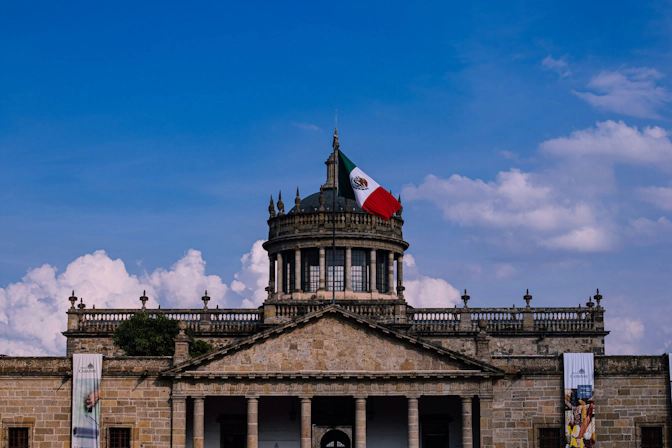
- Historic centre. The cathedral, Hospicio Cabañas, and the surrounding plazas anchor the colonial core.
- Chapultepec and Americana. The city’s most active neighbourhoods for art, music, cafés, and nightlife.
- Mariachi and charrería. Guadalajara is the birthplace of both, with regular performances and events.
- Markets and cuisine. Mercado San Juan de Dios and the city’s birria and torta ahogada traditions are worth planning around.
Why Herb Is Your Go-To Resource for Cannabis Education

jarritos
Mexico is a case study in how cannabis misinformation compounds. A number from an unpassed bill becomes a permit rule. A statutory reference quantity becomes a legal limit. A constitutional ruling becomes decriminalization, right up until the regulator publishes a clarification saying it was not.
Herb works from statutory text, court decisions, and regulator publications rather than recycled summaries. Herb reports a community of more than 14 million across its platforms.
- Strain guides. Research detailed strain profiles covering effects, genetics, and consumption guidance.
- Educational content. Work through guides and learning resources on cannabis fundamentals, formats, and legal concepts.
- Product education. Browse product information covering flower, edibles, oils, topicals, and accessories available in legal markets.
- Legalization news. Follow policy developments across North America and beyond.
- Destination comparison. Weigh jurisdictions against each other before you travel rather than after you arrive.
Final Verdict
roman lopez
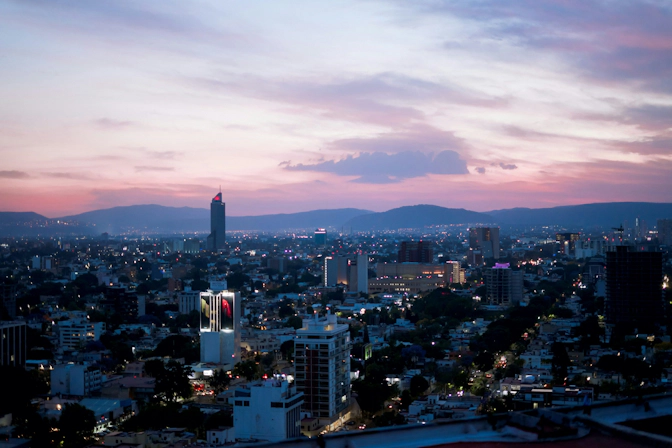
Guadalajara is a wonderful city, and cannabis access is not among the reasons to go. Here is how the decision breaks down.
- Expecting dispensaries? Mexico has no federally authorized commercial adult-use retail system, and self-consumption authorizations expressly exclude sale and distribution.
- Reading that possession is decriminalized? COFEPRIS stated on July 7, 2026 that the Supreme Court did not rule on decriminalization and that conduct remains regulated.
- Counting on the 5-gram line? It works in neither direction. Article 479’s figure is a statutory reference, and the February 2026 ruling requires case-by-case assessment rather than automatic criminalization above it.
- Told you can grow eight plants? That number comes from a bill that was never enacted. The operative framework does not set it.
- Shopping for CBD? A 1% THC reading does not establish lawful marketing. Article 245 is conditional, and COFEPRIS revoked its own 2018 guidelines in 2019.
- Traveling with prescribed cannabis medicine? Article 32 of the 2021 regulation addresses international passengers including foreigners, and an import permit route exists. Confirm requirements with COFEPRIS before departure rather than assuming either that it is fine or that it is impossible.
Frequently Asked Questions
Is weed legal in Guadalajara?
Mexico does not have a federally authorized commercial adult-use cannabis retail system, so there is no lawful way to buy recreational cannabis in Guadalajara. Declaratoria General de Inconstitucionalidad 1/2018 invalidated the absolute prohibition on adult recreational self-consumption and directed that adults may receive authorizations covering activities including sowing, cultivation, harvesting, preparation, possession, and transportation, while expressly excluding commercialization, sale, supply, transfer, and distribution. COFEPRIS reaffirmed on July 7, 2026 that the Supreme Court did not rule on marijuana decriminalization and that applicable conduct remains regulated under existing law.
Is possession of 5 grams legal in Mexico?
Not exactly, and exceeding it is not automatically criminal either. Article 479 of the General Health Law still lists 5 grams as its statutory personal-use quantity, with Article 478 providing for non-prosecution in qualifying circumstances. In 2022 the First Chamber held unconstitutional the portion of Article 478 that prevented consideration of personal consumption merely because possession exceeded five grams, and on February 4, 2026 the Supreme Court again held that automatically criminalizing possession solely for exceeding five grams was unconstitutional in the case before it, requiring courts to weigh the objective and personal circumstances. The Court expressly said this did not legalize cannabis or abolish the possession offence.
Can I get a cultivation permit, and does it allow eight plants?
Adults may seek COFEPRIS authorization for activities associated with personal recreational self-consumption, including cultivation, subject to the terms of the authorization. The Supreme Court’s general declaration does not establish an eight-plant household limit. That figure comes from a 2021 legislative proposal that was never enacted. Herb also could not locate a current primary source establishing Mexican citizenship, permanent residency, or specific identification requirements as substantive prerequisites, nor confirmation of widely republished claims about mandatory Mexico City appointments or 30 to 90 day processing times. Check current procedure directly with COFEPRIS.
Can tourists bring medical cannabis into Mexico?
Do not bring recreational cannabis or unapproved cannabis products into Mexico. For qualifying medicines the picture is different: Article 32 of Mexico’s 2021 medicinal cannabis regulation specifically addresses international passengers, whether Mexican residents or foreigners, who require cannabis medicines for treatment, providing that they must present the relevant medical prescription or, where applicable, authorization issued by the competent authority of their country of origin. The regulation also establishes a mechanism for a prior COFEPRIS sanitary import permit for personal medical use. A foreign cannabis recommendation does not authorize a Mexican pharmacy to dispense to you, since domestic prescribing runs through special controlled prescriptions.
Is CBD legal to buy in Guadalajara?
A THC concentration at or below 1% does not by itself establish that a CBD product is lawfully marketed in Mexico. Article 245 provides that products containing cannabis derivatives at 1% THC or less with broad industrial uses may be commercialized, exported, and imported provided they comply with applicable health regulations, which is a conditional pathway tied to product category rather than a blanket retail permission. COFEPRIS revoked its 2018 cannabis commercialization guidelines in 2019 after concluding they exceeded the governing law, and warned against commercialization without valid authorization. A storefront’s inventory does not establish that its products carry the required authorization.
This article is for informational purposes only and does not constitute legal advice. Cannabis laws vary by jurisdiction and are subject to change. Always verify current regulations with official sources before traveling. Herb does not encourage the purchase or use of cannabis in jurisdictions where it is illegal.
Herb Recommended Products:
READ MORE