How to Buy Weed in Ireland in 2026: Laws, Medical Access & What’s Changing
Understanding Ireland's cannabis laws, the medical access pathway, reform timeline, and what visitors and residents need to know in 2026
Herb
April 27, 2026
This article contains sponsored content. Some of the products featured are part of paid partnerships. This page explains how our process works.

diogo palhais
Understanding Ireland's cannabis laws, the medical access pathway, reform timeline, and what visitors and residents need to know in 2026
April 27, 2026
If you’re searching for how to buy weed in Ireland in 2026, you’re probably one of two people: a traveler from a country where cannabis is legal who doesn’t want to be caught off-guard, or an Irish resident who knows cannabis is everywhere but wants to understand what the law actually says. Either way, the answer is the same: you cannot legally buy weed in Ireland. No dispensaries, no licensed social clubs, no coffee shops, no legal retail of any kind.
In 2026, buying weed in Ireland recreationally remains illegal, and understanding the law, medical pathways, and reform timeline is essential for anyone asking this question.
The full picture is more complicated and more interesting than a flat “no.” Ireland is in the middle of a genuine legal reckoning with cannabis. The Citizens’ Assembly recommended decriminalization. The Oireachtas Committee backed it with 59 specific recommendations. A formal government review of the Medical Cannabis Access Programme was launched in April 2026. And a thriving, if entirely underground, cannabis culture already exists in Dublin and across the country.
This guide covers what Ireland’s cannabis laws actually say, how the medical access pathway works, what the reform movement looks like, and what visitors and residents need to understand before making any decisions.

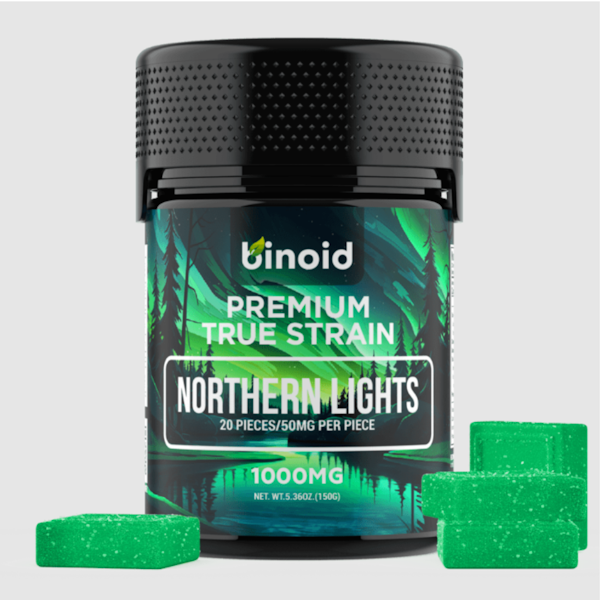
Ireland may not have legal dispensaries, but if you’re in a jurisdiction where hemp-derived cannabinoids are permitted, Binoid’s Strain Profile Gummies bring some of cannabis’ most iconic genetics to life.
Each gummy combines 100mg of premium hemp-derived cannabinoids with strain-specific cannabis terpenes, inspired by favorites like Blue Dream, Granddaddy Purp, Northern Lights, and Strawberry Lemonade.
Experience a bold, strain-inspired edible designed for high-tolerance consumers who appreciate both potency and terpene-rich flavor.
Herb readers get 25% off with code HERB25 at Binoid.

andrew ridley
Legal Status:
Reform Progress:
tristan o connor
People asking how to buy weed in Ireland are often surprised to find the answer is simply: you can’t, legally. Ireland has one of the highest cannabis use rates in the EU, and laws that haven’t caught up with that reality. That gap is why this question comes up constantly.
Travelers arriving from Germany, Malta, the Netherlands, or the United States, where cannabis has been legalized or decriminalized, assume Ireland will have some form of legal access. It doesn’t.
Visitors who purchased cannabis legally in Amsterdam or Berlin land in Dublin and discover there’s no equivalent. Irish residents who follow the political news know reform is being debated and want to understand how close it actually is. Patients who don’t qualify under the Medical Cannabis Access Programme’s specific criteria want to know if anything else is available.
None of these questions has the answers most people hope for, not yet. That’s the reality this guide covers.
vinh ch
You cannot legally buy weed in Ireland in 2026. Cannabis and psychoactive cannabis preparations are subject to strict Schedule 1 controls under Irish misuse-of-drugs regulations, except where access is permitted through MCAP or a Ministerial licence. This applies to possession, sale, cultivation, and import.
What makes Ireland’s situation particularly notable is how sharply public opinion and political momentum have shifted even as the law hasn’t changed. The country has gone from near-silence on cannabis reform to producing a Citizens’ Assembly recommendation, a committee report with 59 specific recommendations, and an active government review of the medical access programme, all within two years.
For now, recreational cannabis is illegal. Medical cannabis exists as a specific legal pathway. Significant reform may be coming, but it hasn’t arrived yet.
irish police
Understanding Ireland’s cannabis laws requires separating what the law says from how it’s enforced day-to-day, because there is a meaningful gap.
Under the Misuse of Drugs Act, the penalties for cannabis offenses in Ireland are:
Possession (personal use):
Supply or intent to supply:
Cultivation:
Import/Export:
The statutory law distinguishes first, second, and third/subsequent cannabis possession offences, with escalating penalties for repeat offences. Enforcement outcomes vary by circumstances, and readers should not assume a caution or fine-only outcome for any possession stop.
Major drug-enforcement operations typically focus on supply and trafficking, but personal possession remains a criminal offence and may still be prosecuted. Being caught with cannabis in Ireland creates a legal record that can affect travel, employment, and future interactions with the justice system.
The unregulated cannabis market can expose consumers to mislabeled products, contaminants, or synthetic cannabinoids. These synthetic products, often sold under brand names to skirt legal definitions, can carry substantially different and sometimes greater health risks than regulated cannabis. This is one reason reform advocates argue that legal frameworks reduce, rather than increase, public health risk.
Lance Murphey/The New York Times
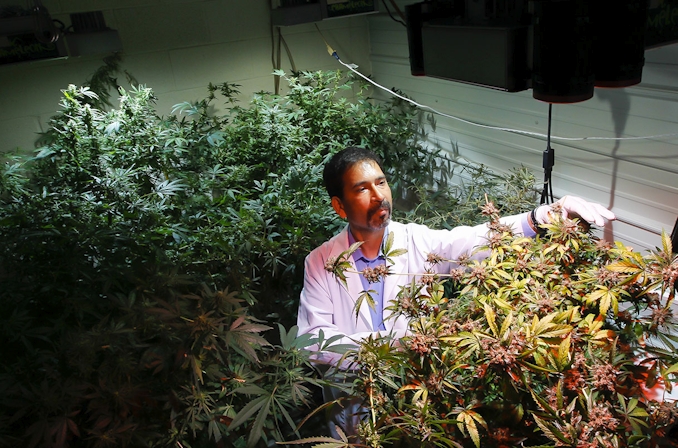
Ireland launched the Medical Cannabis Access Programme (MCAP) in 2019 and began prescribing under it in 2021. The MCAP is Ireland’s structured medical cannabis access programme. A separate Ministerial Licence pathway also remains available for named-patient access in specific cases. As of early 2026, roughly 74 patients had accessed the programme according to industry reporting.
The MCAP currently covers three specific indications:
The programme covers a specific list of accepted cannabis-based products, including oral solutions, oils, capsules, and certain Bedrocan and BMK dried flower products listed by the Department of Health (including Oleo Bedrobinol Dried Flower and Oleo Bedrocan Dried Flower). Products come from licensed producers, including Aurora, MGC Pharmaceuticals (CannEpil), and Tilray.
In April 2026, Health Minister Jennifer Carroll MacNeill announced that Professor Shane Allwright will lead a formal review of Ireland’s medical cannabis access structure. The review examines both the MCAP and the Ministerial Licence pathway and will assess whether eligibility criteria should be expanded. A full report is expected within 12 months of commencement. If the review recommends expanding eligibility, it could open legal medical access to additional Irish patients who currently have no legal pathway.

Photo Courtesy of NuggMD
If you believe you qualify for medical cannabis under MCAP, here is how the process works in 2026.
Medical cannabis in Ireland cannot be prescribed by a GP. You need an appropriately trained medical consultant with expertise in your qualifying condition, such as a neurologist for MS spasticity, an oncologist for chemotherapy-related nausea and vomiting, or a specialist for severe, refractory epilepsy. Industry sources report that only around 22 consultants had submitted MCAP applications on behalf of patients as of early 2026, which reflects how specialized the access chain remains.
Under MCAP, a medical consultant may prescribe an accepted cannabis-based product for an eligible patient after standard treatments have failed. For the separate Ministerial Licence route, an Irish-registered medical practitioner applies to the Minister for Health, with the application endorsed by the patient’s consultant. There is no direct patient application for either pathway.
Approved patients receive a prescription for a specific MCAP-accepted product dispensed through approved pharmacies. Patients with a medical card may qualify for reimbursement; others pay out-of-pocket, which can be substantial.
Outside of MCAP, patients can apply for a ministerial licence directly, a legacy pathway that predates the formal programme. This route is reserved for cases not covered by the standard MCAP criteria. Both pathways require a medical professional to be involved.
Some private clinics in Ireland advertise support for patients seeking medical cannabis access through the MCAP process. Eligibility remains consultant-led and condition-specific. The presence of these clinics reflects growing private-sector interest in the space, even within the programme’s current structure.
andrea leopardi
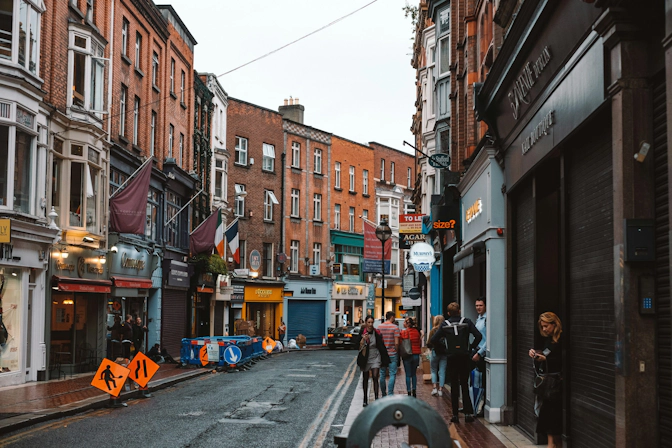
For those wondering how to buy weed in Ireland, specifically in Dublin: Dublin is where Ireland’s cannabis culture is most visible, though “visible” is relative in a country where recreational use remains illegal, and there are no dispensaries, cannabis cafes, or legal retail options of any kind.
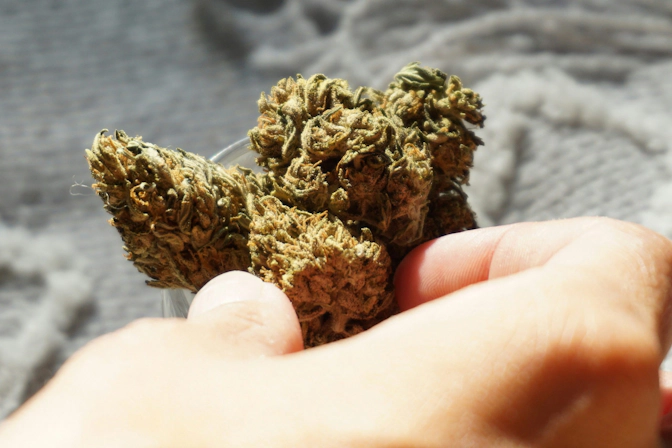
The reality of cannabis in Dublin mirrors the rest of Ireland: an entirely black-market supply chain, primarily accessed through social networks and, increasingly, social media. According to media reporting on EU web-survey data, Irish cannabis users ranked among the most likely in the EU to report buying drugs via social media and receiving them by post. This should be treated as survey data from people who use drugs, not a general-population estimate.
Because the market is unregulated, quantity, potency, and contents cannot be reliably verified. Reported prices vary widely by location, supply, and product type, and any figures circulating in media or online reflect snapshots of an unstable, unregulated market and should not be treated as reliable or consistent guidance.
The source of Ireland’s cannabis supply has shifted significantly. Customs seizures in 2025 showed cannabis worth approximately €107 million entering Ireland, with roughly €46 million traced to the United States.
This represents a dramatic reversal from 2019, when US-sourced cannabis represented just €1.1 million in seizures, a 42-fold increase in six years, according to the Irish Times. Legal cannabis from the US, Canada, and Thailand is entering at wholesale prices that undercut the traditional European black market, with criminal networks selling it at standard Irish street prices to maximize margin.
The supply shift has implications beyond economics. Products from regulated legal markets are now being sold through completely unregulated channels in Ireland, with no quality control, no labeling, and no consumer protections.
There are no cannabis dispensaries in Ireland. There are no cannabis social clubs operating legally. There are no coffee shops in the Dutch style. Any establishment in Dublin claiming to sell cannabis for consumption is operating outside the law. This is meaningfully different from places like Amsterdam, Malta, or Germany, where legal frameworks create some form of regulated access.
elsa olofsson
Ireland’s path toward cannabis reform has been slower than several European neighbors, but the political groundwork laid between 2022 and 2026 represents genuine progress. Here is the timeline.
People Before Profit TD Gino Kenny has been the most persistent parliamentary voice for cannabis reform in Ireland. In November 2022, he introduced a bill to legalize personal use of cannabis and decriminalize possession of up to 7 grams. A Red C poll conducted around the same time found that over 50% of Irish adults supported some form of cannabis reform.
The Irish government convened a Citizens’ Assembly specifically to examine drug policy: a deliberative process in which a randomly selected, representative group of Irish citizens heard evidence and reached recommendations. The assembly focused on the full spectrum of illicit drug use, with cannabis as a central topic.
In January 2024, the Citizens’ Assembly published its final report with 36 recommendations. The report called for a fundamental shift away from a criminal justice response and toward a comprehensive health-led approach to illicit drug use. A cannabis-specific vote on whether to legalize cannabis outright was lost by a single vote within the assembly. The margin underscores how close Ireland came to a full legalization recommendation.
The Oireachtas Joint Committee published an interim report in October 2024 with 59 recommendations, going further than the Citizens’ Assembly in some respects. The committee explicitly backed Recommendation 17, which calls for the decriminalization of all substances for personal use, with a shift toward treatment options where relevant.
Despite the committee’s support, legislative movement has remained slow. In January 2024, when Kenny sought to advance his bill again, Health Minister Stephen Donnelly negotiated a “timed amendment” that blocked the bill from advancing to the next stage until at least October 2024. As of April 2026, a comprehensive decriminalization bill has not passed into law.

jason murphy
The Citizens’ Assembly process matters beyond the specific recommendations it produced. Ireland has a strong track record of using citizens’ assemblies to resolve contentious social issues. The 2018 abortion referendum and the 2015 same-sex marriage referendum both emerged from similar processes.
The key distinction in the cannabis debate is between decriminalization and legalization:
The Irish committee and assembly recommendations lean toward a decriminalization model, not full legalization. Both models would eliminate the threat of criminal charges for simple possession, which is what most daily users care about in practice.
elsa olofsson
Ireland’s position within Europe helps contextualize where it sits and where it might be heading.
| Country | Recreational Status | Medical Status |
|---|---|---|
| Ireland | Illegal | Legal (MCAP, specific conditions) |
| Germany | Partial legal (possession and social clubs since 2024) | Legal (broad access) |
| Malta | Legal (personal possession and home growing since 2021) | Legal |
| Netherlands | Tolerated (coffeeshops); production technically illegal | Legal |
| Portugal | Decriminalized (all drugs, since 2001) | Legal |
| UK | Illegal | Legal (select cases) |
| France | Illegal | Pilot programme underway |
| Spain | Decriminalized (social clubs, grey area) | Select access |
Ireland sits among the more conservative European countries on cannabis policy, closer to France and the UK than to Germany or Malta. But the domestic political trajectory in 2024 to 2026 looks more reform-oriented than at any prior point.
The Oireachtas committee’s explicit reference to Germany’s 2024 reform and Malta’s framework signals that European neighbors are informing the debate in concrete ways.
Despite the legal status, cannabis has a genuine and widespread presence in Irish culture. Ireland has among the highest cannabis use rates in the EU. The EMCDDA repeatedly ranks Ireland near the top of European countries for adult cannabis prevalence. According to Health Research Board data, around 14% of Irish young adults aged 15 to 34 used cannabis in the past year.
Cannabis use in Ireland spans demographics. University students, creative communities, and working adults all participate in what is, statistically, one of Europe’s most active cannabis cultures, entirely underground. The disconnect between legal prohibition and social reality is one of the driving arguments reform advocates make: criminalization isn’t stopping use, it’s shaping who bears the legal risk of it.
The absence of any legal framework shapes Irish cannabis culture in specific ways:
Ireland does not offer cannabis tourism in any form. Dublin is the most visited city in Ireland but among the most restrictive major European capitals for cannabis visitors. Unlike Amsterdam, Barcelona, or Berlin, there are no legal establishments to visit, no events organized around cannabis consumption, and no dispensary tourism of any kind.
For cannabis enthusiasts visiting Ireland, the Herb strain guide is a useful resource for learning about varieties before any travels, but in Ireland itself there is no legal marketplace to connect that knowledge to.
kristel hayes
For international travelers, particularly those from countries where cannabis is legal, Ireland’s laws apply regardless of your home country’s policies. There is no reciprocal legal treatment, no “personal use” exception for tourists, and no legal way to purchase cannabis while in the country.
Carrying cannabis across any international border into Ireland, including from the UK, Netherlands, or Germany, is a customs offense with serious consequences, treated separately from and more seriously than simple possession. This applies regardless of where you purchased it legally.
If you’re traveling to Ireland and want to stay informed about cannabis culture globally, Herb’s destination guides cover the legal landscape across dozens of countries and jurisdictions.
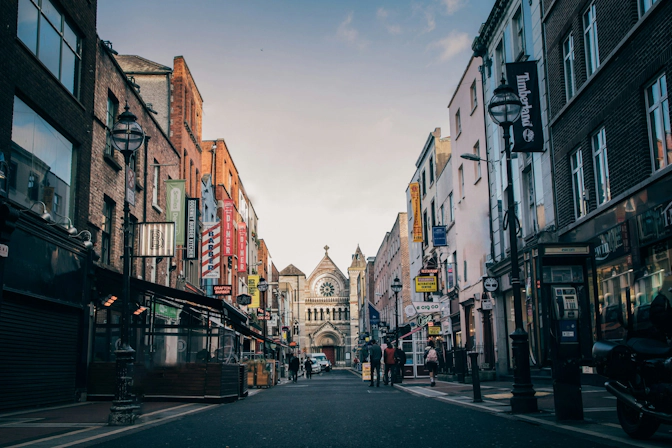
Dublin is a genuinely excellent city. The pub culture, live music, literary heritage, and food scene are among the best in Europe. The city’s nightlife is built around social drinking, not cannabis, and that reflects the legal reality. If you’re visiting and looking for communities that discuss cannabis culture openly, online spaces and advocacy groups like People Before Profit’s drugs policy platform are active.
gregory dalleau
Ireland’s cannabis situation in 2026 looks different depending on who you are and what you need.
For medical patients with a qualifying condition: The MCAP is a real, legal pathway. The access chain is specialist-dependent, and as of early 2026, approximately 74 patients had been approved according to industry reporting. The April 2026 review may expand eligibility meaningfully within the next 12 months.
For Irish residents who use cannabis: The political momentum is the most substantive in the country’s history. The Citizens’ Assembly, the Oireachtas committee, and the MCAP review all represent genuine movement. But legislation hasn’t changed. The risks of the unregulated market, including legal, health, and quality concerns, remain fully in place.
For international visitors: There is no legal cannabis in Ireland, no cannabis tourism infrastructure, and no exceptions for travelers from legal-cannabis countries. Dublin genuinely delivers on everything else.
For reform watchers: Ireland’s trajectory is one of the more interesting in Europe right now. The momentum is real. The law hasn’t caught up yet, but the direction is clear.
Explore Herb’s guides on cannabis law across Europe to see how Ireland’s neighbors are handling legalization and what that means for the region.
No. Cannabis is illegal for recreational use in Ireland in 2026. Cannabis and psychoactive cannabis preparations are subject to strict Schedule 1 controls under Irish misuse-of-drugs regulations, with access permitted only through MCAP or a Ministerial licence. Possession can result in a Class D fine of up to €1,000 on a first offence, rising to a Class C fine of up to €2,500 plus possible imprisonment on a third or subsequent offence.
Yes, but access is specifically scoped. The Medical Cannabis Access Programme (MCAP) covers three conditions: spasticity associated with multiple sclerosis, chemotherapy-induced nausea and vomiting, and severe, refractory epilepsy. Approximately 74 patients had been approved as of early 2026, according to industry reporting. A formal review launched in April 2026 may expand eligibility.
Ireland is not expected to legalize recreational cannabis in the near term. However, decriminalization is actively being debated. The Citizens’ Assembly on Drugs Use recommended a health-led approach to personal possession in January 2024, and the Oireachtas Joint Committee backed decriminalization in October 2024. Legislative action has been slow to follow.
For a first offence, the Misuse of Drugs Act provides for a Class D fine of up to €1,000 on summary conviction. For a third or subsequent personal-use possession offence, the statute provides for a Class C fine of up to €2,500 and/or up to 12 months imprisonment on summary conviction, or a court-determined fine and/or up to 3 years imprisonment on indictment. Supply and cultivation carry much higher penalties, including fines up to €100,000 and imprisonment up to 14 years.
CBD is not itself a controlled drug in Ireland, but CBD foods and food supplements are regulated as novel foods and are not currently authorized for sale as food or food supplements under EU novel food rules. THC remains a controlled substance, and the Food Safety Authority of Ireland states there is no general legal THC tolerance in food except for hemp seed and hemp seed-derived products. Travelers should not assume that products marketed as “hemp-derived” or “CBD” are legally unproblematic in Ireland.