
jiachen LIN
How to Buy Weed in Osaka & Kyoto: Japan’s Kansai Region: Same Answer, Zero Tolerance |
09.17.2026How to Buy Weed in Osaka & Kyoto: Japan’s Kansai Region: Same Answer, Zero Tolerance
Recreational cannabis is illegal in Osaka, Kyoto, and all of Japan, and cannabis use became a crime in December 2024. Here is what travelers risk and how Japan's CBD rules work.

Planning to buy weed in Osaka or Kyoto? Here’s the only answer you need: Don’t. Japan has no recreational cannabis market and maintains one of the world’s strictest approaches to cannabis. As of December 12, 2024, Japan made unlawful cannabis use a crime, closing a gap in the former law that penalized possession but not use. The penalty? Up to seven years’ imprisonment for non-profit offenses, and foreign nationals can also face deportation proceedings and serious restrictions on future entry.
This isn’t a guide to finding weed in Japan’s Kansai region. It’s a critical legal warning that could save you from life-altering consequences. Cannabis travel rules from home do not follow you here.
Below is a breakdown of Japan’s current cannabis laws, the real penalties, what happens after an arrest, how Japan regulates CBD, and legal ways to enjoy Osaka and Kyoto.
Key Takeaways
- Japan made unlawful cannabis use a crime on December 12, 2024. Use, possession, transfer, and acquisition without a profit motive each carry up to 7 years’ imprisonment.
- There are no legal recreational cannabis dispensaries in Osaka, Kyoto, or anywhere in Japan.
- Foreign nationals face the same criminal penalties as residents, and cannabis offenses can lead to deportation proceedings and a continuing ground for refusal of future entry.
- A suspect can be held for up to 23 days in pre-indictment custody for a single alleged offense, and bail is unavailable at that stage.
- More than 99% of defendants who are actually indicted in Japan are convicted, according to the Ministry of Justice.
- CBD products are regulated by Δ9-THC residual limits: 10 ppm for liquid oils and fats and powders, 0.10 ppm for aqueous solutions, and 1 ppm for other products.
- A foreign cannabis prescription or medical card does not, by itself, authorize possession or importation in Japan.
Is Weed Legal in Osaka and Kyoto?
robby mccullough
No. Recreational cannabis is illegal in Osaka, Kyoto, and throughout Japan. There is no recreational dispensary system, no decriminalized personal-use amount, and no tourist exception. For anyone asking how to buy weed in Osaka or Kyoto: there is no legal pathway.
Japan’s 2024 reforms did make two important changes. They created a legal pathway for appropriately approved cannabis-derived medicines, and they shifted regulation of cannabis-derived products toward Δ9-THC concentration limits. Neither change creates any form of recreational access.
Understanding Japan's Cannabis Laws: A Zero-Tolerance Stance

richard tao
Japan’s approach to cannabis stands in stark contrast to the liberalization trends across North America, Europe, and parts of Asia. Recreational cannabis remains prohibited, while Japanese law now allows a pathway for appropriately approved cannabis-derived pharmaceuticals.
Japan's Cannabis Laws: What You Need to Know
The reforms that took effect on December 12, 2024, represent Japan’s most significant cannabis policy change in decades, and for consumers, they tightened restrictions rather than loosening them. Under the reform, the former Cannabis Control Act was renamed the Act on Regulation of Cultivation of Cannabis Plants, while cannabis itself is now regulated substantially through the Narcotics and Psychotropics Control Act.
Previously, Japanese law penalized possession but did not criminalize use. That gap is now closed.
The current law prohibits:
- Possession of regulated cannabis or cannabis products without authorization
- Use of cannabis without authorization (newly criminalized in 2024)
- Cultivation of cannabis plants without a license
- Import and export of regulated cannabis products
- Transfer or acquisition involving others
- Advertising of regulated narcotics
Penalties for Possession, Cultivation, and Distribution
The consequences for cannabis offenses in Japan are severe. According to Japan’s Ministry of Health, Labour and Welfare (MHLW), the penalties are:
- Possession, transfer, or acquisition. Up to 7 years’ imprisonment. If profit-motivated, 1 to 10 years, potentially plus a fine of up to ¥3 million.
- Use. Up to 7 years’ imprisonment. If profit-motivated, 1 to 10 years, potentially plus a fine of up to ¥3 million.
- Import, export, or manufacturing. 1 to 10 years’ imprisonment. If profit-motivated, imprisonment of at least 1 year, potentially plus a fine of up to ¥5 million.
- Cultivation. 1 to 10 years’ imprisonment. If profit-motivated, imprisonment of at least 1 year, potentially plus a fine of up to ¥5 million.
Foreign nationals face these penalties plus potential immigration consequences, covered below.
Distinction Between THC and CBD in Japanese Law
The December 2024 reform moved regulation of cannabis-derived products principally toward Δ9-THC concentration thresholds. MHLW states that products whose Δ9-THC level does not exceed the applicable residual limit are outside narcotics regulation on that basis, provided they contain no other regulated substance.
The residual limits are far stricter than most Western standards:
- Oils and fats that are liquid at room temperature, and powders: Maximum 10 ppm Δ9-THC
- Aqueous solutions: Maximum 0.10 ppm Δ9-THC
- All other products: Maximum 1 ppm Δ9-THC
These categories are based on the product’s physical form rather than consumer-market labels, so a given edible or drink may fall into a different category than you expect. The CBD vs. THC guide from Herb explains how the two cannabinoids differ.
The Reality of 'Buying Weed' in Osaka and Kyoto: It's Not What You Think
ramon kagie
If you’ve searched “how to buy weed in Osaka” or “where to find weed in Kyoto,” you’re not alone. But understanding the reality of this search is critical before you board your flight.
The Dangers of Seeking Illicit Substances
There are no legal recreational cannabis dispensaries, delivery services, or retail operations in Osaka, Kyoto, or anywhere in Japan. Any attempt to source cannabis puts you at risk of:
- Arrest and custody. Suspects can be held for up to 23 days before an indictment decision.
- Prosecution. More than 99% of indicted defendants are convicted.
- Imprisonment. Unlawful use or possession carries up to seven years.
- A criminal record. A conviction in Japan can carry consequences at home.
- Professional fallout. Drug convictions can affect careers and professional licenses.
Japan actively enforces its drug laws, and foreign nationals are subject to them in the same way as residents.
The Severe Consequences for Foreigners
Foreign nationals face the same criminal penalties as Japanese citizens, with additional immigration consequences:
- Pre-indictment custody. A suspect can be held for up to 23 days in pre-indictment custody for a single alleged offense through the arrest and court-authorized detention process.
- Bail. Bail is unavailable during the pre-indictment suspect stage. After indictment, defendants may apply for bail, subject to statutory grounds for denial.
- Deportation. Cannabis offenses can make foreign nationals subject to deportation proceedings under the Immigration Control and Refugee Recognition Act.
- Future entry. People who have been punished for violating laws controlling narcotics or cannabis are subject to a landing-denial ground with no fixed statutory period. Separately, ordinary deportation bars generally run for five years, or ten years for certain repeat deportees.
- Home country implications. Drug convictions may affect professional licenses, security clearances, and travel to other countries.
The U.S. Consulate General Osaka-Kobe cannot get American citizens out of Japanese jails, pay fines, or provide legal representation. Consular assistance typically includes:
- Locating detained citizens. Consular staff can confirm where you are being held.
- Attorney lists. They can provide lists of local English-speaking attorneys.
- Process information. They can explain Japanese legal procedures.
- Family contact. They can notify family members with your permission.
- Welfare checks. They can monitor your welfare during detention.
Navigating CBD in Japan: What's Legal and What's Not
jeremy santana
For travelers who use cannabinoids for wellness purposes, understanding Japan’s CBD landscape is essential, but proceed with caution.
The Nuances of CBD Legality in Japan
CBD products are sold legally in Japan when they meet the applicable Δ9-THC residual limit and contain no other regulated substance. Because Japan’s thresholds are much lower than many other countries’ standards, foreign CBD products may exceed them and need product-specific verification. MHLW has identified CBD products on the Japanese market that exceeded the new limits, so noncompliance is a genuine risk.
Key compliance points include:
- THC residual limits. Compliance turns on the applicable Δ9-THC limit (10 ppm, 0.10 ppm, or 1 ppm depending on product form).
- Other regulated substances. A product must not contain any other regulated substance.
- Product-specific legality. Legality depends on the individual product, not on the brand or the label “CBD.”
- Import risk. Personal CBD imports carry real risk if the product has not been verified.
Ensuring Your CBD Products Are Compliant
The safest option: Do not bring CBD products into Japan unless you have verified that the specific product complies with Japanese rules. Even products labeled “THC-free” in the U.S. or Europe may exceed Japan’s limits. Noncompliant products may be treated as regulated narcotics and can expose a traveler to seizure, investigation, arrest, or prosecution.
MHLW’s Narcotics Control Department offers an optional pre-import non-narcotic confirmation process for CBD-related products. The agency notes that this advance confirmation is not a legally mandatory procedure, but it is a useful step for anyone who intends to import a product.
If you buy CBD during your stay:
- Choose established retailers. Buy from shops that provide product information and documentation.
- Ask about compliance. Request test results or compliance documentation from the manufacturer or seller.
- Understand what a statement means. A retailer’s own compliance statement is not government certification, and MHLW does not confirm whether individual products comply.
- Keep records. Hold on to receipts and packaging.
Where to Find Legal CBD Products in Japan
CBD shops operate in Osaka’s and Kyoto’s shopping districts, but product legality is product-specific. MHLW directs consumers to check compliance with the manufacturer or seller, so ask questions before you buy and confirm a shop’s current operating status directly.
Alternative Experiences in Kansai: Enjoying Osaka & Kyoto Legally

svetlana gumerova
The Kansai region offers extraordinary experiences that don’t require substances. Redirecting your focus toward legal activities ensures you actually enjoy your trip.
Discovering Kyoto's Historical Treasures and Serene Gardens
Kyoto provides cultural immersion that is hard to replicate elsewhere:
- Temple visits. Kyoto is home to a vast number of Buddhist temples and Shinto shrines.
- Traditional tea ceremonies. Experience matcha preparation in historic settings.
- Arashiyama bamboo groves. Enjoy natural beauty on a morning walk.
- Geisha districts. Gion and Pontocho offer evening atmosphere.
- Onsen (hot springs). Find natural relaxation throughout the region.
Personal Safety and Legal Precautions for Travelers in Japan
Understanding your rights and limitations in Japan’s legal system helps you make informed decisions.
Understanding Your Rights as a Foreigner
Japan’s criminal procedure differs significantly from what many visitors expect:
- Right to remain silent. Japan does not use the U.S. Miranda warning formula, but suspects have a statutory right to remain silent, and interrogators must inform suspects of it in advance.
- Defense counsel. Suspects have rights concerning defense counsel, and prosecutors must inform arrested suspects that they may appoint one.
- Pre-indictment custody. Custody can last up to 23 days for a single alleged offense before a decision on indictment.
- Interrogations. Lawyers generally are not present inside police or prosecutorial interrogations, although suspects have a right to consult counsel.
- Language. Ask for an interpreter if you do not fully understand what is being said.
- Conviction rate. More than 99% of defendants who are actually indicted are convicted, according to Japan’s Ministry of Justice. That figure does not mean that more than 99% of people arrested or investigated are convicted.
Avoiding Situations That Could Lead to Legal Trouble
Practical steps to protect yourself:
- Never carry items for strangers. Do not accept packages or bags you cannot account for.
- Decline any offers of cannabis. Walk away and do not engage.
- Avoid posting about drugs. Social media posts can draw unwanted attention.
- Check your medications. Some common medications are restricted in Japan, and travelers carrying controlled medicines must comply with Japan’s medication-import rules and obtain permission where required.
- Research all substances before travel. This includes CBD and supplements. Herb’s airport security guide explains the risks of traveling with cannabis products.
What to Do if You Encounter Legal Issues
If you’re arrested or detained:
- Request consular notification. Ask that your consulate be informed.
- Do not sign anything you do not fully understand.
- Request a defense lawyer. You have rights concerning defense counsel.
- Remain calm. Cooperate with procedures while protecting your rights.
- Use your right to silence. You are not required to make a statement against your will.
U.S. Consulate General Osaka-Kobe:
- Address: 2-11-5 Nishitenma, Kita-ku, Osaka 530-8543
- Contact: Use the U.S. Citizens Services contact system on the U.S. Embassy website
- After-hours emergencies: +81-3-3224-5000
- Local emergency (police): 110
The Global Context: Why Japan's Stance Differs from Other Nations

clay banks
Understanding Japan’s prohibition requires historical and cultural context that extends beyond simple policy differences.
A Brief History of Cannabis Prohibition in Japan
Cannabis was historically common in Japan, used for fiber, food, and Shinto religious ceremonies. The modern prohibition framework dates to the postwar American occupation, when anti-cannabis controls were introduced as part of broader narcotics regulation. Japan has since maintained a strict approach, and the 2024 reforms reinforced prohibition of recreational use.
Comparing Japanese Law to Other Jurisdictions
The contrast with cannabis policy elsewhere is stark.
Legal adult-use markets:
| Jurisdiction | Legal Status | Notes |
|---|---|---|
Canada | Legal for adults | Nationally regulated adult-use market |
California | Legal for adults | Licensed retail dispensaries for adults 21+ |
Legal with restrictions:
| Jurisdiction | Legal Status | Notes |
|---|---|---|
Germany | Legal possession for adults under the 2024 Cannabis Act | Adults may possess up to 25 g in public and 50 g at home; limited home cultivation and cultivation associations; no commercial retail |
Thailand | Regulated as a controlled herb | Businesses operate under controlled-herb licensing; rules have tightened since 2022, so verify before travel |
Recreational use illegal:
| Jurisdiction | Legal Status | Notes |
|---|---|---|
Japan | Illegal | Use, possession, and transfer carry up to 7 years' imprisonment; CBD regulated by Δ9-THC limits |
Societal Views on Drugs in Japan
Drug use carries significant social stigma in Japan beyond legal consequences:
- Career impact. Public figures in Japan have faced serious career consequences after drug arrests.
- Family impact. Drug involvement can affect how families are viewed socially.
- Different norms from alcohol. Cannabis is not treated through a “responsible use” lens.
- Media coverage. Drug arrests of well-known people often receive extensive coverage.
Final Verdict
nomadic julien
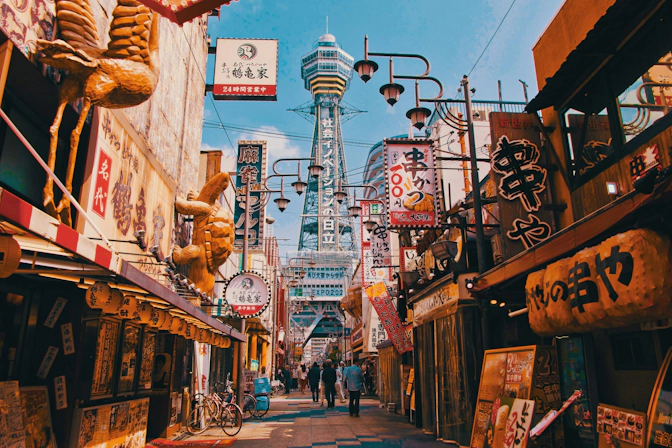
Osaka and Kyoto are among Japan’s most rewarding destinations, but cannabis is not part of what they offer. Here is how the decision breaks down for cannabis-conscious travelers:
- Heading to Kansai for food and culture? You can have an outstanding trip. Skip any cannabis offer and spend your time in Dotonbori, Arashiyama, and Kyoto’s temples instead.
- Using CBD at home? The safest choice is to leave it behind unless you have verified that the specific product meets Japan’s Δ9-THC limits. MHLW’s optional pre-import confirmation process is available.
- Buying CBD in Japan? Ask the seller for compliance documentation, and remember that a shop’s own statement is not government certification.
- Carrying prescription medication? Check Japan’s medication-import rules and obtain permission where required. A foreign cannabis prescription does not authorize possession.
- Planning a trip centered on cannabis? Choose a destination with a legal framework. Herb’s travel guides and cannabis education resources explain where cannabis is welcome and where it is not.
The honest answer to “how to buy weed in Osaka or Kyoto” is: you cannot, legally. Japan enforces its drug laws seriously, and the consequences for foreign visitors can reach well beyond the trip itself.
Frequently Asked Questions
Is cannabis legal in Japan for recreational use?
No. Recreational cannabis is illegal in Japan. Since December 12, 2024, unlawful use has been a crime alongside possession, with penalties of up to 7 years’ imprisonment for non-profit offenses. There are no legal recreational dispensaries, no decriminalized personal-use amounts, and no tourist exceptions.
Can I bring CBD products into Japan?
The safest option is not to bring CBD products into Japan unless you have verified that the specific product complies with Japanese rules. Japan’s Δ9-THC residual limits are 10 ppm for liquid oils and fats and powders, 0.10 ppm for aqueous solutions, and 1 ppm for other products. Foreign CBD products may exceed these limits, and noncompliant products can be treated as regulated narcotics. MHLW offers an optional pre-import non-narcotic confirmation process.
What are the penalties for cannabis possession in Japan?
Possession, transfer, or acquisition without a profit motive carries up to 7 years’ imprisonment. Profit-motivated possession carries 1 to 10 years, potentially plus a fine of up to ¥3 million. Import or export carries 1 to 10 years, or at least 1 year plus a potential fine of up to ¥5 million if profit-motivated. Foreign nationals can also face deportation proceedings and a continuing ground for refusal of future entry.
Are there any exceptions for medical cannabis in Japan?
Japan’s 2024 reforms created a legal framework under which cannabis-derived medicines can be used if they receive pharmaceutical approval. MHLW stated in December 2025 that no cannabis-derived medicine had yet received such approval. A foreign cannabis prescription or medical card does not, by itself, authorize possession or importation, and travelers carrying controlled medicines must follow Japan’s medication-import rules.
What should I do if I'm offered cannabis in Japan?
Decline immediately and remove yourself from the situation. Accepting cannabis from anyone puts you at risk of arrest and prosecution. Do not discuss the offer online, and do not return to places where offers occurred. If you feel pressured or unsafe, contact local police on 110 or reach out to your country’s consulate.
Disclaimer: This article is for informational purposes only and does not constitute legal advice. Cannabis laws vary by jurisdiction and are subject to change. Always verify current regulations with official sources before traveling. Herb does not encourage the purchase or use of cannabis in jurisdictions where it is illegal.
Herb Recommended Products:
READ MORE