
yu kato
How to Buy Weed in Seoul: South Korea’s Capital, K-Culture & Laws That Follow Citizens Abroad |
09.17.2026How to Buy Weed in Seoul: South Korea’s Capital, K-Culture & Laws That Follow Citizens Abroad
Recreational cannabis is illegal in Seoul, and Korean citizens can be punished for using it abroad. Here is what the law says, what travelers risk, and how CBD and medical rules work.

The short answer is you can’t. South Korea maintains one of the world’s strictest approaches to recreational cannabis. Unauthorized use or possession can carry up to five years’ imprisonment or a fine of up to ₩50 million (about US$36,600 as of September 16, 2026), and importing or exporting cannabis is punished far more severely. More unusually, South Korea can punish its own citizens for cannabis use abroad, even in countries where it is completely legal.
This guide explains what you need to know about South Korea’s cannabis laws, airport enforcement, CBD and medical rules, and the cultural factors behind the country’s strict stance. Cannabis travel rules from home do not follow you here.
Key Takeaways
- Recreational cannabis is illegal in South Korea, and there are no legal purchase options for tourists.
- Unauthorized cannabis use or possession can carry up to 5 years’ imprisonment or a fine of up to ₩50 million.
- Unauthorized cannabis import or export can carry life imprisonment or at least five years in prison.
- Korean citizens can be punished for cannabis use abroad, even in jurisdictions where it is legal.
- CBD oil, cannabis cartridges, and THC products should not be brought into Korea without confirming whether any authorization applies. Some products made from legally excluded hemp parts may be permitted only if they meet Korean standards.
- South Korea has a government-authorized medical cannabis pathway, and patients may be able to bring an approved cannabis-containing medicine for self-treatment with advance MFDS authorization.
- Foreign nationals convicted of drug offenses may also face deportation and restrictions on future entry.
Is Weed Legal in Seoul?

Herb
No. Recreational cannabis is illegal in Seoul and throughout South Korea. There are no dispensaries, no decriminalized personal-use amounts, and no tourist exception. For anyone asking how to buy weed in Seoul: there is no legal pathway.
South Korea does allow limited exceptions for government-authorized medical use and other specifically authorized activities. Those exceptions are tightly controlled and do not create any form of recreational access.
Understanding South Korea's Cannabis Prohibition

ciaran o brien
South Korea’s approach to cannabis reflects decades of strict anti-drug policy under the Narcotics Control Act (마약류 관리에 관한 법률). Unlike Western nations gradually relaxing cannabis laws, South Korea has maintained its strict stance on recreational use.
Zero-Tolerance Policy Explained
Recreational cannabis is prohibited. Limited exceptions exist only for government-authorized medical use and other specifically authorized activities. No recreational exception exists for:
- Small personal amounts. There is no decriminalized threshold.
- First-time offenders. A first offense is still a criminal offense.
- Cultural or religious use. No such exemption applies.
- Products legal in other countries. Legality at home offers no protection in Korea.
Penalties Under the Narcotics Control Act

y k
Korean law distinguishes substantially among use, possession, cultivation, manufacture, sale, and import or export:
- Use and certain possession offenses. Up to 5 years’ imprisonment or a fine of up to ₩50 million.
- Manufacture or sale. Can carry a minimum prison term of one year.
- Import or export. Unauthorized cannabis import or export, or possession for that purpose, can carry life imprisonment or at least five years’ imprisonment.
- Cultivation. Unauthorized cultivation is separately regulated and prohibited.
Foreign nationals convicted of drug offenses may also face immigration consequences, including deportation and restrictions on future entry, depending on the circumstances and immigration authorities’ decisions. Suspects may also be detained while criminal proceedings are pending where Korean procedural requirements are met.
Extraterritorial Jurisdiction: Laws That Follow Korean Citizens Abroad
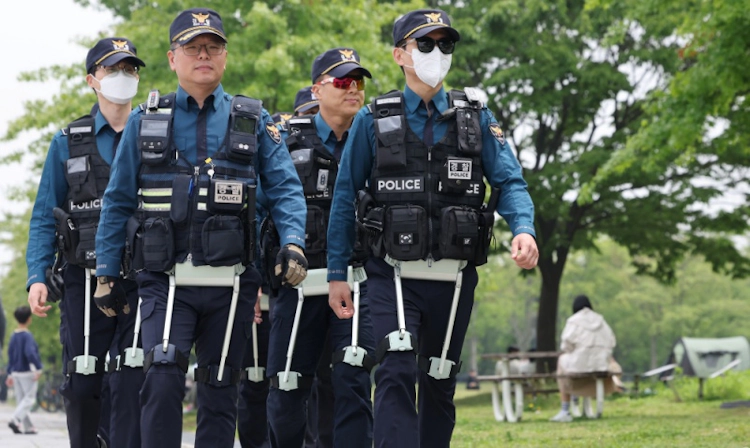
SOUTH KOREA POLICE
South Korea’s most unusual feature is that its citizens can be punished for cannabis use committed abroad. A Korean national who legally consumes cannabis in Amsterdam, Denver, or Vancouver can still face criminal consequences under Korean law.
How Korean Law Applies Globally
In a May 27, 2024 campaign on overseas drug use, the Ministry of Justice reiterated that Korean citizens may be punished after consuming cannabis in a country where it is legal. The Ministry also states that cannabis possession can result in up to five years’ imprisonment or a ₩50 million fine.
Who This Affects
- Korean nationals (citizens). Liability can apply regardless of where cannabis is consumed.
- Foreign tourists. Subject to Korean law for conduct in South Korea, including the same penalties that apply to residents.
- Foreign residents and workers. Subject to Korean law while in the country. Anyone working in Korea should check current official immigration guidance and their employer’s policies.
Incheon Airport Enforcement: What Travelers Face

louie nicolo nimor
Incheon International Airport is South Korea’s primary international gateway, and the Korea Customs Service classifies cannabis products and controlled drugs as restricted goods.
Current Enforcement Methods
Korea Customs uses risk-based passenger and baggage screening, including:
- “Landing 125” inspections. Immediate-after-landing inspections for flights designated as high-risk.
- Millimeter-wave and ion scanners. Used to identify concealed items and drug-related traces.
- X-ray analysis. Expanded X-ray screening of baggage.
- Targeted traveler inspection. Risk-based selection of passengers for closer checks.
Official figures show a serious enforcement focus. Korea Customs reported 362 drug-smuggling detections totaling 298 kg nationwide in the first half of 2024, an 11% increase in cases over the first half of 2023. In 2025, Customs reported 623 drug detections involving air travelers nationwide.
The CBD Confusion Problem
Many travelers mistakenly believe that CBD products legal in their home country can be brought into South Korea. That assumption is risky.
Incheon Airport Customs warns that CBD oil, cannabis e-cigarette cartridges, and other cannabis products can trigger criminal punishment. The U.S. Embassy also advises travelers not to bring marijuana, CBD oil, or hemp-derived products into Korea.
Korean law’s definition of cannabis does exclude cannabis seeds, roots, mature stalks, and products made from those excluded parts. MFDS guidance allows properly processed hulled hemp seed and hemp seed oil as food ingredients, subject to THC and CBD limits. Even so, Korea Customs lists hemp foods, THC, and cannabidiol among items that can be controlled or reportable.
The practical rule: Do not assume a product is legal merely because it is labeled hemp or CBD. Products including the following must not be brought into South Korea without any required authorization:
- CBD oil and tinctures
- CBD vape cartridges
- THC-containing products of any kind
- Cannabis-derived edibles, topicals, and cosmetics
- Hemp flower products
Medical Cannabis in South Korea: Limited and Restricted

sava bobov
South Korea amended its law to allow medical cannabis in 2018, becoming the first East Asian nation to do so. The reality, however, bears little resemblance to medical programs in legal cannabis states.
The Korea Orphan & Essential Drug Center (KODC) Process
Medical cannabis access runs through the Ministry of Food and Drug Safety (MFDS) and the Korea Orphan & Essential Drug Center. The legal framework allows KODC to import cannabis-containing medicines that MFDS considers urgently necessary for public health, or where no substitutable medicine is available domestically, and a patient requests its import. Patients should follow current MFDS and KODC requirements for any application.
What Foreign Travelers Should Know
- No retail access. Foreign travelers generally cannot purchase recreational or ordinary medical cannabis in South Korea.
- Self-treatment carriage. Since December 9, 2022, a patient may be able to bring an approved cannabis-containing medicine into or out of Korea for self-treatment with prior MFDS approval.
- Follow the permit procedure. Travelers should complete the current MFDS permit procedure before carrying any controlled medicine into Korea.
K-Culture and Cannabis: The Stigma Factor

Herb
Understanding South Korea’s cannabis laws requires understanding the cultural context behind them.
Confucian Values and Social Order
Korean society Korean society places strong emphasis on collective reputation and social harmony. Drug use, cannabis included, carries heavy stigma, and the consequences can extend beyond the individual to family reputation, career prospects, and social standing.places strong emphasis on collective reputation and social harmony. Drug use, cannabis included, carries heavy stigma, and the consequences can extend beyond the individual to family reputation, career prospects, and social standing.
K-Pop Celebrity Arrests and Public Consequences
High-profile cases have reinforced cannabis stigma through extensive media coverage:
- T.O.P (Big Bang, 2017). Received a 10-month prison sentence, suspended for two years, and the case drew intense public attention to both the artist and his agency.
- Shin Jung-hyeon (rock pioneer, 1975). Was arrested on cannabis charges during a government crackdown in the 1970s, a case that became a landmark in Korean pop culture history.
These cases show that fame provides no protection. If anything, public figures face heightened scrutiny and public criticism.
Generational Perspectives
Public attitudes toward cannabis in South Korea remain largely conservative, and the current legal framework continues to prohibit recreational use.
What Travelers Must Know Before Visiting Seoul

yu kato
Practical guidance for anyone planning South Korea travel. Herb’s airport security guide explains why traveling with cannabis products is risky.
Items You Must Not Bring
Do not bring the following into South Korea without any required authorization:
- Cannabis flower, regardless of packaging
- THC or CBD vape cartridges and pens
- Cannabis-infused edibles, even sealed products legal at home
- CBD oil, tinctures, or capsules
- Cannabis-derived topicals and cosmetics
- Cannabis seeds or paraphernalia, unless you have confirmed they meet Korean rules
For Foreign Residents and Workers
- Check official guidance. Confirm current visa and immigration requirements with official Korean government sources.
- Know your employer’s policies. Some employers set their own rules, which are separate from immigration requirements.
- Remember the law applies in Korea. Any cannabis use or possession in South Korea is subject to Korean criminal law.
Layover Warnings
The safest practical advice is not to travel through Korea carrying unauthorized cannabis or CBD products. Whether a particular transit passenger goes through Korean customs depends on the itinerary and transfer process, but cannabis products are restricted goods, and any that enter Korea without authorization can lead to serious consequences.
Exploring Cannabis Culture in Legally Compliant Regions
For readers interested in legal cannabis experiences, several jurisdictions offer regulated access. Rules differ widely, so research thoroughly before traveling.
Legal adult-use markets:
| Jurisdiction | Legal Status | Tourist Access |
|---|---|---|
Canada | Legal for adults since 2018 | Nationally regulated adult-use market |
U.S. states | Legal for adults in many states | Licensed dispensaries in states with adult-use programs |
Legal or tolerated with restrictions:
| Jurisdiction | Legal Status | Tourist Access |
|---|---|---|
Netherlands | Tolerated coffeeshop system | Coffeeshops in Amsterdam and other cities; local rules vary |
Germany | Legal possession for adults under the 2024 Cannabis Act | Personal cultivation and cannabis clubs; no commercial retail |
Thailand | Regulated as a controlled herb | Rules have tightened since 2022; verify before travel |
Recreational use illegal:
| Jurisdiction | Legal Status | Notes |
|---|---|---|
South Korea | Illegal | Citizens can be punished for use abroad; import and export carry the heaviest penalties |
Responsible Cannabis Tourism
When visiting legal markets:
- Verify current laws. Check the rules before departure.
- Buy from licensed sources. Purchase only where sales are legal and licensed.
- Follow consumption rules. Understand where you can and cannot consume.
- Never cross borders with cannabis. Do not transport cannabis internationally.
- Consume responsibly. Respect local laws and communities.
Final Verdict

Herb
Seoul is one of Asia’s most exciting cities, but cannabis is not part of what it offers. Here is how the decision breaks down for cannabis-conscious travelers:
- Visiting Seoul for K-culture, food, and nightlife? You can have an outstanding trip. Leave cannabis and CBD products at home and enjoy the city legally.
- Korean citizen traveling to a legal market? Korean law can still apply to you abroad, so cannabis use overseas carries real legal risk.
- Using a cannabis-containing prescription medicine? Obtain MFDS authorization in advance before carrying it into Korea.
- Packing CBD or hemp products? Do not assume a hemp or CBD label makes a product legal. Leave it behind unless you have confirmed its status and any required authorization.
- Planning a trip centered on cannabis? Choose a destination with a legal framework. Herb’s travel guides and cannabis education resources explain where cannabis is welcome and where it is not.
The honest answer to “how to buy weed in Seoul” is: you cannot, legally. South Korea enforces its drug laws seriously, and the consequences can follow you well beyond the trip.
Frequently Asked Questions
Is cannabis legal for foreigners in South Korea?
No. South Korea’s recreational cannabis prohibition applies to citizens and foreign visitors alike. Unauthorized use or possession can carry up to 5 years’ imprisonment or a fine of up to ₩50 million. Foreign nationals convicted of drug offenses may also face deportation and restrictions on future entry. A foreign medical card or prescription does not authorize possession; patients need prior MFDS approval to carry a cannabis-containing medicine.
Can Korean citizens be prosecuted for using cannabis in countries where it is legal?
Yes. The Ministry of Justice reiterated in a May 27, 2024 campaign that Korean citizens may be punished after consuming cannabis in a country where it is legal. A Korean national who uses cannabis in Canada, the Netherlands, or a U.S. state where it is permitted can face criminal consequences under Korean law.
What are the penalties for cannabis possession in South Korea?
Unauthorized use and certain possession offenses can carry up to 5 years’ imprisonment or a fine of up to ₩50 million. There is no decriminalized small-amount exception. Manufacture or sale can carry a minimum one-year prison term, and unauthorized import or export can carry life imprisonment or at least five years. Foreign nationals may also face immigration consequences.
Is medical cannabis available in South Korea?
Yes, on a limited basis. South Korea amended its law in 2018 to allow medical cannabis, and cannabis-containing medicines can be imported through the Korea Orphan & Essential Drug Center under MFDS oversight. Foreign travelers generally cannot buy medical cannabis in Korea, but since December 2022 a patient may be able to bring an approved cannabis-containing medicine for self-treatment with prior MFDS authorization.
Are CBD products legal to bring into South Korea?
Travelers should not bring them without first confirming whether any authorization applies. Incheon Airport Customs warns that CBD oil and cannabis cartridges can trigger criminal punishment, and the U.S. Embassy advises against bringing CBD oil or hemp-derived products into Korea. Some products made from legally excluded hemp parts, such as certain hemp seed foods, may be permitted only if they meet Korean regulatory standards. The safest choice is to leave CBD and hemp products at home.
Disclaimer: This article is for informational purposes only and does not constitute legal advice. Cannabis laws vary by jurisdiction and are subject to change. Always verify current regulations with official sources before traveling. Herb does not encourage the purchase or use of cannabis in jurisdictions where it is illegal.
Herb Recommended Products:
READ MORE