
daniel bernard
How to Buy Weed in South Korea: 2026 Laws & Penalties
Everything you need to know about South Korea's zero-tolerance cannabis laws in 2026: exact penalties, the extraterritorial rule that follows Korean nationals abroad, how enforcement works for foreigners and visa holders, the narrow medical exception, and what to do if something goes wrong.

Here are the facts every cannabis traveler must know about South Korea: you cannot buy weed here legally or safely, under any circumstances. South Korea enforces one of the strictest cannabis prohibitions in East Asia, with possession punishable by up to five years in prison. There are no dispensaries, no legal recreational gray market, and no tolerance for recreational use.
South Korea is one of the most notable East Asian jurisdictions for applying domestic criminal law to its own citizens’ cannabis use abroad. Under Article 3 of the Korean Criminal Act, a Korean national who legally smokes in Canada or the Netherlands can face criminal charges upon returning home, because cannabis-related conduct remains criminalized under the Narcotics Control Act regardless of where it occurred.
This guide covers the legal framework, penalties, enforcement for foreigners, the narrow medical exception, and the cultural roots behind South Korea’s uncompromising drug policy. Whether you are a traveler, an expat teacher, a long-term resident, or simply curious about global cannabis law, this is everything you need to know in 2026.
Key Takeaways

daniel bernard
- Cannabis is fully illegal for recreational use in South Korea, with possession punishable by up to five years in prison or a fine of up to ₩50 million (approximately $38,000 USD).
- South Korea’s criminal law applies extraterritorially to Korean nationals. A Korean citizen can be prosecuted for using cannabis in a legal country abroad, such as Canada, upon returning home.
- Foreign nationals are subject to the same laws as Korean citizens while on Korean soil, with no legal exception for recreational use under any circumstances.
- Medical cannabis was opened in a narrow form in 2019, limited to specific approved pharmaceutical products accessible only through a government-regulated process.
- Drug testing is required for E-2 foreign language teachers seeking visa extensions, and customs at Incheon Airport actively detect cannabis-related items.
- CBD products, even those legal in your home country, are treated as prohibited narcotics-related items for import purposes in South Korea. Do not bring them.
- High-profile K-pop celebrity cases have made cannabis prosecution intensely public and socially stigmatized in Korean culture.
- If you want to consume cannabis legally, South Korea is not your destination. Explore cannabis travel guides for destinations where it is welcome.
Can You Buy Weed in South Korea?

sava bobov
No. You cannot buy weed in South Korea under any legal provision. Cannabis is prohibited for recreational use under the Narcotics Control Act, with possession punishable by up to five years in prison or a fine of up to ₩50 million. There are no dispensaries, no legal recreational gray market, and no safe loopholes. South Korea enforces zero-tolerance cannabis prohibition for everyone on Korean soil, regardless of nationality or home-country laws.
South Korea enforces one of the strictest cannabis prohibitions in East Asia. Countries like China and Japan also maintain firm prohibitions, but South Korea stands out for the active application of its criminal law to Korean citizens even when they use cannabis legally in Amsterdam or Denver.
The short answer: there is no legal mechanism for buying weed in South Korea in 2026. What follows is a full breakdown of the laws, penalties, and cultural context every visitor and expat needs to understand.
South Korea Cannabis Law: At a Glance
| Category | Status |
|---|---|
| Recreational use | Illegal, zero tolerance |
| Possession (any amount) | Up to 5 years in prison / ₩50M fine (~$38K USD) |
| Trafficking / distribution | Serious offenses carry a minimum of 5 years, up to indefinite imprisonment |
| Medical cannabis | Narrow exception, limited approved pharmaceutical products |
| CBD products | Treat as prohibited narcotics for import purposes. Do not bring. |
| Extraterritorial law | Yes. Korean nationals can be prosecuted for use abroad. |
| Drug testing (E-2 visa) | Mandatory for foreign language teachers |
| Legalization outlook | No meaningful reform expected near-term |
South Korea's Narcotics Control Act: The Legal Framework

bradly bellini
Anyone asking how to buy weed in South Korea will encounter the same answer: the Narcotics Control Act (마약류 관리에 관한 법률) makes it impossible. Cannabis in South Korea is classified as a Schedule I narcotic substance, placing it alongside methamphetamine and heroin in terms of legal treatment. This framing may seem extreme to cannabis enthusiasts from North America or Western Europe, but it reflects South Korea’s deeply held policy position.
The Act prohibits the following activities related to cannabis:
- Possession: holding any amount of cannabis or cannabis-derived substances
- Use or consumption: smoking, ingesting, or otherwise using cannabis
- Cultivation: growing hemp or cannabis plants without government authorization
- Distribution or sale: selling, supplying, or facilitating the transfer of cannabis
- Import or export: bringing cannabis into or out of Korea, including through the mail
- Solicitation: arranging or facilitating any of the above
The law explicitly covers all forms of cannabis, including dried flower, concentrates, edibles, tinctures, CBD oils, and vape cartridges containing THC or CBD. Even possession of cannabis paraphernalia can trigger legal scrutiny.
South Korea can apply its criminal law to Korean nationals abroad under Article 3 of the Korean Criminal Act. Cannabis-related conduct remains criminalized under the Narcotics Control Act, and that combination extends the legal reach well beyond Korea’s borders.
Hemp cultivation for industrial fiber is technically permitted under a separate authorization system administered by the Ministry of Agriculture, Food and Rural Affairs. This licensing system is narrow, tightly controlled, and entirely separate from any cannabis-for-consumption framework.
Penalties for Cannabis Offenses in South Korea
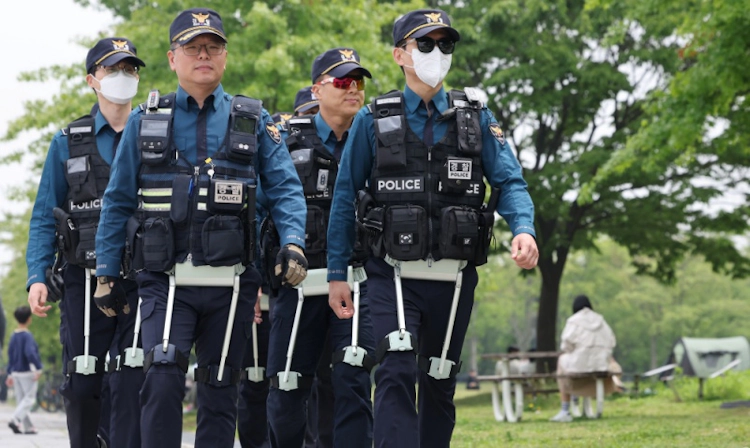
SOUTH KOREA POLICE
South Korean law establishes a graduated penalty scale depending on the severity of the offense.
Possession and Personal Use
Simple possession or personal use of cannabis carries a potential sentence of up to five years in prison or a fine of up to ₩50 million (roughly $38,000 USD). In practice, first-time offenders who cooperate with authorities may receive suspended sentences, probation, or fines. There is no concept of a “personal use amount” below which enforcement is waived.
Distribution, Trafficking, and Import/Export
Import and export of cannabis, or possession for that purpose, can carry a minimum sentence of five years and potentially indefinite imprisonment. Other sale, transfer, and distribution offenses carry different penalties depending on the specific conduct and provisions applied. South Korea treats trafficking as one of the most serious categories of criminal offense.
Aggravating Factors
Penalties escalate significantly when offenses involve:
- Organized criminal networks
- Repeat offenses
- Large quantities
- Use of minors in drug activity
- Smuggling via international mail or cargo
Fines Alongside Imprisonment
Korean courts frequently impose financial penalties on top of prison terms, especially for trafficking offenses. Fines can run into the hundreds of millions of won for serious cases.
Comparison to Other Asian Jurisdictions
For context: Singapore and Malaysia still carry the death penalty for certain drug trafficking offenses. Japan sentences cannabis possession with up to five years. Thailand’s framework has been in flux and remains legally complicated in 2026, so travelers should verify the current law before assuming cannabis access is legal there. South Korea sits among the strictest in the region without reaching death penalty territory.
South Korea Cannabis Arrests: 2026 Enforcement Data

BUNDO KIM
Cannabis-related enforcement in South Korea is intensifying, not declining. Some Korean legal practitioners and media reports describe increased enforcement involving foreign nationals in fiscal year 2024, though official annual statistics from Korean authorities are the authoritative source for confirmed trend data. Customs enforcement at Incheon International Airport remains highly active, with cannabis-related products among the most commonly detected contraband.
Public support for cannabis reform in South Korea remains limited, and no significant legislative proposals have advanced in recent years.
The Extraterritorial Law: Korea Follows Its Citizens Abroad

JEFF W
One of the most striking features of South Korea’s drug policy is its reach beyond the country’s physical borders.
Under Article 3 of the Korean Criminal Act, South Korean nationals are subject to Korean criminal law regardless of where in the world they are. Because cannabis-related conduct is criminalized under the Narcotics Control Act, a South Korean citizen who legally uses cannabis in Canada, the Netherlands, or any other jurisdiction where it is permitted can still be prosecuted for that use upon returning to Korea.
The enforcement mechanism works as follows:
- Drug testing in investigations: Korean authorities can order drug tests. THC metabolites remain detectable in hair for up to 90 days, meaning a cannabis session weeks before returning can still produce a positive result.
- Voluntary disclosures and self-incrimination: Some offenders are caught because they disclose cannabis use during unrelated interviews or investigations.
- Overseas arrest reports: South Korea cooperates with foreign law enforcement, meaning arrests or charges in other countries can be transmitted to Korean authorities.
- International cooperation: The Korean National Police Agency, the prosecution, and customs work with foreign counterparts to identify drug offenses by Korean nationals abroad.
The real-world effect of this law made headlines in 2018 when Canada legalized recreational cannabis. Korean authorities issued warnings to Korean nationals studying in Canada, with media reports at the time noting that roughly 23,000 South Korean students were enrolled there. Those warnings explicitly stated that cannabis use in Canada remained prosecutable under Korean law once they returned home. Similar warnings followed for students in the Netherlands and other legal jurisdictions.
Korean authorities have also repeatedly warned nationals traveling or living abroad that overseas cannabis use can still lead to punishment in Korea.
For Korean nationals, the conclusion is clear: legal status in your travel destination is irrelevant. If Korea classifies it as a crime, you can face prosecution at home.
This extraterritorial application concerns Korean citizens only, not foreign nationals. Foreigners are subject to Korean law only while physically in Korea.
How South Korea Enforces Drug Laws Against Foreigners

SOUTH KOREA POLICE
Foreign nationals visiting or living in South Korea are subject to the same core prohibitions as Korean citizens while on Korean soil. Enforcement takes several specific forms that directly affect expats and travelers.
Customs Inspection at Incheon Airport
South Korea’s customs authority conducts rigorous inspections of both incoming luggage and international mail. Cannabis-related items, including CBD oil cartridges that might be perfectly legal in your home country, are treated as narcotics and will be confiscated. Possession discovered at the border, regardless of quantity, results in immediate detention and legal proceedings.
The Korean Customs Service has specifically flagged CBD vape cartridges and cannabis-infused products as commonly detected contraband at Incheon International Airport. “I didn’t know it was illegal here” is not a legal defense.
Drug Testing for Visa Holders
Since December 2007, drug tests have been mandatory for foreign English teachers seeking E-2 visa extensions. Drug testing may also be required in other employment or immigration contexts. A positive cannabis test can result in visa refusal, deportation, and a ban on future entry.
Increased Enforcement in 2024 and 2025
The Busan Metropolitan Police Agency conducted a sweep from September to December 2024, arresting 90 individuals, including foreign nationals, on charges connected to drug distribution at nightclubs. The Incheon District Prosecutors’ Office, the Korean Central Coast Guard, and the Seoul Metropolitan Police Agency jointly arrested individuals in separate trafficking operations during the same period.
Enforcement has expanded beyond urban entertainment districts into industrial complexes, agricultural areas, and other locations where foreign workers are employed.
Social Consequences Beyond Legal Penalties
Beyond the formal legal penalties, a drug conviction in Korea can have cascading effects:
- Deportation and multi-year entry bans
- Visa application rejections for future travel to Korea or other countries that check criminal history
- Employment consequences, especially for those in teaching, healthcare, or government-adjacent roles
- Significant reputational damage in a culture where drug-related scandals carry intense social stigma
Why South Korea Has Such Strict Cannabis Laws

ELLE MORE
To understand the law, it helps to understand the history. South Korea’s cannabis policy was shaped by decades of political decisions, cultural values, and social anxieties that continue to influence public opinion today.
Cannabis Was Once Part of Korean Daily Life
Hemp has a long history in Korea as a fiber crop, distinct from modern recreational cannabis use. It was cultivated primarily for fabric and rope production, and cannabis itself was not widely associated with intoxication in traditional Korean culture.
The American Influence and the 1960s
In the 1960s, cannabis use spread in Korea through contact with U.S. military bases. Hippie culture, carried by American soldiers stationed in Korea, introduced recreational cannabis to a new generation of Korean youth. In the 1960s and 1970s, recreational cannabis became associated in public discourse with youth culture, musicians, and foreign influence, carrying a sense of anti-establishment sentiment.
Park Chung-hee's 1976 Cannabis Control Act
The critical turning point was the military government of President Park Chung-hee. In the winter of 1975, amid anxieties about drug culture spreading through American influence, the government launched a major crackdown. Park’s administration arrested more than 50 well-known South Korean entertainers for cannabis use, using the cases to build political momentum for new legislation.
In 1976, Park signed the Cannabis Control Act, banning all forms of cannabis in a sweeping prohibition. This law established the framework that, in updated form, still governs Korean cannabis policy today.
Confucian Values and Cultural Stigma
Korean society carries deep Confucian traditions that frame individual behavior in terms of collective duty and social harmony. Substance use, particularly psychoactive substances, is viewed through the lens of self-discipline and moral rectitude. Cannabis is not categorized as a “mild” recreational substance in Korean public discourse; it occupies the same cultural space as harder narcotics.
The Korean term yakjaengi (약쟁이), loosely translating to “drug addict,” carries intense social stigma and is applied broadly to cannabis users alongside harder drug users. This cultural framing means that even outside the legal system, cannabis use in Korea carries profound social consequences.
Shifting Attitudes Among Younger Koreans
Attitudes among younger Koreans, particularly those who have studied or lived abroad, are slowly becoming more complex. Some polls suggest growing awareness that cannabis is treated differently in other countries, and discussions about reform occasionally appear in Korean media. As of 2026, however, these shifts have produced no policy change and remain far from a mainstream position.
Medical Cannabis in South Korea: The Narrow Exception

bundo kim
South Korea became the first country in East Asia to open a medical cannabis access pathway when the National Assembly amended the Narcotics Control Act in November 2018. However, “legal” in this context describes an extremely narrow, highly regulated access system, not a functional medical cannabis program by most international standards.
What Is Actually Available
As of 2026, access is generally limited to specific foreign-approved cannabinoid medicines through a government-controlled approval and import process.
| Product | Active Compound | Approved Use |
|---|---|---|
| Epidiolex | Cannabidiol (CBD) | Treatment-resistant epilepsy (Lennox-Gastaut, Dravet) |
| Marinol | Dronabinol (synthetic THC) | Chemotherapy nausea, AIDS-related appetite loss |
| Sativex | Nabiximols (THC + CBD) | Multiple sclerosis spasticity |
| Cesamet/Canemes | Nabilone (synthetic cannabinoid) | Chemotherapy-induced nausea |
A small number of other cannabis-derived medicines may be accessible on a case-by-case basis through the government’s rare disease framework.
For travelers: CBD products available in pharmacies, grocery stores, or online in other countries remain classified as narcotics in South Korea. Legal CBD from your home country does not become legal when you bring it to Korea. Treat all CBD oils, vapes, gummies, and consumer CBD products as prohibited narcotics-related items for import purposes.
How to Access Medical Cannabis in Korea
The process is highly restricted:
- A licensed Korean physician must issue a prescription for one of the approved medications.
- The patient must apply to the Korea Orphan Drug Center, a government agency that manages access to rare medicines, for approval.
- Approval is granted on a case-by-case basis, evaluated by the Ministry of Food and Drug Safety.
- The approved medication is then sourced through the government procurement system.
This process is designed for patients with serious medical conditions, particularly severe treatment-resistant epilepsy. The total number of patients accessing medical cannabis through this system in Korea remains very small.
No Recreational or General Wellness Use
There is no legal pathway for expats, travelers, or Korean residents to access cannabis for recreational purposes, general wellness, anxiety, sleep, or most chronic pain indications. Any cannabis or CBD product purchased abroad remains illegal to bring into Korea, regardless of its legal status at its point of origin.
What to Know Before You Try to Buy Weed in South Korea

shawn
If you are visiting South Korea as a cannabis enthusiast, here is the practical guidance you need.
Leave Your Cannabis at Home, All of It
This includes:
- Dried flower or pre-rolls
- Edibles, gummies, tinctures
- CBD oil (legal in your home country or not, irrelevant in Korea)
- Vape cartridges containing THC or CBD
- Topicals with CBD content
- Paraphernalia that carries residue
Korean customs actively detects these items. Attempting to bring them in exposes you to immediate arrest, criminal prosecution, potential imprisonment, and deportation. No quantity is safe.
Know Your Body's THC Clearance Timeline
If you have consumed cannabis in the weeks before arriving in Korea, drug testing is possible if you attract law enforcement attention. The following windows are approximate and vary significantly by use pattern, dose, metabolism, and testing method:
| Test Type | Approximate Detection Window | Who Uses It |
|---|---|---|
| Urine test | Up to 30 days (heavy users) | Police, visa processing |
| Hair follicle test | Up to 90 days | Investigations, returning nationals |
| Blood test | Up to 7 days | Post-arrest, DUI-equivalent stops |
Casual travelers are not routinely drug-tested at entry, but any legal trouble in Korea may trigger a test.
Visa Holders Face Higher Scrutiny
If you are applying for or renewing a visa that requires a drug test, such as the E-2 English teacher visa, a positive cannabis result will end your visa application. Plan accordingly, or choose a different destination if cannabis use is part of your regular life.
Do Not Search for Cannabis While in Korea
Attempting to source cannabis in Korea, even casually asking around, can bring you into contact with criminal networks and law enforcement surveillance. There is no safe gray market in South Korea. Unlike some Southeast Asian countries, where enforcement is inconsistent, Korean authorities are serious and capable.
Know Your Embassy Contact
If you are arrested for any drug offense in South Korea, contact your country’s embassy immediately. For U.S. citizens, the U.S. Embassy in Seoul maintains a list of legal resources for arrested Americans. Consular assistance ensures you have access to proper legal representation.
Respect the Law, Even If You Disagree With It
South Korea’s cannabis laws reflect deeply held national values, even if those values differ from those of your home country or your own beliefs about cannabis. Traveling in Korea means living under Korean law. Visitors who treat Korean drug law as something to circumvent face serious, life-altering consequences.
Where to Buy Weed Legally: South Korea Alternatives

Herb
If you are a cannabis enthusiast planning international travel in 2026, South Korea is simply not the right destination for that aspect of your trip. The legal landscape could not be clearer or more enforced.
The good news: the global map of legal or decriminalized cannabis destinations is expanding. From Canada’s mature regulated market to the Netherlands, Uruguay, and beyond, there are destinations around the world where cannabis tourism is legal, safe, and culturally welcoming.
Herb’s guides cover cannabis law and culture for destinations across every continent, helping cannabis enthusiasts travel with confidence, find legal dispensaries, and make the most of the growing number of places where cannabis is part of the official welcome.
If South Korea is on your itinerary for its extraordinary food, its K-pop culture, its ancient palaces, and modern cities, go. It is a remarkable place. Just leave the cannabis at home, and enjoy the trip on Korea’s own extraordinary terms.
Final Verdict

timothy ries
South Korea is not a cannabis destination, not now, not in the near future. The law is unambiguous, enforcement is real, and the cultural consequences extend well beyond the courtroom. But the right response depends on who you are and why you are asking.
- Travelers visiting Korea for culture, food, and sightseeing: Go. Leave all cannabis at home, including vapes, CBD capsules, and anything with residue. Enjoy one of Asia’s most extraordinary countries on its own terms.
- Korean nationals living in legal cannabis countries: The extraterritorial application of Korean criminal law is real and has been applied in real cases. Legal in Canada does not mean safe from Korean prosecution. Consult a Korean attorney if you need specific legal guidance before returning home.
- Expats on work visas (especially E-2): Know whether your visa category requires drug testing. The E-2 mandates it. If cannabis is part of your regular life, factor this into your visa planning before you arrive.
- Cannabis enthusiasts traveling specifically to consume: South Korea is not on the list. Canada has a mature regulated market, and legal cannabis destinations offer established frameworks for cannabis travel.
If you want to experience cannabis as part of travel, the world is increasingly opening up. South Korea is not part of that map.
Frequently Asked Questions
Is weed legal in South Korea?
No. Cannabis is fully illegal for recreational use in South Korea under the Narcotics Control Act. Possession carries a potential sentence of up to five years in prison or a fine of up to ₩50 million. There is no decriminalization, no tolerance policy, and no legal recreational gray market. Medical cannabis is accessible only through a narrow set of approved pharmaceutical products available via a government-controlled process.
Can foreigners be arrested for cannabis in South Korea?
Yes. South Korean drug law applies equally to foreign nationals and Korean citizens while on Korean soil. Foreigners have been arrested, convicted, deported, and banned from re-entry for cannabis offenses. There is no legal distinction based on nationality for crimes committed within Korea’s borders.
What happens if I bring CBD from home to South Korea?
For import purposes, CBD oils, capsules, topicals, and vape cartridges should be treated as prohibited narcotics-related items in South Korea. Bringing them into Korea can result in arrest at customs, regardless of their legal status in your country of origin.
Can Korean nationals use cannabis abroad without prosecution?
Not safely. Under Article 3 of the Korean Criminal Act, Korean nationals are subject to Korean criminal law regardless of where they are. A Korean citizen who uses cannabis in Canada, the Netherlands, or any other legal jurisdiction can still be prosecuted for that use upon returning to Korea. The law is serious and has been applied in real cases.
Does South Korea have medical cannabis?
Yes, in a very limited sense. South Korea opened a narrow access pathway in 2019 for specific pharmaceutical-grade cannabis products, including Epidiolex, Marinol, Sativex, and Cesamet/Canemes, for conditions such as treatment-resistant epilepsy and MS spasticity. Access requires a physician’s prescription and approval from the Korea Orphan Drug Center. This is not a functional medical cannabis program in the way that Canada, Germany, or many U.S. states have developed. It is an access pathway for a small number of rare disease patients.
Herb Recommended Products:
READ MORE