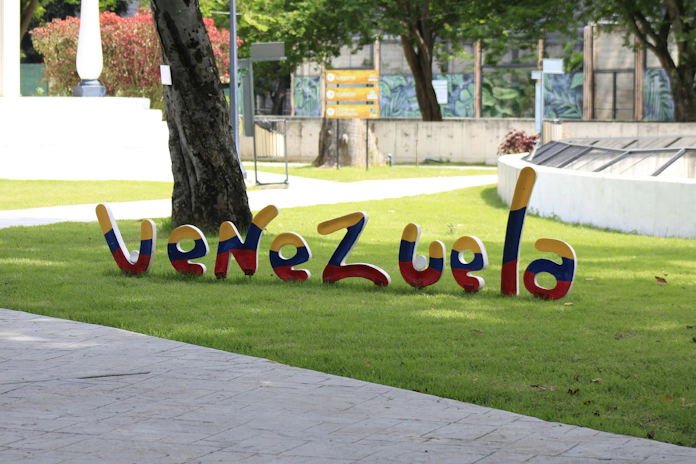
leonardo guillen
How to Buy Weed in Venezuela: Caracas, Strict Laws and Why Tourists Should Pass |
09.10.2026How to Buy Weed in Venezuela: Caracas, Strict Laws and Why Tourists Should Pass
Venezuela's Organic Law on Drugs carries multi-year prison terms, prisons described as among the world's worst, and airport drug screening. Here is why tourists should not risk it.

Before you even consider purchasing cannabis in Venezuela, understand this: the country enforces serious criminal penalties for cannabis offenses, operates prisons that Australian government guidance describes as among the worst in the world, and subjects departing travelers to thorough drug screening at its airports. Unlike browsing legal cannabis guides for states like California or Colorado, attempting to buy weed in Venezuela carries life-altering consequences that no tourist should risk. This is not a guide to finding cannabis. It is a warning about why you absolutely should not try.
Venezuela’s cannabis law is also widely misreported. Most travel content online compresses four separate statutory articles into a single sentence about 20 grams, and that shorthand is wrong in ways that matter if you are the person standing in front of a Venezuelan judge. Below you will find what the Organic Law on Drugs actually says, what current government travel advisories actually warn, and what happens to foreign nationals inside the system.
Key Takeaways
- Cannabis is illegal in Venezuela for recreational and medical use, and there is no legal retail pathway of any kind for tourists or residents.
- The Organic Law on Drugs separates personal consumption, illicit possession, and trafficking into different articles with very different consequences. There is no simple “20 grams equals safe” rule.
- Article 153 provides one to two years for illicit possession within its stated scope. Article 149 provides eight to twelve years for the lowest trafficking bracket above those limits, rising to twelve to eighteen and fifteen to twenty-five years for larger quantities.
- Cultivation and offenses involving controlled seeds, resin, or plants carry six to ten years for smaller quantities under Article 151 and twelve to eighteen years otherwise.
- Personal-dose status is decided case by case under Article 131 through expert evidence, not by a fixed weight, and a person found to be a consumer can be ordered into compulsory treatment.
- Travel advisory levels vary by country as of September 2026: the United States is at Level 3 with specified Level 4 areas, Canada advises avoiding all travel, Australia advises do not travel, and the United Kingdom applies geographically differentiated restrictions.
- Do not bring cannabis or cannabis-derived products, including CBD, into Venezuela without confirming their status with Venezuelan authorities first.
Is Weed Legal in Venezuela?

eduardo juhyun
No. Venezuela’s Organic Law on Drugs, the Ley Orgánica de Drogas enacted in 2010, remains the principal statutory framework governing drug offenses, and cannabis sits squarely inside it. There is no recreational market, no dispensary system, and no publicly documented patient-access medical cannabis program comparable to those in Canada or U.S. states.
What the law does contain is a tiered structure that most guides flatten into a single misleading number. Understanding the actual tiers is the difference between a useful warning and a false sense of security.
For anyone asking how to buy weed in Venezuela: there is no legal pathway, and the informal market carries risks that go well beyond a fine.
Venezuela Cannabis Laws: The Statutory Tiers Explained

lalo hernandez
The Organic Law on Drugs handles cannabis through several distinct articles. Each one covers different conduct and carries a different range.
- Article 131, personal dose. Whether a quantity counts as a personal dose is evaluated according to the individual, including tolerance, dependency, consumption pattern, psychophysical characteristics, and the substance involved. Judges rely on forensic expertise. There is no fixed weight that automatically makes possession lawful.
- Article 153, illicit possession. Possession outside lawful activities or personal consumption carries one to two years. The article references up to 20 grams of marijuana and up to 5 grams of genetically modified marijuana for the purposes of that provision.
- Article 149, trafficking conduct. Selling, supplying, distributing, transporting, concealing, and storing are all trafficking modalities. The lowest bracket, covering quantities above the Article 153 limits and up to 500 grams of marijuana, carries eight to twelve years. Intermediate quantities carry twelve to eighteen years. The general range is fifteen to twenty-five years.
- Article 151, seeds, resin, and plants. Unlawful sowing, cultivation, harvesting, preservation, storage, transport, and distribution involving controlled seeds, resins, or plants carries twelve to eighteen years. Where seeds or resin do not exceed 300 grams, or plants do not exceed 10 units, the range is six to ten years. Genetically modified marijuana plants can increase the penalty.
- Article 163, aggravating circumstances. Where a drug offense is committed by a public official, a member of the armed forces, a criminal-investigation body, or a national security body, the applicable sentence is increased by one half. This is an aggravator on the underlying offense, not a separate standalone penalty.
- Article 178, expulsion. The statute provides for expulsion of foreign offenders after a qualifying sentence has been served.
Why “over 20 grams means 8 to 12 years” is wrong. That claim collapses Articles 131, 149, and 153 into one line. Exceeding the Article 153 figures does not automatically establish trafficking, and it does not automatically produce an eight-to-twelve-year sentence. What actually happens depends on the conduct alleged, the quantity, and expert evaluation of whether the person is a consumer. The correct takeaway is not that small amounts are safe. It is that the outcome is decided inside a system where you have very little visibility or leverage.
What happens in personal-consumption cases. Possession claimed to be for personal consumption is assessed by authorities and experts rather than made lawful by a threshold. A person legally determined to be a consumer may be ordered into compulsory treatment along with related social-security measures, and the law also provides for suspension of driving and weapons licenses in that procedure.
Medical Cannabis and CBD in Venezuela

HERB
This is the section where most travel content overreaches, so here is the careful version.
- Medical access. Venezuela does not appear to operate a general patient-access medical cannabis program. Travelers should not assume a foreign medical cannabis authorization permits them to possess or import cannabis in Venezuela. No evidence indicates that a foreign card creates an exemption under Venezuelan law.
- CBD and hemp. Do not bring cannabis or cannabis-derived products into Venezuela without confirming their legal status with Venezuelan authorities. Government travel guidance warns broadly against bringing narcotics, controlled substances, or substances that could be mistaken for illegal drugs into the country. Herb’s CBD guide explains how cannabinoid classifications and thresholds differ between jurisdictions, and why a product that is lawful at home may not be treated the same way abroad.
- The practical rule. For a trip to Venezuela, the safe assumption is that nothing cannabis-derived travels with you. That includes gummies, tinctures, topicals, vape cartridges, and anything else in your bag that a screening officer would need to test to identify.
Travel Advisories for Venezuela in 2026
Advisory levels changed during 2026 and are not uniform across governments. Anyone repeating a blanket “every Western government says do not travel” line is working from stale information.
| Country | Current Advisory | Drug-Specific Guidance |
|---|---|---|
United States | Level 3, Reconsider Travel, issued June 27, 2026, with specified areas at Level 4 | Severe penalties for drug offenses; do not bring controlled substances into the country |
Canada | Avoid all travel | Penalties are severe; departing visitors are thoroughly screened for drugs |
United Kingdom | Geographically differentiated: advise against all travel to some areas, against all but essential travel to others | Drug trafficking is a serious crime carrying long sentences; prisons are harsh |
Australia | Do not travel | Severe penalties including long jail sentences; airport drug screening on arrival and departure |
These advisories stem from broader security concerns as much as drug enforcement, including violent crime, kidnapping risk near the Colombian border, arbitrary detention concerns, and civil unrest. Advisory levels move, so check your own government’s page immediately before booking rather than relying on any article, including this one.
On airport screening. Government travel advisories warn that departing travelers are subject to thorough drug screening at Venezuelan airports, with checks also reported on arrival. Treat every departure as screened. Herb’s airport security guide covers how screening works in transit generally, though nothing in it creates an exception to Venezuelan law.
On current flight operations. Commercial flights have resumed at Simón Bolívar International Airport at Maiquetía following the June 2026 earthquake disruption, operating from temporary facilities with delays reported. Confirm your routing directly with the airline.
Detention, Prisons, and Consular Support
Understanding what follows an arrest puts the risk in proper perspective.
- Proceedings are slow. Criminal proceedings in Venezuela can experience substantial delays, and defendants may remain in temporary or pretrial detention while their cases proceed.
- Prison conditions are dangerous. Current Australian government guidance describes Venezuelan jails as among the worst in the world. U.S. human rights reporting has documented severe overcrowding, systemic violence, inadequate medical care, and shortages. Older reporting cited penitentiary capacity around 19,000 with overcrowding averaging well above capacity, and jail overcrowding far higher still. Those figures come from earlier reporting years and should be read as historical documentation rather than a current census.
- Consular support varies by nationality. Australian guidance states its government may not be notified of a detention and cannot guarantee consular access or legal representation. U.S. guidance notes the State Department may not be informed of a detention, particularly for dual nationals. The U.S. Embassy in Caracas resumed operations in March 2026 and provides limited emergency services, with most consular services still routed through Bogotá.
- Embassies cannot fix it. Consular officers cannot secure your release, override the judicial system, provide legal representation, or demand faster adjudication. UK consular guidance is explicit on that last point.
- Identification. Security forces may request identification, particularly at checkpoints. Canadian guidance advises carrying your passport at all times, while Australian and UK guidance accept photo ID or copies of the passport photo page and entry stamp. Check your own government’s current instruction before you travel.
Black Market Risks: Why Even Finding Cannabis Creates Danger
Herb
An illicit cannabis market exists in Venezuela, as it does in most prohibition countries. Engaging with it as a foreign visitor is a poor trade at every level.
- Criminal exposure. Informal sellers may connect to organized criminal networks, and robbery or violence during a transaction is a real risk in a country where violent crime is a documented concern.
- Corruption and extortion. Government advisories document corruption, extortion attempts at airports and checkpoints, arbitrary detention concerns, and people posing as security officials. A cannabis transaction hands leverage to anyone who wants to use it against you.
- No product safety. There is no testing, labeling, or certificate of analysis. Potency is unknown, and contamination or adulteration cannot be ruled out.
- No recourse. You cannot report a bad transaction, recover money, or seek help without disclosing an illegal act in a jurisdiction with serious penalties.
- Currency friction. U.S. dollars are widely accepted and some vendors accept only dollars. That is a general observation about the economy, not an argument for informal exchange arrangements, which carry their own regulatory risk.
Consequences Beyond the Courtroom
kevin keith
Even setting aside the sentence itself, engaging with Venezuela’s illicit market carries downstream effects that legal-market cannabis guides never need to address.
- Insurance depends on the policy. Coverage varies. Review your policy’s exclusions for illegal activity, destinations under government travel warnings, and criminal detention before you assume anything is covered.
- Immigration and employment effects vary. A drug conviction can create immigration or employment consequences depending on the laws and policies of the country or employer involved. Venezuela’s own statute provides for expulsion of foreign offenders after a qualifying sentence, which is a distinct matter from any future entry ban elsewhere.
- Funding harm. Purchases in illicit markets route money to networks that cause real damage in Venezuela and across the region.
Venezuela vs. Other South American Destinations
South America varies widely, and Venezuela sits at the restrictive end of that spectrum. If cannabis access matters to how you travel, this comparison is worth reading before booking.
Regulated legal access:
| Country | Legal Status | Tourist Access |
|---|---|---|
Uruguay | Recreational and medical legal | Registered residents only; visitors have no access to the regulated retail system |
Personal-use distinction or decriminalization:
| Country | Legal Status | Tourist Access |
|---|---|---|
Colombia | Personal possession decriminalized; medical framework in place | Personal-use thresholds exist; there is no tourist retail market |
Argentina | Personal possession decriminalized in practice; medical framework in place | Medical access runs through a domestic registry; no tourist retail market |
Prohibition destinations:
| Country | Legal Status | Notes |
|---|
Venezuela imposes serious criminal penalties for cannabis-related offenses. Herb’s guides section tracks the full picture across South America and beyond, and is the place to start if you are weighing a change of destination.
Final Verdict
bona lee
The calculation here involves no complexity, but the reasoning matters more than the slogan.
- Thinking a small amount is fine because of the 20-gram figure? It is not a safe harbor. Personal-dose status is decided by expert evaluation under Article 131, and even a consumer finding triggers compulsory treatment and license suspension rather than a clean walk-away.
- Traveling with CBD or a medical authorization? Leave both at home. No evidence indicates a foreign card creates an exemption, and cannabis-derived products should not enter Venezuela without confirmation from Venezuelan authorities.
- Weighing the informal market anyway? Between trafficking-range sentences, documented corruption and extortion risk, dangerous detention conditions, and consular support that varies by nationality and may never be triggered, there is no version of this that ends well enough to justify it.
- Going to Venezuela for other reasons? Check your own government’s current advisory, which changed during 2026 and differs by country, and plan the trip without cannabis in it.
- Want a South American cannabis experience? Uruguay’s legal market is closed to visitors, and Colombia and Argentina decriminalize personal possession without offering tourist retail. Cannabis-centered travel in this region is more limited than most guides imply.
The honest answer to “how to buy weed in Venezuela” is that you cannot, legally. The honest answer to whether the informal market is worth trying anyway is a firm no, and the reasons have nothing to do with morality and everything to do with what the statute and the detention system actually do.
Frequently Asked Questions
What are the penalties for cannabis possession in Venezuela?
Venezuela’s Organic Law on Drugs handles cannabis in tiers rather than through one blanket rule. Article 153 provides one to two years for illicit possession within its stated scope, which references up to 20 grams of marijuana and up to 5 grams of genetically modified marijuana. Article 149 covers trafficking conduct, with eight to twelve years for the lowest quantity bracket above those limits, rising to twelve to eighteen and fifteen to twenty-five years. Article 131 requires that personal-dose status be assessed case by case through expert evidence, so no fixed weight guarantees any particular outcome.
Is there a medical cannabis program in Venezuela?
Venezuela does not appear to operate a general patient-access medical cannabis program, and no evidence indicates that a foreign medical cannabis card creates an exemption under Venezuelan law. Travelers should not assume that documentation from a legal jurisdiction permits them to possess or import cannabis. Anyone with a genuine medical need should speak with a physician about legal alternatives before departure.
Can I bring CBD or hemp products into Venezuela?
Do not bring cannabis or cannabis-derived products into Venezuela without first confirming their legal status with Venezuelan authorities. Government travel guidance warns against bringing narcotics, controlled substances, or substances that could be mistaken for illegal drugs into the country, and advisories note that travelers are subject to thorough drug screening at Venezuelan airports. The practical rule for this destination is to travel with nothing cannabis-derived at all.
What is the current travel advisory for Venezuela?
Levels differ by country and changed during 2026. As of September 2026 the United States is at Level 3, Reconsider Travel, issued June 27, 2026, with specified areas at Level 4. Canada advises avoiding all travel and Australia advises do not travel. The United Kingdom applies geographically differentiated restrictions rather than a single nationwide position. Check your own government’s advisory page immediately before booking, since these assessments update as conditions change.
What should I do if I am detained in Venezuela?
Ask for consular notification immediately, request legal representation, and do not sign anything you do not understand without counsel and, where available, interpretation assistance. Be aware that consular support varies by nationality: Australian guidance says its government may not be notified and cannot guarantee access, and U.S. guidance notes the same risk, particularly for dual nationals. Consular officers can visit, provide attorney lists, and contact family, but cannot secure release, pay fines, provide legal representation, or accelerate the judicial process.
Disclaimer: This article is for informational purposes only and does not constitute legal advice. Cannabis laws vary by jurisdiction and are subject to change. Always verify current regulations with official sources before traveling. Herb does not encourage the purchase or use of cannabis in jurisdictions where it is illegal.
Herb Recommended Products:
READ MORE