
herb
Airheads Strain: Everything You Need to Know
Airheads is Runtz crossed back into its own family tree, which explains the candy nose. Here's the terpene profile, effects, and honest reviews.

The Airheads strain is what happens when breeders decide Runtz wasn’t Runtz enough. You’ll also see it written as Airheadz, depending on the producer.
The most commonly cited cross is Runtz crossed with Pink Runtz, which is worth discussing. Pink Runtz is itself a selection out of the Runtz line, so this is essentially Runtz doubled down on its own genetics. And that’s exactly why the candy character is so pronounced. Concentrate a family trait hard enough, and you get exactly this.
Other cuts circulate under the same name from Zkittlez and Gelato 41 lines, so treat Airheads as a phenotype family rather than one fixed strain.
The flower runs frosty and sticky with the color you’d expect from Runtz genetics. The nose is candy sweet, citrus, and berry over a light gas base. It sits as a balanced to slightly indica-leaning hybrid, generally cited around 55/45 or 60/40. Potency is the part people underestimate.
Important: This article is for informational purposes only and does not constitute legal, medical, or professional advice. For adults 21+ only.
Quick Facts: Airheads Weed Strain

herb
- Strain type: balanced to slightly indica-leaning hybrid, around 55/45 to 60/40
- Genetics: Runtz x Pink Runtz, with Zkittlez and Gelato 41 versions also circulating
- Breeder: multiple, primarily California teams working the Runtz family
- THC: typically 20% to 28%, with select phenos reaching 28% to 30%
- CBD: under 1%, usually 0.05% to 0.5%
- Terpene profile: limonene, beta-caryophyllene, myrcene, with linalool and ocimene as secondaries
- Aroma and flavor: sugary candy and citrus with berry, cream, and light gas
- Effects: euphoric and uplifted first, body relaxation second, sedating at higher doses
Airheads Strain Terpene Profile
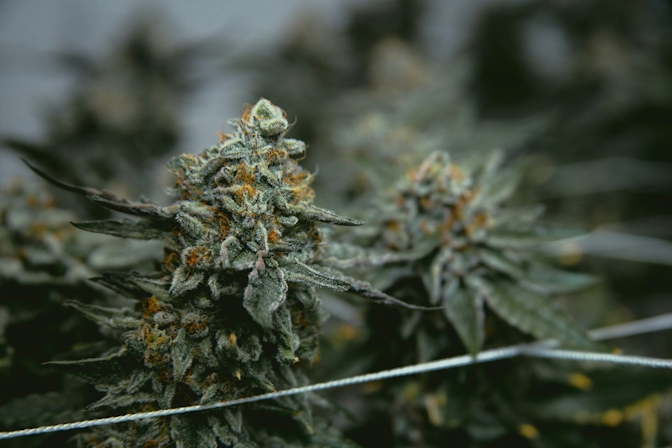
Jeff W / Unsplash
Airheads terpenes are led by limonene, beta-caryophyllene, and myrcene. It’s the standard Runtz-family stack, which is exactly why the candy note is so consistent across cuts.
Limonene: the sweetness and the citrus. It’s the dominant terpene in most panels and the main driver of the candy-store aroma, and it’s commonly associated with mood elevation and stress relief.
Beta-caryophyllene: the structure. Peppery and woody, it’s where the light gas undertone comes from, and it’s the terpene most linked to physical relief. Without it, this would be flatly sweet.
Myrcene: the body. Earthy and musky with ripe fruit behind it, myrcene is the terpene most associated with physical relaxation, and it accounts for the back half of the high.
Linalool and ocimene appear as secondaries, adding floral calm and a sweet herbal edge that rounds out the dessert character.
The practical note on the Airheads strain taste is that the candy comes through more literally than most strains named after sweets. A reviewer covering a Grape Airheads cartridge said it tasted exactly as described on the packaging, and a commenter confirmed the same from a separate batch.
Airheads Strain Effects

herb
Airheads strain effects lead with euphoria and finish in the body, with potency that outpaces the friendly flavor.
- euphoria
- happiness and mood lift
- creativity
- sociability
- body relaxation
- sedation at higher doses
Onset is quick and cerebral. Most descriptions put the head effects first, with a feel-good lift plus some creative or talkative energy.
The back half brings the body bliss. At moderate doses, it’s commonly reported as calm but functional, easing tension without shutting you down. Higher doses change that.
Potency is where people get caught. A reviewer covering a FLOS Airheadz batch on r/Michigents described losing track of the fact he was smoking at all, saying he was thoroughly done about halfway through. That’s a joint’s worth of warning.
The cart reviewer above reported something heavier, with couch lock and heavy eyes. Worth calibrating for format, since concentrates hit harder and faster than flower, and that’s a cartridge review rather than a flower one.
So on whether the Airheads strain is indica or sativa, it’s a hybrid with a mild indica lean. Expect a bright, sociable front end and a progressively heavier finish. And expect the Airheads strain THC level to do more work than the candy profile implies.
Best use cases are late afternoon, social settings, and creative time. The main downside is that it’s easy to overshoot because it doesn’t taste like it should hit that hard.
Airheads Strain Reviews

herb
Airheads strain review coverage is scarce. Airheads hasn’t generated the review volume of Runtz itself or the bigger Gelato derivatives. But the Airheads strain review consensus below points us in a general direction.
- Aroma is loud and noticeable from the jar, which is not universal in this family.
- Bud appearance earns praise for frost and stickiness.
- Potency consistently exceeds expectations.
- Flavor delivers on the candy promise more literally than most.
- There’s very little critical feedback, mostly because there’s very little feedback at all.
The most useful account is that FLOS Airheadz review. He described a nice nose on the jar with beautiful sticky buds inside, and noted his wife walked in while it was open and immediately asked what the smell was. The flower was frosty, and he mentioned his own habit of chewing a stem to get a true read on a strain’s flavor. If that’s not someone who’s paying attention, I don’t know what is.
The other data point is the Grape Airheads cartridge, which scored 9/10. Two separate people in that thread agreed the flavor matched the label precisely. He also passed along a useful tip: the flavor came through best between 1.9 and 2.1 volts. Worth noting for anyone with an adjustable battery.
Both accounts are positive, but neither is a deep flower review. Expect more data as the strain spreads.
Important: Reviews referenced here come from unverified online users. Individual experiences vary.
Airheads Strain Price

herb
Pricing runs toward the upper end, as it does for most Runtz-family strains with bag appeal behind them.
- Eighth (3.5g): $35 to $55
- Quarter (7g): $60 to $100
- Half ounce (14g): $110 to $175
- Full ounce (28g): $200 to $320
Premium indoor lands at the top of every range, with the usual gap of 40% or more over greenhouse and outdoor flower. On a strain this dependent on aroma and frost, that gap is more visible than usual. Cartridges and concentrates carrying the name typically run $30 to $60 per gram depending on extraction quality.
Where to Buy Airheads

Herb
Availability is patchier than for the bigger Runtz derivatives. Airheads and Airheadz flower shows up through state-licensed dispensaries, with FLOS running it in Michigan. The name also appears on cartridges from producers including Dubs Garden.
Two things to check.
First, ask what the cross is. Since Airheads functions as a phenotype family rather than one fixed strain, a Runtz and Pink Runtz version and a Zkittlez and Gelato 41 version are different plants sharing a label. Retailers who can tell you are the ones worth buying from.
Second, use your nose if you can. The detailed flower review describes an aroma strong enough to notice from across a room. So a quiet jar is a reasonable warning sign on this particular strain.
If you’re buying a cart rather than flower, keep the voltage low. That 1.9 to 2.1 volt range is where the flavor reportedly lives, and running hotter costs you the candy character you paid for.
Airheads Grow Info and Tips

herb
Here’s what to know before dedicating space to the Airheadz strain.
- Difficulty: moderate
- Indoor vs outdoor: indoor is the better option
- Tent and space: a 4×4 handles three to four plants
- Lighting: strong light through flower drives the frost
- Temperature and humidity: aim for 70 to 80°F, with humidity near 50 to 60% in veg, dropping to 40 to 45% by late flower
- Training: topping and LST improve light penetration
- Veg period: four to six weeks indoors
- Feeding: moderate nitrogen in veg, then heavier phosphorus and potassium in flower
- Flowering time: commonly reported at 8 to 9 weeks
- Yield: moderate
- Pest and disease management: airflow and defoliation are the main defenses
- Seeds available: Airheads seeds circulate from several boutique breeders rather than one source, so read the stated cross carefully before ordering
Similar Strains to Airheads

Photo by Georgia Love for Herb
- Runtz: a direct parent, and the origin of the candy sweetness and the bag appeal.
- Pink Runtz: the other parent, and itself a Runtz selection, which is why the family traits are so concentrated here.
- Zkittlez: sits behind Runtz and appears in some Airheads lineages directly. Fruit-forward and relaxing.
- Gelato 41: cited in alternate versions of the cross, bringing dessert cream and heavier body effects.
- White Runtz: another Runtz selection with comparable candy character and a similar balanced effect.
- Rainbow Sherbet: matches on color and candy profile with a lighter finish.
Frequently Asked Questions
What strain is Airheads?
The Airheads weed strain is a balanced to slightly indica-leaning hybrid, most commonly listed as Runtz crossed with Pink Runtz. Other producers use Zkittlez or Gelato 41 lines under the same name, so genetics vary. It’s also sold as Airheadz.
Is the Airheads strain indica or sativa?
It’s a hybrid with a mild indica lean, usually cited around 55/45 to 60/40. Expect euphoric, sociable head effects early and body relaxation arriving later. At moderate doses, most people describe it as calm but still functional.
What is the Airheads strain THC percentage?
Most batches test between 20% and 28% THC, with many landing in the low to mid 20s. Select phenotypes and optimized grows can reach past 28%. CBD sits below 1% in nearly every panel.
How strong does the Airheads strain feel?
Stronger than the candy flavor suggests. One flower reviewer described losing track of how much he’d smoked partway through a session, and a cartridge reviewer reported outright couch lock. It’s approachable in taste and genuinely potent in effect.
What does the Airheads strain taste like?
Sweet candy and citrus on the inhale with berry and creamy dessert notes, finishing on light gas and earthiness. Reviewers note it delivers on the candy comparison more literally than most strains named after sweets. Some cuts lean gassier than others.
How much does the Airheads strain cost?
Expect roughly $10 to $16 per gram depending on market and quality tier. Eighths typically run $35 to $55, with ounces landing between $200 and $320. Cartridges generally sit between $30 and $60 per gram.
Is Airheads a good strain?
The available feedback is positive on aroma, appearance, flavor, and potency. The honest caveat is that independent reviews are still limited, so the picture is less established than for bigger Runtz derivatives. Nothing in the existing coverage is negative.
Is Airheads strain easy to grow?
Moderate difficulty and manageable with some experience. The main considerations are airflow around dense buds and humidity control in late flower. Runtz-family genetics are generally forgiving on feeding as long as you don’t overdo it.
What is Airheads strain flowering time?
Flowering runs 8 to 9 weeks indoors, with outdoor grows finishing early to mid-October in the Northern Hemisphere. Cool nights near the end bring out the coloring, and harvesting early costs terpenes.
Herb Recommended Products:
READ MORE