Forbidden Fruit Strain: Effects, Reviews & Where to Buy THCA Flower
Selected from 37 phenotypes for one thing: flavor. Here's the full breakdown on the unique Forbidden Fruit strain.
Rachel Abela
August 14, 2026
This article contains sponsored content. Some of the products featured are part of paid partnerships. This page explains how our process works.

herb
Selected from 37 phenotypes for one thing: flavor. Here's the full breakdown on the unique Forbidden Fruit strain.
August 14, 2026
The Forbidden Fruit strain is an indica-dominant cross of Cherry Pie and Tangie. You’ll also see it listed as Purple Obeah on some menus.
Credit for the Forbidden Fruit weed strain goes to a breeder named Joseph. Known online as UrbanGardener408, he was working out of Chameleon Extracts in Santa Clara when history went down.
In 2015, he took a Tangie cut from Crockett Family Farms and dusted it with Cherry Pie pollen from the breeder Jigga. Then, he grew 37 phenotypes and picked one for early purple expression and a cherry-citrus terpene profile. That strain was eventually backcrossed twice into Cherry Pie. It circulated as a clone-only cut through California before seeds ever reached the public.
That selection work shows. Forbidden Fruit weed strain buds go so deep purple they read almost black. Crack a jar, and you get sour citrus and orange peel zest. Then, sweet cherry and berry underneath, with pine and tropical fruit rounding it out.
THC typically ranges from 21% to 26%. Effects run about 70/30 indica, hitting between the eyes before settling into deep physical calm. What makes the Forbidden Fruit weed strain stand out in 2026 is that the flavor lives up to the hype, provided you buy it fresh. More on that below.
Cannabinoid legality varies by state, and the federal hemp definition narrows in late 2026—verify your state’s laws and that the retailer ships to you before buying. Featured products are not FDA-evaluated and are not intended to diagnose, treat, cure, or prevent any disease.

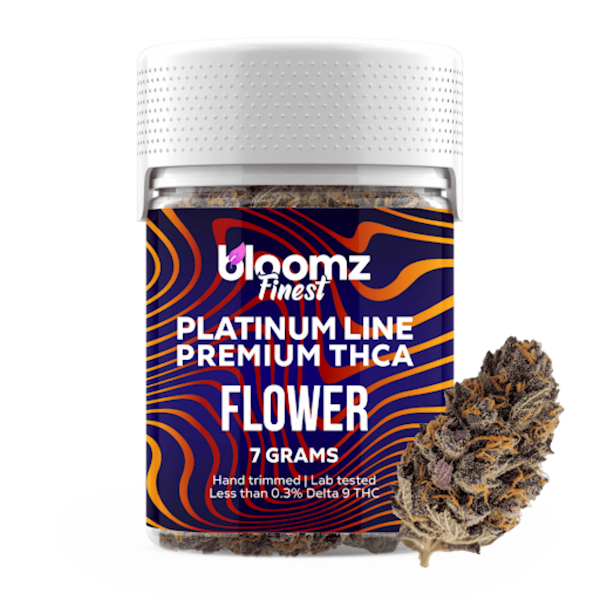
Bloomz THCA Flower Platinum Line carries Forbidden Fruit on the indica side, and it’s small-batch AAA indoor rather than bulk. This Platinum line features the best nugs from Bloomz’s best batches. They’re specifically hand-selected for aroma, color, and cannabinoid profile. It’s $47.99 for an eighth, down from $79.99, in 3.5g, 7g, and 28g. Code HERB25 takes 25% off.
If you want the Forbidden Fruit weed strain cheat sheet before the deep dive, here it is:

Dad Grass / Unsplash
The Forbidden Fruit strain terpenes are myrcene, limonene, and caryophyllene.
Myrcene: The most abundant terpene in cannabis, myrcene brings earthy, musky sweetness with a fruity edge. It’s the terpene most associated with body relaxation, and it’s a big part of why this one lands as physically as it does.
Limonene: The citrus lift inherited straight from the Tangie side. Limonene delivers the sour orange and grapefruit notes that hit first, and it’s commonly linked to mood elevation.
Caryophyllene: Known for its spicy, peppery aroma, caryophyllene adds a gentle spice on the exhale that keeps the fruit from going flat.
Some batches also test for linalool, pushing the Forbidden Fruit strain terpenes floral and adding to the calm. The Forbidden Fruit strain taste is genuinely layered: citrus on the inhale from Tangie, cherry and berry on the exhale from Cherry Pie. Just know the Forbidden Fruit strain terpenes fade fast, which matters more with this cultivar than most.

herb
Forbidden Fruit strain effects hit between the eyes first, then sink into the body. It’s an evening strain that doesn’t pretend otherwise.
The primary effects of the Forbidden Fruit weed strain include:
Onset is fairly quick, usually within about five minutes. Forbidden Fruit strain effects announce themselves rather than creeping, and one reviewer described the arrival as sleepy, relaxed bliss.
The body effect builds steadily and gets heavy. Forbidden Fruit strain effects are commonly reported as more physical than cerebral. At higher doses, they tip toward couch-lock. That’s the trade for a strain this flavor-forward.
Duration typically runs 2 to 3 hours. But some smokers report it fading faster than expected depending on the batch.
Best use cases: What is Forbidden Fruit strain good for? Evenings, winding down, watching something, and quieting a busy head.
Possible downsides: Dry mouth and dry eyes are standard. Forbidden Fruit strain effects turn sedating faster than the fruity nose suggests. Not a daytime pick.
Who enjoys it most: Flavor chasers who want real body weight behind the taste. On the Forbidden Fruit strain indica or sativa question, it’s indica-dominant at roughly 70/30. Some reviewers put it as high as 80/20. Forbidden Fruit strain effects often swing sleepier.

Herb
Here’s what nearly every Forbidden Fruit strain review online agrees on:
Every Bloomz Forbidden Fruit strain review focuses on flavor. One reviewer compared it directly against another strain and said Forbidden Fruit was a little more flavorful. Another kept it simple with good flavor. The most telling was a buyer who tried an eighth and immediately came back for a half.
Flower-side Forbidden Fruit strain review reports back the aroma reputation. A smoker on r/trees described buds “so purple it almost looks black.” They said the bag smelled of pure sour citrus and orange peel zest, with “pure grapefruit” emerging in a joint.
The most useful Forbidden Fruit strain review is also the most critical. A reviewer on r/Michigents rated a $30 eighth at 2.8 out of 5, scoring looks a 4 but smell and taste a 2 each. Their diagnosis wasn’t the strain. The harvest date was four months old, and they blamed “muted terps, degraded high” on age plus a hydro grow. They’d buy again, and called it the heavier, tastier cousin of Super Boof.
That’s the honest split in any Forbidden Fruit strain review. When it’s fresh, people rave. When it’s been sitting, the terpenes that make this cultivar worth buying are the first thing to go. Check harvest dates.
A quick note: the reviews referenced here come from unverified online users, and individual experiences vary. Treat them as a vibe check, not a guarantee.

herb
Pricing depends on your market and whether you’re buying top-shelf indoor or budget flower, but Forbidden Fruit strain price sits mid-range. Here’s the realistic range:
Real-world reports track that. One Michigan buyer paid $30 for an eighth from a small local grower. Hemp-derived Forbidden Fruit THCA flower runs $47.99 an eighth through Bloomz.
Premium indoor versus budget Forbidden Fruit weed strain flower comes down to freshness above all else. This strain sells on aroma, and the reviews make clear that an older batch loses exactly what you paid for. Given the choice between a cheaper fresh eighth and a pricier stale one, take the fresh one every time.
Dispensary availability is regional, since this circulated as a clone-only cut for years before seeds reached the public. If your local menu comes up short, Forbidden Fruit THCA flower ships more broadly.
Our pick for Forbidden Fruit THCA flower is the Bloomz Platinum Line, which carries it among ten AAA Platinum strains.
Forbidden Fruit, along with the 9 other strains in this lineup, are part of Bloomz’s Platinum line. These nugs are hand-selected for potency, color, and cannabinoid profile, so you get a loud smoke every time.
Code HERB25 takes 25% off Bloomz, including your Forbidden Fruit THCA flower order.
Cannabinoid legality varies by state, and the federal hemp definition narrows in late 2026—verify your state’s laws and that the retailer ships to you before buying. Featured products are not FDA-evaluated and are not intended to diagnose, treat, cure, or prevent any disease.

herb
Growing this one splits opinion. Seed banks describe it as manageable and mold-resistant with a preference for drier conditions. Growers who’ve actually run it describe something more demanding. One cultivator said the dense, colorful buds are achievable but require precision in nutrients, light, and temperature management. It’s clearly a strain that rewards attention to detail.
Here’s the practical Forbidden Fruit strain info for anyone attempting it:

Elsa Olofsson / Unsplash
Love this one but want to branch out? These hit similar notes through genetics, terpenes, or effects:
Forbidden Fruit strain genetics cross Cherry Pie with Tangie, bred by Joseph at Chameleon Extracts in 2015. The Forbidden Fruit strain lineage traces to a Tangie cut from Crockett Family Farms pollinated with Cherry Pie from the breeder Jigga, then selected from 37 phenotypes. It also goes by Purple Obeah.
Indica-dominant, commonly cited around 70% indica and 30% sativa, with some reviewers putting it closer to 80/20. Effects are body-focused and evening-appropriate despite the bright citrus aroma. The Tangie parentage shows up in the nose rather than the energy.
The Forbidden Fruit strain THC level typically runs 21% to 26%. Forbidden Fruit THCA flower tests similarly, with the Bloomz Platinum Line publishing 29% THCA for this strain. Check your specific batch, since figures vary by producer.
Sour citrus and orange peel on the inhale, sweet cherry and berry on the exhale, with pine and tropical fruit underneath. Reviewers frequently mention grapefruit specifically. The smoke is commonly described as unusually smooth for how loud the flavor is. Forbidden Fruit strain terpenes fade fast, so buy fresh.
Expect roughly $9 to $16 per gram, with eighths typically running $30 to $55 and ounces between $180 and $300. Bloomz prices its Platinum Line version at $47.99 an eighth before discount.
Yes, and it’s one of the better flavor-first cultivars available, provided you buy it fresh. It was selected from 37 phenotypes specifically for its terpene profile, and that work shows. The main catch is that those terpenes degrade quickly, so harvest date matters more here than with most strains.