
herb
Fruity Pebbles Strain: Everything You Need to Know
Fruity Pebbles is shy in the jar and loud once you grind it. Here's the terpene profile, real lab numbers, and why the cereal comparison oversells it.

The Fruity Pebbles strain has a reputation problem, and it isn’t the one you’d expect. You’ll see it sold as Fruity Pebbles OG, or shortened to FPOG, and the name sets an expectation the flower doesn’t deliver.
Multiple reviewers have flagged the same thing. Open a jar of FPOG, and you get very little. Grind it, and the whole profile arrives at once. More on that below, because it’s the single most useful thing to know before buying.
The genetics are a piece of California history. Alien Genetics put this together around 2006 as a three-way cross of Green Ribbon, Granddaddy Purple, and Tahoe Alien. GDP brings the grape and the body calm, Green Ribbon brings the lift, and Tahoe Alien contributes tropical sweetness plus serious resin production.
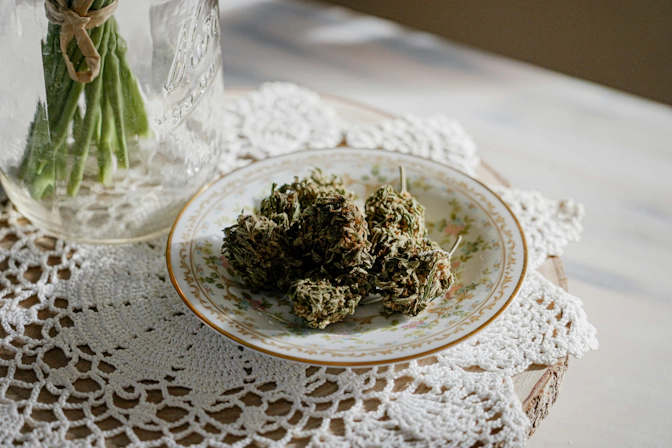
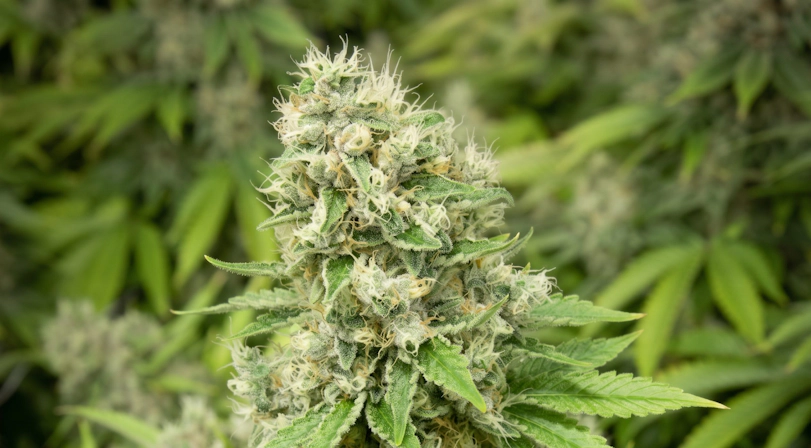
Buds come out dense and compact with real color, purple hues running through green with orange pistils and a heavy frost. Structure is tight enough that reviewers complain about grinding it.
It’s usually cited as balanced to slightly indica-leaning, around 55/45. In practice, it behaves more upbeat than that suggests, which the reviews break down below.
Important: This article is for informational purposes only and does not constitute legal, medical, or professional advice. For adults 21+ only.
Quick Facts: Fruity Pebbles Weed Strain

herb
- Strain type: balanced to slightly indica-leaning hybrid, around 55/45
- Genetics: Green Ribbon x Granddaddy Purple x Tahoe Alien
- Breeder: Alien Genetics, California, circa 2006
- THC: typically 18% to 25%, with select phenos reaching 25% to 27%
- CBD: under 1%, usually 0.1% to 0.5%
- Terpene profile: limonene, myrcene, pinene, with caryophyllene and ocimene as secondaries
- Aroma and flavor: creamy fruit and grape candy over OG earth, with a cereal milk finish
- Effects: euphoric and talkative first, gentle body relaxation second
Fruity Pebbles Strain Terpene Profile

herb
Fruity Pebbles strain terpenes are led by limonene, myrcene, and pinene.
Limonene: the fruit and the citrus. It’s the dominant terpene in most panels, and it’s commonly associated with mood elevation.
Myrcene: the body and the depth. Earthy and musky with ripe fruit underneath, it’s the terpene most linked to physical relaxation, and it’s the counterweight to all that limonene.
Pinene: the clarity. Piney and herbal with a clean feel, it contributes aromatic sharpness and is part of why FPOG doesn’t flatten people out.
Caryophyllene and ocimene show up as secondaries, filling in spice and sweet herbal notes.
Two independently posted panels put total terpenes around the 2% mark. A reviewer on r/ILTrees logged a Rythm batch at 2.21% and was pleased with the number, while noting he wished those terps had a louder aromatic expression. Then a New Jersey reviewer reported almost 2% terps on a Garden Greens batch alongside 37.5% total cannabinoids.
Fruity Pebbles Strain Effects

herb
Fruity Pebbles strain effects lead with the head, and they’re brighter than you’d expect from an indica-leaning hybrid.
- euphoria
- mood elevation
- chattiness and sociability
- creative focus
- appetite stimulation
- gentle body relaxation
Onset is fast and cerebral. The New Jersey reviewer described mental fog clearing within a few pulls and stress dropping a notch. That was followed by what he called euphoric, talkative energy.
Body relaxation arrives second and stays gentle. He specifically noted it doesn’t hit like a heavy indica and leans uplifting at first.
Duration holds up too. His partner described it as feeling like a sativa with a high that lasted a long time, going over an hour without wanting more. A reviewer on r/sqdc covering a Vertical 7 batch rated the high as excellent, describing it as potent, smooth, crisp, and long.
So, on whether the Fruity Pebbles strain is indica or sativa, the genetics say slightly indica-leaning, and the experience says otherwise. Appetite stimulation is there, but described as gentle rather than a fridge raid.
Best use cases are daytime and social settings, creative work, and mood. The main caution is potency. At the upper end of its range, this is strong flower. The NJ reviewer’s closing note was to respect the THC even though it feels friendly.
Fruity Pebbles Strain Reviews
Elsa Olofsson
Pulling from Reddit across Illinois, Quebec, and New Jersey, the Fruity Pebbles strain review consensus is consistent, including its flaws.
- Bag appeal is excellent, with color and frost mentioned everywhere.
- The high earns strong marks for being potent without being sedating.
- Aroma is faint in the jar and dramatically louder once ground.
- The cereal comparison oversells the actual flavor.
- Dry flower comes up repeatedly.
- Dense, stemmy bud structure makes it annoying to break down.
Start with the aroma, because two reviewers three years and one country apart said the same thing. The Illinois reviewer opened his jar hoping to get blasted with fruity cereal and found the aroma pretty faint until he ground it up. The Quebec reviewer described the flavors as shy. But there’s a day and night difference between smelling an untouched bud and smelling one you’ve handled.
Break it up and the odor intensifies, revealing creamy, fruity, sweet, OG, and gas notes plus something he compared to fermented sweet grapes.
On flavor, the New Jersey reviewer gave the clearest description. Fruity on the inhale, straight OG on the exhale, and explicitly not candy in the Runtz or Gelato sense.
The criticism is consistent too. Dryness came up in Illinois and New Jersey both. The NJ reviewer said his buds were dry but not crumbling, which made rolling difficult. But it still burned cleanly with a thick oil ring. The Quebec reviewer’s complaints were structural: buds too compact, too much stem curling deep inside, and a need for more taste overall.
Nobody here called it a perfect strain. But everybody said they’d smoke it again.
Important: Reviews referenced here come from unverified online users. Individual experiences vary.
Fruity Pebbles Strain Price

herb
Pricing sits in the standard band for an established hybrid with a long track record.
- Eighth (3.5g): $30 to $50
- Quarter (7g): $55 to $95
- Half ounce (14g): $100 to $165
- Full ounce (28g): $180 to $300
Premium indoor lands at the top of each range, with the usual 40% or more gap over greenhouse and outdoor. On this strain, the biggest factor is moisture. Multiple reviewers received dry flower, and dryness costs you both the aroma and the roll. A jar with proper moisture content or a humidity pack is worth paying a little more for.
Where to Buy Fruity Pebbles

Crystalweed / Unsplash
FPOG circulates widely, which is one of the benefits of a strain that has been around since 2006. It shows up in state-licensed dispensaries across the US, through Canadian provincial retailers, and as a Fruity Pebbles cart strain in vape form.
Two checks before buying.
First, ask about moisture or packaging date. Given how consistently dryness comes up in reviews, this is the single most predictive question. If it arrives dry, a humidity pack and a couple of weeks in a sealed jar will bring some of the aroma back.
Second, adjust your expectations on the jar test. This strain genuinely does not present well unopened or unground, and a faint nose does not mean a weak batch. If you can, ask to see the terpene percentage instead. Around 2% is where the reviewed batches landed, and both reviewed well despite quiet jars.
For carts and concentrates carrying the name, be aware that extraction changes the profile a lot. The creamy OG exhale that defines the flower rarely survives into distillate.
Fruity Pebbles Grow Info and Tips
herb
Here’s the Fruity Pebbles strain info worth having before dedicating space.
- Difficulty: Fruity Pebbles strain growing difficulty is typically moderate
- Indoor vs outdoor: indoor gives better control
- Tent and space: a 4×4 handles three to four plants
- Lighting: strong light through flower drives the trichome coverage
- Temperature and humidity: aim for 70 to 80°F, with humidity near 50 to 60% in veg, dropping to 40 to 45% in late flower
- Training: topping and LST are worth it
- Veg period: four to six weeks indoors
- Feeding: moderate nitrogen in veg, then heavier phosphorus and potassium through flower
- Flowering time: commonly reported at 8 to 9 weeks
- Yield: Fruity Pebbles strain yield is generally moderate
- Drying and cure: over-dried FPOG is the most repeated complaint in reviews
- Pest and disease management: airflow and defoliation
- Seeds available: Fruity Pebbles strain seeds trace back to Alien Genetics, with clones and various selections circulating widely given the strain’s age
Similar Strains to Fruity Pebbles

herb
- Granddaddy Purple: a direct parent, and the source of the grape, the body calm, and the purple coloring.
- Green Ribbon: another parent, contributing the uplifting, clear-headed front end.
- Tahoe Alien: the third in the cross, bringing tropical sweetness and heavy resin production.
- Raspberry Cannoli: completely unrelated genetically, but one reviewer found the creamy fruit dessert profile remarkably similar.
- Rainbow Pie: compared directly by a reviewer on flavor and overall character.
- Zkittlez: fruit-forward and relaxing, though candy-sweet where FPOG runs creamier.
Frequently Asked Questions
What strain is Fruity Pebbles?
The Fruity Pebbles marijuana strain is a slightly indica-leaning hybrid bred by Alien Genetics in California around 2006, crossing Green Ribbon with Granddaddy Purple and Tahoe Alien. It’s also sold as Fruity Pebbles OG or the FPOG strain. The name refers to its sweet fruit profile rather than an exact cereal match.
Is the Fruity Pebbles strain indica or sativa?
It’s a hybrid, usually cited around 55% indica and 45% sativa. In practice, most reviewers describe it as uplifting first, with body relaxation following, and at least one described it as feeling like a sativa outright. Expect function rather than sedation at moderate doses.
What is the Fruity Pebbles strain THC percentage?
Most batches test between 18% and 25% THC, with many landing in the high teens to low 20s. Select phenotypes can reach 25% to 27%. Be careful reading labels that list total cannabinoids, since that figure runs considerably higher than actual THC.
How strong does the Fruity Pebbles strain feel?
Potent but not overwhelming. Reviewers describe it as long-lasting and strong while remaining functional, with one calling it a racy ride rather than a knockout. It’s strong enough that experienced smokers advise respecting the dose despite how friendly it feels.
What does the Fruity Pebbles strain taste like?
Creamy fruit and grape on the inhale with earthy OG notes on the exhale, finishing on something close to cereal milk. It’s less candy-sweet than Runtz or Gelato derivatives and more dessert-like. The aroma is faint until you grind it, then it opens up considerably.
How much does the Fruity Pebbles strain cost?
Expect roughly $9 to $14 per gram depending on market and quality tier. Eighths typically run $30 to $50, with ounces landing between $180 and $300. Premium indoor sits at the top of those ranges.
Is Fruity Pebbles a good strain?
Yes, and it has staying power, having been in circulation since 2006. Reviewers consistently praise its appearance, the quality of the high, and the balance between uplift and relaxation. The recurring complaints are dry flower and a quieter aroma than the name promises.
Is Fruity Pebbles strain easy to grow?
Moderate difficulty and manageable for growers with some experience. The main considerations are airflow around dense buds and avoiding over-drying, which is the most common complaint about finished flower. Training helps produce less stemmy, easier-to-handle buds.
What is Fruity Pebbles strain flowering time?
Flowering runs 8 to 9 weeks indoors, with outdoor grows finishing early to mid-October in the Northern Hemisphere. Cool nights near harvest bring out the purple. Rushing the dry costs aroma, which this strain can least afford to lose.
Herb Recommended Products:
READ MORE