
khay edwards
How to Buy Weed in Chattanooga: Tennessee’s Hemp Rules and the Georgia Border Question |
08.20.2026How to Buy Weed in Chattanooga: Tennessee’s Hemp Rules and the Georgia Border Question
Tennessee's TABC hemp framework reshaped Chattanooga's market in 2026. Here is what stayed legal, what stopped, and why a drive to Georgia will not solve it.

Chattanooga’s cannabis landscape looks very different from what it did eighteen months ago. Tennessee’s Public Chapter 526, enacted from House Bill 1376, moved hemp oversight to the Tennessee Alcoholic Beverage Commission and tightened what can legally sit on a shelf. The transition ran in two stages, and by August 2026 it is substantially complete.
If you are searching for how to buy weed in Chattanooga, the honest answer starts with a distinction most guides blur: recreational marijuana is not legal in Tennessee, and the hemp products that filled Scenic City shops through 2025 now face a much narrower compliance window. For anyone browsing cannabis dispensaries from out of state, Tennessee does not have them.
This guide breaks down what Tennessee actually prohibits, what remains available at licensed retailers, how the new tax structure works, why Georgia’s medical program is closed to Tennessee residents, and what the November 12, 2026 federal hemp deadline could change next.
Key Takeaways
- Recreational marijuana is illegal in Tennessee, and the state does not operate a comprehensive medical cannabis patient access and dispensary program.
- Public Chapter 526 moved hemp regulation to the Tennessee Alcoholic Beverage Commission on January 1, 2026, and legacy Department of Agriculture licensees operated under the prior 2023 framework until those licenses expired on June 30, 2026.
- Tennessee prohibits synthetic cannabinoids and THCp, bars hemp plant parts above 0.1% THCa on a dry weight basis, prohibits derivatives and finished products containing THCa, and caps covered products at 0.3% total or theoretical THC.
- All legal hemp purchases must happen face-to-face at a TABC-licensed retailer. Direct-to-consumer shipping and third-party delivery of regulated products are prohibited statewide.
- Purchasers must be at least 21 and must show valid government-issued photo identification.
- Georgia’s Medical Cannabis Patient Registry requires Georgia residency and physician certification from a Georgia-licensed doctor, so Tennessee residents cannot enroll.
- Tennessee’s wholesale tax runs $0.02 per milligram of hemp-derived cannabinoid, $50 per ounce for hemp plant parts or flower, and $4.40 per gallon for liquid products.
- A federal hemp definition change takes effect November 12, 2026, which would narrow what qualifies as lawful hemp nationwide unless Congress intervenes.
Is Weed Legal in Chattanooga?

Photo by Shutterstock
No. Recreational marijuana is illegal throughout Tennessee, including Chattanooga, and possession carries criminal penalties under state law. There are no adult-use dispensaries anywhere in the state, and there is no municipal carve-out that changes this inside Hamilton County.
Tennessee also does not currently operate a comprehensive medical cannabis patient access and dispensary program. The state has a statutory Medical Cannabis Commission and has repeatedly considered medical legislation, but no licensed patient-facing dispensary system exists.
What Chattanooga does have is a regulated hemp-derived cannabinoid product market, now overseen by the Tennessee Alcoholic Beverage Commission. That market is narrower than it was in 2025, and the products in it are lower in potency than what most travelers from legal states expect.
For a plain-language look at how these compounds differ, Herb’s THC vs CBD guide is a useful starting point before you shop.
Tennessee's 2026 Hemp Overhaul: What Public Chapter 526 Changed

austin wills
Tennessee first regulated hemp-derived cannabinoid products under Public Chapter 423 in 2023, which placed licensing with the Department of Agriculture. Public Chapter 526, enacted from House Bill 1376 and signed in May 2025, replaced that structure.
How the transition actually worked:
- January 1, 2026. Primary licensing and regulatory authority transferred to TABC, and the new three-tier supplier, wholesaler, and retailer system took effect alongside a new wholesale tax and brand registration requirement.
- The legacy license window. Businesses holding Department of Agriculture licenses issued on or before December 31, 2025 continued operating under the 2023 framework until those licenses expired. TABC has stated most legacy licenses ran through June 30, 2026.
- July 1, 2026 forward. Retailers selling regulated hemp-derived cannabinoid products directly to consumers need a TABC license and are subject to the full requirements of Public Chapter 526.
The practical result is that January 1 was not an overnight statewide shutdown. It was the opening of a six-month runway, and that runway has now closed.
The Science Behind THCa and Total THC
THCa, or tetrahydrocannabinolic acid, occurs naturally in raw cannabis and is not intoxicating in that state. Heating it through smoking, vaping, or baking triggers decarboxylation, converting THCa into Delta-9 THC.
Under the earlier framework, hemp flower testing below 0.3% Delta-9 THC could qualify as legal hemp regardless of THCa content, which is how high-THCa flower reached retail shelves. Tennessee’s current rules address that directly by regulating THCa itself rather than relying on Delta-9 testing alone.
What Tennessee Now Prohibits
Rather than a simple list of banned brand names, the statute works through categories:
- Hemp plant parts above 0.1% THCa on a dry weight basis cannot be manufactured, cultivated, produced, or sold in Tennessee.
- Hemp derivatives and finished products containing THCa are prohibited, which is what removes conventional THCa flower and THCa concentrates from the legal market.
- Products exceeding 0.3% total or theoretical THC on a dry weight basis are outside the regulated category.
- THCp and synthetic cannabinoids are prohibited under the TABC-regulated framework.
- Delta-8 THC and Delta-10 THC are named among the hemp-derived cannabinoids the law regulates. Many products marketed under those names do not meet current Tennessee requirements because of how they are produced or their cannabinoid concentrations, so shoppers should confirm compliance rather than assume it.
The distinction matters. “Delta-8 is banned” is a shorthand that gets the practical retail outcome roughly right while getting the statute wrong, and that difference becomes important when you are reading a label or a certificate of analysis.
What You Can Actually Buy in Chattanooga
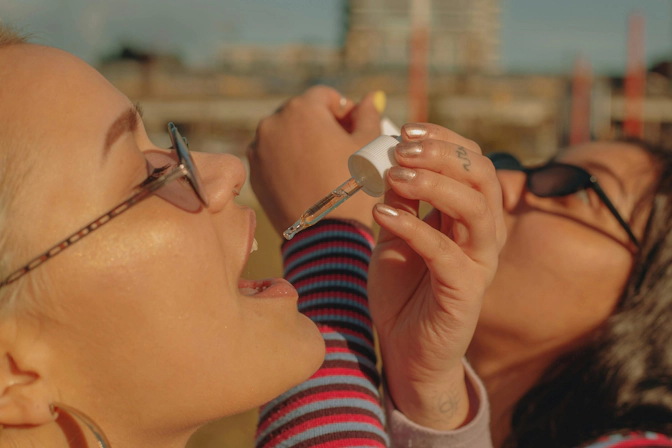
The compliant product landscape is real, just narrower and lower in potency than the 2025 market.
Generally available at licensed retailers:
- CBD oils, tinctures, and capsules. Full-spectrum, broad-spectrum, and isolate formulations in a range of potencies.
- Topicals and skincare. Lotions, balms, muscle rubs, and recovery products. Note that transdermal and topical cannabinoid items are included in Tennessee’s regulated product definition.
- Low-dose ingestibles. Tennessee’s enacted law caps ingestible products at 25 milligrams in the aggregate of one or more hemp-derived cannabinoids per serving.
- Hemp beverages. Subject to the same per-serving aggregate cap plus separate concentration, container volume, and serving-count restrictions.
- Accessories. Pipes, papers, storage, grinders, and vaporizers built for compliant products. Herb’s best bongs roundup covers the glassware side.
Outside the legal market:
- THCa flower, THCa concentrates, and other derivatives containing THCa
- THCp and synthetic cannabinoids, including products marketed as such
- Anything above 0.3% total or theoretical THC on a dry weight basis
- Online sales, mail order, and third-party delivery of regulated hemp-derived cannabinoid products to Tennessee addresses
Herb’s product catalog is a good place to understand categories and formulations before you shop, keeping in mind that what may be lawful depends on product type and jurisdiction rather than on any single nationwide standard.
Where to Shop for Legal Hemp in Chattanooga

herb
Retail licensing in Tennessee is dynamic right now. Storefronts opened, closed, and changed hands throughout the legacy license wind-down, and any fixed store count published today has a short shelf life.
The reliable approach is to verify before you drive:
- Check the TABC license database. The commission publishes a current list of licensed hemp-derived cannabinoid product retailers. A shop that cannot be found there is not one to buy from.
- Confirm the license is visible in store. Licensed retailers display current TABC credentials.
- Call ahead. Hours, inventory, and even operating status shifted significantly after July 1, 2026.
- Expect brick and mortar only. Public Chapter 526 requires face-to-face transactions. Any Chattanooga-area seller offering shipping or delivery of regulated products is operating outside the law.
Tennessee law limits retail sale of these products to specific business categories, including 21-and-up establishments, retail package stores, and liquor-by-the-drink licensees such as restaurants, bars, and hotels. Gas stations, grocery stores, convenience stores, and vending machines are not part of that list.
The Georgia Border Question: Why the Drive Does Not Help

georgia police
Chattanooga sits close enough to the Georgia line that the idea comes up constantly. It does not work, and the reasons have changed since 2025 in ways worth understanding.
Georgia's Program Modernized in 2026
Georgia’s program is no longer the 5% low-THC oil system it was for years. Senate Bill 220, the Putting Georgia’s Patients First Act, took effect July 1, 2026 and replaced the potency percentage cap with a possession standard. Under the Georgia Department of Public Health Medical Cannabis Patient Registry, registered patients and caregivers may possess medical cannabis containing up to 12,000 milligrams of THC. The program also expanded authorized product formats.
Why Tennessee Residents Still Cannot Access It
Georgia’s requirements close the door regardless of how the product rules evolve:
- Georgia residency is required to enroll in the patient registry.
- Physician certification must come from a fully licensed physician whose principal practice is in Georgia.
- An active registry card is required to purchase and possess products through the regulated system.
- A qualifying condition from Georgia’s statutory list must be certified through the state program.
Current licensed dispensary locations are published by the Georgia Access to Medical Cannabis Commission, which is the only source worth trusting for where those dispensaries actually operate.
Federal Law Across the State Line
The commonly repeated claim that crossing a state line with any cannabis product is automatically a federal felony is not accurate, and the real picture is more specific.
- Marijuana. Do not transport marijuana or other federally unlawful cannabis products across state lines. A Georgia medical registry card, if you somehow held one, would not authorize possession in Tennessee.
- Federally compliant hemp. Federal law treats lawfully produced hemp differently and protects its interstate transportation, though the laws of both states involved can impose additional restrictions. Tennessee’s total THC and THCa rules are among those restrictions.
- What Section 841 covers. That statute addresses manufacture, distribution, dispensing, and possession with intent to distribute controlled substances. Simple personal possession is handled separately under federal law, so describing every interstate possession event as trafficking overstates the exposure.
- Federal policy shifted in 2026. An April 2026 Department of Justice order moved FDA-approved marijuana drug products and marijuana subject to a state medical marijuana license from Schedule I to Schedule III. Marijuana outside those two categories remains Schedule I, and broader rescheduling is still in administrative proceedings.
The practical guidance stays simple. Buy in the state where you intend to consume, keep products in original packaging, and do not treat a short drive as a legal workaround.
Tennessee Medical Cannabis: Where Things Actually Stand

Herb
Tennessee has considered medical cannabis legislation repeatedly without establishing patient access. The state’s statutory Medical Cannabis Commission exists, but it has not produced a licensed dispensary system.
- The current gap. Narrow state provisions allow possession of certain low-THC oil for specified conditions, without a legal in-state route to obtain it. Qualifying patients are left permitted to possess something they cannot lawfully purchase in Tennessee.
- Legislative trajectory. Recent sessions have seen medical cannabis proposals stall before floor votes. The passage of Public Chapter 526 pointed toward tighter regulation rather than expanded access.
- What could shift the conversation. Federal movement on scheduling and Georgia’s 2026 program expansion both change the regional context. Neither creates access in Tennessee today.
Herb’s cannabis news coverage tracks state-level legislative movement as it happens.
Taxes and What They Mean for Shelf Prices
Tennessee replaced the previous 6% retail privilege tax with a wholesale tax structure administered by the Department of Revenue.
| Product Form | Wholesale Tax Rate |
|---|---|
Hemp-derived cannabinoid content | $0.02 per milligram of hemp-derived cannabinoid in each product |
Hemp plant parts or hemp flower | $50.00 per ounce of weight |
Liquid products | $4.40 per gallon, or proportionally for other container sizes |
Two details are worth noting. The per-milligram tax applies to hemp-derived cannabinoid content generally, not exclusively to THC. And suppliers must register each brand annually with the Department of Revenue and pay a brand registration fee.
Wholesalers pay these taxes, and some of that cost reaches retail shelves. Actual pricing varies by retailer, brand, package size, cannabinoid content, and date, so it is worth comparing before committing to a purchase.
How to Identify Quality and Compliant Products
With the market mid-transition, verification is the single most valuable habit a Chattanooga shopper can build. Tennessee requires testing covering cannabinoid potency and specified contaminants, with suppliers contracting third-party laboratories approved by TABC.
What to check before you buy:
- Request the certificate of analysis. Any compliant retailer can produce one for any product on the shelf.
- Verify the cannabinoid numbers. Total THC should fall within Tennessee’s limits, and the product should not list THCa content.
- Confirm contaminant panels. Pesticides, heavy metals, and microbial testing should all appear.
- Match the batch number. The number on the certificate should match the number on the package.
- Read the serving information. Ingestibles should stay within the 25 milligram aggregate per-serving cap.
Signals worth a second look:
- No TABC license displayed
- Products labeled as THCa flower or marketed as THCp
- Offers of shipping or delivery for regulated products
- Reluctance to share lab results
- Packaging designed around characters or imagery that appeals to people under 21, which Tennessee restricts
Herb’s educational resources go deeper on reading lab reports and understanding cannabinoid profiles.
Age Requirements and Purchase Rules
Tennessee requires anyone purchasing or receiving regulated hemp-derived cannabinoid products to be at least 21.
At the counter:
- Valid government-issued photo identification showing you are at least 21. A driver’s license, passport, or state ID all qualify under the statute’s proof-of-age definition.
- Electronic ID scanning is used by some retailers as part of their compliance process.
- Face-to-face transaction is mandatory. There is no pickup-by-proxy or delivery pathway for regulated products.
- No out-of-state exception. Visitors follow the same rules as residents.
Transportation, Storage, and Consumption
Once you have made a legal purchase, a few rules and a few sensible practices apply:
- Keep the unconsumed portion in its original packaging. This one is a statutory requirement, not a suggestion.
- Retain lab documentation if the retailer provides it, which makes any question about the product simpler to resolve.
- Do not drive impaired. Tennessee impaired driving law applies regardless of a product’s legal status.
- Understand where smoking is restricted. Tennessee’s Non-Smoker Protection Act generally prohibits smoking in most enclosed public places and workplaces, subject to statutory exceptions.
- Do not carry marijuana across state lines. For federally compliant hemp, check the rules of both states before traveling with it.
If you are flying rather than driving, Herb’s airport security guide covers what actually happens at screening.
The November 12, 2026 Federal Deadline
The most consequential date on the calendar for Chattanooga hemp shoppers is not a Tennessee one.
Section 781 of Public Law 119-37 rewrites the federal definition of hemp effective November 12, 2026. The change replaces the Delta-9-only threshold with a total THC standard inclusive of THCa, caps final hemp-derived cannabinoid products at 0.4 milligrams of total THC per container, and excludes cannabinoids synthesized or manufactured outside the plant.
Several points matter for planning:
- Tennessee already moved in this direction. The state’s total THC and THCa restrictions anticipate much of the federal shift, so the practical retail change in Chattanooga may be less dramatic than in permissive states.
- The container cap reaches beyond intoxicating products. A 0.4 milligram per-container ceiling affects a wide range of wellness formulations.
- Legislative activity is ongoing. Bills to delay, modify, or replace Section 781 have been introduced, and Congress has continued to take up related measures through August 2026. None has changed the effective date as of this writing.
Because this is genuinely unsettled, verify current federal and state status before making purchasing or travel decisions built around it.
Chattanooga Compared to the Wider Region
Regional context helps set expectations for anyone weighing a trip.
| Jurisdiction | Status | Practical Access |
|---|---|---|
Practical Access | Marijuana illegal; hemp regulated by TABC | In-person purchase of compliant low-THC products at licensed retailers, 21 and up |
Georgia | Medical cannabis patient registry | Georgia residency and Georgia physician certification required; possession limit set in total THC milligrams |
Alabama | Medical program authorized | Residency and qualifying condition requirements apply; verify current dispensing status |
North Carolina | Marijuana illegal | Limited state provisions; no adult-use retail |
Illinois | Adult-use legal | Nearest full adult-use retail market for many Tennessee travelers |
If cannabis access is a meaningful part of how you plan travel, Herb’s guides section covers destinations where legal purchase is straightforward.
How Herb Helps You Stay Informed

Herb
Cannabis rules in Tennessee changed twice in under three years, and the federal definition changes again in November. Herb is built for exactly this kind of moving target.
- State-by-state legal tracking. Herb’s news section follows legislative and regulatory developments across all 50 states, including Tennessee’s transition from Department of Agriculture oversight to TABC.
- Cannabinoid education that goes past headlines. Understanding how THCa, Delta-8, and CBD differ is what lets you read a certificate of analysis with confidence. Herb’s learning hub explains the chemistry, the effects, and the legal distinctions in plain language.
- Product discovery inside legal boundaries. The Herb products catalog lets you research categories and formulations before you shop, so you arrive at a licensed retailer knowing what to ask for.
- Strain knowledge for when you travel. Herb’s strain database covers effects, genetics, and consumption guidance, which is worth having on hand for trips to legal markets.
- Updates delivered to you. The Herb Insider newsletter sends regular updates on trends, products, and legal developments.
Final Verdict

sarah swainson
Chattanooga in 2026 is a low-potency, high-verification market. Here is how the decision breaks down depending on what you are after:
- Looking for recreational marijuana in Chattanooga? It is not available legally, and Tennessee possession penalties are real. There is no version of this that works inside the law.
- Want compliant hemp products while you are in town? Buy in person at a TABC-licensed retailer, confirm the license, ask for the certificate of analysis, and check that total THC and serving sizes fall within Tennessee’s limits.
- Considering the Georgia drive? Georgia’s program modernized in 2026, but it remains closed to non-residents. The trip adds legal exposure without adding access.
- A Tennessee patient looking for medical access? The state does not currently operate a comprehensive patient access and dispensary program. Watching legislative developments is the realistic option.
- Planning around November 12, 2026? Verify the current federal status before assuming any specific product category will remain available. This is the most volatile piece of the picture right now.
The honest answer to “how to buy weed in Chattanooga” is that you can buy regulated, low-THC hemp products from licensed retailers and nothing stronger. For destinations where legal purchase is simple, Herb’s guides section has the full picture.
Frequently Asked Questions
Is recreational marijuana legal in Chattanooga, Tennessee?
No. Recreational marijuana is illegal throughout Tennessee, and there are no adult-use dispensaries in the state. Tennessee also does not currently operate a comprehensive medical cannabis patient access and dispensary program. What remains legal is a regulated category of hemp-derived cannabinoid products sold in person at TABC-licensed retailers to buyers who are at least 21.
What did Public Chapter 526 actually change on January 1, 2026?
It transferred hemp-derived cannabinoid regulation from the Department of Agriculture to the Tennessee Alcoholic Beverage Commission, created a three-tier licensing system, established a wholesale tax and brand registration requirement, and mandated face-to-face retail sales. Businesses holding Department of Agriculture licenses issued on or before December 31, 2025 continued under the prior 2023 framework until those licenses expired, with most expiring June 30, 2026.
Is THCa flower still available in Chattanooga?
No. Tennessee prohibits hemp plant parts containing more than 0.1% THCa on a dry weight basis and prohibits hemp derivatives and finished products that contain THCa. Products are also capped at 0.3% total or theoretical THC on a dry weight basis. Conventional THCa flower falls outside the lawful category on both counts.
Can Tennessee residents use Georgia's medical cannabis program?
No. Georgia’s Medical Cannabis Patient Registry requires Georgia residency, a qualifying condition, and certification by a fully licensed physician whose principal practice is in Georgia. Georgia modernized the program effective July 1, 2026, by replacing its THC percentage cap with a 12,000 milligram total THC possession standard and expanding authorized product formats, but the residency requirement did not change.
Can I order hemp products online and have them shipped to Chattanooga?
No. Tennessee prohibits direct-to-consumer shipping and the use of delivery services for regulated hemp-derived cannabinoid products. All legal purchases must occur face-to-face at a licensed retail location with valid government-issued photo identification showing the buyer is at least 21.
This article is provided for general informational purposes only and does not constitute legal advice. Cannabis and hemp laws in Tennessee, Georgia, and at the federal level are changing rapidly, including a federal hemp definition change scheduled for November 12, 2026. Verify current requirements with official state and federal sources, or consult a licensed attorney, before making any purchasing, possession, or travel decisions.
Herb Recommended Products:
READ MORE