How to Buy Weed in Copenhagen: Christiania, Gray Areas & the Real Deal |
02.11.2026How to Buy Weed in Copenhagen: Christiania, Gray Areas & the Real Deal
Understanding Denmark's legal cannabis landscape, the closure of Pusher Street, and safe alternatives for 2026

Every missed opportunity to understand Copenhagen’s cannabis reality means risking legal trouble, financial loss, or personal safety. With Christiania’s famous Pusher Street permanently closed and Denmark’s new permanent medical cannabis program launched in 2026, the solution isn’t following outdated tourist guides—it’s leveraging accurate, current information to navigate the legal alternatives available while avoiding dangerous illegal markets. Whether you’re seeking relief through Denmark’s medical program or exploring legal CBD options, knowing the real landscape is essential for a safe experience in Copenhagen’s evolving cannabis scene.
Key Takeaways
Ava Coploff
- Pusher Street’s open market was dismantled in 2024 – The cannabis market in Christiania was dismantled after gang violence and a resident-led push to end open dealing
- Recreational cannabis remains illegal – Possession is fined under standardized prosecution guidance, often 2,000 DKK+ depending on amount and type
- Medical cannabis is now permanent – Denmark’s framework changes took effect January 1, 2026 under Bill L135, following the pilot that ran through December 31, 2025
- Prescription rules depend on route – Authorized medicines (Sativex®, Epidyolex®) are specialist-prescribed, while pilot-scheme and magistral routes differ
- CBD/hemp isn’t automatically “legal” – Denmark references a 0.2% THC threshold in relevant rules, but foods and ingestibles face novel-food restrictions and many CBD oils may be treated as medicines requiring authorization
- Reimbursement exists but isn’t a flat 50% for everyone – Commonly 50% up to 20,000 DKK per 12-month period, 0% above that threshold, and 100% for terminally ill patients
- Gang violence ended the market – Christiania residents voted to close Pusher Street after shootings endangered the community
The Christiania Reality: What Pusher Street Was and Why It's Gone

Your understanding of Copenhagen’s cannabis culture must begin with the definitive closure of Christiania’s Pusher Street. What was once Northern Europe’s most famous open cannabis market no longer exists as of 2024. The transformation wasn’t gradual—it was a decisive dismantling driven by safety concerns that fundamentally changed what Christiania represents.
The root cause wasn’t government intervention but community self-preservation. After gang-related shootings, including incidents that endangered innocent bystanders, Christiania residents voted in August 2023 to permanently close the market. This decision led to the physical dismantling of the area in 2024, with cobblestones removed and stalls torn down, effectively ending decades of cannabis trading in the freetown.
Why Christiania Closed: Safety Over Tradition
The closure represents a critical shift in priorities:
- Gang violence escalation – Organized crime had taken over from the original hippie commune
- Community safety concerns – Residents and tourists faced increasing danger
- Government grant conditional on ending open dealing – A grant of ~14.3 million DKK (reported ~US$2.1M) was tied to supporting the transition after ending the open cannabis market
- Cultural preservation – Residents chose to protect Christiania’s alternative community identity
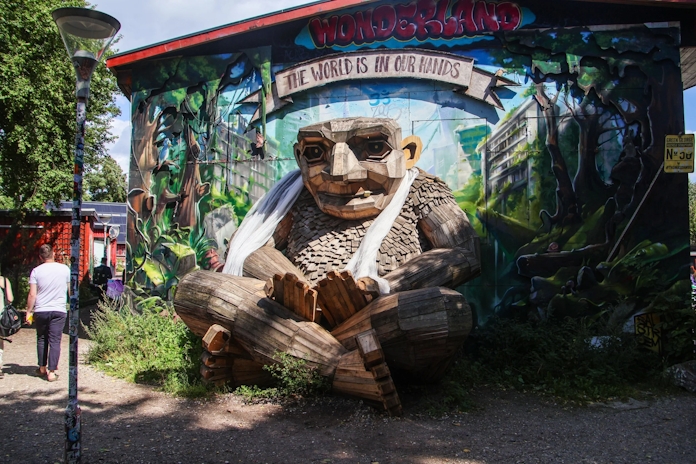
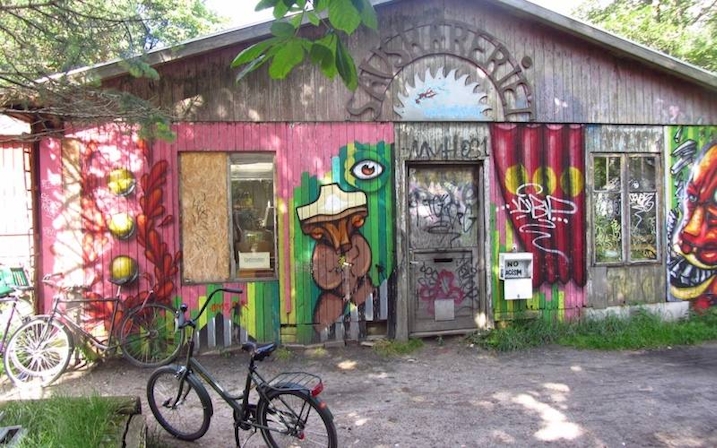
Today, Christiania functions as a cultural attraction focused on art galleries, street art, music venues, and cafes—not as a drug market. The area remains accessible via Christianshavn Metro, but visitors should understand they’re experiencing a cultural community, not a cannabis destination.
Critical Safety Warning: Do Not Attempt to Buy Cannabis in Christiania
Despite lingering online misinformation, attempting to purchase cannabis in Christiania in 2026 carries significant risks:
- No legitimate market exists – The physical infrastructure was dismantled
- Remaining dealers are gang-affiliated – High risk of violence and scams
- Contaminated products – No quality control or safety standards
- Police enforce cannabis laws – Possession can trigger standardized fines depending on amount and type
- Criminal record potential – Tourist status provides no legal protection
The stakes are too high to rely on outdated travel guides or word-of-mouth recommendations. Christiania’s cannabis era has definitively ended.
Denmark's Legal Cannabis Landscape: Medical and CBD Pathways
Abby Rurenko
While recreational cannabis remains illegal throughout Denmark, two legal pathways exist for those seeking cannabis-related products in 2026.
Medical Cannabis: Denmark's Permanent Program
The most significant development in Denmark’s cannabis landscape is the permanent medical cannabis framework that took effect January 1, 2026. This transition from a four-year pilot program (which entered into force January 1, 2018 and ran through December 31, 2025) to permanent legislation under Bill L135 represents a major step forward in patient access.
Eligibility and Access Process:
- Understand the prescription routes – Prescription rules depend on the route: authorized medicines are specialist-prescribed, while pilot-scheme and magistral routes have different requirements
- Medical evaluation – Eligibility depends on route: authorized medicines are limited to approved indications, while the pilot scheme was designed to let doctors consider certain cannabis products when patients haven’t benefited from authorized medicines
- Prescription issuance – Doctors determine appropriate cannabis products and dosages based on the relevant prescribing framework
- Pharmacy fulfillment – Prescriptions are filled at any Danish pharmacy (apotek)
Available Medical Products:
- Approved medicines – Sativex® (for MS spasticity, specialist-prescribed) and Epidyolex® (for specific epilepsy types, specialist-prescribed)
- Pilot program products – Cannabis oils, capsules, teas, and standardized flower products
- Magistral preparations – Synthetic cannabinoids like Marinol and Nabilone (via compassionate use), plus pharmacy-compounded products
Cost and Reimbursement: Under the new permanent program, reimbursement is available but not a flat 50% for everyone. Under the scheme, many patients receive a 50% subsidy up to an annual threshold of 20,000 DKK per 12-month period. Above that threshold, no subsidy applies. Terminally ill patients can receive 100% reimbursement. Patients should budget accordingly, as medical cannabis is partially affordable but not free.
Important Limitations for Tourists: The medical cannabis program is primarily designed for Danish residents with established healthcare relationships. Tourists face significant barriers to accessing medical cannabis, as they would need to consult a Danish physician and establish medical eligibility—a process that typically requires residency and ongoing medical care.
Legal CBD and Hemp Products
For visitors and residents seeking legal alternatives, CBD/hemp products are not automatically “legal” across the board. Denmark applies a 0.2% THC reference point in relevant rules, but product category matters significantly: many ingestible CBD products fall under novel food restrictions and some CBD oils may be considered medicinal products requiring authorization.
Where to Find CBD Products:
- Udonno Store – Multiple Copenhagen locations offering hemp flowers, hash, oils, and cosmetics
- Sense Weed retailers – A CBD brand reporting 150+ retail partners across Denmark (note: this is company marketing, not government authorization)
- Sinsemilla Hemp Shop – Located in the Christiania area, offering hemp and CBD products
- Online retailers – CBD products available for delivery throughout Copenhagen, though legality depends on product category
What to Look for When Purchasing CBD:
- THC content verification – Ensure products contain less than 0.2% THC, Denmark’s reference threshold
- Lab reports – Reputable retailers provide third-party testing results
- Product category awareness – Understand that foods/ingestibles face novel-food restrictions, while cosmetics and aromatherapy products have different regulatory treatment. Learning to read cannabis labels is essential for informed purchasing
- No medical claims – Legal CBD products cannot make therapeutic claims; products making such claims may be classified as unauthorized medicines
What to Avoid: Legal Risks and Dangerous Alternatives
Herb
Understanding what not to do is as important as knowing legal alternatives. Copenhagen’s cannabis landscape includes several dangerous misconceptions that can lead to serious consequences.
Illegal Markets and Street Dealers
Despite Christiania’s closure, illegal cannabis markets continue to operate in various parts of Copenhagen. These markets present significant risks:
- Gang involvement – Many dealers are connected to organized crime networks
- Contaminated products – No quality control or safety testing
- Violence and scams – High risk of theft, violence, or receiving fake products
- Legal consequences – Typical first-offense fines for small amounts are set in Danish kroner and are commonly around 2,000 DKK (amount and form dependent), with higher penalties for larger quantities or aggravating factors
"Hash Clubs" and Private Sales
Some online sources promote private “hash clubs” or delivery services, but these operations are illegal under Danish law. Participating in these markets carries the same risks as street purchases, with the added complication of providing personal information to unverified sources.
Border and Transportation Risks
Cannabis possession remains illegal when entering or leaving Denmark, regardless of origin or destination. Do not travel with cannabis into Denmark—import and export remains illegal without appropriate medical authorization, and border enforcement exists. Travelers should be aware of:
- Airport and border enforcement – Do not attempt to carry cannabis through Copenhagen Airport or any Danish entry point
- Driving under the influence – License suspension and significant fines for cannabis impairment (Danish police publish specific penalty structures for THC-related driving offenses)
- International legal consequences – Possession in Denmark can affect travel to other countries
Practical Tips for Visitors and Residents

Carlo Villarica
Navigating Copenhagen’s cannabis landscape requires practical knowledge and realistic expectations.
For Medical Cannabis Access
If you’re a resident or long-term visitor with medical needs:
- Establish healthcare relationships – Connect with a Danish physician who understands medical cannabis and the relevant prescribing routes
- Document your medical history – Provide comprehensive information about your condition and treatment history
- Understand the reimbursement system – Budget for out-of-pocket costs, keeping in mind the 50% subsidy applies up to 20,000 DKK per 12-month period, with no subsidy above that threshold
- Contact the Danish Medicines Agency – The regulatory authority (Lægemiddelstyrelsen) can provide official guidance on the program
For CBD Product Exploration
Visitors seeking legal alternatives should:
- Verify THC content – Always check product labels for THC percentages (must be below 0.2%)
- Start with reputable retailers – Udonno Store and Sense Weed are established CBD networks
- Understand product category limitations – CBD products classified as foods face novel-food restrictions, while cosmetics have different rules. Not all CBD products sold are necessarily compliant with Danish regulations
- Keep receipts and documentation – Maintain proof of legal purchase in case of questions
Cultural and Legal Etiquette
Respect for local laws and culture is essential:
- Public consumption – Even legal CBD products should be consumed discreetly
- Photography etiquette – Avoid photographing former cannabis areas or current CBD shops without permission (this is a long-standing community norm, not a law)
- Language preparation – Basic Danish phrases can help when discussing legal products
- Local guidance – Consult with locals or official tourism sources for current information
Herb's Role in Cannabis Education and Discovery
While Copenhagen’s cannabis landscape presents unique challenges, Herb provides essential resources for understanding cannabis culture, products, and legal developments worldwide. Unlike generic travel guides that may contain outdated information about locations like Christiania, Herb’s comprehensive educational platform ensures you have current, accurate information about cannabis wherever you are.
Herb delivers unique advantages specifically designed for cannabis consumers seeking quality, education, and community:
- Detailed Strain Guides: In-depth profiles of thousands of cannabis strains with effects, flavors, and growing information
- Expert Product Reviews: Unbiased evaluations of the latest cannabis products, from flowers to edibles to accessories
- Cannabis News and Culture: Stay informed about industry developments and legalization updates globally
- Educational Resources: From beginner guides to advanced cannabis science, Herb’s content helps you understand complex topics like terpenes and your high and THC alternatives
- How-To Guides: Practical advice on everything from consumption techniques to spotting fake products to quality identification
For travelers and residents navigating complex cannabis landscapes like Copenhagen’s, Herb’s commitment to education ensures you understand not just local laws, but how to evaluate quality, understand effects, and make informed decisions about cannabis products. Interested in cannabis laws in other European countries? Check out our guides to cannabis in Spain and cannabis in Portugal. The platform’s global perspective helps contextualize local developments within broader cannabis trends, providing valuable insights for both casual users and serious enthusiasts.
Whether you’re researching Denmark’s new medical cannabis program or exploring legal CBD alternatives, Herb’s comprehensive approach provides the tools and information needed to navigate cannabis landscapes confidently and safely. Find a dispensary near you or explore our brand directory to discover trusted cannabis partners.
Looking Ahead: Copenhagen's Cannabis Future

Nick Karvounis
Denmark’s cannabis landscape continues to evolve, with the permanent medical program representing a significant step forward. While full recreational legalization remains unlikely in the immediate future, the establishment of a stable medical framework suggests growing acceptance of cannabis as medicine.
For visitors to Copenhagen, the key takeaway is clear: the era of open cannabis markets has ended, but legal alternatives exist for those who understand the current landscape. By respecting local laws, prioritizing safety, and exploring legitimate CBD options, you can experience Copenhagen’s unique culture without risking legal trouble or personal safety.
The city’s transformation from cannabis tourism destination to medical cannabis pioneer reflects broader European trends toward regulated, medically-focused cannabis programs. As Denmark’s program matures, it may serve as a model for other countries considering similar approaches to cannabis regulation.

Frequently Asked Questions
Is cannabis legal anywhere in Copenhagen?
Recreational cannabis remains illegal throughout Denmark, including Copenhagen. However, two legal alternatives exist: Denmark’s permanent program (framework changes effective January 1, 2026) and CBD products—though CBD legality depends on product category (cosmetics, foods, or medicines each have different rules) and Denmark applies a 0.2% THC reference threshold. Possession of recreational cannabis can result in fines commonly around 2,000 DKK for small first-time amounts, with higher penalties for larger quantities or repeat violations.
What is the difference between Christiania's cannabis sales and the rest of Denmark?
Christiania’s Pusher Street was never legal under Danish law—it operated as an informal market within the autonomous freetown. However, as of 2024, this market has been permanently closed and dismantled by Christiania residents due to gang violence and safety concerns. Throughout the rest of Denmark, cannabis possession remains illegal, but the country now operates a permanent medical cannabis program and allows certain CBD products, subject to category-dependent regulations (novel food restrictions apply to ingestibles, and some CBD oils may be classified as unauthorized medicines).
Can tourists purchase weed in Christiania without issue?
No—tourists should absolutely not attempt to purchase cannabis in Christiania. The Pusher Street market was permanently closed in 2024 and physically dismantled. Any remaining dealers are likely gang-affiliated, selling potentially contaminated products with no quality control. Police enforce cannabis laws in the area, and tourists face the same legal consequences as residents, including fines and potential criminal records. Christiania is now a cultural destination focused on art, music, and alternative community life—not cannabis.
What are the typical penalties for cannabis possession outside of Christiania?
Cannabis possession penalties in Denmark are set under standardized prosecution guidance in Danish kroner. For small amounts (e.g., hash up to 9.9g), first-time offenders typically face fines starting at 2,000 DKK, with amounts varying by substance type and quantity. Larger quantities or repeat offenses can result in criminal charges and potential imprisonment. Driving under the influence of cannabis carries additional penalties, including license suspension and significant fines. Tourist status provides no legal protection from Danish drug laws.
Will cannabis be fully legal in Copenhagen by 2026?
No—recreational cannabis remains illegal in Denmark as of 2026. However, the country did implement a permanent medical cannabis framework effective January 1, 2026, replacing the previous pilot program that ran from 2018 through 2025. This represents significant progress in medical access, but there are no current plans for recreational legalization. The focus remains on expanding medical access and regulating CBD products, rather than creating a recreational market similar to Amsterdam’s coffee shops.
Are there any 420-friendly hotels or experiences in Copenhagen?
Copenhagen does not have officially designated 420-friendly hotels or consumption lounges like those found in some legal cannabis markets. However, certain legal CBD products can be consumed discreetly in private accommodations—keeping in mind that not all CBD products are necessarily compliant with Danish regulations depending on their category. The focus for cannabis-interested visitors should be on exploring Copenhagen’s cultural attractions and legal CBD alternatives, rather than expecting cannabis tourism infrastructure.
Herb Recommended Products:
READ MORE