
tanner boriack
How to Buy Weed in Knoxville: Tennessee Law, Hemp Shops and What Visitors Should Know |
08.06.2026How to Buy Weed in Knoxville: Tennessee Law, Hemp Shops and What Visitors Should Know
Tennessee overhauled its hemp rules in 2025, with TABC licensing fully operative from July 2026. Marijuana remains illegal, and Delta-8 is not as settled as shops suggest.

Tennessee’s cannabis landscape shifted substantially with the hemp regulatory overhaul enacted as Public Chapter 526 in May 2025, which moved hemp-derived cannabinoid regulation to the Tennessee Alcoholic Beverage Commission and established new requirements for retailers and consumers alike. Whether you are a Knoxville resident or a visitor from a legal state, understanding what you can and cannot buy here matters more than it did two years ago.
The timeline, because it determines which rules apply: TABC assumed regulatory authority on January 1, 2026, with a transition period for legacy Tennessee Department of Agriculture licensees running through June 30, 2026. The current total-THC framework and the resulting restrictions on high-THCA flower became fully operative under the new licensing regime on July 1, 2026. Guides describing a 2024 effective date are describing something that did not happen.
This guide covers Tennessee’s actual possession penalties, why the Delta-8 question is not settled, what the state’s CBD oil provision really is, how the new retail framework works, and what visitors need to know.
Key Takeaways
- Tennessee has no operational medical marijuana program and no dispensaries. Recreational cannabis remains illegal.
- Simple possession of marijuana is generally a Class A misdemeanor, punishable by up to 11 months and 29 days and a fine of up to $2,500. A third marijuana-possession conviction does not automatically become a felony.
- Hemp-derived products must contain no more than 0.3% total THC by dry weight, and Tennessee separately prohibits products containing synthetic cannabinoids.
- Most commercial Delta-8 and Delta-10 products are made by chemically converting CBD, so a lab report showing under 0.3% total THC does not by itself establish legality.
- Hemp-derived cannabinoid product sales require an applicable TABC license. A local or general business license does not demonstrate TABC authorization.
- All hemp-derived cannabinoid product purchases require a valid ID proving you are 21 or older, including for qualifying topical and transdermal products.
- Out-of-state medical marijuana cards are not recognized in Tennessee.
Is Weed Legal in Knoxville?

alex reynolds
No. Cannabis containing more than 0.3% delta-9 THC remains illegal in Tennessee for both medical and recreational purposes. The state has not decriminalized possession, and there is no adult-use pathway regardless of what neighboring states permit.
For visitors, products purchased legally in Colorado, California, Illinois, or anywhere else become illegal the moment you cross the state line. That includes flower and pre-rolls, edibles and concentrates, vape cartridges, and medical cannabis held with a valid out-of-state card.
What Tennessee has instead of a medical program
Tennessee has no operational medical cannabis program. There is no patient licensing, no medical cannabis card, and no authorized dispensary. The Tennessee Medical Cannabis Commission studies the issue and prepares recommendations for a potential future program rather than administering one.
What state law does contain is a narrow statutory exclusion for certain CBD oil containing less than 0.9% THC. That exclusion applies only when detailed conditions are satisfied, including specific product-labeling requirements and medical documentation connected to a qualifying diagnosis, along with an out-of-state legal order or recommendation.
This is not a general medical cannabis program, and it does not provide broad protection for patients. An out-of-state medical marijuana card by itself does not establish compliance with the exclusion.
Tennessee Cannabis Possession Penalties

Elsa Olofsson
Several widely repeated figures for Tennessee are wrong, and the errors run in the direction of overstating some penalties while mislabeling others.
Simple possession or casual exchange
- Classification. Generally, a Class A misdemeanor under Tennessee Code § 39-17-418, including for amounts not exceeding one-half ounce
- Jail. Up to 11 months and 29 days
- Fine. Up to $2,500
On the fine amounts you may have seen elsewhere. The $250, $500, and $1,000 figures that circulate in Tennessee guides are statutory minimum fines associated with successive convictions, not maximums. Presenting them as caps understates the exposure considerably.
On the “third strike felony” claim. Current law does not make a third marijuana-possession conviction automatically punishable as a felony. The repeat-offense felony provision applies where the new offense involves heroin and the defendant has two or more qualifying prior convictions.
Where felony exposure actually comes from. Manufacture, sale, delivery, possession with intent to distribute, or other aggravating circumstances. Quantity, packaging, and conduct drive that determination rather than a simple count of prior possession charges.
Hemp in Tennessee: What the Rules Actually Say

Photo by Shutterstock
While marijuana remains prohibited, Tennessee has a regulated hemp-derived cannabinoid market. The rules are more restrictive than the federal baseline, and the differences matter.
The federal starting point
The 2018 Farm Bill drew the line at 0.3% delta-9 THC by dry weight, removing qualifying hemp from the federal Controlled Substances Act. Tennessee adopted that threshold and then layered state requirements on top of it.
Tennessee's total THC calculation
Products are measured using a total THC formula that accounts for THCA conversion:
(THCA × 0.877) + delta-9 THC
Anything exceeding 0.3% under that calculation is not compliant. This is what restricts high-THCA flower in Tennessee. Any product marketed as “THCA flower” needs to test at no more than 0.3% total THC under the required calculation to be sold lawfully.
Where Delta-8 and Delta-10 sit
This is the section most Tennessee guides get wrong.
Tennessee’s current rules prohibit products containing synthetic cannabinoids, in addition to imposing the 0.3% total THC maximum. Delta-8 and Delta-10 occur naturally in hemp only in very small quantities, so most commercial products in these categories are made by chemically converting CBD.
The consequence: a product is not necessarily lawful simply because its laboratory report shows less than 0.3% total THC. Legality depends on how the cannabinoid was produced, not on the THC figure alone. Delta-8 and Delta-10 should not be treated as generally legal product categories in Tennessee.
The FDA has also stated that Delta-8 THC products have not been evaluated or approved for safe use, and has raised concerns about manufacturing processes and potentially harmful byproducts.
Also prohibited
- THCP (tetrahydrocannabiphorol)
- Synthetic cannabinoids of any kind
- Products exceeding the total THC threshold, including most high-THCA flower
Herb’s THC alternatives guide covers the broader cannabinoid landscape, with the caveat that legality is jurisdiction-specific.
Buying Hemp Products in Knoxville

wade allen
Knoxville has hemp retailers across most neighborhoods. What matters more than location is licensing.
Verify TABC licensing, not business licensing
Tennessee hemp-derived cannabinoid retailers now need an applicable TABC license. A local or general business-license number does not demonstrate current TABC authorization, and a store being open does not establish that it holds one.
Check any retailer against the current TABC license database before purchasing. The database identifies the legal entity, the licensed premises, and the TABC license number. If a shop’s operating entity or address does not appear, treat that as meaningful information.
What to look for in a retailer
- Current TABC license, verifiable in the state database rather than just displayed on a wall
- QR codes on products linking to batch-specific lab results
- Certificates of analysis showing total THC under the state formula, batch numbers, and testing dates
- Age verification at entry, since 21 and older, applies to hemp-derived cannabinoid products
- Staff who can explain the manufacturing method, which is the question that actually determines Delta-8 legality
Warning signs
- Claims that “THCA is completely legal” without qualification
- Products with no certificate of analysis
- Reluctance to show licensing documentation
- Delta-8 or Delta-10 products presented as unambiguously lawful
Product Categories and What Applies to Each
elsa olofsson
Browse Herb’s cannabis products catalog for background on formats, keeping in mind that availability and legality are state-specific.
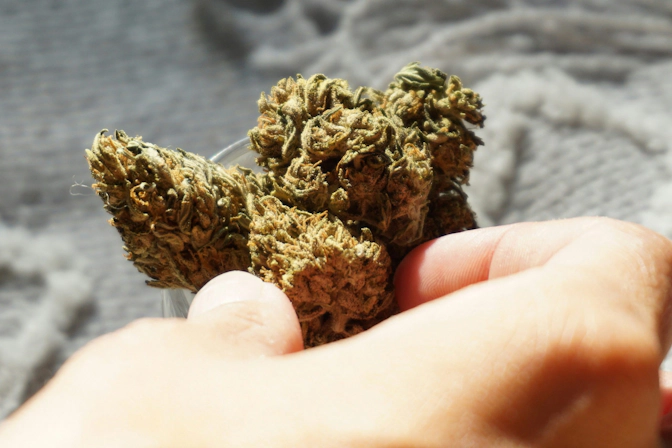
- Hemp flower. Must test at no more than 0.3% total THC under Tennessee’s calculation. Most high-THCA flower does not qualify.
- Edibles and beverages. Serving-size and package limits apply under the state framework. Verify the current TABC serving and package rules rather than relying on figures published before the 2026 transition.
- Tinctures. Sublingual products offer a faster onset than edibles with dropper-based measuring.
- Vape cartridges. Must contain compliant hemp extracts, and the synthetic cannabinoid prohibition is particularly relevant here. Herb’s guide on spotting fake vapes covers authentication.
- Topicals. Tennessee’s definition of regulated hemp-derived cannabinoid products includes certain products intended to be absorbed through the skin, and sale to anyone under 21 is prohibited. Cannabinoid topicals qualifying as hemp-derived cannabinoid products, including transdermal formats, are subject to the 21-and-older restriction. Do not assume topicals are exempt.
Consumption Rules

ryan waring
Tennessee does not impose a blanket statewide prohibition on consuming legal hemp-derived cannabinoid products in every setting.
Under the 2026 framework, certain properly licensed liquor-by-the-drink establishments, including qualifying restaurants, bars, and hotels, may sell hemp-derived cannabinoid products intended for on-premises consumption.
That said, consumption is restricted to places where it is specifically lawful and permitted. Separate smoking laws, local ordinances, property policies, and restrictions on where products may be used all continue to apply, and a hotel or rental can prohibit use regardless of what state law permits.
Impairment and driving. Tennessee’s DUI laws apply to cannabis impairment regardless of a product’s legal status. Hemp-derived THC products can cause genuine impairment and can produce positive drug test results. Do not drive after consuming any THC product.
Safety and Responsible Consumption
ELSA OLOFSSON
Verifying product quality
Every compliant hemp product should carry:
- A certificate of analysis showing cannabinoid content and contaminant testing
- A QR code linking to those results
- A batch or lot number matching the COA
- Accredited laboratory information
Consumption guidance
There is no authoritative medical standard assigning THC doses by whether someone is a first-time, occasional, or experienced consumer. Effects vary substantially with product composition, tolerance, metabolism, medications, food intake, and other factors, and Delta-8 products in particular have not been FDA-approved or evaluated as safe consumer products.
Practical harm-reduction guidance instead:
- Follow the lowest labeled serving on the product
- Wait at least two hours before considering additional edible THC. Edible effects may take roughly 30 minutes to two hours to appear, which is where most overconsumption happens
- Avoid combining with alcohol or other impairing substances
- Do not drive
- Keep products away from children and pets, in original child-resistant packaging
What Visitors Should Know
Flying with hemp products
TSA screening focuses on security threats rather than drugs, but officers refer suspected illegal substances discovered during screening to law enforcement. Hemp products meeting federal requirements are generally permissible to fly with, though possessing marijuana at McGhee Tyson Airport can result in arrest under state law. Keep products in original packaging with accessible COAs.
Other realities for out-of-state visitors
- Your home state’s medical card has no validity in Tennessee
- Products legal where you live can carry criminal exposure here
- Unfamiliarity with the law is not a defense
- Hotels and rental properties may prohibit all cannabis use
- Law enforcement cannot distinguish hemp from marijuana visually, which is why documentation and original packaging matter
The Future of Cannabis in Tennessee
- Legislative landscape. Tennessee has repeatedly declined to advance medical cannabis expansion bills, though some lawmakers have proposed narrow programs.
- Public opinion. Polling consistently shows majority support for medical cannabis among Tennessee voters, without corresponding legislative movement.
- The active front is hemp. The Public Chapter 526 overhaul and the TABC licensing transition have done more to change what is actually available in Knoxville than any marijuana bill.
- Federal developments could shift the underlying framework, and Herb’s cannabis news coverage tracks those changes.
Legal Hemp vs. the Illicit Market
Risks of unlicensed purchases
- Criminal exposure for possession, purchase, or intent to distribute
- No testing requirements and potential contamination
- Inconsistent potency with no labeling standards
- No recourse if a product causes harm
Identifying compliant products
- Sold by a TABC-licensed retailer
- Compliant packaging with a scannable QR code
- Third-party lab testing documentation matching the batch
- Total THC under 0.3% using Tennessee’s formula
- Child-resistant packaging
Federal vs. state
Hemp meeting the federal threshold is removed from the federal Controlled Substances Act, but states can impose stricter rules. Tennessee’s framework adds TABC licensing, a synthetic cannabinoid prohibition, a 21-and-older requirement, serving-size limits, and a complete THCP ban.
Why Herb Helps Knoxville Readers Stay Informed

istrfry marcus
Tennessee’s rules changed twice in eighteen months, which makes reliable reference material worth having. Herb covers:
- Strain information. Detailed profiles covering effects, flavors, and genetics
- Product discovery. The product catalog spans edibles, vapes, topicals, and accessories
- Educational resources. In-depth guides on cannabinoid science and consumption methods
- Dispensary discovery. The dispensary directory for states with legal retail
- Industry news. Policy coverage tracking developments that affect Tennessee
Whether you are sorting out what is actually available in Knoxville or planning a trip to a legal market, that combination helps you act on current information rather than outdated summaries.
Final Verdict
Knoxville has a regulated hemp market and no cannabis market, and the distance between those two things is where most confusion lives. Here is how it breaks down:
- Looking for a dispensary? There is not one. No operational medical program, no cards, no adult-use retail.
- Carrying a small personal amount? Simple possession is a Class A misdemeanor with up to 11 months and 29 days and a fine reaching $2,500. The “third offense felony” you may have read about is not the law.
- Buying Delta-8 or Delta-10? Tennessee prohibits synthetic cannabinoids, and most commercial products in these categories are chemically converted from CBD. The lab report alone does not settle it.
- Buying THCA flower? It has to test at no more than 0.3% total THC under the state formula, which most high-THCA flower does not.
- Shopping anywhere? Check the retailer against the current TABC license database first. A business license number is not the same thing.
The honest answer to “how to buy weed in Knoxville” is that marijuana is not legally available, and the hemp market that exists is more tightly regulated than the storefronts suggest.
Frequently Asked Questions
Is recreational marijuana legal in Knoxville, Tennessee?
No. Recreational marijuana remains illegal throughout Tennessee. Simple possession or casual exchange is generally a Class A misdemeanor under § 39-17-418, punishable by up to 11 months and 29 days and a fine of up to $2,500. A third marijuana-possession conviction does not automatically become a felony; the repeat-offense felony provision applies where the new offense involves heroin and the defendant has two or more qualifying prior convictions. Felony exposure for cannabis generally arises from manufacture, sale, delivery, possession with intent to distribute, or other aggravating circumstances.
Are Delta-8 and Delta-10 products legal in Tennessee?
Not categorically. Tennessee’s rules prohibit products containing synthetic cannabinoids in addition to capping total THC at 0.3%. Delta-8 and Delta-10 occur naturally in hemp only in very small quantities, so most commercial products are made by chemically converting CBD. A laboratory report showing under 0.3% total THC does not by itself establish that a product is lawful. The FDA has also stated that Delta-8 products have not been evaluated or approved for safe use.
Does Tennessee have a medical marijuana program?
No. Tennessee has no operational medical cannabis program, no patient licensing, no medical cannabis cards, and no authorized dispensaries. The Tennessee Medical Cannabis Commission studies the issue and prepares recommendations for a potential future program. State law contains only a narrowly conditioned exclusion for certain CBD oil with less than 0.9% THC, which requires specific product labeling and medical documentation connected to a qualifying diagnosis along with an out-of-state legal order or recommendation. An out-of-state medical card by itself does not establish compliance with that exclusion.
How do I verify that a Knoxville hemp shop is licensed?
Check the retailer against the current TABC license database, which identifies the legal entity, licensed premises, and TABC license number. Hemp-derived cannabinoid retailers need an applicable TABC license, and a local or general business-license number does not demonstrate TABC authorization. Ask to see current licensing documentation, and treat reluctance to provide it as a reason to shop elsewhere.
Do age restrictions apply to CBD topicals in Tennessee?
In many cases, yes. Tennessee’s definition of regulated hemp-derived cannabinoid products includes certain products intended to be absorbed through the skin, and sale or distribution of a hemp-derived cannabinoid product to anyone under 21 is prohibited. Cannabinoid topicals qualifying under that definition, including transdermal formats, are subject to the 21-and-older restriction, so do not assume topicals are exempt.
This article is for informational purposes only and does not constitute legal advice. Cannabis laws vary by jurisdiction and are subject to change. Always verify current regulations with official sources before traveling. Herb does not encourage the purchase or use of cannabis in jurisdictions where it is illegal.
Herb Recommended Products:
READ MORE