
MON JESTER
How to Buy Weed in Laos in 2026: Vang Vieng Happy Menus & the Real Risks |
04.08.2026How to Buy Weed in Laos in 2026: Vang Vieng Happy Menus & the Real Risks
Understanding Laos's illegal cannabis scene in 2026, from Vang Vieng's happy menus and tourist-town hookups to police extortion, severe penalties, and the risks hidden behind apparent tolerance

Here are the main ways tourists buy weed in Laos: “happy menu” restaurants in Vang Vieng, tuk-tuk drivers in other tourist towns, and informal sellers in tourist areas. Recreational marijuana is illegal in Laos, and traveler reports consistently describe police extracting large cash payments from tourists who purchase it. Those reported “fines” can run into the hundreds or even thousands of dollars.
The gap between what feels tolerated and what the law actually says has cost travelers thousands of dollars, their passports, and sometimes their freedom.
Recreational marijuana is illegal in Laos under the Law on Narcotics (2007) and the Penal Code (2017). Lao drug penalties vary sharply by substance form (raw marijuana, dried marijuana, THC/hashish), amount, and context, with prison sentences that can reach 10 years or more for serious offenses. Separate regulated hemp activities were authorized in 2022 under Decision No. 3789/MOH, but that framework applies only to licensed commercial operators and has no bearing on recreational use. For a sense of where Laos ranks globally, see our overview of the strictest weed laws around the world.
Despite this, restaurants in Vang Vieng and other tourist areas openly sell food through so-called “happy menus” that may contain cannabis, opiates, or other unknown substances. This creates a false sense of safety. According to traveler accounts, police routinely use these establishments as a basis for extracting cash from foreign visitors.
This guide covers everything you need to know before making any decisions: the actual laws, what the happy menu scene looks like on the ground, how police encounters reportedly work, what penalties you realistically face, how Laos compares to its neighbors, and the cultural history behind cannabis in this landlocked Southeast Asian country.
Key Takeaways

ADRIAN FLEUR
- Recreational marijuana is illegal in Laos. Possession, use, sale, and cultivation of recreational cannabis are all prohibited under the Law on Narcotics (2007) and Penal Code (2017). Separate regulated hemp activities were authorized in 2022, but this does not extend to recreational use.
- Lao drug penalties vary by substance form, weight, and context. Publicly accessible legal texts do not support a single universal marijuana-possession penalty line. Sentences can range from months to a decade or more depending on the specifics.
- Despite the law, “happy menus” selling food that may contain cannabis, opiates, or other unknown substances are openly available in tourist towns, particularly Vang Vieng.
- Traveler reports consistently describe police targeting tourists who buy from these establishments, with reported on-the-spot cash demands often described in the range of several hundred dollars or more.
- Accounts of entrapment scams, where a friendly stranger arranges drugs and police raid your room shortly after, are widely reported among travelers, though not independently verified by official sources.
- Laos approved regulated hemp activities in 2022 under Decision No. 3789/MOH, but this has zero bearing on recreational cannabis, which remains a criminal offense.
- Neighboring Thailand restricted cannabis access effective June 2025, making the entire region more restrictive than it was two years ago.
Explore Herb’s guides for cannabis laws in every destination.
Is Weed Legal in Laos?

ELSA OLOFSSON
No. Recreational marijuana is illegal in Laos. There is no decriminalization provision and no medical cannabis program available to tourists or citizens. Separate regulated hemp activities were authorized in 2022, but that does not legalize tourist or recreational cannabis use.
The relevant legislation:
- Law on Narcotics (2007): The primary statute governing drug offenses in Laos, prohibiting the production, trade, and use of recreational cannabis.
- Penal Code (2017): Reinforces criminal penalties for drug possession and distribution, including cannabis.
- Amendment No. 22/NA (2012): Increased penalties for certain drug offenses.
- Decision No. 3789/MOH (2022): Authorized regulated hemp activities (cultivation, extraction, processing, storage, distribution, and import-export) for licensed commercial operators under strict government oversight.
Tourists and ordinary foreign nationals are subject to the same laws and penalties as Lao citizens. There are no tourist exceptions and no reduced penalties for first-time visitors. (Accredited diplomats are governed by the separate immunities framework under the Vienna Convention, but that is irrelevant for travelers.) The UK Foreign Office, U.S. State Department, and Australian DFAT all explicitly warn travelers about Laos’s strict drug laws.
What makes Laos confusing, and dangerous, is that enforcement is selective. Cannabis is openly sold in tourist zones while simultaneously being used as a basis for police revenue through fines and reported extortion. The visibility of “happy menus” does not mean tolerance. It means opportunity for enforcement.
For anyone comparing this to other destinations, Herb’s city guides cover the legal landscape across dozens of countries. You can also read about weed laws when traveling and the strictest weed laws to understand where Laos falls on the spectrum.
Why It Matters for Travelers in 2026

DANKA PETER
The cannabis landscape in Southeast Asia shifted dramatically in 2025, and those changes make understanding Laos’s situation more important than ever.
Thailand restricted cannabis access (June 2025). Thailand was the first Southeast Asian country to decriminalize cannabis in 2022, and for two years it was a cannabis tourism hotspot with thousands of dispensaries. In June 2025, Thailand reclassified cannabis flower as a controlled herb, shutting down the recreational market.
Thousands of dispensaries closed. Legal purchase now requires a medical prescription from a licensed Thai practitioner. Thailand’s tighter rules may have regional spillover effects, but there is no hard public data proving a demand shift into Laos specifically.
Laos approved regulated hemp activities (2022). The Lao government approved the regulated cultivation, extraction, processing, storage, distribution, and import-export of hemp (Cannabis sativa L.) for industrial and medical purposes under Decision No. 3789/MOH.
This sometimes gets misreported as “Laos legalized weed,” which is flatly wrong. The hemp approval applies to licensed commercial operators working within a strict regulatory framework. It has nothing to do with tourist consumption, and it does not change the criminal status of recreational cannabis.
The 2019 legalization committee led only to hemp regulation. In 2019, the Lao government established an ad hoc committee to consider the feasibility of legalizing hemp cultivation for medicinal use. That committee’s work ultimately led to the Ministry of Health’s 2022 hemp decision, but it has not produced any legislation addressing recreational cannabis. I found no reliable public evidence of an active recreational legalization bill in Laos as of April 2026.
The bottom line for 2026: knowing how to buy weed in Laos does not make it safe or legal. The country is not moving toward recreational legalization, the regional trend is toward tighter controls, and the gap between visible availability and legal reality remains as wide, and as dangerous, as ever.
How to Buy Weed in Laos: The Vang Vieng Happy Menu Scene

VANG VIENG
Vang Vieng is a small town on the Nam Song River in Vientiane Province, roughly two to three hours north of the capital by road (about 130 km). It became famous in the 2000s as a backpacker party destination, and despite government efforts to clean up its image after a series of tourist deaths, it remains one of the most visible centers of open drug availability in Laos.
What a Happy Menu Actually Is
A “happy menu” is a separate menu, sometimes printed, sometimes just explained verbally by staff, that lists food and drinks that may be laced with cannabis, psilocybin mushrooms, opiates, or other unknown substances. Official U.S. and Canadian travel advisories warn that “happy” items may contain opiates or substances that are not disclosed, so it is important to understand that these are not standardized cannabis edibles with predictable contents. The naming convention uses “happy” as a euphemism:
- “Happy pizza”: Pizza that may contain cannabis or other substances baked into the sauce or sprinkled on top
- “Happy shake”: Fruit smoothie that may be blended with cannabis, mushrooms, or other substances
- “Happy tea” or “happy coffee”: Hot drinks that may be laced with various substances
- “Happy sandwich”: Any food item with unknown drug additives
Customers order by intensity: “a little bit happy,” “medium happy,” or “very happy.” The dosing is completely unregulated, unmeasured, and inconsistent. There is no lab testing, no ingredient disclosure, and no way to know what substance, potency, or strain you are actually consuming.
Known Establishments
Milan Happy Pizza-DK3 Bar & Lounge is one of the most well-known happy menu restaurants in Vang Vieng, openly reviewed on TripAdvisor with photos of the actual menu. Multiple restaurants along the main tourist strip offer similar menus, and the presence of these establishments is no secret to local police, which is precisely the problem.
The Experience and the Risks
Eating drug-laced food in Vang Vieng might feel casual and safe. The restaurant is full of other tourists doing the same thing. The staff is friendly. Nobody seems concerned. But the experience is designed to create that false comfort, because what happens next, outside the restaurant, is where the real danger begins.
Edibles in particular carry additional risk because dosing is unpredictable. Without any quality control, a “very happy” pizza could contain anywhere from a mild dose to an overwhelmingly strong one, and you may not even know exactly what substance is in it. Tourists who are incapacitated by unexpectedly strong edibles become even more vulnerable to police encounters, theft, and poor decision-making in an unfamiliar environment.
Where and How to Buy Weed in Laos by City
CJ
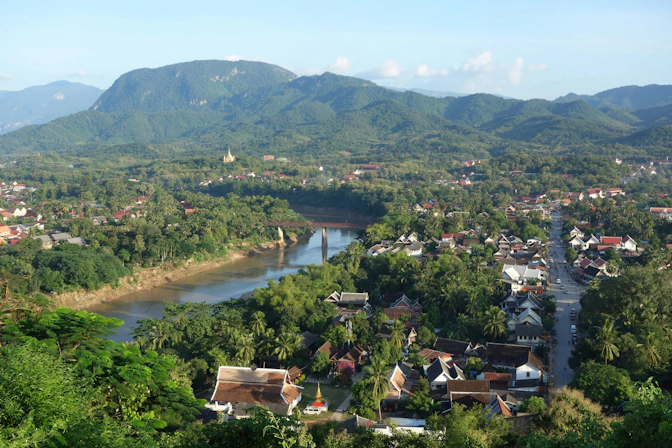
If you are researching how to buy weed in Laos, the answer depends heavily on which city you are visiting. Cannabis availability extends beyond Vang Vieng’s happy menus, though the level of openness varies significantly by location.
The following city-by-city information reflects anecdotal traveler reports and has not been independently verified by official sources. Treat it as informal guidance, not established fact.
Vang Vieng
The most open market, according to traveler accounts. Happy menus are the primary access point, but cannabis is also reportedly available as loose flower from some tuk-tuk drivers and guesthouse staff. Prices are low, quality is generally described as outdoor-grown, and the police presence is constant.
Luang Prabang
The UNESCO-listed former royal capital reportedly has a more discreet cannabis scene. According to traveler accounts, the easiest way to find weed here is through tuk-tuk drivers, particularly around larger groups of drivers near tourist sites. You may be offered cannabis (or other drugs) without asking. The approach is more informal than Vang Vieng’s restaurant-based model, but the legal risks are identical. Note that official travel advisories specifically warn about “happy” items in Vang Vieng; I did not find comparably strong official-source corroboration for Luang Prabang.
Vientiane
The capital city reportedly has the most limited open availability. Cannabis can allegedly be found through personal connections and some nightlife venues, but Vientiane has tighter police presence and less of the “anything goes” backpacker culture that enables open sales in Vang Vieng.
4,000 Islands (Si Phan Don)
The laid-back river islands in southern Laos near the Cambodian border have a reputation for cannabis availability, particularly on Don Det. Traveler reports mention guesthouses and small bars that may offer cannabis, but the scene is described as smaller and less organized than Vang Vieng.
Rural Areas
In rural and highland communities, cannabis reportedly grows semi-wild and has been cultivated traditionally for generations. If you want to understand hemp’s broader uses, Herb has a full guide. However, purchasing cannabis in rural areas as a tourist is uncommon and carries its own set of risks, including language barriers, remoteness from any consular assistance, and the same legal penalties as anywhere else in the country.
What It Costs
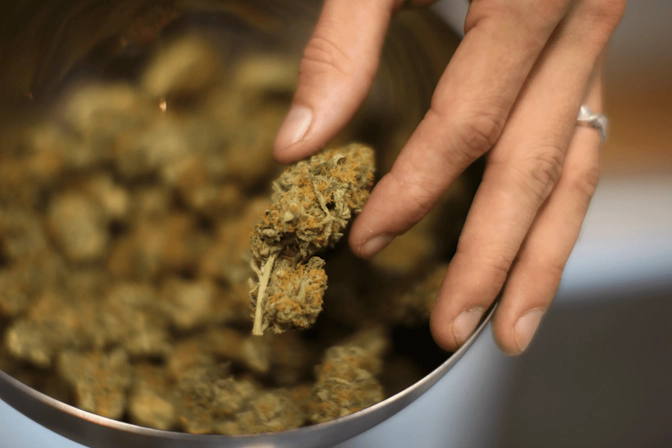
Cannabis in Laos is cheap by any international standard, which is part of what makes the risk-reward calculation so lopsided.
The following prices are based on anecdotal traveler reports and informal accounts, not verified market data. They should be taken as rough estimates rather than reliable figures: a pre-rolled joint reportedly runs around 50,000 kip ($2.25 USD), happy pizzas are described in the range of 40,000 to 80,000 kip ($1.80 to $3.60 USD), happy shakes around 30,000 to 60,000 kip ($1.35 to $2.75 USD), and a small bag of flower (roughly 2 to 3 grams) around 100,000 to 200,000 kip ($4.50 to $9 USD).
For context, the police cash payment that travelers report being forced to pay if caught can be many times the cost of what you bought. This math alone should give any traveler pause.
The quality is generally described as outdoor-grown, seeded, and uncured by the standards of legal markets. There is no strain selection, no potency information, and no quality assurance of any kind.
How Police Encounters Reportedly Work in Laos
This is the most important section of this guide. The single biggest risk when figuring out how to buy weed in Laos is not the cannabis itself; it is the police response, which in tourist areas reportedly operates as a revenue-extraction system.
The following accounts are drawn from widely circulated traveler reports and online forums. Official government travel advisories warn about severe drug penalties and limited consular help, but they do not describe the specific mechanics below. Treat these as widely reported but not independently verified allegations.
The Restaurant-to-Street Pattern
This is the most commonly reported pattern in Vang Vieng, according to traveler accounts:
- You eat at a happy menu restaurant. The staff serves you drug-laced food openly.
- You leave the restaurant. You may or may not have cannabis on your person.
- Police stop you on the street. They may search you, or they may simply accuse you based on having seen you leave a known establishment.
- You are told you face prison time. Your passport may be confiscated.
- You are offered the option to pay a cash “fine” to make the problem disappear.
- You pay. You get your passport back. The police keep the cash. According to these accounts, there is no receipt, no official record, and no actual court proceeding.
These accounts are widely reported across traveler forums and first-person accounts spanning more than a decade. However, official embassy and government advisories I reviewed do not lay out these specific mechanics or confirm the reported payment ranges.
The restaurants that sell drug-laced food are not operating in secret. According to traveler accounts, they exist because police allow them to operate as a reliable basis for targeting tourists. Understanding how to buy weed in Laos means understanding that, by many accounts, the seller and the enforcer may be part of the same informal system.
The Entrapment Scam
A more sophisticated version is described in traveler reports like this:
- A friendly foreigner, or sometimes a local, befriends you at a bar, hostel, or tourist spot.
- They offer to help you find cannabis, or they suggest buying together.
- They arrange the purchase and deliver it to you, or you bring it back to your accommodation.
- Shortly after, police arrive at your room. They “find” the cannabis.
- You are told you face serious prison time for possession and possible distribution charges.
- The cash demand to make it go away is reportedly substantial.
According to these traveler reports, the person who helped you find the cannabis was working with the police. These accounts describe a coordinated operation, though this has not been independently verified by official sources.
The Accommodation Raid
Traveler reports describe police occasionally raiding guesthouses, hostels, and hotels in tourist areas. These raids may be random or may be triggered by tips from staff. If cannabis is found in your room, you reportedly face the same arrest-and-fine dynamic described above.
What Your Embassy Can (and Cannot) Do
If you are arrested in Laos for cannabis possession, your embassy can confirm your arrest to family members, provide a list of local attorneys, and visit you in detention.
Your embassy cannot get you out of jail, override Lao law, pay your fine, or intervene in legal proceedings.
You are subject to Lao law, period. Consular assistance is limited to ensuring you are not being physically mistreated; it does not extend to legal protection.
Penalties: What You Actually Face

LAOS POLICE
The legal penalties for drug offenses in Laos are severe on paper. Importantly, Lao drug law does not present a single clean marijuana-possession rule. Instead, it distinguishes by substance form, weight, and sometimes commercial purpose. Here is what the publicly accessible legal text outlines:
For dried marijuana in a commercial context: 5 to 10 kg carries 3 to 7 years imprisonment plus fines of 5 to 20 million kip. Over 10 kg, or organized offenses, carries 5 to 10 years plus fines of 20 to 50 million kip.
For “chemical marijuana” (THC/hashish): 0.3 to 50 grams carries 2 to 4 years plus fines of 5 to 9 million kip, escalating up to life imprisonment for over 500 grams.
For first-time drug use: Public criticism and a fine of 100,000 to 300,000 kip (~$5 to $14 USD).
For second-time drug use: 3 months to 1 year imprisonment plus fines of 300,000 to 500,000 kip.
For third-time or more drug use: 3 months to 1 year imprisonment plus fines of 500,000 to 5,000,000 kip.
For sale or distribution: 5 to 10 years prison plus fines of 20 to 50 million kip.
For serious drug offenses generally: Laos retains the death penalty for serious drug offenses, though the publicly accessible legal text does not clearly show the death penalty applying specifically to marijuana trafficking. The death penalty has not been carried out in Laos since 1989.
For cross-border transport: Enhanced penalties, treated as international trafficking.
What Actually Happens in Practice
In reality, most tourist encounters with police reportedly follow the cash-extraction pattern described above rather than formal legal proceedings. According to traveler reports, police extract cash payments and release tourists without any official charges. However, this is not guaranteed. There are accounts of tourists being formally charged, spending time in Lao prisons, and going through the legal system.
Key factors that reportedly increase the likelihood of formal charges rather than a cash demand: possessing more than a personal-use amount (which raises trafficking suspicions), being near a border crossing or airport with cannabis (which dramatically increases risk), inability to pay the demanded amount, repeat encounters with police, and the political climate (periodic crackdowns, often tied to international pressure or government campaigns, can shift enforcement from informal extraction to prosecution).
Lao prisons are not comparable to Western detention facilities. Conditions are harsh, legal proceedings are slow, and access to legal representation is limited.
Cannabis History and Culture in Laos
Cannabis has a long and genuine history in Laos that predates modern drug laws. Understanding this context helps explain why the plant remains culturally embedded even as it is legally prohibited.
Traditional Uses
Cannabis was used traditionally across Laos for medicine, religious rituals, and practical purposes. Communities used cannabis preparations to treat pain, digestive issues, and as part of spiritual ceremonies. The plant was woven into daily life, not as a recreational drug, but as a multipurpose agricultural product.
The Hmong Hemp Heritage
Hmong communities in Laos have a deep and important hemp-textile tradition. However, “thousands of years in Laos” would overstate the Laos-specific historical timeline, since public historical sources place major Hmong migration into Laos and wider mainland Southeast Asia largely in the 19th century. The Hmong hemp tradition itself is ancient, but its presence in Laos specifically is better described as spanning generations rather than millennia.
The traditional process is labor-intensive and culturally significant: hemp stalks are harvested and dried, women hand-strip or peel the bast fiber from the stalk, the fiber is pounded with stone to make it malleable, processed fiber is placed on a spinning machine to twist and extract individual threads, and the threads are woven into cloth for clothing, bags, and household items.
This hemp tradition is specifically a fiber tradition, not a recreational cannabis tradition. The Hmong cultivated hemp (Cannabis sativa) for its stalk, not for its flowers. The distinction matters because it illustrates how cannabis served a completely different cultural function in highland communities.
Lowland Cannabis Traditions
Some accounts suggest that the cultivation of ganja, flowering cannabis grown for its psychoactive properties, has historically been more associated with lowland ethnic groups of Laos. These communities may have a longer tradition of using cannabis for its intoxicating effects, though this use was historically modest and localized rather than commercialized. This claim would benefit from specialized academic sourcing, and I present it here as context rather than established fact.
The Colonial and Modern Shift
Cannabis use continued relatively undisturbed through the French colonial period in Laos. It was not until international pressure through UN drug conventions in the second half of the 20th century that Laos began formally criminalizing cannabis. The Law on Narcotics (2007) represents the current culmination of that prohibition trajectory. These historical claims are generally consistent with the broader regional pattern but would benefit from specialized academic sourcing for the Laos-specific details.
The irony is thick: a plant with deep cultural roots in Laos is now the basis for a system where tourists reportedly get extorted and locals face prison time, while the government explores hemp commercialization through official channels.
For more on how cannabis culture varies around the world, Herb’s guides section covers dozens of countries and regions.
How Laos Compares to Its Neighbors
WILL SUN
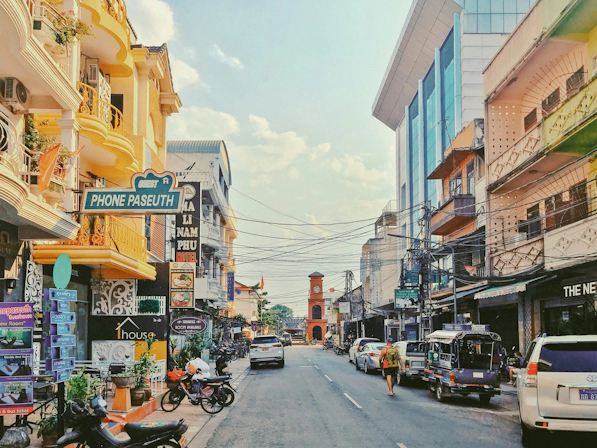
Understanding Laos’s cannabis situation requires context from the broader Southeast Asian region. Every neighboring country has a different approach, and the landscape has shifted significantly in recent years.
Thailand
Thailand made history in 2022 by becoming the first Southeast Asian country to decriminalize cannabis, triggering a boom in cannabis dispensaries and tourism. That era ended in June 2025 when the Thai government reclassified cannabis flower as a controlled herb, effectively restricting access to medical channels. Thousands of dispensaries closed. Legal purchase now requires a medical prescription from a licensed Thai practitioner. Herb’s Thailand guide covers the current rules in detail.
The Thailand reversal is significant because it removed the region’s only legal recreational cannabis market.
Cambodia
Cannabis is illegal in Cambodia, but enforcement for personal use is minimal. In many parts of the country, authorities turn a blind eye to small-scale cannabis use, particularly in tourist areas. “Happy pizza” restaurants exist in Phnom Penh and Siem Reap, similar to those in Vang Vieng, but the police dynamic is generally described as less aggressive. That said, formal penalties exist and can be applied, particularly during crackdowns. Herb’s Cambodia guide has the full breakdown.
Vietnam
Cannabis is illegal in Vietnam with severe penalties: possession of 1 to 500 grams can result in 2 to 7 years in prison, and trafficking over 600 grams can carry the death penalty. While some cannabis-themed bars exist in tourist areas, Vietnamese law enforcement actively conducts raids and sting operations targeting tourists. Undercover police frequently patrol popular destinations. Vietnam’s penalties are more severe than Laos’s, and the legal system is less navigable for foreigners.
Myanmar
Cannabis is illegal in Myanmar, and the country’s ongoing political instability makes any drug-related encounter with authorities extremely unpredictable and dangerous.
China (Yunnan Province)
The Regional Picture
Laos: Recreational cannabis is illegal. Enforcement is selective with reported extortion. Tourist risk is very high.
Thailand: Medical only since June 2025. Active enforcement. Tourist risk is moderate.
Cambodia: Illegal but minimal enforcement for personal use. Tourist risk is low to moderate.
Vietnam: Illegal with active raids and stings. Tourist risk is high.
Myanmar: Illegal with unpredictable enforcement. Tourist risk is extreme.
China: Illegal with strict enforcement. Tourist risk is extreme.
The trend across Southeast Asia is toward tighter controls, not looser ones. Thailand’s reversal in 2025 was the clearest signal that the brief window of cannabis liberalization in the region has closed. For destinations where cannabis access is less risky, check Herb’s guides for Bali, India, or Nepal.
How to Buy Weed in Laos Safely: Harm Reduction

Herb
This guide exists to give you complete, accurate information, not to tell you what to do. If you understand the legal risks and still choose to consume cannabis in Laos, these harm reduction principles can reduce (but never eliminate) your exposure.
- Consume only in private. If you eat an edible at a restaurant, finish it there and leave without any cannabis on your person. Public consumption or carrying cannabis on the street is where most police encounters reportedly happen.
- Never carry cannabis between locations. The walk from a restaurant to your guesthouse with cannabis in your pocket is described as the highest-risk moment. According to traveler reports, police know the routes tourists take from happy menu establishments and patrol them accordingly.
- Never buy from strangers who approach you. Unsolicited offers, particularly from other foreigners, are described as the classic setup for entrapment scams in traveler accounts. If someone you just met offers to help you find weed, decline.
- Keep cash accessible but separate. If you are stopped by police, having cash readily available may resolve the situation faster according to traveler reports. Keep your main funds and cards separate from a smaller amount you can access if needed.
- Know your embassy’s number. Save the phone number for your country’s embassy or consulate in Laos before you need it. Having this information immediately accessible can help if a situation escalates.
- Do not cross borders with cannabis. This cannot be stated strongly enough. Transporting cannabis across any of Laos’s international borders (Thailand, Cambodia, Vietnam, China, Myanmar) transforms a minor possession offense into international drug trafficking, which carries extreme penalties including death in some jurisdictions.
- Be cautious with edibles dosing. Happy menu items have no standardized dosing and may contain unknown substances. Start with the smallest option (“a little bit happy”) and wait at least 90 minutes before considering more. Being incapacitated in a foreign country where police reportedly target tourists is a genuinely dangerous situation.
- Avoid mixing substances. Some happy menus may include mushrooms, opium, or other substances alongside or instead of cannabis. Mixing drugs in an uncontrolled environment with no medical support nearby is a risk multiplier.
Common Mistakes Tourists Make

LEO VISIONS
Anyone learning how to buy weed in Laos should understand these patterns that consistently lead to the worst outcomes for travelers.
- Assuming visibility equals legality. The fact that restaurants openly sell drug-laced food does not mean it is legal. It means police allow it because, according to traveler reports, the resulting encounters generate revenue. Every happy menu restaurant exists within a system that reportedly profits from your arrest.
- Trusting new friends with drug connections. The reported entrapment scam relies on your willingness to trust someone you just met. Seasoned travelers in Laos understand that unsolicited drug offers from strangers are red flags, not friendly gestures.
- Carrying cannabis on the street. Walking between a restaurant and your accommodation with cannabis in your bag or pocket is described as the single most common way tourists get caught. Police reportedly know which restaurants serve happy menus and patrol the surrounding streets.
- Trying to bring cannabis across borders. Every year, travelers are arrested at the Thai-Lao Friendship Bridge, at Wattay International Airport, and at land border crossings with Cambodia and Vietnam. Cross-border transport converts a local drug offense into an international trafficking charge.
- Arguing with police. If you are stopped by police in Laos, confrontation makes the situation worse. Demanding to speak to your embassy, threatening legal action, or refusing to cooperate does not improve your position. According to traveler reports, it typically increases the demanded payment or triggers formal charges.
- Posting on social media. Photographing or posting about cannabis use in Laos creates permanent evidence of a criminal act. This evidence can be used against you during an encounter with police, and it can create legal complications if you travel to other strict jurisdictions in the region.
- Underestimating edible potency. Unregulated edibles with no dosing information, and potentially containing unknown substances, can be dramatically stronger than expected. Being visibly intoxicated in public makes you a target for both police and opportunistic theft.
The Bottom Line

Herb
Cannabis is genuinely available in tourist areas of Laos, that part of every backpacker rumor is true. What those rumors usually leave out is the systematic exploitation that reportedly follows. The happy menus exist not in spite of police awareness, but, according to traveler accounts, because of it. They are described as part of an informal economy where restaurants sell cheap drug-laced food and police extract expensive cash payments from the tourists who buy it.
The legal framework is unambiguous: recreational marijuana is a criminal offense in Laos with penalties that vary by substance form, weight, and context but can include years of imprisonment. The cultural history is rich: cannabis has been part of Lao life for generations, from Hmong hemp weaving to lowland traditional use. The modern reality sits uncomfortably between these two facts, with tourists caught in the middle.
If you are traveling through Southeast Asia and cannabis access matters to you, the honest assessment is that no country in the region currently offers safe, legal recreational access. Thailand’s brief liberalization ended in 2025. Cambodia tolerates use but does not legalize it. Laos criminalizes it while reportedly profiting from its visibility. The safest approach is to understand exactly what you are getting into before you make any decisions.
For country-by-country cannabis laws, strain information, and travel guides, explore Herb’s guides and browse Herb deals. We cover dozens of destinations with the same level of detail so you always know where you stand.
Frequently Asked Questions
Is weed legal in Laos?
No. Recreational marijuana is illegal in Laos. Possession, use, sale, and cultivation are all prohibited under the Law on Narcotics (2007) and the Penal Code (2017). There is no medical cannabis program, no decriminalization provision, and no exception for tourists. Laos did authorize regulated hemp activities in 2022, but that applies only to licensed commercial operators and does not affect the recreational prohibition.
What is a happy menu in Vang Vieng?
A happy menu is a separate menu offered by some restaurants in Vang Vieng (and occasionally other tourist areas) that lists food and drinks that may be laced with cannabis, magic mushrooms, opiates, or other unknown substances. Official travel advisories warn that the actual contents may not match what is described. Items are labeled “happy” and customers choose intensity levels from “a little bit happy” to “very happy.”
What happens if you get caught with weed in Laos?
According to widely reported traveler accounts, the most common outcome for tourists is an informal police cash extraction: your passport may be confiscated, you are told you face prison time, and you are given the option to pay a substantial sum to resolve the situation. This is not an official legal process. In some cases, tourists reportedly face formal charges, which can result in prison sentences that vary by substance form and quantity under Lao law.
Can you go to jail for weed in Laos?
Yes. Lao drug penalties vary sharply by substance form and amount. Dried marijuana offenses can carry sentences of 3 to 10 years depending on quantity and context. THC/hashish offenses carry their own separate penalty scale, with sentences potentially reaching life imprisonment for large quantities. Laos retains the death penalty for serious drug offenses generally.
Is it safe to eat a happy pizza in Vang Vieng?
It is not “safe” in any legal or health sense. Legally, you are committing a criminal offense that can result in arrest and imprisonment. The dosing is completely unregulated, and official advisories warn that “happy” items may contain opiates or other unknown substances. Police reportedly target tourists leaving happy menu establishments.
Has Laos legalized hemp?
In 2022, Laos approved regulated hemp activities including cultivation, extraction, processing, and trade for licensed commercial operators under Decision No. 3789/MOH. This applies to industrial hemp (Cannabis sativa L.) under strict government oversight and has no bearing on recreational cannabis, which remains a criminal offense.
How does Laos compare to Thailand for cannabis?
Thailand decriminalized cannabis in 2022 but restricted access to medical channels effective June 2025. Both countries now prohibit recreational cannabis. Thailand has a functioning medical program; Laos does not.
Herb Recommended Products:
READ MORE