gautam krishnan
How to Buy Weed in Tijuana: The Border City’s Cannabis Reality 2026
The 2021 Supreme Court ruling did not decriminalize marijuana, and COFEPRIS said so again in July 2026. Here is what Mexican law actually allows in Tijuana.

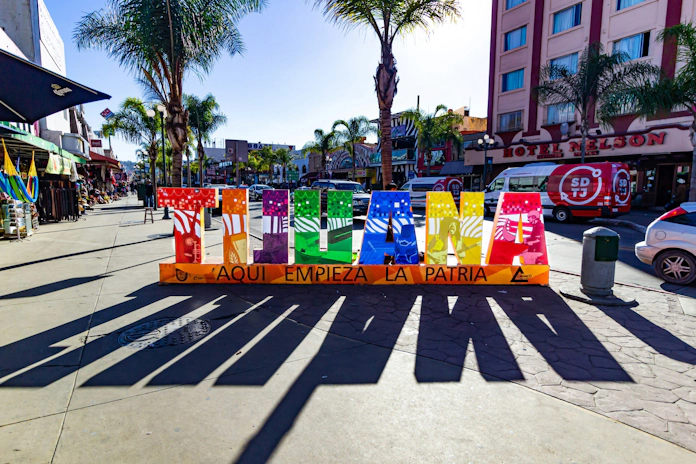
If you are crossing the border from California expecting to find legal dispensaries stocked with tested products, prepare for a reality check. Tijuana has no licensed recreational cannabis dispensaries. Mexico’s June 2021 Supreme Court action removed the absolute prohibition on adult recreational self-consumption, but it never authorized commercial sales. That distinction confuses thousands of visitors who assume the ruling means cannabis is available for purchase. It does not.
The confusion runs deeper than most coverage admits. The 2021 decision is routinely described as decriminalizing possession, and that description is wrong. COFEPRIS issued a fresh clarification on July 7, 2026, stating explicitly that the Supreme Court did not rule on marijuana decriminalization and that applicable conduct remains regulated under existing law. Any guide telling you otherwise is building advice on a false premise.
Below you will find what the 2021 declaration actually did, why the widely circulated 28-gram figure does not exist in Mexican law, how the medical and industrial frameworks differ from the recreational one, and what the border rules mean for a Californian.
Key Takeaways
- Tijuana has no licensed recreational cannabis dispensaries, and Mexico has not established an adult-use retail market anywhere in the country.
- The 2021 Supreme Court declaration invalidated parts of the absolute prohibition on adult recreational self-consumption. It did not generally legalize or decriminalize marijuana, and COFEPRIS reaffirmed this on July 7, 2026.
- There is no 28-gram federal allowance. Article 479 of the General Health Law continues to list 5 grams as the statutory quantity in its immediate personal-consumption table.
- In February 2026, the Supreme Court held in Amparo en Revisión 132/2025 that exceeding 5 grams cannot automatically require criminalization where the cannabis is genuinely for personal consumption, while expressly stating this does not decriminalize possession generally.
- A sub-1% THC label does not make a CBD product lawful. COFEPRIS revoked its 2018 commercialization guidelines in 2019 and issued a February 2025 warning naming seven brands as illegally marketed without authorization.
- Mexico regulates cannabis medicines under a prescription-based pharmaceutical framework with separate provisions for international travelers carrying such medicines.
- Importing marijuana into the United States generally violates federal controlled-substance law under 21 U.S.C. §952 regardless of California law.
Is Weed Legal in Tijuana?

sho
No, not in the way most Americans understand the term. There is no licensed recreational retail market in Tijuana or anywhere else in Mexico.
What the Supreme Court did in June 2021, through the Declaratoria General de Inconstitucionalidad 1/2018, was to invalidate portions of Mexico’s absolute administrative prohibition on adult recreational self-consumption and establish a route for COFEPRIS authorization covering personal activities such as cultivation, preparation, possession, transport, and consumption. The Court itself described the decision as eliminating the absolute prohibition on recreational self-consumption. It did not create a commercial market.
What the framework does not authorize:
- Commercial sale, supply, transfer, or distribution of recreational cannabis. COFEPRIS confirms that self-consumption authorizations confer no right to commercialize.
- Licensed dispensary operations for adult use.
- Consumption affecting third parties, including in public places where nonconsenting people are present.
- A general decriminalization of possession. This is the point COFEPRIS restated in July 2026.
What operates separately:
- Regulated medical cannabis medicines under Mexico’s January 2021 regulation, dispensed through authorized pharmacies and drugstores on prescription.
- Certain industrial cannabis-derived products. Article 245 of the General Health Law provides that products containing cannabis derivatives at 1% THC or less with broad industrial uses may be commercialized, exported, and imported if they comply with sanitary regulations.
So the accurate framing is narrower than “all cannabis purchases are illegal” and far narrower than “possession is decriminalized.” Purchasing recreational marijuana through an adult-use retail market remains unauthorized, while regulated medicines and qualifying industrial derivatives sit under their own rules.
The Quantity Question: There Is No 28-Gram Rule

HERB
This is the correction most likely to matter to a reader deciding on the border or on Avenida Revolución.
- The statutory figure is 5 grams. Article 479 of the General Health Law continues to list 5 grams of cannabis as the maximum quantity in its table for strict and immediate personal consumption.
- The 28-gram figure has no basis. The 2021 Supreme Court decision did not establish a federal 28-gram decriminalized allowance. Guides citing that number are importing a figure from legislative proposals or from other jurisdictions.
- The 5-gram figure is not an automatic cutoff either. In Amparo en Revisión 132/2025, decided February 2026, the Court held that exceeding the fixed 5-gram amount cannot automatically require criminalization when the cannabis is genuinely for personal consumption, and that courts must evaluate the circumstances of the particular case. The Court expressly said this does not decriminalize cannabis possession generally.
- What this means practically. Neither number functions as a safe harbor. Possession remains subject to Mexico’s health and criminal laws, with individualized assessment rather than a mechanical threshold test.
On home cultivation, the recreational-use decisions allow COFEPRIS to authorize activities including sowing, cultivation, harvesting, preparation, possession, transport, and personal consumption for authorized adults. Widely repeated plant-count limits such as six plants come from legislative proposals rather than enacted law, so do not treat any specific number as an established statutory allowance.
CBD and Hemp Products: Why the 1% Figure Is Not a Green Light
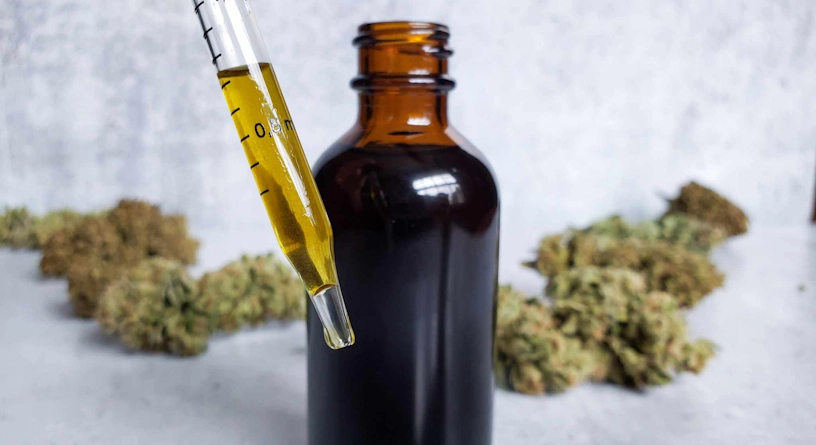
The sub-1% THC shorthand does more damage in Mexico than almost anywhere, because it sounds like a rule and functions like a marketing claim.
- What Article 245 actually permits. Cannabis-derived products containing no more than 1% THC may be commercialized, imported, or exported when they qualify for permitted industrial uses and meet applicable sanitary requirements. That is a conditional pathway, not a blanket authorization for consumer CBD retail.
- COFEPRIS pulled back its own guidance. The agency revoked its 2018 cannabis commercialization guidelines in 2019 after concluding they exceeded the governing law by facilitating non-medical and non-scientific cannabis-derived products.
- Products can be on shelves and still be unauthorized. In a February 2025 warning, COFEPRIS stated that foods, confectionery, supplements, cosmetics, and beverages marketed with CBD, hemp extract or oil, or THC under specified brands lacked authorization and were being illegally marketed, and that ingredients and manufacturing, storage, and transport conditions could not be verified.
- The brands identified. COFEPRIS named PARADISE, DOCTOR CBD, JOIN’T ME, CBDFX, TRYP, CRAZY EATS, and KANABI in that illegal-marketing and health-risk warning.
On verifying products, a certificate of analysis, lot number, business registration, or factura does not establish COFEPRIS authorization or lawful cannabis-derived product status. Those are ordinary commercial documents. What matters is whether the product carries any required COFEPRIS sanitary registration or authorization applicable to its category, which is checked through the agency’s official systems rather than at the counter. The 2025 warning demonstrates precisely why commercial availability proves nothing about regulatory status.
For the underlying science on what these compounds do, Herb’s THC and CBD guide is a useful reference.
Medical Cannabis in Mexico: The Actual Framework

TESTEUR
Mexico’s medical framework is real, and it is frequently described inaccurately in travel content.
- It is a pharmaceutical prescription system. The January 12, 2021 regulation establishes rules for Medicamentos de Cannabis. Authorized professionals use special prescriptions, and possession of such medicine may be demonstrated through the prescription or the corresponding invoice.
- Dispensing runs through pharmacies. Authorized pharmacies, drugstores, and related establishments may supply registered cannabis medicines subject to prescription and recordkeeping requirements. There is no dispensary model.
- Import authorization is a separate question. A prior COFEPRIS permit applies in specified circumstances when cannabis medicines are being imported for personal medical use.
- International travelers are addressed directly. The regulation specifically recognizes international passengers, including both Mexican residents and people residing abroad, who carry cannabis medicines for treatment, and provides documentation rules for them.
Claims that the medical route categorically requires Mexican residency documentation are not supported by the regulation, which contemplates travelers residing abroad. That said, this is a pharmaceutical pathway for patients with prescribed medicines, not a workaround for recreational access, and anyone intending to rely on it should confirm current documentation and permit requirements with COFEPRIS before travel.
Crossing the Border: What Californians Get Wrong
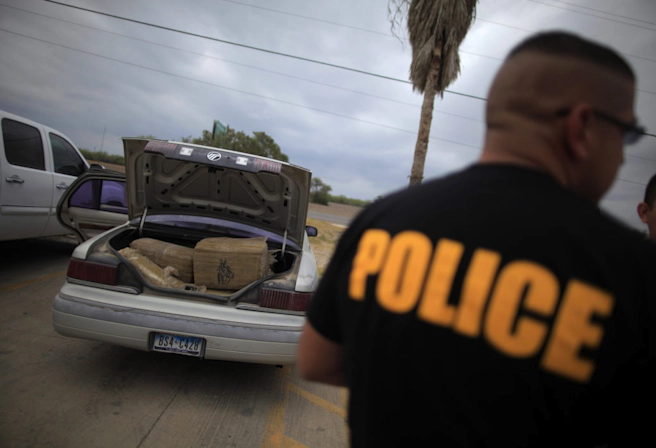
Photo courtesy of PBS
This is the single most consequential section for a San Diego day-tripper.
Northbound into the United States:
- Federal import law governs. Importation of controlled substances is generally prohibited under 21 U.S.C. §952, and knowing or intentional unlawful importation can be prosecuted under §960.
- California law is irrelevant at the border. State legalization does not authorize importing marijuana from Mexico into the United States, and Customs and Border Protection enforces federal law exclusively.
- San Ysidro is heavily screened. It is among the world’s busiest land crossings.
- Consequences can extend beyond fines, including criminal charges, records affecting employment and travel, vehicle seizure, and immigration consequences for non-citizens.
Southbound into Mexico:
- Unauthorized cannabis import violates Mexican law. A California dispensary receipt carries no legal standing at Mexican customs.
- Prescribed medicines follow a different track. Mexico’s medical-cannabis regulations provide for personal medical import permits and documentation for international travelers carrying cannabis medicines. That is a regulated exception, not a recreational one.
The bottom line: do not carry recreational marijuana across the US-Mexico border in either direction. Limited medical or other authorized exceptions exist within both legal systems and should not be confused with recreational cannabis. Herb’s guide to airport security screening covers how comparable checks work in the aviation context.
The Unregulated Market and Personal Safety

Herb
Without a legal retail option, any cannabis obtained in Tijuana comes from an unregulated source.
- No quality assurance. Products carry no testing for potency, pesticides, mold, or contaminants, and no labeling standards apply.
- Legal exposure runs both ways. Purchasing recreational marijuana is not an authorized transaction, and unauthorized supply is separately unlawful.
- Enforcement encounters are unpredictable. Extortion and corruption are documented traveler risks in parts of Mexico and are tracked in current official travel guidance. As a general practice, do not make cash payments without official documentation.
- Situational risk compounds it. Seeking out an unregulated transaction in an unfamiliar city increases vulnerability regardless of the substance involved.
General precautions for visitors:
- Stay in well-trafficked areas during daylight and use registered taxis or rideshare apps rather than street hails.
- Keep valuables secured and avoid displaying expensive items.
- Travel with others where practical and tell someone your plans.
- Do not consume in public, which is outside what any self-consumption authorization covers where nonconsenting third parties are present.
- Know your consular contacts. Use the State Department’s current Mexico contact page to identify the U.S. Consulate General Tijuana’s present numbers, since consular contact details change.
Government Contacts in Tijuana

david nieto
Contact details for regulatory and consular offices shift, and several widely republished numbers are outdated.
- State health regulator. Baja California’s regional metropolitan COEPRIS office is listed by current state-government materials at Calle Hermenegildo Galeana y Avenida Revolución #8133, Zona Centro, Tijuana, B.C. 22000, with 664 608 0075 as the published contact number.
- Federal health authority. COFEPRIS publishes current guidance, authorization procedures, and health warnings through its official portal.
- U.S. consular assistance. Refer to the U.S. Consulate General Tijuana’s current official page for main and after-hours numbers rather than relying on figures republished in travel content.
Verify all of these immediately before travel.
Tijuana vs. Other Nearby Cannabis Destinations
For a Southern California traveler, the comparison that matters most is what sits a short drive north.
Regulated adult-use retail:
| Destination | Legal Status | Traveler Access |
|---|---|---|
California | Adult use legalized | Licensed retail with tested products and state consumer protections; product cannot lawfully cross the international border |
Nevada | Adult use legalized | Licensed retail; public consumption restricted, with licensed consumption lounges in some jurisdictions |
Arizona | Adult use legalized | Licensed retail available to adults; possession limits apply |
No adult-use retail market:
| Destination | Legal Status | Traveler Access |
|---|---|---|
Tijuana and Mexico | No licensed adult-use retail | Self-consumption authorization framework only; no lawful purchase pathway; medical medicines by prescription |
Texas | Prohibited for adult use | Limited medical program; possession remains a criminal matter |
Idaho | Prohibited | No medical or adult-use framework |
The practical implication for a border visitor is uncomfortable but simple: the legal market is behind you, and nothing you buy there can lawfully come back with you. Herb’s legalization news tracks how these frameworks change.
Cannabis Culture and Local Context
Tijuana occupies an unusual cultural position, shaped by proximity to a mature legal market across the fence.
- Exposure without access. Residents have extensive familiarity with California cannabis culture through media, travel, and family ties, without a corresponding domestic retail framework.
- Generational variation. Attitudes differ substantially across age groups, as they do in most jurisdictions undergoing policy change.
- Private rather than public. Consumption, where it occurs, tends toward private settings, and public use has not been normalized by the self-consumption jurisprudence.
- Visible does not mean representative. Any tourist-facing street activity represents a narrow segment rather than how the city generally operates.
Where Mexican Policy Stands

chris kursikowski
Mexico’s Congress has not enacted comprehensive adult-use legislation that would produce a nationwide licensed retail framework, despite Supreme Court deadlines and repeated legislative proposals across multiple sessions.
What can be stated with confidence as of September 2026:
- COFEPRIS continues to recognize and process recreational self-consumption authorizations.
- Those authorizations still exclude commercialization, supply, transfer, and distribution.
- The medical framework operates under the 2021 regulation through prescriptions and authorized pharmacies.
- No adult-use retail framework has been implemented at the federal level.
Specific bills and their status change frequently, so verify current legislative activity through Cámara de Diputados and Senado records rather than relying on summaries of proposals.
Why Herb is Your Go-To Resource for Cannabis Education
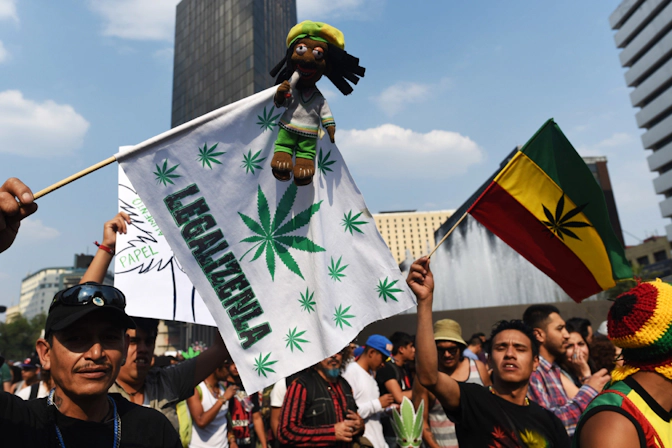
Photo courtesy of Rolling Stone
Border-city cannabis content is some of the least reliable material online. A constitutional ruling gets reported as decriminalization, a figure from a shelved bill becomes a possession limit, and a THC percentage from an industrial-use provision turns into a retail legality test. All three of those errors appear in most Tijuana guides.
Herb works from statutory text, court decisions, and regulator publications rather than recycled summaries. Herb reports a community of more than 14 million across its platforms.
- Strain guides. Explore detailed strain profiles covering effects, genetics, and characteristics.
- Educational content. Access how-to guides and learning resources spanning consumption methods, cannabis science, and legal considerations.
- Product education. Browse product information covering edibles, vapes, pre-rolls, beverages, and accessories available in legal markets.
- Legalization news. Follow policy developments across Mexico, the United States, and beyond.
- Newsletter. Subscribe to the Herb newsletter for ongoing coverage.
Final Verdict

Herb
Tijuana is a genuinely interesting city, and cannabis access is not part of what it offers a visitor. Here is how the decision breaks down.
- Expecting dispensaries? There are none. Mexico has not implemented an adult-use retail framework, and the 2021 ruling did not create one.
- Relying on “decriminalized”? That framing is wrong. COFEPRIS stated in July 2026 that the Supreme Court did not rule on marijuana decriminalization and that applicable conduct remains regulated.
- Working from a 28-gram figure? It does not exist in Mexican law. Article 479 lists 5 grams, and the February 2026 ruling made even that figure a matter for case-by-case evaluation rather than an automatic cutoff in either direction.
- Shopping for CBD? A sub-1% THC label is not authorization. COFEPRIS revoked its own 2018 guidelines in 2019 and named seven brands in a 2025 illegal-marketing warning.
- Thinking about the crossing? Do not. Importing marijuana into the United States generally violates 21 U.S.C. §952 regardless of California law, and CBP enforces federal law exclusively at San Ysidro.
- A patient with prescribed cannabis medicine? That is a separate regulated track with its own permit and documentation rules, including provisions for travelers residing abroad. Confirm requirements with COFEPRIS before you go.
Frequently Asked Questions
Is weed legal in Tijuana?
No. There is no licensed recreational cannabis retail market in Tijuana or anywhere in Mexico. The June 2021 Declaratoria General de Inconstitucionalidad 1/2018 invalidated parts of the absolute prohibition on adult recreational self-consumption and created a route for COFEPRIS authorization covering personal activities such as cultivation, preparation, possession, transport, and consumption. It did not authorize commerce. COFEPRIS issued a clarification on July 7, 2026 stating explicitly that the Supreme Court did not rule on marijuana decriminalization and that applicable conduct remains regulated under existing law.
Is 28 grams the legal possession limit in Mexico?
No. There is no federal 28-gram decriminalized allowance. Article 479 of the General Health Law continues to list 5 grams as the statutory quantity in its table for strict and immediate personal consumption. In February 2026, the Supreme Court held in Amparo en Revisión 132/2025 that exceeding the fixed 5-gram amount cannot automatically require criminalization where the cannabis is genuinely for personal consumption, requiring courts to evaluate the circumstances of the case. The Court expressly stated that this ruling does not decriminalize cannabis possession generally, so neither figure operates as a safe harbor.
Can I bring cannabis across the US-Mexico border?
Not recreational cannabis, in either direction. Importation of controlled substances into the United States is generally prohibited under 21 U.S.C. §952, with knowing or intentional unlawful importation prosecutable under §960, and California’s legalization provides no protection at an international border where Customs and Border Protection enforces federal law exclusively. Importing cannabis into Mexico without authorization separately violates Mexican law. Limited exceptions exist for regulated medicines under Mexico’s medical-cannabis rules, including provisions for international travelers carrying prescribed cannabis medicines, and those should not be confused with recreational cannabis.
Is CBD legal to buy in Tijuana?
A sub-1% THC label does not establish legality. Article 245 of the General Health Law permits cannabis-derived products containing no more than 1% THC to be commercialized, imported, or exported when they qualify for permitted industrial uses and meet applicable sanitary requirements, which is a conditional pathway rather than blanket authorization. COFEPRIS revoked its 2018 commercialization guidelines in 2019 for exceeding the governing law, and in February 2025 warned that foods, confectionery, supplements, cosmetics, and beverages marketed with CBD, hemp extract or oil, or THC under PARADISE, DOCTOR CBD, JOIN’T ME, CBDFX, TRYP, CRAZY EATS, and KANABI lacked authorization and were being illegally marketed. A certificate of analysis or receipt is not a substitute for COFEPRIS authorization.
Can tourists access medical cannabis in Mexico?
Mexico regulates cannabis medicines under a prescription-based pharmaceutical framework established by the January 12, 2021 regulation. Authorized professionals issue special prescriptions, possession may be demonstrated through the prescription or corresponding invoice, and authorized pharmacies and drugstores supply registered cannabis medicines subject to prescription and recordkeeping requirements. A separate prior COFEPRIS permit applies in specified circumstances for importing cannabis medicines for personal medical use, and the regulation specifically addresses international passengers, including people residing abroad, carrying such medicines with documentation rules for them. This is a pharmaceutical pathway for prescribed patients rather than a route to recreational access.
This article is for informational purposes only and does not constitute legal advice. Cannabis laws vary by jurisdiction and are subject to change. Always verify current regulations with official sources before traveling. Herb does not encourage the purchase or use of cannabis in jurisdictions where it is illegal.
Herb Recommended Products:
READ MORE