
Nathan Anderson
420 Pet Safety: How to Keep Your Pets Safe On 4/20
Your dog doesn't need to be part of the rotation. Here's everything you need to know about cannabis and pets, from prevention tips to what to do if something goes wrong.

What does weed do to cats, dogs, and other pets? It’s a question more people are asking as cannabis becomes a bigger part of everyday life. And it’s especially relevant around 4/20, when there’s more flower, edibles, concentrates, and smoke in the air than usual.
The short answer: THC is toxic to pets. Their brains have significantly more cannabinoid receptors than ours, which means even a small amount of cannabis can produce intense and stressful effects in cats and dogs.
This isn’t about being anti-weed. Herb is the last place you’ll find that energy. It’s about being a responsible pet owner on the one day of the year when cannabis products are everywhere—on coffee tables, in open bags, passed between friends, and left within paw’s reach.
The ASPCA’s Animal Poison Control Center has reported a 765% increase in marijuana-related pet calls over a 10-year period, and most of those incidents are preventable.
Worth noting: some cannabis products are specifically designed for pets, typically CBD-based formulations that don’t contain THC. Those can be perfectly safe when dosed correctly and purchased from reputable brands. But THC products like flower, edibles, concentrates, and vapes are a completely different story for your animals. So, what does weed do to cats and dogs? Understanding that is the first step toward keeping them safe.
Here’s how to protect your pets this 4/20 and beyond.
Key Takeaways

raquel pedrotti
- THC is toxic to cats and dogs. Pets have more cannabinoid receptors in their brains than humans, making them far more sensitive to cannabis
- If your dog ate weed or your cat ingested an edible, call your vet or the ASPCA Animal Poison Control Center (888-426-4435) immediately, don’t try to sober them up with home remedies
- Symptoms of dogs cannabis poisoning include stumbling, lethargy, dilated pupils, urinary incontinence, vomiting, and tremors, usually appearing within 30–60 minutes
- Cat eating weed symptoms are similar but can also include extreme agitation, aggression, fear, and alternating states of apathy
- Prevention is the best strategy: store all cannabis products in sealed, elevated containers, create pet-free smoking zones, and be mindful of what guests bring into your home
- Cannabis intoxication in pets is rarely fatal, but high-potency edibles and concentrates carry the most risk—always seek veterinary care when in doubt
How to Keep Your Pets Safe From Weed During 4/20 and Beyond

jamie street
Keep Cannabis Products Sealed Shut (Yes, Even Edibles)
Edibles are the biggest risk because they smell and taste like regular food to your pets. A bag of THC gummies left on a side table is indistinguishable from candy to a curious dog. The same goes for cannabutter, infused brownies, or concentrate containers with residue.
General best practices:
- Store all cannabis products like flower, edibles, vapes, concentrates, and pre-rolls in airtight, child-proof containers
- Keep containers in high cabinets or behind closed doors, out of your pet’s reach
- Don’t leave grinders, rolling trays, or open jars on counters or coffee tables
- Treat cannabis products with the same care you’d give chocolate or medications
4/20 specifically: When you’ve got friends over, the risk multiplies. People set things down, leave bags open, and forget where they put their edibles. Designate a single storage spot for all cannabis products—a closed cabinet or a specific room—and make it clear to guests that nothing stays out in the open. Your dog doesn’t know the difference between a gummy bear and a THC gummy bear.
Keep Pets Away From All Smoke and Vapor
Can pets get high from weed smoke? Yes. Secondhand smoke and vapor can expose your pets to THC, and is weed smoke bad for dogs and cats? The answer is absolutely yes, especially in enclosed spaces where smoke tends to concentrate.
Indoor sessions: If you’re smoking or vaping inside, do it in a room where your pets aren’t present. Keep the door closed, open windows for ventilation, and give the room time to air out before letting animals back in. Smoke and vapor particles can linger long after you think the air has cleared.
Outdoor sessions: Even outside, smoke doesn’t disappear instantly. If you’re on a patio or deck with your pet nearby, keep them at a reasonable distance, especially downwind. In larger outdoor spaces, the risk is lower, but pets sitting directly next to a smoke circle are still getting exposure.
4/20 specifically: Parties and group sessions mean more smoke in a smaller timeframe. Set up a designated pet-free smoking area and give your animals their own comfortable space away from the action. A closed bedroom with water, their bed, and some background noise works well.
Be Aware of What Others Bring Into Your Home
You can control your own stash, but you can’t always control what guests walk in with. Loose edibles in a jacket pocket, a vape pen left on the couch, a half-smoked joint on the porch railing—all of it is fair game for a curious pet.
General best practices:
- Let guests know you have pets and ask them to keep all products stored
- Set up a designated “stash spot” where guests can leave their cannabis products out of pet reach
- Create a pet-free zone where the session happens, so your animals aren’t circling the room looking for dropped crumbs
4/20 specifically: This is the day when people bring their best stuff and don’t always think about where it ends up. A quick heads-up at the start of the party goes a long way: “Hey, we’ve got a dog. Please keep your stuff sealed and off the floor.” Nobody is going to be offended by that.
Know Emergency Contacts Before You Need Them
Don’t wait until there’s a problem to figure out who to call. Take a screenshot or save these numbers in your phone now:
- Your veterinarian’s direct line and after-hours emergency number
- ASPCA Animal Poison Control Center: (888) 426-4435
- Pet Poison Helpline: (855) 764-7661
Both hotlines charge a consultation fee, but they can provide immediate guidance specific to your pet’s size, the substance involved, and the amount consumed. Having these numbers ready means you’re not panic-Googling “what to do if my dog ate weed” at midnight.
What Does Weed Do to Cats, Dogs, and Other Furry Friends?

So what does weed do to cats and dogs on a biological level? THC interacts with the endocannabinoid system through CB1 receptors, which are concentrated in the brain. Dogs and cats have more CB1 receptors than humans, which means THC affects them more intensely and for longer. What might feel like a mild buzz to you can be a terrifying, disorienting experience for your pet.
Is marijuana bad for cats? Yes. Is marijuana bad for dogs? Also yes. While cannabis intoxication is rarely fatal on its own, it can cause serious distress and physical symptoms. And when combined with secondary toxins (like chocolate in a pot brownie), the situation can become dangerous fast.
Symptoms of a Dog Eating Weed or Being High
According to the American Kennel Club, dog eating weed symptoms usually appear within 30 minutes to an hour after ingestion. The most common symptoms of dog eating weed include:
- Stumbling, crossing feet, walking like they’re drunk (ataxia)—88% of dogs in a Colorado study presented with this
- Dull behavior and lethargy
- Dilated pupils and flinching at fast movements
- Urinary incontinence—roughly half of affected dogs lose bladder control
- Vomiting
- Tremors and shaking
- Agitation or, in severe cases, comatose states
Dogs eating weed is more commonly reported than cats because dogs are more likely to eat edibles and other scented products. The symptoms of dogs cannabis poisoning can last 24–72 hours, depending on the dose and the dog’s size.
Symptoms of a Cat Eating Weed or Being High
Cat eating weed symptoms overlap with dogs but carry some notable differences. According to PetMD, cats may experience:
- Uncoordinated, wobbly movements (ataxia)
- Extreme lethargy or alternating between apathy and agitation
- Dilated pupils
- Slower-than-normal heart rate
- Vomiting and drooling
- Aggression, fear, and paranoia—the “high” can be genuinely terrifying for cats
- Loud vocalizing (meowing, hissing)
What does weed do to cats that makes it so distressing? Cats have a higher concentration of CB1 receptors, and THC binds to those receptors in ways that can cause intense fear and disorientation rather than relaxation. A published case study in Acta Veterinaria Scandinavica documented a cat exposed to marijuana smoke that exhibited psychomotor agitation, aggression, and alternating states of agitation and apathy over a 14-day hospitalization.
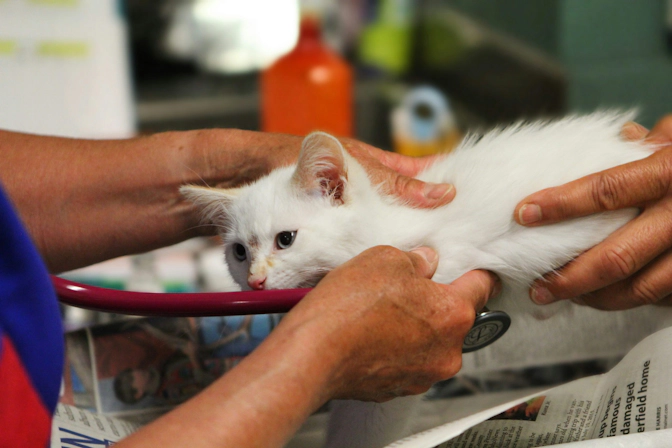
What to Do If You Suspect Your Cat or Dog Is High
judy beth morris
If you’re wondering what to do if your cat eats weed or what to do if your dog ate weed, here are the immediate steps to follow.
1. Call Your Vet and/or Poison Hotline Immediately
Don’t wait to see if symptoms get worse. Contact your vet, the ASPCA Animal Poison Control Center (888-426-4435), or the Pet Poison Helpline (855-764-7661). Be honest about what your pet was exposed to. Vets are not going to report you. Withholding information makes it harder for them to provide the right treatment.
2. Do Not Try to "Sober Them Up"
If you’re searching “my dog ate weed how do I sober him up”—stop right there. There is no way to sober a pet up at home, and attempting to do so can make things worse. Do not:
- Force them to drink water (they may aspirate it)
- Induce vomiting at home without vet guidance (cannabis has anti-emetic properties that complicate this, and aspiration is a risk)
- Give them any “home remedies” like milk, coffee, or activated charcoal without professional instruction
- Try to “walk it off” or stimulate them into alertness
Follow the advice of your vet. In most mild cases, dogs cannabis poisoning can be monitored at home with supportive care. More severe cases may require IV fluids, anti-nausea medication, temperature regulation, or intralipid therapy to help remove THC from the system faster.
3. Monitor Symptoms Closely
Keep track of what symptoms appear and when. Note whether symptoms are getting better or worse, and relay this information to your vet. Common monitoring points include alertness level, coordination, breathing rate, heart rate, body temperature, and whether they’re urinating or vomiting.
4. Provide a Safe, Calm Environment
While your pet is experiencing the effects, keep them in a quiet, dimly lit room with familiar bedding. Minimize noise, sudden movements, and other stimulation. If they’re a cat, avoid handling them excessively. An intoxicated cat in a state of fear or aggression may bite or scratch. Place water nearby but don’t force them to drink. Most pets recover fully within 24–72 hours with proper care.

erik jan leusink
Frequently Asked Questions
Is weed toxic to dogs and cats?
Yes. THC, the psychoactive compound in cannabis, is toxic to both dogs and cats. Their brains have a higher density of cannabinoid receptors than humans, making them far more sensitive to its effects.
Is cannabis poisonous for pets?
THC-containing cannabis products can cause toxicity in pets. CBD products designed for animals are generally safe when dosed appropriately, but any product containing THC poses a risk.
What happens if a cat or dog eats weed?
Symptoms typically appear within 30–60 minutes and can include stumbling, lethargy, dilated pupils, vomiting, urinary incontinence, tremors, and agitation. In cats, fear, aggression, and paranoia are also common. Effects can last 24–72 hours.
Can cats or dogs get high off weed smoke?
Yes, can pets get high from weed smoke is a common question, and the answer is absolutely. Secondhand smoke exposes them to THC, which can cause intoxication symptoms, particularly in enclosed or poorly ventilated spaces.
Can cats or dogs get high from smelling weed but not weed smoke?
Simply smelling unburned cannabis is unlikely to cause intoxication. The THC in raw flower is primarily in its non-active form (THCA), which requires heat to convert to psychoactive THC. However, strong odors may attract curious pets to investigate and potentially eat the product.
Can cats or dogs die from eating weed?
Cannabis intoxication alone is rarely fatal. However, deaths have been reported in cases involving high-concentration medical-grade THC products. The bigger risk is secondary toxins. If a pet eats a pot brownie, they’re also dealing with chocolate toxicity. Always seek veterinary care.
Do dogs like weed?
Dogs don’t seek out cannabis for its effects, but they are attracted to the smell and taste of edibles, which often contain ingredients dogs love—sugar, chocolate, butter, and peanut butter. Dogs are also notorious counter surfers who’ll eat first and ask questions never.
Why are pets attracted to edibles?
Edibles smell and taste like food because they are food—gummies, brownies, cookies, butter. Pets can’t tell the difference between regular treats and infused ones. That’s what makes secure storage so critical.
What should I do if my dog ate weed?
Call your vet or the ASPCA Animal Poison Control Center (888-426-4435) immediately. Don’t induce vomiting or attempt home remedies without professional guidance. Monitor symptoms and follow your vet’s instructions.
What should I do if my cat ate weed?
Same protocol: call your vet immediately. Cats may be more difficult to treat because of their smaller size and heightened sensitivity to THC. Be honest about what happened and follow professional guidance.
How long do weed effects last in pets?
Effects typically last 24–72 hours in pets, significantly longer than in humans. THC is stored in fat tissue and metabolized more slowly by animals. Most pets recover fully with appropriate care.
The Bottom Line

GERARD RICHARD
Cannabis and pets don’t mix. Not because weed is bad, but because THC is genuinely toxic to the animals that share our homes. This 4/20, the best thing you can do for your furry friends is treat your cannabis products the way you’d treat anything else that could hurt them: store them out of reach, smoke in a pet-free zone, and know who to call if something goes wrong.
The overwhelming majority of pet cannabis exposures are preventable. A sealed container, a closed door, and a five-second conversation with your guests are all it takes. Enjoy 4/20 to the fullest, just make sure the only ones getting elevated are the humans in the room.
The Herb Community

HELENA LOPES
For more than a decade, Herb has been a gathering place for people who love, use, and are simply curious about cannabis. What started as a small corner of the internet has grown into a community where millions come to learn, share, and stay connected to cannabis culture.
Here’s what you can tap into at Herb:
- Learning hub and guides that break things down clearly, from growing weed outdoors to understanding how terpenes impact your high
- News hub that spotlights the latest cannabis culture and policy shifts
- Dispensary directory to help you find licensed shops in your local area
- Monthly strain picks, featuring rotating Indica, Sativa, and Hybrid favorites
- Deals page, updated monthly with the best cannabis discounts available online
Stay connected with the Herb community by subscribing to our newsletter, following us on Instagram, and X for the latest in cannabis lifestyle and culture.
Herb Recommended Products:
READ MORE