
Alpas Wellness
Sprayed Weed: What It Is, How to Spot It, and What It Does to You
Something felt off about that last batch? Here's what might be going on… and what's at stake.

Sprayed weed is more common than you think. Maybe the smell was too aggressive for how the bud looked. Maybe the high came on faster than expected and felt closer to panic than relaxation. Maybe the ash came out jet black, and the whole thing just felt wrong.
The unfortunate truth? “Sprayed weed” is a whole spectrum. On one end, you’ve got legal-market operators lightly spraying commercial terpenes onto lower-grade flower to boost marketability. That’s a transparency problem, not a safety one.
On the other end, you’ve got black-market flower laced with synthetic cannabinoids that have been linked to seizures, cardiac events, and even death. This article walks you through the full picture.
What Is Sprayed Weed?
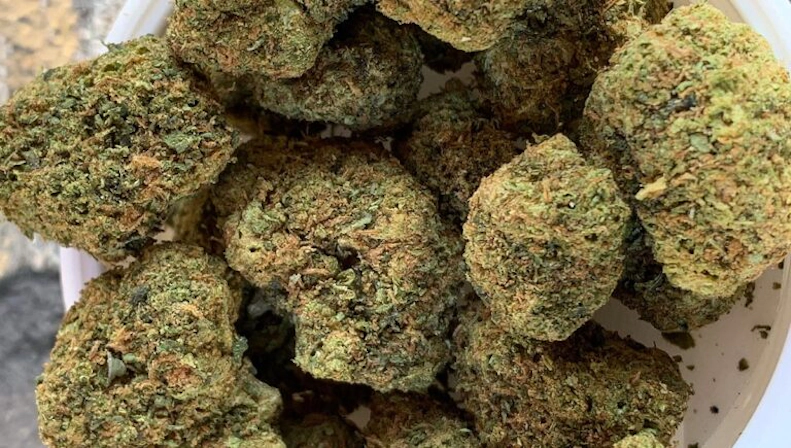
Sprayed weed is exactly what it sounds like: cannabis flower that has been sprayed with a substance after harvest.
Three main reasons sprayed weed exists:
- Weight fraud. Heavy substances such as sugar, syrup, glass particles, or silica beads are added to increase the final product’s weight. More weight, more money.
- Appearance or quality enhancement. Spraying can fake trichome coverage, boost fragrance, or revive stale flower so it looks and smells like a premium strain.
- Potency fraud. This is the dangerous one. Low-THC hemp or mid-grade cannabis gets sprayed with synthetic cannabinoids to create a “high” that the flower couldn’t produce on its own.
What Can Weed Be Sprayed With?
Asahi
Synthetic Cannabinoids
This is the scariest category, and it’s worth starting here so you understand the stakes. Synthetic cannabinoids (sold under names like K2 and Spice) are lab-made compounds originally developed for research. They’re sprayed onto dried plant material (hemp or cheap cannabis) to mimic a high at a fraction of the cost.
They are not the same as THC. They act on the same receptors, but they hit those receptors harder, last longer, and produce wildly unpredictable effects. The CDC has documented cases involving seizures, strokes, cardiac arrhythmias, kidney failure, severe psychosis, and deaths associated with synthetic cannabinoid use.
The National Institute on Drug Abuse notes that overdoses can cause raised blood pressure, reduced blood supply to the heart, kidney damage, and seizures. Even deaths can occur when synthetic opioids like fentanyl get added without the user knowing.
Where does this show up most?
- Unregulated and black-market sources
- Fake branded vape carts
- Anything marketed as “legal weed,” sold in gas stations or corner stores
If something seems like a bargain and the source isn’t licensed, the odds of contamination skyrocket.
Glass and Silica Beads
Fine glass or silica particles are sometimes applied to flower to fake trichome coverage and add weight. The bud looks frostier than it should and weighs more than clean flower of the same size.
Detection: The finger-rub test. Roll a small piece of the flower between your thumb and forefinger. Real trichomes leave a waxy, slightly sticky residue. Glass or silica feels gritty like fine sand. If your fingers feel scratchy or you can see tiny sparkles that don’t match the strain, that’s a flag.
Health risk: Inhaled silica causes lung damage. Repeated exposure can lead to silicosis, which is progressive, incurable, and the reason construction and mining workers wear respirators. Smoking glass-coated flower is not a one-time-and-you’re fine situation.
Sugar and Syrup
Sugar, molasses, or sugar water can be sprayed onto bud to add weight and fake a sweet, dessert-like aroma. This one is more common in lower-tier unregulated products than in licensed dispensary flower.
Detection: Unusually sticky texture that feels different from natural resin. Think tacky or crunchy rather than waxy. The smell tips too sweet, like candy rather than the strain’s actual terpene profile. Sugar-sprayed weed also tends to develop mold fast. You’re essentially creating a sugary, humid environment inside the bag.
Health risk: Acutely lower than glass or synthetics, but far from zero. Combusting sugar produces byproducts you don’t want in your lungs. Plus, mold contamination is a legitimate concern, especially for those who are immunocompromised.

Weedzard
Heavy Metals
Lead, arsenic, cadmium, and mercury can show up in cannabis flower through contaminated soil, water, or grow inputs. But they can also be introduced through sprays, adulterants, or low-quality cutting agents in black-market products.
Detection: There isn’t one you can do at home. Heavy metal contamination is invisible, odorless, and tasteless. The only way to know is through lab testing.
Health risk: This is the slow-burn category. Repeated exposure to heavy metals through inhalation is linked to neurological damage, cardiovascular disease, and kidney problems. Not an immediate emergency, but a long-term health concern worth avoiding.
Synthetic Terpenes (Legal Market Context)
This one is genuinely different from the four above and worth treating as its own conversation. Some licensed operators spray terpenes onto lower-grade flower or biomass. They do this to standardize quality, improve margin, or recreate a specific strain profile.
Detection: Flower that looks mid-tier but smells like a perfume counter. A slightly oily or greasy surface. A scent that reads as “chemically sweet” or “too loud” rather than the complex, layered aroma of untouched flower.
Health risk: This is primarily a transparency and fraud concern rather than an acute health emergency. The long-term effects of inhaling concentrated, post-applied terpenes haven’t been thoroughly studied. But we’re not talking about the same category of risk as synthetic cannabinoids or silica. The real issue is consumer disclosure. You deserve to know if the “top-shelf” flower you paid premium prices for is actually mid-grade bud with a terpene bath.
How To Tell If Weed Is Sprayed

No single test catches every type of contamination, which is why learning how to tell if weed is sprayed is so important. Here’s the full rundown.
Visual Signs
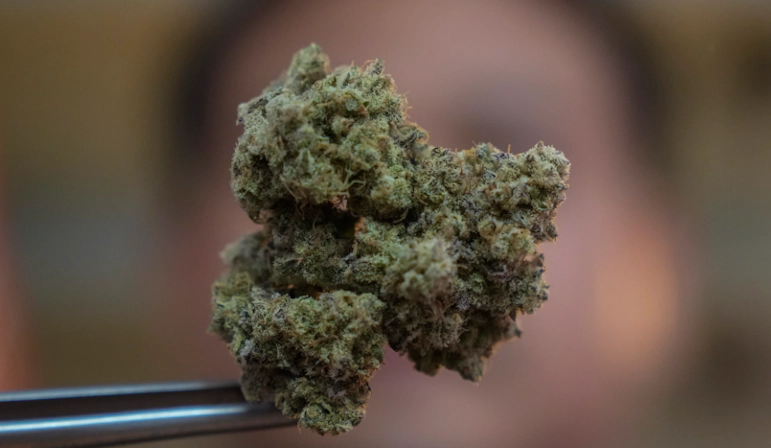
Figuring out how to tell if weed has been sprayed often starts with your eyes. Real trichomes cluster irregularly. They’re denser in some parts of the bud than others, and under magnification, they look like tiny mushroom-capped stalks. Sprayed or dusted flower tends to look too uniform—as if someone shook powdered sugar over the bud and everything got the same dusting.
Things to watch for:
- Unnatural trichome uniformity across the whole bud
- Visible grit, sparkle, or particulate matter that doesn’t match the strain’s expected look
- A greasy or oily sheen that goes beyond normal cannabis resin
- Trichome shapes that look angular or crystalline, rather than the natural rounded-cap shape
A jeweler’s loupe or a cheap handheld microscope is one of the best $10 investments a cannabis consumer can make. Real trichomes under magnification are unmistakable.
Touch and Texture Tests
The finger-rub is the single most useful home test for spotting sprayed weed. If you’re wondering how to know if weed is sprayed with pretty solid confidence, this is the move. Gently roll a piece of bud between your thumb and forefinger for a few seconds.
- Real trichomes: waxy, slightly sticky, leave a resinous residue on your skin
- Glass or silica: gritty, scratchy, feels like rubbing fine sand
- Sugar or syrup: unusually sticky (tacky rather than resinous) and may feel crunchy on the outside
- Terpene spray: noticeably oily surface that leaves a wet sheen on your fingers

jack h
Smell
Your nose is more useful here than most people realize. One of the easiest ways to figure out how to tell if your weed is sprayed is just paying attention to what you’re smelling. When mid-tier bud smells more intense than top-shelf flower, something’s been added.
Red flags on the smell side:
- Chemical, solvent-like, or plastic-y scent
- Overly sweet or candy-like smell that dominates the strain’s actual profile
- “Perfumey” quality that seems synthetic rather than plant-derived
- Fragrance that fills a whole room from a small amount of flower (real cannabis is aromatic, but there’s a limit)
The Burn and Ash Test
How the flower burns tells you a lot. Clean cannabis burns to a light gray or white ash that crumbles easily. Sprayed or contaminated flower tends to behave differently.
Watch for:
- Black, chunky, or tar-like ash
- Flower that won’t stay lit or burns unevenly
- Excessive crackling or popping beyond the normal sound of dry bud
- A chemical, plastic, or metallic smell when combusted (this is a hard stop)
If the smoke smells like anything other than burning plant material, put it down. Don’t try to “push through” a session that smells chemical.
cambridge jenkins
Effects as an Indicator
Your body’s response is information, and how the flower actually hits you is the next data point. If the effects don’t match what you expected from the amount you consumed, pay attention.
Warning signs during or after use:
- Effects dramatically more intense than the dose should produce
- Onset that’s much faster than regular flower
- Psychoactive effects that run much longer than a typical cannabis experience
- Racing heart, severe anxiety, chest pain, nausea, or dissociation
- Any symptom that feels outside the range of normal cannabis effects
If you’re having an experience that doesn’t match what cannabis normally does to you, that should be a tell-tale sign.
Lab Testing (The Only Definitive Answer)
The only way to know whether flower has been sprayed is a third-party Certificate of Analysis (COA). In legal markets, COAs should be available for every product. They’ll cover the cannabinoid profile, terpene profile, pesticide residues, heavy metals, and microbial contamination.
A few things to know:
- Missing COA = red flag. Walk away.
- A COA that only covers cannabinoid potency without pesticides and heavy metals isn’t a complete test
- Many legal-market consumers request or look up COAs before buying high-value flower, especially from newer brands
- Brand batch numbers should match the COA batch you’re referencing
COAs are the single most reliable source of information. Everything else in this article is a best-effort home check.
Is Sprayed Weed Bad for You?

The honest answer: it depends entirely on what it’s been sprayed with. The risks stretch from “you got ripped off on price” to “you need to call 911.”
Synthetic cannabinoids are the most dangerous. Published research, including the systematic review from the journal Brain Sciences, documents seizures, tachycardia, psychosis, cardiac events, and fatalities linked to synthetic cannabinoid exposure. Unlike natural THC, which has never been directly linked to a fatal overdose, synthetic cannabinoids kill people. If there’s one category of sprayed weed to take seriously, it’s this one.
Glass and silica cause acute respiratory irritation and, with repeated exposure, progressive lung scarring (silicosis). The damage is cumulative and largely irreversible. This isn’t a risk that shows up after one session. It shows up after years of inhaling particles you shouldn’t have been inhaling.
Heavy metals pose long-term cardiovascular and neurological risks. Chronic exposure through inhalation is linked to elevated blood pressure, kidney damage, and cognitive effects.
Sugar and syrup sprayed weed carries lower risk but introduces unknown combustion byproducts and creates conditions for mold growth. Smoking moldy flower is its own separate health concern, especially for immunocompromised users.
Synthetic terpenes are primarily a fraud and transparency issue. Long-term inhalation effects of concentrated terpenes haven’t been studied yet. Still, the risk profile is nowhere near that of synthetic cannabinoids or silica.
One important note: legal doesn’t automatically mean zero risk. Testing failures happen, recalls happen, and not all legal markets test products equally. A licensed dispensary in a state with strict testing rules is meaningfully safer than a gas station selling “hemp flower” with no lab backup. Still, no supply chain is bulletproof.
When to seek medical attention: If you or someone you’re with is experiencing severe, unexpected, or sustained symptoms after consuming cannabis (especially chest pain, difficulty breathing, seizures, severe dissociation, or anything that feels like an overdose), get medical help immediately. Tell the provider you consumed cannabis and that you suspect contamination. This information helps them treat you faster and more accurately, and the goal is care, not judgment.
Where Sprayed Weed Is Most Common and How to Reduce Your Risk

Contamination risk isn’t evenly distributed. It concentrates on specific parts of the supply chain.
Black market and unregulated sources carry the highest risk. No testing requirements, no accountability, no recall mechanism. If something goes wrong, there’s no way to track the batch back to the source.
Counterfeit branded vape cartridges are a major risk for synthetic cannabinoid contamination, which overlaps heavily with the sprayed weed conversation since many counterfeit carts also contain sprayed flower or residue. Fake carts made to look like real dispensary brands have been a documented problem for years. If you’re buying carts outside a licensed dispensary, assume elevated risk.
Gray market and unlicensed delivery services sit in the middle. Some are careful. Some aren’t. Quality is inconsistent because regulation is inconsistent.
Licensed dispensaries in legal states are the lowest-risk option. Mandatory testing, traceable supply chains, and actual accountability when something goes wrong. Still worth checking COAs, especially for premium flower.
Practical risk reduction, in order of impact:
- Buy from licensed dispensaries in legal states
- Request or look up the COA before purchasing, especially for flower or concentrates
- Avoid counterfeit branded products: if the packaging looks off or the price is too good, it is
- Learn the visual and sensory indicators in this article and use them
- Trust your instincts: if something smells, tastes, feels, or hits wrong, stop consuming and throw it out
The last point matters more than people realize. Your senses evolved to detect contamination. When your gut tells you something is off with your weed, it’s usually right.
herb
Frequently Asked Questions
What is sprayed weed?
Sprayed weed is cannabis flower that has had a substance externally applied to it after harvest rather than grown in. It can be sprayed with synthetic cannabinoids, glass or silica beads, sugar or syrup, heavy metals, or commercial terpenes—each with its own risk profile. The term covers everything from low-level fraud (like terpene enhancement on mid-grade flower) to genuinely dangerous contamination (like K2/Spice).
How can you tell if weed is sprayed?
Use a combination of visual, tactile, olfactory, and combustion tests. Look for unnatural trichome uniformity, grit, or chemical sheen. Rub a piece between your fingers. Sprayed flower often feels gritty, oily, or unusually sticky rather than waxy. Smell for synthetic or perfumey notes. Watch the ash: black or tar-like ash is a red flag, and a chemical smell during combustion is a hard stop. For definitive confirmation, request a Certificate of Analysis.
How do you tell if weed is sprayed with terpenes?
The biggest tell is a disconnect between visual quality and aroma intensity—flower that looks average but smells overwhelmingly strong. A slightly oily or wet texture is another indicator, along with a fragrance that smells perfumey, chemically sweet, or artificially loud.
Is sprayed weed dangerous?
It depends on what it’s sprayed with. Synthetic cannabinoids (K2, Spice) have been associated with seizures, strokes, cardiac events, and even death. Silica beads cause progressive, incurable lung damage (silicosis) with repeated exposure. Heavy metals are a long-term health risk. Synthetic terpenes are primarily a transparency problem rather than an acute danger. Sugar and syrup carry lower acute risk but contribute to mold and unknown combustion byproducts.
Can you get sick from sprayed weed?
Yes. Symptoms range from mild (nausea, headache, unusual fatigue) to severe (seizures, chest pain, hallucinations, dissociation, psychosis). If symptoms are severe, unusual, or sustained (especially anything cardiac or neurological), seek medical attention and tell your provider you consumed cannabis. That context helps them treat you correctly.
How common is sprayed weed?
In licensed legal markets with mandatory testing, sprayed weed is relatively rare but not nonexistent. Recalls happen. In unregulated markets with black market flower, counterfeit vape carts, gas station “hemp” products, it’s significantly more common. Synthetic cannabinoid contamination has been documented in every U.S. state.
What should I do if I think I've consumed sprayed weed?
Stop consuming sprayed weed immediately. Preserve any remaining product in case you need it for evaluation. Monitor for symptoms like cardiac issues, seizures, severe anxiety, or dissociation that warrant emergency medical attention. If effects are mild but unusual, stay hydrated, avoid stimulants, and give yourself a safe, monitored space to come down. Tell a medical provider about cannabis consumption if symptoms escalate. Disclosure helps treatment, and care providers aren’t there to judge.
The Herb Community

elsa olofsson
For more than a decade, Herb has been a gathering place for people who love, use, and are simply curious about cannabis. What started as a small corner of the internet has grown into a community where millions come to learn, share, and stay connected to cannabis culture.
Here’s what you can tap into at Herb:
- Learning hub and guides that break things down clearly, from growing weed outdoors to understanding how terpenes impact your high
- News hub that spotlights the latest cannabis culture and policy shifts
- Dispensary directory to help you find licensed shops in your local area
- Monthly strain picks, featuring rotating Indica, Sativa, and Hybrid favorites
- Deals page, updated monthly with the best cannabis discounts available online
Stay connected with the Herb community by subscribing to our newsletter, following us on Instagram, and X for the latest in cannabis lifestyle and culture.
Herb Recommended Products:
READ MORE