
herb
Black Cat Strain: Everything You Need to Know in 2026
Every review of Black Cat says the same thing: not a daytime smoke. Here's the terpene profile, breeder, and why harvest timing matters.

The Black Cat strain has one of the most consistent verdicts of any cultivar in this series, and it’s a short one. Nobody smokes this during the day.
Three separate posts about it, from two different people in two different states, all land on the same conclusion. One called it definitely not a daytime smoke. Another said it’s getting saved for nighttime. The third described it as definitely a night smoke. That’s unusual agreement for a strain with this little coverage.
Black Cat strain genetics aren’t fixed across producers. The recurring story is Cat Piss crossed with a dark, Afghani-style indica along the lines of Black Domina or a Blackberry-type parent. That pairing puts a loud, skunky donor against a heavy, resinous backbone, which is exactly what the reports describe.
Worth noting something the strain databases miss. Two of the three reports specifically credit Offensive Selections as the breeder, which is more attribution than most listings offer. Separately, there’s a company called Black Cat Seeds that releases different strains entirely, so don’t confuse the two.
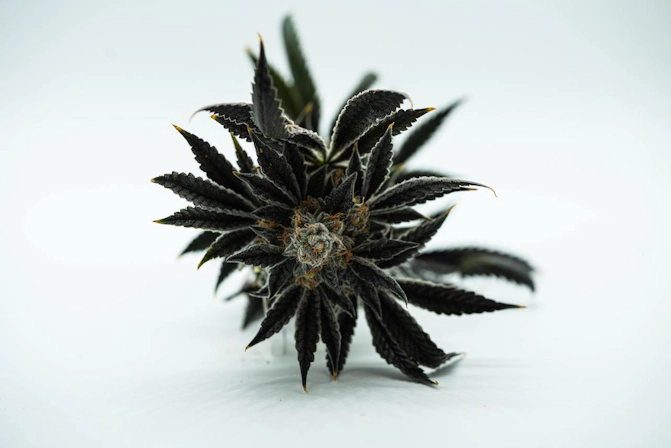
The nose is where it gets interesting. Skunk and hash funk is the standard description, but one grower reported his phenotype smelling distinctly of black licorice and gas, which is not a note you encounter often.
Important: This article is for informational purposes only and does not constitute legal, medical, or professional advice. For adults 21+ only.
Quick Facts: Black Cat Weed Strain

herb
- Strain type: hybrid, indica-leaning to near-balanced depending on the cut
- Genetics: Cat Piss crossed with a dark Afghani-style indica, commonly Black Domina or a Blackberry-type parent
- Breeder: Offensive Selections per grower reports, with other cuts circulating from various growers
- THC: typically 18% to 24%, with select phenos reaching 24% to 26%
- CBD: under 1%, often below 0.2%
- Terpene profile: caryophyllene, myrcene, limonene, and pinene, with humulene and ocimene as secondaries
- Aroma and flavor: skunky hash funk with dark berry and black licorice in some phenos
- Effects: strong appetite stimulation followed by heavy sedation
Black Cat Strain Terpene Profile

herb
Black Cat strain terpenes are led by caryophyllene and myrcene, with limonene and pinene providing lift underneath.
Caryophyllene: the backbone. Peppery, woody, and warm, it’s the terpene most associated with physical relief.
Myrcene: doing the heavy lifting on effects. Earthy and musky with ripe fruit underneath, myrcene is the terpene most linked to sedation and body weight. Given how universally people describe this strain as a knockout, a myrcene-forward profile makes sense.
Limonene and pinene: provide the brightness. Citrus and pine cut through the skunk, and pinene in particular explains the herbal edge in the flavor descriptions.
Humulene and ocimene round things out with woody and sweet herbal notes.
The aroma reports are where this gets genuinely interesting. The standard description is loud skunk and hash funk with dark berry and grape behind it. But a craft grower on r/Craftmarijuana described his phenotype smelling like black licorice and gas after a six-week cure in living soil. Licorice is an unusual note in cannabis and it points to a genuinely distinct pheno expression.
Meanwhile, a Michigan reviewer covering a Ripe Herb batch described it as fruity with an OG backend, which is a third direction entirely.
Black Cat Strain Effects

herb
Black Cat strain effects follow a pattern that includes:
- immediate and intense appetite stimulation
- euphoria on the front end
- rapid onset of body weight
- deep physical relaxation
- heavy sedation
- sleep
Onset is fast. Reports describe a quick shift with euphoria and a grounded, heavy feeling arriving almost immediately rather than building.
Then the munchies, which get called out more specifically than anything except the sedation. The grower quoted above said he gets the munchies badly and then passes out every single time he smokes it.
The Michigan reviewer described a heavy high that knocked him out, and said it was going to be saved for evenings.
So on whether the Black Cat strain is indica or sativa, it’s classified as a hybrid and behaves like a heavy indica in practice. There isn’t a single account describing anything approaching daytime function.
Best use cases are evening, appetite, and sleep. The downside is straightforward: this ends your evening, and everyone who has written about it says so.
Black Cat Strain Reviews

herb
Worth being upfront about the evidence base. Three public posts review this strain, and two come from the same home grower documenting different harvests. So the Black Cat strain review consensus below rests on two people rather than a crowd.
- Every account agrees it’s a night-only strain.
- Appetite stimulation is described as unusually strong.
- Sedation is consistent and arrives quickly.
- Aroma varies considerably between phenotypes.
- Growers report it performing well with minimal inputs.
- Nobody has posted a negative experience.
The most detailed accounts come from a home grower running Offensive Selections genetics. In one post on r/OKmarijuana, he noted he’d let the plant go a little longer before harvest, and described the result as immediate munchies followed by insane couchlock.
Letting a plant run longer past its standard window pushes trichomes toward amber and shifts the cannabinoid profile, which is well understood to produce heavier, more sedating flower. He named both the late harvest and the extreme couchlock in the same breath. So at least part of Black Cat’s knockout reputation may come down to when it gets picked rather than the genetics alone.
His second post, covering a different run after a six-week cure in living soil, described the same pattern of severe munchies followed by passing out. He rated the effects highly and said he’s keeping the cut around.
The one commercial account, from Michigan, describes fruity flavor with an OG backend and a heavy high that knocked him out. Short, but consistent with everything else.
Important: Reviews referenced here come from unverified online users, two of them from the same grower. Individual experiences vary.
Black Cat Strain Price
avery meeker
Public pricing data on this strain is limited, since it circulates through craft growers and smaller producers. These are reasonable expectations for a cultivar in this tier.
- Eighth (3.5g): $30 to $50
- Quarter (7g): $55 to $95
- Half ounce (14g): $100 to $165
- Full ounce (28g): $180 to $300
Premium indoor lands at the top of each range, with the usual gap over greenhouse and outdoor material. Because this moves largely through craft channels, availability drives price more than tier does. When a small grower runs it, expect to pay accordingly. When it turns up as a commercial drop, pricing tends to normalize.
Where to Buy Black Cat

herb
Black Cat is not a widely stocked strain. It appears through craft growers, smaller regional producers like Ripe Herb in Michigan, and home grows using Offensive Selections genetics. Finding it takes some looking.
Two things to check.
First, ask which cut it is. Multiple producers use this name for different crosses, and the aroma reports range from black licorice to fruity OG to straight skunk. Those are different experiences sharing a label, so knowing the lineage tells you more than the name does.
Second, ask about harvest timing if you can, or read the trichome description. Most retailers won’t have that information, but craft growers often will. It’s the best predictor of how heavy your flower will be.
Don’t confuse it with products from Black Cat Seeds, a separate company releasing unrelated strains.
Black Cat Grow Info and Tips
herb
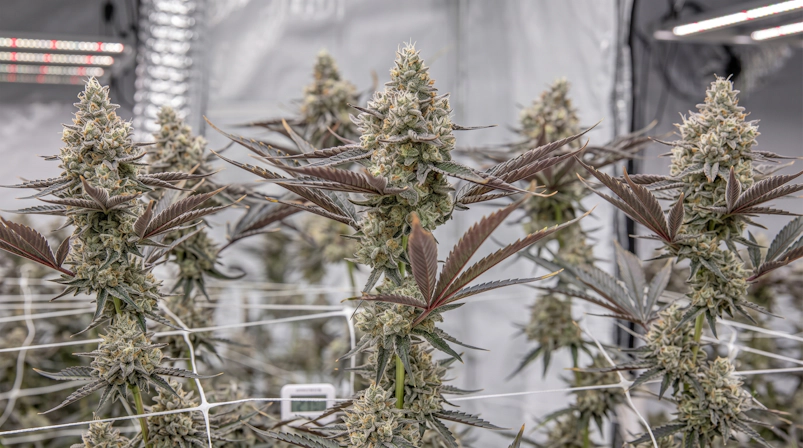
Here’s the Black Cat strain info worth having before committing space.
- Difficulty: moderate and forgiving
- Indoor vs outdoor: both appear workable
- Tent and space: a 4×4 handles three to four plants
- Lighting: strong light through flower supports resin production
- Temperature and humidity: aim for 70 to 80°F, with humidity near 50 to 60% in veg, dropping to 40 to 45% in late flower
- Training: topping and LST help open up a naturally bushy canopy
- Veg period: four to six weeks
- Feeding: light; this is not a cultivar that needs a heavy feed schedule
- Flowering time: expect 8 to 9 weeks
- Yield: moderate
- Pest and disease management: airflow and defoliation
- Seeds available: Offensive Selections is the breeder named by growers running this cut, and availability is limited
Similar Strains to Black Cat

herb
- Cat Piss: a parent in the accepted lineage, and the source of the loud skunk funk.
- Black Domina: cited as the likely indica side, bringing the dark resin and heavy sedation.
- Northern Lights: sits behind Black Domina, sharing the Afghani weight and sleepy character.
- Blackberry: named as an alternate indica parent, contributing dark berry notes to the aroma.
- Afghani: the foundational genetics under most of this lineage, matching on hash-like funk and body effect.
- Skunk #1: comparable loud, funky profile for anyone chasing the aroma rather than the sedation.
Frequently Asked Questions
What strain is Black Cat?
Black Cat is a hybrid, generally indica-leaning, most commonly described as Cat Piss crossed with a dark Afghani-style indica such as Black Domina. Growers running it credit Offensive Selections as the breeder. Multiple producers use the name for slightly different crosses.
Is the Black Cat strain indica or sativa?
It’s classified as a hybrid but behaves like a heavy indica. Every available account describes sedation and couchlock, and all three explicitly rule it out as a daytime option. Expect body weight rather than head clarity.
What is the Black Cat strain THC percentage?
Most batches test between 18% and 24% THC, with select phenotypes reaching 24% to 26%. CBD sits below 1% and often under 0.2%. The effects land heavier than those numbers suggest, which points to the terpene profile and harvest timing doing more work than potency.
What does the Black Cat strain taste like?
It depends heavily on the phenotype. The standard description is skunky hash funk with dark berry and a peppery, piney finish. One grower’s cut smelled distinctly of black licorice and gas, while a commercial batch read as fruity with an OG backend.
How much does the Black Cat strain cost?
Expect roughly $9 to $14 per gram depending on market and producer. Eighths typically run $30 to $50, with ounces landing between $180 and $300. Craft-grown versions command more because availability is limited.
Is Black Cat a top shelf strain?
The limited feedback is uniformly positive, with growers calling the effects great and planning to keep the cut around. That said, only a handful of people have written about it publicly, so the picture is far less established than for mainstream strains. Judge the jar rather than the reputation.
Is Black Cat strain easy to grow?
It appears to be forgiving. One documented grow ran water-only in living soil and produced flower the grower rated highly, which suggests low nutrient demands. The main decision is harvest timing, since pulling later noticeably increases the sedation.
What is Black Cat strain flowering time?
Expect 8 to 9 weeks indoors, though harvest timing matters more than the calendar on this one. A grower who let his run past the standard window reported significantly heavier couchlock, so pull according to the effect you want rather than the date.
Herb Recommended Products:
READ MORE