How to Buy Weed in Guatemala: 2026 Laws, Antigua & the Real Risk
Cannabis is fully illegal in Guatemala with no decriminalization. Here's what the law actually says and what travelers face on the ground.
Herb
May 10, 2026
This article contains sponsored content. Some of the products featured are part of paid partnerships. This page explains how our process works.

clovis castaneda
Cannabis is fully illegal in Guatemala with no decriminalization. Here's what the law actually says and what travelers face on the ground.
May 10, 2026
Buying weed in Guatemala is not legally possible. Guatemala has no legal recreational program, no medical program, and no decriminalization as of 2026. Possession carries 4 months to 2 years in prison. Foreign nationals may also face expulsion from Guatemala, because Article 12 lists expulsion of foreigners as a possible principal penalty for drug-law offenses.
You searched for how to buy weed in Guatemala because you heard something. Maybe it was a fellow traveler describing San Pedro La Laguna as impossibly relaxed. Maybe someone mentioned that mota flows through Antigua’s backpacker bars as freely as Gallo beer. Guatemala has a well-worn reputation in cannabis travel circles, and that reputation has a kernel of truth inside a very serious legal reality.
The bottom line before anything else: cannabis is illegal in Guatemala. There is no recreational program, no medical program, and no decriminalization. Possession alone carries up to two years in prison, and foreign nationals face the added risk of expulsion. What travelers call the “gray area” is not a legal gray area. It is an enforcement one, and that distinction matters enormously for anyone thinking through the risks.
This guide covers all of it: what the law actually says, what Antigua and Lake Atitlan’s cannabis scenes look like in practice, how Guatemala’s culture around mota developed, where Guatemala sits relative to its Central American neighbors, and what cannabis-curious travelers who love Guatemala but want legal access should actually do.

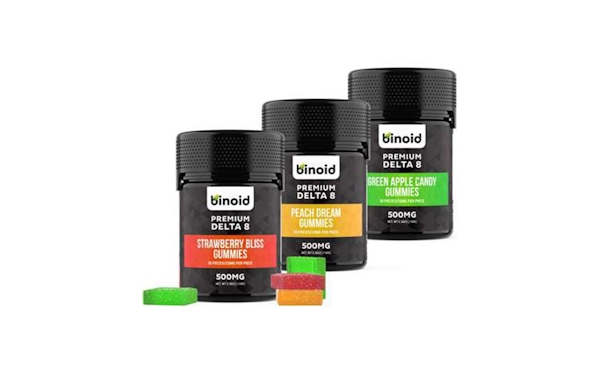
Guatemala’s cannabis scene isn’t worth testing as a tourist, but Binoid’s Delta 8 Gummies Bundle gives you an easy way to stock up at home before or after your trip.
The bundle includes 60 gummies across three 500mg containers—Strawberry Bliss, Peach Dream, and Green Apple Sour Candy—giving you three distinct vegan flavors in one order. You can also request a custom flavor mix in the order notes to personalize your lineup.
Pick your flavors, enjoy them responsibly at home, and leave the gummies out of your suitcase.
Herb readers get 25% OFF at Binoid with code HERB25.

rodrigo escalante
mathijis beks
Search any travel forum, and you will find Guatemala described as “easy” for cannabis, a “no big deal” destination, and a country where the mota practically finds you. Then you will find accounts from tourists who spent three days in a Guatemalan jail cell before being released without formal charges but several hundred dollars lighter.
Both things are true, and the gap between them is what makes Guatemala uniquely confusing for cannabis travelers.
Guatemala borders Mexico, where Mexico’s Supreme Court removed key barriers to adult personal cannabis use in 2021, though the country still lacks a fully regulated recreational retail market. It sits next to Belize, where personal possession has been decriminalized since 2017. Travelers moving through Central America on the backpacker circuit frequently cross these borders and arrive in Guatemala with expectations calibrated to friendlier legal environments. Those expectations do not hold here.
The backpacker forum posts are typically written by people who got lucky, or who got shaken down for money and chose to describe it as a minor inconvenience rather than an arrest. The jail stories are less frequently shared but more representative of what the law actually permits Guatemalan authorities to do. This guide is built to close that gap.
Guatemala has no legal recreational or patient-access medical cannabis program. Controlled substances may be authorized only in narrow medical, scientific, pharmaceutical, or law-enforcement contexts. There is no recreational framework, no patient-access medical cannabis framework, and no personal possession exemption comparable to a medical marijuana program. Cultivation, trafficking, possession, and use are all criminal offenses under Guatemalan law.
This places Guatemala among the strictest cannabis environments in the Western Hemisphere. The statutes are explicit.
Guatemala’s Law Against Drug Activity imposes serious consequences for cannabis-related offenses. The table below shows the full penalty range, including fines that rarely appear in travel forum discussions.
| Offense | Minimum Sentence | Maximum Sentence | Fine Range |
|---|---|---|---|
| Personal possession | 4 months jail | 2 years jail | 200–10,000 quetzals (~$25–$1,300 USD) |
| Personal use | 4 months jail | 2 years jail | 200–10,000 quetzals |
| Cultivation | 5 years prison | 20 years prison | Q10,000–Q100,000 |
| Trafficking and distribution | 12 years prison | 20 years prison | Q50,000–Q1,000,000 |
| Foreign nationals | Any of the above | Plus possible expulsion under Article 12 | In addition to the above |
There is no fixed gram threshold that makes cannabis possession legal. Under Article 39, authorities may treat possession as personal consumption only when the amount appears reasonable for immediate use and the circumstances support personal use. If the quantity or circumstances do not support immediate personal consumption, authorities may pursue more serious drug-law charges under Article 38, which covers trafficking, storage, transport, distribution, sale, and related activity.
Unlike Panama, which legalized medical cannabis in 2021, or Costa Rica, which passed medical cannabis legislation in 2022, Guatemala has not developed a medical framework. Cannabis reform initiatives introduced in 2016–2017, including proposals covering medicinal and broader cannabis regulation, failed to advance. No consumer-facing cannabis access pathway exists for tourists or ordinary patients comparable to a medical marijuana program.

jeison higuita
Guatemala’s prohibition of cannabis is not recent. Decree 1331 of 1932 was among the earliest laws restricting cannabis in Central America, classifying “Indian hemp and marihuana” among “plantas letales” (lethal plants). That framing shaped the country’s political relationship with cannabis for nearly a century.
The most significant challenge to prohibition came in 2012. Then-President Otto Pérez Molina publicly advocated for drug decriminalization, arguing that prohibition had failed to reduce drug trafficking and that the countries bearing the costs of cartel violence, Guatemala chief among them, deserved a seat at the table in redesigning drug policy.
Pérez Molina took his case to international forums, including the UN General Assembly in 2012. Several Central American leaders expressed interest in coordinated reform. For a brief window, it appeared that Guatemala might lead a regional shift.
Those efforts were blocked. Reporting from the period documents US diplomatic opposition to Guatemala’s decriminalization push. Under that pressure, Pérez Molina backed away. The reform window closed quickly.
Cannabis reform initiatives introduced in 2016 and 2017, including proposals covering medicinal cannabis, broader regulation, and scientific use, failed to advance through Congress. The relevant commission concluded that such legislation was unfeasible, inopportune, and unconstitutional.
Since those rejections, no meaningful legislative effort to reform Guatemala’s cannabis laws has advanced. Younger urban Guatemalans show the most openness to reform, influenced by global cannabis culture and changing attitudes in neighboring countries. Political will has not followed.
Heading into 2026, Guatemala’s cannabis laws remain exactly where they stood in 2017.

Herb
Travel forums, backpacker subreddits, and cannabis community blogs consistently describe Guatemala as a “gray area” for cannabis. Understanding what that phrase actually means is essential before treating it as a green light.
The gray area is not a legal one. No provision in Guatemalan law creates any tolerance for cannabis possession or use. The gray area is an enforcement one: Guatemalan law enforcement has not pursued blanket prosecution of cannabis users the way it pursues trafficking networks.
For Guatemalan nationals, especially in rural agricultural communities, personal use and small-scale cultivation have historically been treated as something closer to an open secret than an active enforcement priority. Police resources are concentrated on trafficking and organized crime. A Guatemalan found with a small amount for personal use is frequently not prosecuted.
This informal tolerance does not extend equally to foreign visitors.
Reports from travelers and from organizations tracking drug law enforcement in the region consistently document a different experience for tourists. Foreigners found in possession of cannabis are commonly arrested and held in detention. Some are released after several days without formal charges, often after paying fees. Others face criminal proceedings. Foreign tourists face additional practical and legal risks, including possible expulsion, and should not assume informal local tolerance applies to them.
Several factors make the gray area smaller than backpacker mythology suggests:
When this guide refers to Guatemala’s “gray areas,” it means social and cultural gray areas shaped by inconsistent enforcement, not any form of legal protection or decriminalization. Travelers who test those limits are simply hoping to fall on the less-enforcement side of an unpredictable coin flip.

mana5280
Antigua Guatemala is one of the great colonial cities in the Americas. A UNESCO World Heritage Site, it sits in a highland valley at over 1,500 meters of elevation, surrounded by three volcanoes and centered on a grid of cobblestone streets, ochre-colored ruins, and baroque churches. It draws close to a million non-resident visitors a year and supports a well-developed traveler infrastructure of hostels, Spanish schools, coffee shops, and nightlife.
It also supports an underground cannabis scene, concentrated in its creative and backpacker communities.
Nothing about cannabis in Antigua is open or organized. There are no dispensaries, no designated smoking areas, no menus. What exists is a network of informal connections, accessed primarily through hostel culture, nightlife contacts, and street sellers who approach foreign travelers in tourist-heavy areas.
Antigua’s nightlife centers on a handful of iconic venues. Café No Sé is the most famous: a dimly lit, speakeasy-style bar that gave birth to Ilegal Mezcal and operates as a gathering point for travelers, long-term expats, and local creative types. La Sin Ventura runs a packed salsa club atmosphere with a 1920s feel and live bands on weekends. La Sala attracts a mixed crowd of Guatemalans and foreigners with live music Thursday through Saturday. These venues are not cannabis-friendly in any official sense, but the social networks that form around them are where connections are sometimes made.
Travelers who have spent time in Antigua’s cannabis underground describe the experience as accessible but not comfortable. The anxiety of operating in a country where foreign nationals face possible expulsion on top of criminal charges is a consistent feature of those accounts.
Street solicitation around tourist areas has been reported anecdotally, but travelers should avoid any illegal transaction. These interactions carry more risk than they might appear: the seller is operating in the open, the buyer is visible, and the transaction is observable in an area where police patrol regularly. Some travelers also report that encounters with sellers or individuals claiming to be police officers escalate into demands for money.
Antigua is worth every hour you spend there. The cannabis scene, for what it is, comes with costs that are harder to see from a distance.

pawel wieladek
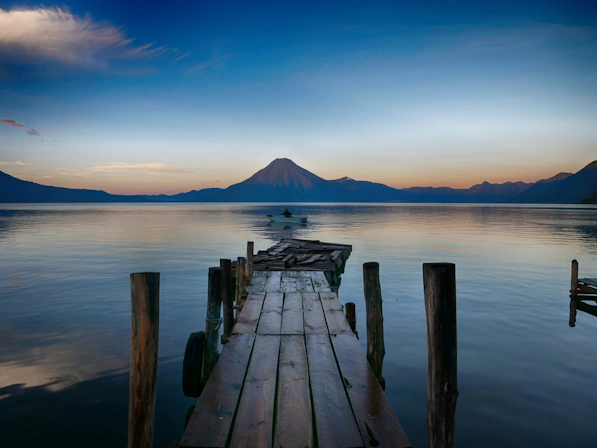
About two hours from Antigua by road and shuttle, Lake Atitlan sits in a volcanic caldera at over 1,500 meters of elevation, ringed by a dozen indigenous Maya villages and overlooked by three volcanic peaks. It is one of the most photographed landscapes in Central America and a long-established node on the backpacker circuit connecting Mexico to Colombia.
San Pedro La Laguna, on the lake’s southern shore, has developed a particular reputation in cannabis traveler communities. It is a traditional Tz’utujil Maya village that over decades accumulated a significant backpacker presence, partly due to affordable language schools and partly due to a social atmosphere that travelers described as unusually relaxed.
Several factors have contributed to San Pedro’s status in cannabis traveler discussions. First, the agricultural land surrounding Lake Atitlan has historically included cannabis cultivation alongside traditional crops. Some travelers report that the cannabis quality available in the lake region is among the best they have found in Guatemala, which aligns with what is known about small-scale cultivation in the area’s farming communities.
Second, San Pedro’s hostel culture developed its own social momentum over many years of backpacker traffic. Communities of long-term travelers and digital nomads established themselves around the lake, and word-of-mouth within those communities perpetuated a reputation for accessibility.
Third, Atitlan’s geography, reached only by boat or winding mountain roads, contributed historically to a sense of remove from central authority. That sense of remove is not legal protection, but it shaped the social culture.
San Pedro and the broader Lake Atitlan area are subject to the same Guatemalan drug laws as everywhere else in the country. The “relaxed” atmosphere of the lake towns is a social phenomenon, not a regulatory one. Foreign nationals caught with cannabis at Lake Atitlan face the same potential for arrest, detention, and possible expulsion as those caught in Antigua or Guatemala City.
Street solicitation around tourist docks has been reported anecdotally. Any interaction with an illegal seller carries legal risk for the buyer, and travelers should avoid engaging with any street offer.

Elsa Olofsson / Unsplash
To understand cannabis in Guatemala is to understand a word: mota.
Mota is a common Spanish slang term for cannabis in Mexico and parts of Central America. In Guatemala specifically, other terms also circulate: “borro,” “ganja,” and “diguil” appear in local usage depending on region and community. But mota is the one that cuts across social contexts.
One journalist who traveled extensively through Guatemala described mota as being “as much a cash crop as coffee and chocolate” in certain agricultural regions. Campesinos, the small-scale farmers who work highland plots growing corn, beans, and vegetables, have in many areas cultivated cannabis alongside their food crops for generations.
This parallel economy is what Guatemalans describe as a “secreto a voces”: an open secret where everyone in a given community knows who cultivates, but no one states it officially. The cultivation is not organized or cartel-connected in the way that Guatemala’s larger drug trafficking networks are. It is a survival strategy, a way of supplementing income in communities where cash is scarce and formal employment is absent.
Guatemala’s cannabis cultivation culture predates modern prohibition by at least several generations. The 1932 law that criminalized it did not eliminate the practice; it simply drove it deeper into the category of open secret.
The social dynamics around mota reflect Guatemala’s urban-rural divide in real time. In Guatemala City and Antigua, younger generations increasingly encounter cannabis through global music, streaming culture, and travel. The stigma that held for their parents’ generation is softening in these contexts, particularly among educated urban adults.
In more conservative religious and rural communities, the stigma remains strong. Cannabis is not a unified cultural conversation in Guatemala. It is several conversations happening simultaneously in communities with very different relationships to the plant.
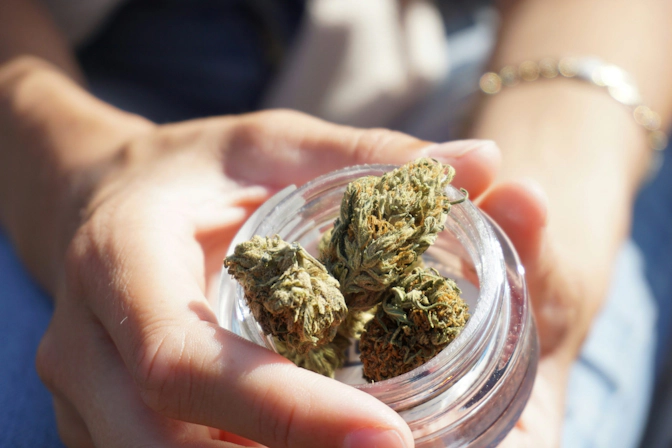
Cannabis grown in Guatemala’s highland regions, particularly around Lake Atitlan and in the Sierra de los Cuchumatanes, tends to reflect the outdoor sun-grown cultivation methods common to traditional campesino farming. What travelers encounter is typically landraces or loosely bred outdoor cannabis rather than the craft indoor cultivars that appear in legal dispensary markets.
For cannabis enthusiasts who want to explore strain profiles and understand what regional cultivation produces, Herb’s strain database covers thousands of cultivars with terpene profiles, THC/CBD ranges, and effect notes.
Elsa Olofsson
Before modern breeding programs reshaped cannabis genetics globally, highland jungle regions produced their own indigenous varieties shaped by centuries of open-air cultivation. Guatemala is associated with one of Central America’s more distinctive sativa landrace lines, preserved and marketed internationally by seed banks and strain databases.
Some international seed banks and strain databases preserve and market Guatemalan landrace sativa genetics, often described as pure sativa lines collected from Guatemalan highland regions. Specific potency and effect claims vary by source and should be treated as breeder-reported rather than independently verified. The general profile described by breeders is a fruity, uplifting effect associated with open-air highland cultivation adapted to rainy conditions and longer flowering cycles.
For context on how landrace genetics like the Guatemala Sativa fit into the global cannabis story, Herb’s guide to original cannabis strains explores how these indigenous varieties shaped modern breeding and what makes them botanically distinct.
Because cultivation inside Guatemala remains illegal, any Guatemalan landrace genetics are now primarily preserved through international seed banks operating in legal markets. The strain lineage exists. The cultivation history is real. Access inside Guatemala itself remains illegal.
Guatemala occupies the strictest end of the cannabis policy spectrum in Central America, even as neighboring countries have begun to move. The table below reflects the actual legal landscape as of 2026, including possession limits and tourist risk levels.
| Country | Recreational | Medical | Possession Limit | Tourist Risk | Key Notes |
|---|---|---|---|---|---|
| Mexico | Personal use barriers removed by Supreme Court in 2021; no nationwide regulated retail market | Legal | Up to 28g personal; no commercial retail system | Low-Medium | Legally more permissive for personal use; no regulated dispensary system nationally |
| Belize | Illegal | Illegal | Up to 10g on private premises (since 2017) | Low-Medium | First in Central America to decriminalize; no licensed sales |
| Costa Rica | Illegal | Legal (since 2022) | No statutory recreational limit; personal use often treated with enforcement discretion | Medium | Medical and hemp framework in place; recreational not formally legal |
| Panama | Illegal | Legal (since 2021) | None for recreational | High | Medical only through licensed pharmacies; tourist access very limited |
| Guatemala | Illegal | Illegal | None | High | No decriminalization; tourists arrested and held; expulsion possible |
| Honduras | Illegal | Illegal | None | Very High | Strong penalties enforced; no medical provisions |
| El Salvador | Illegal | Illegal | None | Very High | Zero tolerance; strict enforcement across all forms |
| Nicaragua | Illegal | Illegal | None | Very High | Cultivation fully prohibited under national law |
Legal Status: Decriminalized up to 10 grams on private premises. Tourist Risk: Low for small amounts in private settings. Getting There from Guatemala: 3 to 4 hours by road from Flores; overland crossing at Benque Viejo.
Belize decriminalized personal possession of up to 10 grams in 2017, becoming the first country in Central America to formally relax its cannabis laws. The Belizean decriminalization does not create a regulated market. There are no legal dispensaries or licensed sellers. But possession of small amounts for personal use does not carry criminal penalties, which is a meaningful distinction from Guatemala’s framework.
Best For: Travelers adding a Caribbean leg to a Guatemala itinerary who want reduced legal exposure without traveling as far as Costa Rica or Mexico.
Legal Status: Medical cannabis legal since 2022; recreational remains illegal but personal use is often treated with enforcement discretion in practice. Tourist Risk: Medium (police can still confiscate; entry bans possible for foreigners). Getting There from Guatemala: Long trip by land, 12-plus hours overland, or a short direct flight.
Costa Rica legalized medical cannabis in 2022 and maintains a more tolerant enforcement environment for personal use than Guatemala, but recreational cannabis is not formally legal. Costa Rica’s tourism infrastructure is extensive, and its natural scenery is competitive with that of Guatemala.
Best For: Cannabis enthusiasts who want the most evolved legal environment in Central America, combined with a full travel destination.
Legal Status: Mexico’s Supreme Court removed key barriers to adult personal cannabis use in 2021, but the country still lacks a fully regulated recreational retail market. Purchasing cannabis remains legally complicated despite greater personal-use permissiveness. Tourist Risk: Low-Medium. Getting There from Guatemala: Northern Guatemala border crossings lead directly into Chiapas; Cancun is a short direct flight.
Mexico is legally more permissive than Guatemala for personal adult use, though it does not yet have a nationwide regulated recreational retail system.
Best For: Travelers prioritizing legal access who are entering Central America from the north, or who are willing to build Mexico into their regional itinerary.
This section is worth reading carefully, particularly for travelers who have read forum posts about cannabis being easy to find in Antigua or San Pedro and concluded that the risk is minimal.
The risk is not minimal for tourists. The evidence is consistent and specific.
Multiple accounts from travelers and from organizations that track drug law enforcement in Central America document the same pattern: Guatemalan nationals found with small amounts of cannabis for personal use are frequently not prosecuted. The system exercises informal discretion for locals. Foreign visitors do not benefit from the same discretion.
Travelers found with cannabis in Guatemala are commonly arrested and held in detention for several days. Some are released without formal charges, often after paying what amounts to an unofficial fee. Others face criminal proceedings under a legal system that is not optimized for speed or transparency. The process, even when it ends without conviction, consumes time, money, and a high psychological cost.
Foreign nationals may also face expulsion from Guatemala, because Article 12 of Guatemala’s Law Against Drug Activity lists expulsion of foreigners as a possible principal penalty for drug-law offenses. This is an available legal remedy that Guatemalan authorities can pursue on top of any criminal sentence. A tourist arrested with cannabis in Antigua is not simply facing a fine or a warning. They are facing potential imprisonment and possible formal expulsion from the country, with consequences that may affect future visa applications across the region.
Travel advisories and traveler accounts note a secondary risk that is separate from formal law enforcement: extortion. Interactions with individuals selling cannabis in tourist zones, or with people who present themselves as law enforcement, can escalate into demands for money to avoid arrest or further scrutiny. Travelers carrying cannabis are financially vulnerable in these situations, regardless of whether formal charges are ever filed.
The practical advice that follows from all of this is not to avoid Guatemala. Guatemala is extraordinary. The practical advice is to be honest with yourself about what you are actually risking if you choose to seek cannabis there, and to make that choice with complete information rather than based on forum posts from travelers who happened to get lucky.

shalom de leon
If you choose to navigate Guatemala’s cannabis scene despite the legal risks, these are the operational realities drawn from consistent traveler accounts and drug policy reporting in the region.
These rules do not make cannabis tourism in Guatemala safe. They describe the harm reduction logic that experienced travelers apply in an environment where the legal framework provides no protection.
Guatemala is a destination worth building an entire trip around. Tikal and the jungle ruins of the Peten, the colonial perfection of Antigua, the volcanic lakes, the indigenous weaving traditions of Chichicastenango, and the Highlands: none of this requires cannabis to access, and all of it rewards travelers who show up fully present.
For cannabis enthusiasts who want to integrate legal or decriminalized access into a Central American itinerary, here is the honest picture.
Belize is the most straightforward legal option in the immediate region. Up to 10 grams for personal possession is decriminalized. Belize is accessible from Guatemala by overland crossing and is a natural add-on to a Guatemala trip. The Cayes, particularly Caye Caulker and Ambergris Caye, have well-developed traveler infrastructure and an atmosphere more aligned with cannabis-tolerant Caribbean culture.
Costa Rica is a larger trip but a more evolved destination for cannabis-curious travelers. The combination of a legal medical framework and a more tolerant enforcement environment for personal use creates a more predictable landscape. San Jose and the coastal towns have well-established traveler communities, and the wildlife and ecosystems rival anything in Guatemala.
Mexico is legally more permissive than Guatemala for personal adult use, though it does not yet have a nationwide regulated recreational retail system. For travelers coming from North America, it remains one of the more accessible options in the region.
For keeping up with cannabis policy developments across the region, Herb’s cannabis news tracks changes as they happen. Guatemala’s political situation has shifted enough times in the last decade that the landscape could look different by the time you plan your trip. Verify before you go.
Guatemala’s magic is real, and it is enormous. It does not need mota to unlock it.
No. Guatemala has no legal recreational or patient-access medical cannabis program, and no decriminalization as of 2026. Controlled substances may be authorized only in narrow medical, scientific, pharmaceutical, or law-enforcement contexts. Cultivation, trafficking, possession, and use are all criminal offenses under the Law Against Drug Activity.
Foreigners found with cannabis in Guatemala are commonly arrested and held in detention. Some are released without formal charges, often after unofficial payments. Others face criminal proceedings. Under Article 39, possession carries 4 months to 2 years in prison and a fine of 200 to 10,000 quetzals. Foreign nationals may also face expulsion under Article 12 of Guatemala’s Law Against Drug Activity.
No. There is no fixed gram threshold that makes cannabis possession legal in Guatemala. Under Article 39, authorities may treat possession as personal consumption only when the amount appears reasonable for immediate use and the circumstances support personal use. If the quantity or circumstances do not support immediate personal consumption, authorities may pursue more serious drug-law charges.
Belize is the most straightforward option. Personal possession of up to 10 grams was decriminalized in 2017 and is accessible by overland crossing from Guatemala. Costa Rica has a legal medical cannabis framework and a more tolerant enforcement environment for personal use than Guatemala, though recreational cannabis is not formally legal there. Mexico is legally more permissive for personal adult use following the Supreme Court’s 2021 ruling, though it does not yet have a fully regulated recreational retail market.
No. Crossing any border with cannabis is illegal under Guatemalan law and creates exposure under the laws of both countries at any crossing point. Legal possession in Belize does not protect you at the Guatemalan border, and Guatemalan authorities conduct active searches at crossing points. Cannabis must stay in the country where it was legally possessed.