
herb
Blue Dream vs Pineapple Express: We Compared Everything So You Don’t Have To |
05.29.2026Blue Dream vs Pineapple Express: We Compared Everything So You Don’t Have To
Two iconic sativa-dominant hybrids. One honest breakdown of how they actually compare, from terpene chemistry to the grow.

Blue Dream vs Pineapple Express is the question getting asked at dispensary counters for over a decade.
Both are sativa-dominant hybrids. Both are tropical-leaning in flavor. Both became cultural icons in their own way: Blue Dream as the unofficial mascot of the California legalization era, Pineapple Express as the strain that got its own 2008 Seth Rogen movie.
They share enough surface-level similarities that newer smokers genuinely confuse them. But under the hood, they’re different plants with different parent genetics, different terpene chemistry, and different effects.
This is the full side-by-side comparison. Genetics, appearance, cannabinoids, terpenes, effects, growing reality, and which one earns the crown for what kind of session.
Key Takeaways

shelby ireland
- Blue Dream leans more cerebral and creative. Pineapple Express delivers a punchier, body-aware energy with a faster onset.
- Blue Dream’s terpene profile is myrcene-dominant with pinene and caryophyllene support. Pineapple Express contains caryophyllene and limonene for a brighter tropical fruit flavor.
- THC levels are similar (17 to 24% for both, depending on phenotype), but Pineapple Express tends to feel more potent due to its terpene synergy.
- Blue Dream is easier to grow and more forgiving of beginner mistakes. Pineapple Express needs tighter environmental control.
- Both shine in different sessions. Blue Dream for daytime creativity and social ease, Pineapple Express for short bursts of focused energy.
Blue Dream vs Pineapple Express Strain: Comparing Two Sativa-Dominant Favorites

herb
If you’re trying to decide between these two for your next pickup, the comparison comes down to four factors.
- Genetic lineage: the parent strains that shaped each cultivar’s character
- Bud appearance: color, density, trichome coverage, and how to spot a well-grown version of each at a dispensary
- Cannabinoids and terpenes: the chemistry that drives the effects
- Strain effects: how each one actually feels in practice
One important note before we get into it. Strain consistency varies dramatically by grower, phenotype, and curing process. A Blue Dream strain from one California farm may not feel, look, or smell the same as one grown in Massachusetts or Colorado.
Factors like indoor versus outdoor cultivation, nutrient regimens, flushing technique, drying environment, and cure length all shape the final product. The descriptions below cover what well-grown, properly cured versions of each strain often deliver.
Genetic Lineage and Origin
Blue Dream is a cross of Blueberry (indica) and Haze (sativa), bred in Santa Cruz, California, in the mid-2000s. That parent lineage tells you everything about why the Blue Dream cannabis strain feels the way it does. The Blueberry side contributes the sweet, fruity flavor and a soft body relaxation that keeps the experience grounded. The Haze side brings the cerebral lift, creative bend, and long-lasting energy that makes Blue Dream a daytime favorite. The two halves balance each other in a way few hybrids actually achieve.
Pineapple Express is a cross of Trainwreck and Hawaiian. The Trainwreck parent is the engine, giving that fast-acting potency and slightly chaotic energy that makes the Pineapple Express cannabis strain hit hard. The Hawaiian side delivers three core aspects: a tropical fruit terpene profile, juicy pineapple notes, and an uplifting cerebral buzz.
When we hear Pineapple Express, our minds go straight to the 2008 Seth Rogen film of the same name. That movie is largely responsible for why the strain became so popular in the first place. But whether the movie inspired a strain that already existed or pushed an existing cultivar into wider cultivation is still in question. What matters now: the name stuck, and the strain has been a dispensary staple ever since.
Bud Appearance and Structure
Appearance is the first thing you’ll check at a dispensary counter, and both strains have distinct visual signatures when grown properly.
Blue Dream Bud Appearance and Structure
Blue Dream buds run medium to large, with a long, slightly tapered shape that reflects the Haze parentage. Color leans sage green with subtle blue undertones in well-grown phenotypes. The “blue” in the name comes from these hints, not from actual blue flower.
Pistils range from light orange to amber. Trichome coverage is heavy and frosted, giving the buds a slightly sugar-dusted appearance under good light. Density is medium: not as dense as a pure indica, not as airy as a pure sativa. Properly cured Blue Dream has a slightly springy give when you pinch it.
Pineapple Express Bud Appearance and Structure
Pineapple Express buds tend to run smaller and more compact than Blue Dream. Color sits in bright lime-green to deeper forest-green territory, often with golden orange pistils that contrast sharply against the green. Trichome coverage is dense and crystalline, with the kind of glassy frost you’d expect from a high-terpene cultivar.
Bud structure is denser than Blue Dream, with tight, rounded clusters rather than long tapered colas. The visual signature is brighter and more compact overall.
Blue Dream vs Pineapple Express Appearance
Side by side, Blue Dream has the more elongated, classic-sativa structure with cooler-toned green and blue accents. Pineapple Express has the brighter, denser, more compact look with warmer color tones.
Phenotype variation is real for both strains, so you may see versions that lean away from these descriptions. The cleaner indicator of quality across both: heavy trichome coverage, intact pistils, no visible seeds, and a tight, well-cured bud structure that gives slightly when pressed.
When it comes to bud appearance, Blue Dream wins on classic sativa stretch and elegance. Pineapple Express wins on density and frost-forward bag appeal.
Cannabinoids and Terpenes
This is where the two strains actually separate, and where the “why they feel different” answer lives.
Blue Dream Cannabinoids and Terpenes
THC content for Blue Dream typically lands between 17% and 24%. The terpene profile is myrcene-dominant, with pinene and caryophyllene playing supporting roles. That terpene stack drives Blue Dream’s character: myrcene adds the soft, slightly relaxing body feel.
Pinene contributes mental clarity and a piney top-note. Caryophyllene rounds out the profile with a peppery, slightly spicy depth. The overall flavor tastes like sweet berry with herbal and earthy undertones.
Pineapple Express Cannabinoids and Terpenes
Pineapple Express THC ranges from 18% to 25%, with high-end phenos pushing past 25%. The terpene profile is quite different: caryophyllene and limonene lead, with myrcene playing a smaller role and terpinolene occasionally appearing in tropical-forward phenos.
Limonene drives the citrusy lift and mood elevation. Caryophyllene brings the body-aware quality that distinguishes Pineapple Express from purely cerebral sativas. The result is tropical pineapple with notes of pine, cedar, and a peppery finish.
Blue Dream vs Pineapple Express Cannabinoids and Terpenes
THC potency is similar on paper. Where the strains diverge is in the cannabis terpene chemistry. Blue Dream’s profile creates a softer, more relaxed sativa experience. Pineapple Express delivers a brighter, more energetic, more body-aware experience. If you’re shopping by COA (Certificate of Analysis), the terpene profile is a better predictor of which experience you’ll get than the THC percentage alone.
Strain Effects and Overall Experience
The terpene differences above translate directly into how each strain feels in practice. Here’s what that looks like in a session.
Blue Dream Strain Effects
Blue Dream is the strain of choice for people who want sativa lift without sativa anxiety. The onset is gentle, building over 10 to 15 minutes into a clear-headed cerebral elevation paired with mild physical relaxation. Creativity, conversation, and visual focus all sharpen.
The high lasts 2 to 3 hours and tapers gracefully rather than crashing. It’s a daytime strain, a creative-work strain, a social hangout strain, and one of the few sativas that consistently doesn’t tip into paranoia for most users.
Pineapple Express Strain Effects
Pineapple Express hits faster and lands with more force. The onset is quick (sometimes within 5 to 10 minutes), and the peak is more energetic and uplifting. Where Blue Dream feels like a gentle wave, Pineapple Express feels like a stronger current. Mood elevation is pronounced, body energy picks up, and there’s an active, slightly chatty quality to the high.
Duration is similar (2 to 3 hours), but the come-down is more noticeable. It’s a strain better suited to short bursts of focused energy, social events, or any activity where you want to feel actively lifted rather than gently elevated.
Blue Dream vs Pineapple Express Effects
If you’re choosing between Blue Dream and Pineapple Express based on effects, the deciding question is energy level. Blue Dream is the easygoing, all-day option.
Pineapple Express is the higher-energy, faster-onset option that hits harder for shorter sessions. Anxiety-prone smokers tend to do better with Blue Dream’s gentler profile. Smokers who want to actively feel something will gravitate toward Pineapple Express.
Growing Pineapple Express vs Blue Dream: Which Is Better?
herb
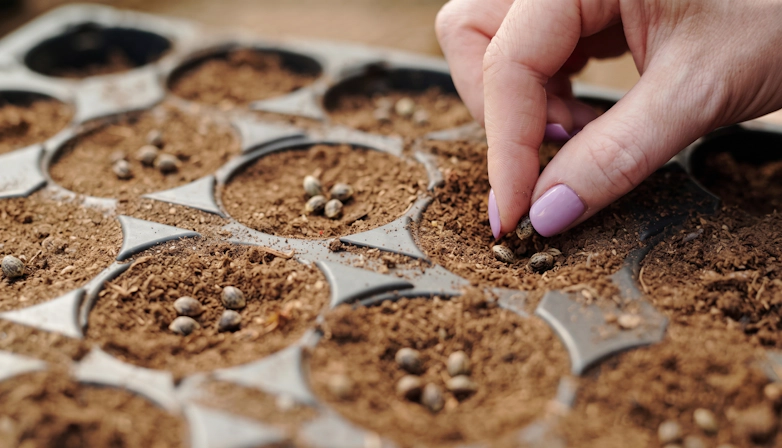
For growers, “which is better” depends entirely on goals. Yield, ease of cultivation, terpene expression, or pheno hunting potential. Both strains are widely available as seeds from reputable banks, and both have well-documented cultivation histories. Here’s how they actually compare in the grow room.
Growing the Blue Dream Weed Strain
Blue Dream is one of the more beginner-friendly commercial cultivars on the market. It’s resilient to common pests, tolerates fluctuations in humidity and temperature, and produces consistent yields even when growing conditions aren’t perfect. The Haze genetics mean the plants stretch high during flower, sometimes doubling or tripling in height once the light cycle flips. This strain particularly benefits from low-stress training (LST).
Yields are abundant. Expect 18 to 21 ounces per square meter indoors and up to 24 ounces per plant outdoors in good conditions. Flowering time is moderate at 9 to 10 weeks. The flavor and terpene expression peak with proper flushing in the final two weeks and a slow, controlled cure.
- Growing difficulty: Beginner-friendly
- Suitable environment: Indoor, outdoor, or greenhouse
- Flowering time: 9 to 10 weeks
- Average yield: 18 to 21 oz per square meter indoors; up to 24 oz per plant outdoors
- Height: Medium to tall (significant stretch during flower)
- Training recommended: Topping, LST, or ScrOG (Screen of Green) to manage stretch

colorado hasvest company
Growing the Pineapple Express Weed Strain
Pineapple Express is a step up in difficulty. The plants are more sensitive to environmental fluctuations and require overall tighter control. The Trainwreck side of the genetics can introduce some hermaphroditic tendencies in stressed plants, so growers need to watch for stress signals and avoid major environmental shocks during flower.
Yields are solid but generally lower than Blue Dream: 14 to 17 ounces per square meter indoors and up to 19 ounces per plant outdoors. Flowering time is faster at 7 to 9 weeks, which is one of the strain’s best advantages. Plants stay shorter and bushier than Blue Dream, which makes indoor cultivation more manageable in tight spaces.
- Growing difficulty: Intermediate
- Suitable environment: Indoor or greenhouse preferred; outdoor possible in warm, dry climates
- Flowering time: 7 to 9 weeks
- Average yield: 14 to 17 oz per square meter indoors; up to 19 oz per plant outdoors
- Height: Short to medium (bushy structure)
- Training recommended: Topping and LST to maximize light penetration in dense canopy

pineapple express
Blue Dream vs Pineapple Express Growing
For first-time growers or anyone optimizing for ease and yield, Blue Dream is the clear pick. It’s more forgiving, produces more bud per plant, and tolerates different environmental conditions.
For experienced growers who want a faster harvest cycle, denser bud structure, and the chance to dial in a high-terpene tropical phenotype, try Pineapple Express. Blue Dream wins on accessibility. Pineapple Express wins on flavor ceiling for skilled cultivators.
Which Strain Takes the Crown: Blue Dream or Pineapple Express?

herb
There’s no one winner. The “best” strain depends entirely on what you want from the session. Here’s how to choose.
Go with the Blue Dream strain if:
- You want a gentle, daytime-friendly high that won’t trigger anxiety
- Creativity, social hangouts, or focused work are your primary use cases
- You’re newer to sativas and want a forgiving introduction
- You prefer a sweet berry flavor profile over tropical fruit
- You want a longer, more gradual high rather than a fast onset
- You’re a beginner grower or want maximum yield with minimal fuss
- You’re stocking up for an all-day rotation
Go with the Pineapple Express strain if:
- You want a punchier, more energetic high with a faster onset
- Tropical fruit and citrus flavors appeal more than sweet berry
- You’re looking for active mood elevation rather than gentle uplift
- You want a strain with stronger body-aware energy without sedation
- Shorter sessions or social events are your typical context
- You have grow-room experience and want a faster harvest cycle
- You prioritize bag appeal and dense, frost-heavy bud structure

Photo by Marshall Pittman / Adobe Stock Photo
Frequently Asked Questions
Is Pineapple Express similar to Blue Dream?
They share a sativa-dominant hybrid classification, and both deliver uplifting, daytime-friendly effects. But the experiences are different. Blue Dream is gentler and more cerebral. Pineapple Express is faster-onset, more energetic, and tropical-fruit-forward. They’re related by category but not interchangeable.
Does Pineapple Express or Blue Dream lean more sativa?
Both are sativa-dominant hybrids on paper, typically classified as 60/40 sativa/indica. Pineapple Express tends to feel more sativa-forward, thanks to its Trainwreck genetics and limonene-rich terpene profile. Blue Dream’s myrcene dominance pulls it slightly toward a balanced hybrid feel despite the sativa-leaning classification.
Which weed strain is better, Blue Dream or Pineapple Express?
Neither is objectively better. Blue Dream is better for gentle daytime use, creative work, and anxiety-prone smokers. Pineapple Express is better for energetic sessions, social events, and consumers who want a more pronounced mood lift. The right answer depends on the use case.
Which is stronger, the Blue Dream or Pineapple Express weed strain?
On paper, THC content is comparable (17 to 24% for Blue Dream, 18 to 25% for Pineapple Express). In practice, Pineapple Express often feels stronger thanks to its caryophyllene-and limonene terpene synergy and faster onset. Phenotype matters too. A high-end Pineapple Express cut can easily out-punch an average Blue Dream cut.
Which strain is more likely to make me sleepy, Pineapple Express or Blue Dream?
Neither is a sleep strain. Both are sativa-dominant and lean energetic. If you had to pick the one more likely to ease you toward couch territory, Blue Dream’s myrcene-forward profile gives it a softer comedown that can edge toward sleepiness at higher doses. Pineapple Express tends to keep you active longer.
What strain is made when Blue Dream is crossed with Pineapple Express?
Blue Dream crossed with Pineapple Express isn’t a widely available stabilized hybrid. The two genetics rarely get bred together commercially, so you won’t find “Blue Dream x Pineapple Express” on dispensary menus as a named strain. The closest experience is mixing the two strains in the same bowl or joint. Herb’s strain mixing guide covers how to blend strains effectively for custom effects.
What strain tastes better, Blue Dream or Pineapple Express?
Taste is subjective. But in flower form, Pineapple Express tends to win on flavor distinctiveness thanks to its tropical pineapple-and-citrus terpene profile. Blue Dream has a softer, sweeter berry profile that some smokers find more drinkable for extended sessions. Consumption method shifts the answer too. A Blue Dream live resin can pull out cleaner, brighter terpene notes than the flower itself, while a Pineapple Express concentrate can amplify the tropical fruit beautifully.
The Herb Community

Herb
For more than a decade, Herb has been a gathering place for people who actually want to understand cannabis. The genetics, the chemistry, the cultivation, and the cultural moments that shape the plants we smoke. What started as a corner of the internet has grown into a community where millions come to dig into strain knowledge and stay current on cannabis culture.
Here’s what you can tap into at Herb:
- Learning hub and guides that break things down clearly, from strain comparisons to understanding how terpenes shape your high
- News hub that spotlights the latest cannabis culture and policy shifts
- Dispensary directory to help you find licensed shops in your local area
- Monthly strain picks, featuring rotating Indica, Sativa, and Hybrid favorites
- Deals page, updated monthly with the best cannabis discounts available online
Stay connected with the Herb community by subscribing to our newsletter, following us on Instagram, and X for the latest in cannabis lifestyle and culture.
Herb Recommended Products:
READ MORE