
herb
Tree Flip Strain: Everything You Need to Know in 2026
One reviewer smoked two growers' Tree Flip and logged both lab sheets. The terpene number predicted everything. Here's what the data shows.

The Tree Flip strain comes with an unusually clean piece of evidence attached. One reviewer below bought it from two different growers and posted the lab numbers for both.
Tree Flip is Lemon Tree crossed with Wedding Cake, credited to Rasta Cruz Farms and Lemon Tree Organics in California and circulated as a clone-only cut. Lemon Tree brings Lemon Skunk and Sour Diesel, which is a limonene and fuel engine. Wedding Cake brings Triangle Kush and Animal Mints, which is dense, resinous, and dessert-forward. Two high-resin, limonene-heavy parents stacked on each other.
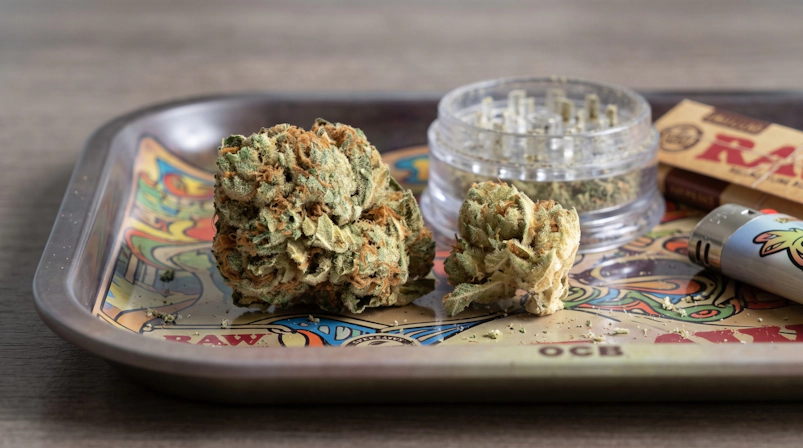
The result is bright and gassy at once. Lemon and citrus up front, sweet cake and vanilla behind it, and earthy kush underneath. Buds come out purple, green, and orange, dense, very sticky, with heavy trichome coverage.
Classification is where it gets messy, and we’ll get to why. Menus call it a sativa hybrid, other sources put it at roughly 55% indica, and the people smoking it report something different.
Important: This article is for informational purposes only and does not constitute legal, medical, or professional advice. For adults 21+ only.
Quick Facts: Tree Flip Weed Strain

herb
- Strain type: hybrid, marketed as sativa-leaning, though effects reports vary widely by batch
- Genetics: Lemon Tree x Wedding Cake
- Breeder: Rasta Cruz Farms and Lemon Tree Organics, circulating clone-only
- THC: typically 22% to 30%, with documented batches at 19.4% and 23.8%
- CBD: under 1%, usually 0.1% to 0.3%
- Terpene profile: limonene, beta-caryophyllene, and myrcene, with humulene, linalool, and pinene behind them
- Aroma and flavor: lemon cake with fuel, over earthy kush and a peppery exhale
- Effects: bright euphoric lift, then body relaxation that ranges from mild to knockout depending on the batch
Tree Flip Strain Terpene Profile

herb
Tree Flip strain terpenes are led by limonene, beta-caryophyllene, and myrcene. Both parents are limonene expressers, which is why the citrus is so pronounced.
Limonene: the headline. Sharp lemon peel and citrus, and it’s the terpene most associated with mood elevation and energy. It comes through from the Lemon Skunk and Sour Diesel side of Lemon Tree.
Beta-caryophyllene: the gas. Peppery, spicy, and fuel-adjacent, it’s the backbone under the citrus and the terpene most linked to physical relief.
Myrcene: the body and the depth. Earthy and musky, it’s the terpene most connected to relaxation, and its concentration appears to vary a lot between growers.
Humulene, linalool, and pinene fill in behind those three.
Now the useful part. A Mississippi reviewer logged an Apotha batch at 23.8% THC with 2.53% total terpenes. Months later, the same reviewer logged a Black Water Reserve batch at 19.4% THC with 1.62% total terpenes.
His verdict on the first one was that it tasted like a genuinely good kush, super gassy but sweet. His verdict on the second was, in his words, not much taste.
Same strain, same person, and the terpene figure predicted the flavor almost exactly. If you take one thing from this Tree Flip strain review roundup, make it that.
Tree Flip Strain Effects

herb
Tree Flip strain effects are the most inconsistent thing about this cultivar, and the reports contradict each other.
Tree Flip strain effects include:
- bright euphoric lift early
- mood elevation and focus
- creativity
- strong appetite stimulation
- body relaxation building over time
- sedation, sometimes severe
Onset is consistently described as a quick, happy head change with focus and clarity intact.
What happens next depends entirely on which account you read. The reviewer with the 2.53% terp Apotha batch described serious munchies, then a knockout. His words: he didn’t make it fifteen minutes into a movie. He also noted that despite the hybrid label, it hit him like a strong indica.
A different reviewer covering the same Apotha batch had a completely different night. He described it as evenly balanced, chill and relaxed but still able to focus if needed, with a bit of laziness setting in after about an hour before he sat down in front of the TV.
There’s a plausible explanation worth noting: the second reviewer was using a dry herb vaporizer. Vaporizing at controlled temperatures tends to produce a clearer, less sedating experience than combustion does, which could account for a good part of that gap.
So on whether the Tree Flip strain is indica or sativa, the honest answer is that nobody agrees, including the labels. Apotha sold it as a hybrid, and it hit one reviewer like an indica. Black Water Reserve sold it as a sativa, and the same reviewer said it smoked like a hybrid.
Best use cases are late afternoon into evening, with the caveat that a high-terpene batch can end your night. The main downside is that unpredictability, so treat a new jar carefully.
Tree Flip Strain Reviews

herb
Pulling from Reddit, the Tree Flip strain review consensus is positive on quality and split on effects.
- Citrus and gas are the two constants across every account.
- Cure quality and stickiness earn consistent praise.
- Flavor intensity tracks the terpene percentage closely.
- Effects range from balanced and functional to full knockout.
- The aroma is loud enough to draw unprompted comments.
- Concentrate versions rate extremely highly.
The Apotha runs draw the strongest response. One reviewer described green and orange nugs that were dense and very sticky with excellent trichome coverage. He called it solid.
Another Mississippi buyer posted about the same Apotha drop simply to flag how loud it was, describing a strong nose and saying he wanted to grab some.
The budget comparison is where the Tree Flip cannabis strain gets interesting. That 19.4% Black Water Reserve batch had a nice cure, smoked smooth, and cost $18 a unit, which the reviewer called a great budget buy. He just didn’t get much flavor from it. So the lower-terpene version wasn’t bad, it was quiet, and the price reflected that fairly.
On the concentrate side, a reviewer on r/rosin covering a Damn Good live hash rosin called it the tastiest live hash rosin he’d ever had and said the price was unbeatable. He picked up strong citrus lemon with sweetness and gas, which matches the flower profile closely.
Important: Reviews referenced here come from unverified online users. Individual experiences vary.
Tree Flip Strain Price
herb
Pricing spans an unusually wide range depending on grower and tier.
The Tree Flip Strain price typically ranges across the following quantities:
- Eighth (3.5g): $18 to $55
- Quarter (7g): $50 to $95
- Half ounce (14g): $90 to $165
- Full ounce (28g): $180 to $300
Premium indoor lands at the top of each range, with the usual gap over greenhouse and outdoor material. The documented low end is that $18 Black Water Reserve unit, which was honestly priced for what it delivered. The Tree Flip weed strain from a grower running higher terpene numbers will cost considerably more and, based on the reviews, is worth the difference if flavor matters to you.
Where to Buy Tree Flip

herb
Tree Flip circulates through state-licensed dispensaries, with Apotha, Black Water Reserve, CAM, Imperial NYC, and Tortuga all running versions.
Two things to check, and the first is unusually well evidenced here.
Look at total terpenes before anything else. The one reviewer who documented two batches found 2.53% delivered excellent kush flavor and 1.62% delivered almost none, with the THC difference being far less relevant. Anything above 2% is where this strain performs.
Second, treat the indica or sativa label on the jar as decoration. Two different producers labeled it two different ways, and both were wrong according to the person who smoked them. Ask about the terpene profile instead, or ask whether the batch leans heavy.
If flavor is your priority, the rosin reviews are the strongest of any format here.
Tree Flip Grow Info and Tips

herb
Here’s the Tree Flip strain grow info worth having before committing space. Published data is limited, since this circulates clone-only, so some of this is based on the parent genetics.
- Difficulty: moderate to advanced
- Indoor vs outdoor: indoor is the better bet
- Tent and space: leave vertical headroom; a 4×4 handles two to three plants
- Lighting: strong light through flower drives resin production
- Training: topping and a SCROG net are worth it
- Feeding: moderate nitrogen in veg, then heavier phosphorus and potassium in flower
- Flowering time: Tree Flip strain flowering time is likely 9 to 10 weeks
- Yield: moderate to good
- Pest and disease management: airflow and defoliation
- Seeds available: Tree Flip moves as a clone-only cut from Rasta Cruz Farms and Lemon Tree Organics rather than through seed banks
Similar Strains to Tree Flip

Herb
- Lemon Tree: a direct parent, and the source of the sharp lemon dominance.
- Wedding Cake: the other parent, bringing the dessert sweetness, the density, and the resin.
- Sour Diesel: behind Lemon Tree, and the origin of the fuel note and the stretch.
- Lemon Skunk: the other half of Lemon Tree, matching on bright citrus with a skunky edge.
- Triangle Kush: behind Wedding Cake, and the likely source of the kush character one reviewer picked out.
- Animal Mints: also behind Wedding Cake, sharing the minty, gassy cookie profile.
Frequently Asked Questions
What strain is Tree Flip?
Tree Flip is a hybrid crossing Lemon Tree with Wedding Cake, credited to Rasta Cruz Farms and Lemon Tree Organics in California. It circulates as a clone-only cut, so multiple growers run their own versions. Expect lemon and gas over a dessert and kush base.
Is the Tree Flip strain indica or sativa?
Officially a hybrid, and in practice nobody agrees. One producer labeled it a hybrid, and a reviewer said it hit like a strong indica. Another labeled it a sativa, and the same reviewer said it smoked like a hybrid. Treat the label as unreliable.
What is the Tree Flip strain THC percentage?
Most batches test between 22% and 30% THC, with many in the high 20s. Two documented batches came in at 23.8% and 19.4%. Notably, the difference in experience between those two tracked the terpene numbers far more closely than the THC.
What does the Tree Flip strain taste like?
Zesty lemon and citrus on the inhale with creamy vanilla cake, finishing peppery and gassy. One reviewer described a high-terpene batch as tasting like genuinely good kush, super gassy but sweet. A lower-terpene batch from another grower delivered almost no flavor at all.
How much does the Tree Flip strain cost?
Expect roughly $5 to $16 per gram, depending heavily on grower and tier. One budget batch sold at $18 a unit, while premium runs sit at the top of the range. The price gap tracks terpene content closely.
Is Tree Flip a good strain?
Yes, when the terpenes are there, with reviewers praising flavor, cure, stickiness and trichome coverage. The rosin version drew the strongest praise of any format. The caveat is batch variation, which on this cut is more pronounced than most.
Is Tree Flip strain easy to grow?
It’s on the more demanding side, with Sour Diesel genetics in the background bringing significant stretch and a longer flowering window. Growers used to compact eight-week dessert strains should plan for extra height and time. Terpene retention is the thing to protect.
What is Tree Flip strain flowering time?
Likely 9 to 10 weeks indoors given the diesel lineage, with outdoor grows finishing mid to late October. That’s longer than most current hybrids. Published data for this specific cut is limited, so treat it as informed inference rather than documented fact.
Herb Recommended Products:
READ MORE