
karl moore
How to Buy Weed in St. Lucia: 2026 Cannabis Guide
St. Lucia decriminalized cannabis possession in 2021, making personal amounts of 30 grams or less exempt from criminal liability under St. Lucia law. No licensed dispensaries have opened yet, but the informal market operates openly in tourist areas. This guide covers the exact legal framework, real tourist risks, the island's Rastafari cultural roots, and what the Cannabis and Industrial Hemp Bill 2025 means for the near future.

Most travelers searching for cannabis information about St. Lucia find outdated guides or conflicting forum posts, some written before the 2021 law change, others that confuse St. Lucia with stricter Caribbean neighbors, where a personal amount still carries serious legal consequences. If you are planning a trip and want to understand where things actually stand, this is the accurate picture.
St. Lucia decriminalized personal cannabis possession in September 2021. Under the amended Drugs Act, possession of 30 grams or less of cannabis or cannabis resin does not make a person guilty of an offence, and prosecution or punishment does not apply. That is the honest answer to the first question most tourists have about how to buy weed in St Lucia.
St. Lucia is not Jamaica, where licensed herb houses serve tourists openly. It is not the Netherlands, where coffeeshops are a fixture of daily life. But it is not a destination where a personal amount means handcuffs and a criminal record either. St. Lucia occupies a meaningful and evolving middle ground in the Caribbean cannabis landscape: decriminalized for personal possession, culturally rooted in Rastafari ganja tradition, and actively building a regulated industry from the ground up.
The informal market exists, and anyone who has walked the beachfronts near Rodney Bay or attended the Friday night Jump-Up in Gros Islet knows it. Cannabis is woven deeply into the island’s cultural fabric, through the Rastafarian communities who have used ganja as a religious sacrament for generations, through local herbal medicine traditions, and through the social norms of younger St. Lucians who grew up watching prohibition gradually give way to reform.
This guide covers everything you need to know about cannabis in St. Lucia in 2026. That includes the exact legal framework, tourist-specific risks, where the cultural and informal market operates, quality and pricing expectations, how St. Lucia compares to its Caribbean neighbors, and what the Cannabis and Industrial Hemp Bill 2025 means for the near future.
Key Takeaways

nick fewings
- Possession of 30 grams or less of cannabis or cannabis resin is not a criminal offence under St. Lucia’s amended Drugs Act, following the September 2021 reform.
- Public smoking carries a fine of up to XCD $1,500 (approximately USD $555); private consumption in an enclosed space is the appropriate setting.
- Importing cannabis through Hewanorra International Airport or George F.L. Charles Airport is a serious criminal offence, completely separate from the decriminalization framework.
- St. Lucia has regulatory and licensing infrastructure in development, but no licensed consumer dispensaries are currently open to tourists; all access remains through the informal vendor market.
- St. Lucia’s regulations allow cultivation of not more than four cannabis plants at a dwelling-house; this provision applies to residents, not short-term tourists.
- In April 2026, St. Lucia selected GrowerIQ to build a national seed-to-sale cannabis traceability platform, indicating active construction of the licensed industry.
- The 2021 reform included automatic expungements for prior possession convictions and a public apology from Prime Minister Pierre to the Rastafarian community for decades of enforcement harm.
Why Caribbean Cannabis Laws Are Hard to Track

omar eagle
The Caribbean has seen more cannabis law changes in the past five years than in the previous fifty. Since 2019, Jamaica expanded its licensed herb house framework, St. Kitts moved toward near-legalization through a High Court ruling, Antigua opened medical dispensaries to tourists with valid documentation, and St. Lucia passed its landmark 2021 decriminalization. This rapid reform created a real problem for travelers: most online information has not caught up.
Three things make St. Lucia specifically confusing for cannabis tourists:
- Decriminalization does not equal legalization. Most people searching “how to buy weed in St. Lucia” want to understand what carrying a personal amount actually means at street level, not regulatory architecture. The answer changed in 2021, and many sources still describe pre-reform criminal penalties as current.
- The airport rule is completely separate. The 30-gram exemption applies to cannabis already on the island, not cannabis you attempt to bring through customs. Many travelers conflate the two, which is how a personal amount becomes a criminal importation offence.
- No licensed retail market exists yet. Unlike Jamaica, where tourists can walk into a licensed herb house, St. Lucia’s 2021 reform created legal protections without creating legal purchase infrastructure. The gap between “legal to carry” and “legal place to buy it” is where most confusion lives, and where this guide is most useful.
Is Weed Legal in St. Lucia?

NDISPENSABLE
Cannabis is decriminalized in St. Lucia. Under the amended Drugs Act, possession of 30 grams or less of cannabis or cannabis resin does not make a person guilty of an offence, and prosecution or punishment does not apply within that limit.
Here is the precise legal picture as of 2026:
| Activity | Legal Status |
|---|---|
| Possession of up to 30g | Exempt from criminal liability under the amended Drugs Act |
| Personal cultivation (up to 4 plants) | Permitted at a dwelling-house under the 2021 reform |
| Public smoking | Prohibited; fine up to XCD $1,500 (approximately USD $555) |
| Private consumption within 30g limit | Exempt from criminal liability |
| Sale and distribution | Criminal offence |
| Importing cannabis | Criminal offence |
| Exporting cannabis | Criminal offence |
| Medical cannabis | Regulatory framework in development; not yet accessible |
| Licensed dispensaries | Licensing infrastructure in development; no consumer dispensaries open yet |
Possession of 30 grams or less is exempt from criminal liability under St. Lucia law. That said, police encounters can still become serious if public smoking, sale or supply, importation, or larger quantities are involved. The situation that will create serious legal problems is bringing cannabis through customs at either St. Lucia airport. Importation is a criminal offence entirely separate from the decriminalization framework, and the 30-gram protection only applies to cannabis already on the island.
St. Lucia's 2021 Cannabis Reform: What Changed

germine sealy
On September 14, 2021, St. Lucia’s parliament passed two landmark cannabis bills simultaneously, and the moment carried weight far beyond legislative procedure. Here is what actually changed.
Bill 1: Cannabis Expungements (September 2021)
The first bill cleared the criminal records of every St. Lucian convicted of possessing 30 grams or less of cannabis. These convictions, accumulated over decades of strict prohibition, had affected employment prospects, housing applications, and international travel opportunities for thousands of people, disproportionately from Rastafarian and lower-income communities. The expungements were retroactive and automatic.
Bill 2: Cannabis Decriminalization
The second bill removed criminal liability for personal possession of up to 30 grams and permitted home cultivation of up to four plants at a dwelling-house. The reform ended criminal charges for qualifying possession and eliminated the creation of a criminal record from the simple act of possessing cannabis within the threshold.
The reform, per Prime Minister Philip J. Pierre’s public address, was designed to end decades of harm that prohibition had caused to Rastafarian and lower-income communities. It was a rare and significant acknowledgment from a Caribbean government, particularly toward communities whose cultural and religious traditions had been directly criminalized.
The Regulated Substances Authority (RSA)
The Regulated Substances Act established the Regulated Substances Authority as the governing body for the eventual licensed cannabis industry. Its mandate covers cultivation permits, processing licences, and retail distribution frameworks, covering the full commercial chain from seed to sale.
St. Lucia's 30-Gram Threshold: Caribbean Context
At the time of reform, most Caribbean jurisdictions that had decriminalized cannabis had done so at significantly lower thresholds, typically 10 to 15 grams. St. Lucia’s 30-gram limit placed it among the more permissive decriminalization frameworks in the English-speaking Caribbean, though Jamaica’s 56-gram decriminalization threshold remains the region’s highest.
The broader significance: this was not a quiet technical adjustment to a criminal statute. It was a political and moral statement about the relationship between the state, the law, and communities that had borne the disproportionate cost of prohibition for forty years.
What the 30-Gram Threshold Means for Tourists
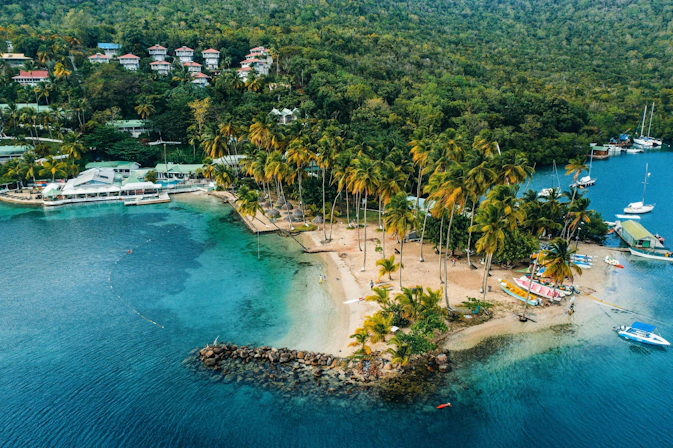
omar eagle
The decriminalization framework applies equally to tourists and residents. There is no heightened exposure for foreign visitors, and no reduced protection either. What this means in practical terms for someone visiting St. Lucia in 2026:
- Under 30 grams on your person. You are in the protected zone. Possession within that limit is exempt from criminal liability under the amended Drugs Act. Police officers are not incentivized to process qualifying possession cases as criminal matters; the legal architecture redirected that category in 2021.
- Smoking in public. This is where tourists most commonly create unnecessary exposure. The XCD $1,500 fine (approximately USD $555) for public smoking applies whether you are a local or a visitor. “Public” in this context includes beaches, parks, roadsides, restaurant patios, and any space accessible to others. A hotel balcony is context-dependent; check your accommodation’s specific policies. A private villa or enclosed private space is the appropriate setting.
- Purchasing from informal market vendors. Possession of 30 grams or less is exempt from criminal liability, but St. Lucia has not opened licensed retail sales. Informal vendor transactions carry legal risk because supply and offer-to-supply remain prohibited. The buyer’s resulting possession may fall within the 30-gram exemption, but the transaction itself does not have the same protection as a legal retail purchase.
Your home country’s medical card. It carries zero legal standing in St. Lucia. The island has no medical cannabis programme, no prescription framework, and no mechanism to recognise foreign medical documentation.
Tourist Risk Reality: Where Legal Lines Are Drawn
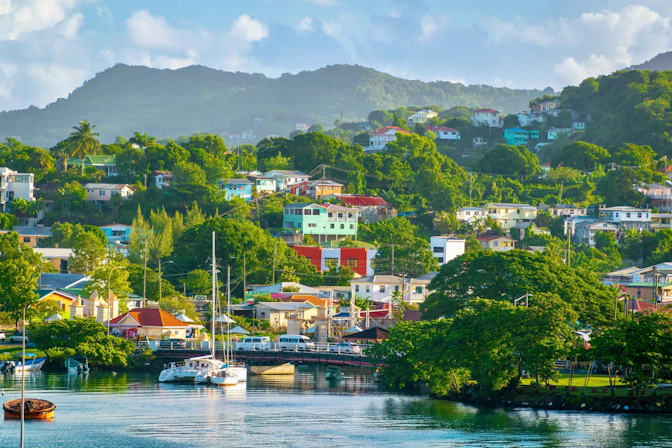
tom podmore
The risk profile for cannabis tourists in St. Lucia is not uniform; it depends almost entirely on what you are doing. Understanding the actual landscape is more useful than a blanket warning.
Lower Risk
- Possessing under 30 grams privately. Possession within that limit is exempt from criminal liability. The framework is meaningfully different from a criminal one.
- Consuming in an enclosed private space. Private residences, villas, and guesthouse rooms are not enforcement targets.
- Receiving cannabis through a social introduction rather than a visible street transaction.
Moderate Risk
- Purchasing from beach vendors in tourist-dense areas. The transaction itself draws visibility even if your possession remains within the protected threshold. In heavily patrolled resort areas, the interaction can attract attention beyond what the legal framework strictly governs.
- Public consumption. The XCD $1,500 fine is the documented legal consequence, but in resort areas or tourist zones with active police presence, being stopped can be disruptive well beyond the fine amount.
- Possessing over 30 grams. Above this threshold, the decriminalization protection disappears and criminal exposure for possession returns.
Serious Risk
- Importing through any airport. This is the single most consequential mistake tourists make. Customs officers at Hewanorra International (UVF) and George F.L. Charles Airport (SLU) operate under a separate criminal framework. Importation and exportation of controlled drugs are prohibited unless licensed or exempted, and unlawful import or export is a criminal offence.
- Transporting cannabis between islands. Moving cannabis from Jamaica, Barbados, or anywhere else to St. Lucia is international drug trafficking by definition.
- Any quantity above the trafficking threshold. Large amounts trigger criminal charges with potential imprisonment regardless of intent.
The overall picture: St. Lucia offers a better legal footing for cannabis-carrying tourists than the majority of Caribbean destinations. The 2021 reform changed real things on the ground. But the airport rule is absolute, and public consumption fines are real.
St. Lucia Cannabis Culture: Rastafari Roots

ROCK STAAR
To understand cannabis in St. Lucia, you need to understand the Rastafari movement’s place in the island’s identity, because the two are culturally inseparable.
Rastafari and Sacred Cannabis Use
Rastafari arrived in St. Lucia in the mid-20th century, carried by the same Caribbean cultural currents moving through Jamaica, Trinidad, and the Windward Islands. In Rastafari tradition, ganja is not recreational; it is a sacrament.
Cannabis is used in reasoning sessions (group spiritual discussions), meditation, individual prayer, and as a means of connection with Jah. It is a religious practice with deep theological grounding. Approximately 2% of St. Lucia’s population identifies as Rastafarian.
The Human Cost of Cannabis Prohibition
For decades under prohibition, Rastafarian communities in St. Lucia bore the heaviest enforcement burden. Possession of even small amounts resulted in criminal charges, imprisonment, and fines that devastated families and communities over generations. Cultural and religious practices integral to identity were treated as criminal behaviour.
The 2021 Acknowledgment and Apology
The 2021 reform’s explicit acknowledgment, the expungements and PM Pierre’s public apology, was more than symbolic. The expungements removed concrete barriers from thousands of lives.
When you understand this history, the political significance of the 30-gram threshold becomes clearer: it was designed to create space large enough to protect practices that had been criminalized for forty years.
Cannabis in St. Lucian Folk Medicine and Everyday Culture
Beyond formal Rastafari practice, cannabis has a long history in St. Lucian folk medicine. Local herbal traditions reference cannabis in various cultural and anecdotal uses; these are traditional practices rather than formal medical guidance.
Among younger St. Lucians, casual social use is common and mostly unremarkable. The generational shift mirrors what has occurred across much of the Caribbean as global legalization trends reshaped public attitudes.
As a tourist, the cultural attitude you encounter reflects this layered history: people are generally relaxed, informed about the post-2021 framework, and accustomed to visitors participating in something that has been part of the island’s culture for generations.
For broader context on Rastafari culture and cannabis history, Herb’s cannabis news section regularly covers the intersection of culture, religion, and the evolving Caribbean policy landscape.
How to Buy Weed in St Lucia: The Informal Market
To buy weed in St. Lucia, tourists use the informal beach and street vendor market. No licensed dispensaries exist as of 2026. Vendors approach tourists in spots like Rodney Bay and the Gros Islet Friday Jump-Up. Possession of up to 30 grams is exempt from criminal liability under the 2021 reform. Traveler reports and crowd-sourced pricing sites commonly cite EC $60 to $100 per quarter ounce (approximately USD $22 to $37), though prices are informal, unregulated, and highly variable.
Knowing how to buy weed in St Lucia starts with understanding one fundamental reality: there are no licensed dispensaries as of 2026. The Cannabis and Industrial Hemp Bill 2025 is building the framework, but the stores are not there yet. All purchases happen through beach vendors, street introductions, and resort-adjacent networks; informal, unregulated, but operating in a decriminalized legal context for possession.
Rodney Bay
Rodney Bay is St. Lucia’s primary tourist hub: a stretch of beaches, bars, restaurants, and marina between Castries and Gros Islet. It is also the most active area for cannabis access.
Beach vendors operate along the waterfront with a regularity that surprises many first-time visitors. Multiple traveler accounts describe being approached proactively and repeatedly. Pricing is negotiable; vendors typically accept offers 20 to 30 percent below the opening ask.
Gros Islet Friday Jump-Up
The Friday night Jump-Up in Gros Islet is one of the Caribbean’s most celebrated weekly street parties: a block party of local music, open-air food stalls, rum drinks, and an atmosphere that brings together locals and tourists in genuine mixed company.
It is widely referenced across travel communities as a place where cannabis access is particularly open. Given the public smoking fine, any consumption should be taken to a private setting afterward.
Soufrière
Soufrière, on St. Lucia’s southwest coast near the Pitons UNESCO World Heritage Site, attracts a different traveler: more adventure tourism, hiking, and eco-tourism than the resort beach scene. Cannabis is available here through beach vendors and street-level introductions, though the environment is more relaxed and less vendor-dense than Rodney Bay.
Marigot Bay and the North
Marigot Bay has a quieter cannabis presence, more through social and guesthouse networks than visible beach vendors. The northern peninsula around Cap Estate and Rodney Bay Marina tends toward more affluent resort tourism, where access happens through introductions rather than open solicitation.
Cannabis in Resort Environments
Traveler accounts consistently document cannabis solicitations happening within resort environments, in some cases from hospitality staff. This falls entirely outside any protection the legal framework offers to the resort or employer. Resort policies on cannabis vary widely and may restrict use on property regardless of national decriminalization.
For legal dispensary access across the US and other markets where regulated retail exists, Herb’s dispensary finder covers curated options worth bookmarking for destinations where the regulated market is open.
Cannabis Quality and Sourcing in St. Lucia
The St. Lucia informal cannabis market is exactly what it says: informal. There is no labelling, no third-party testing, no standardised product categories. Here is what the market actually looks like for a tourist navigating it.
Because the market is informal, reliable data on local versus imported supply is not widely available. The remaining supply appears to come from Jamaica, St. Vincent (the primary Caribbean supplier), and other international sources, including the United States.
Locally grown cannabis is predominantly outdoor cultivation. St. Lucia’s tropical climate is productive, but traveler reports consistently describe locally grown flowers as variable in potency and quality. Jamaican-sourced cannabis, when available through the vendor chain, tends to reflect Jamaica’s more developed cultivation culture.
Tourists should not expect regulated, labelled, or tested products. Flower appears to be the most commonly reported product, while edibles, vapes, and concentrates should be treated as unreliable or unverified in the informal market.
Strains Available in St. Lucia
Named strain identification does not exist in the informal market. A strain called “St. Lucia OG” does exist in the cannabis world, but it is a California-bred indoor cultivar developed by Connected Cannabis Co., named after the island with no geographic or cultivation connection to it.
Vendors may describe their product in loose terms such as “strong,” “smooth,” or “Jamaican grade,” but this reflects the informal market dynamic rather than any reliable strain information. For detailed strain profiles with terpene breakdowns, effects data, and user reviews, Herb’s strain database is the best reference for calibrating expectations before traveling.
Cannabis Pricing in St. Lucia
Traveler reports and crowd-sourced price sites commonly cite EC $60 to $100 per quarter ounce (approximately USD $22 to $37). Prices are informal, unregulated, and highly variable. This is substantially below North American retail, reflecting outdoor cultivation and an informal supply chain with no regulatory overhead.
Negotiation is built into the transaction; vendors operate with margin for it and expect it. Inspecting the product before paying is standard practice. Be especially wary of anyone who insists on payment before showing product.
The Cannabis and Industrial Hemp Bill 2025

Herb
The Cannabis and Industrial Hemp Bill 2025 is the most consequential legislative development in St. Lucia’s cannabis history since the 2021 decriminalization. Released for public consultation in January 2025 with a comment deadline of February 7, 2025, it lays out the full architecture of a regulated commercial cannabis and hemp industry.
What the Cannabis and Industrial Hemp Bill Proposes
A Cannabis Advisory Council to provide expert guidance to the Regulated Substances Authority on licensing, standards, and policy implementation.
A full licensing framework covering the commercial chain from cultivation through processing, distribution, and retail sale. Both cannabis and industrial hemp are addressed within a single legislative framework.
Two product tiers:
- Class One: CBD and low-THC products available without a prescription through general retail channels.
- Class Two: Higher-THC cannabis products available by prescription only through designated dispensaries.
Industrial hemp provisions covering cultivation, processing, and export for fibre, seed, and CBD extraction. According to St. Lucia’s Cannabis Task Force, small-scale farmers may apply for licences covering up to three acres of cultivation.
Local ownership protections. The St. Lucia government has been explicit that the cannabis industry should remain profitable and locally owned, with regulatory design intended to resist foreign corporate consolidation.
St. Lucia Cannabis Bill: Current Status (April 2026)
The draft Cannabis and Industrial Hemp Bill 2025 was released for public review in January 2025. St. Lucia has since moved toward the implementation of infrastructure, including selecting GrowerIQ for national seed-to-sale traceability in April 2026. However, the timeline for consumer retail access remains uncertain.
The most concrete signal of actual progress came in April 2026: St. Lucia selected GrowerIQ to build the national seed-to-sale cannabis traceability platform, the infrastructure that will track cannabis from cultivation through retail. Selecting and contracting a traceability technology partner is an operational investment in anticipation of a market opening. The industry is being built; the direction is clear.
What the Cannabis Bill Means for Tourists
When the regulated market opens, tourists will have access to licensed, tested, labelled products from legal retail points for the first time. Class One CBD products should be accessible through general retail without a prescription process. Whether the Class Two higher-THC framework will be accessible to tourists on short visits has not been finalised in any public documentation.
Caribbean Cannabis Laws Compared: How St. Lucia Stacks Up
St. Lucia’s position in the Caribbean cannabis landscape is distinctive. Here is how it compares to the most relevant neighbors as of 2026.
Caribbean Cannabis Comparison Table 2026
| Destination | Status | Possession Limit | Dispensaries | Tourist Access |
|---|---|---|---|---|
| Jamaica | Decriminalized and licensed | Approximately 56g decrim | Yes, licensed herb houses | Herb houses open to visitors |
| St. Kitts and Nevis | Freedom-of-conscience framework (2023) | 56g and up to 5 plants with permit | None yet | Adults may apply for licences for limited possession, designated smoking, and cultivation |
| St. Lucia | Decriminalized | 30g and 4 plants at dwelling-house | Licensing infrastructure in development | Among the more permissive English-speaking Caribbean thresholds |
| Antigua and Barbuda | Decriminalized and medical | 15g and 4 plants | Licensed medical only | Medical dispensaries open to tourists with valid card |
| Barbados | Decriminalized and medical | 14g | Limited | Registered Rastafarians: legal sacramental use |
| Trinidad and Tobago | Decriminalized | 30g and 4 plants | None | Matches St. Lucia threshold; no retail framework |
| US Virgin Islands | Recreational legal | 2 oz | Developing | Virgin Islands Cannabis Use Act signed 2023 |
| Curaçao | Prohibited | 0 | None | Recreational cannabis remains illegal; visitors face materially higher legal risk |
| Cayman Islands | Prohibited | 0 | None | Recreational cannabis remains illegal; visitors face materially higher legal risk |
Key Observations: Caribbean Cannabis Laws
St. Lucia and Trinidad and Tobago share the most permissive decriminalization thresholds in the English-speaking Caribbean at 30 grams, and both allow home cultivation of up to four plants. This makes both notably more permissive than the majority of Caribbean destinations.
Jamaica leads in tourist access infrastructure. The Cannabis Licensing Authority created a framework where licensed herb houses can legally serve tourists, and the cultural context makes cannabis tourism well-integrated. For a cannabis-forward Caribbean trip with legal retail access, Jamaica is the regional benchmark.
St. Kitts and Nevis made a significant legal move in 2023, following a 2019 High Court ruling that the prohibition violated constitutional rights to freedom of religion and privacy. The Freedom of Conscience Act 2023 permits adults to apply for licences to possess up to 56 grams, smoke in designated areas, and cultivate up to five plants.
The OECS framework is an emerging variable. The Organisation of Eastern Caribbean States is working toward a harmonized regional cannabis policy for trade, testing standards, and cross-island regulatory alignment. This multi-year process could eventually create conditions for a Caribbean cannabis trade zone, but practical implementation remains in early stages across member states.
For a full-length guide to cannabis tourism in Jamaica, Herb’s Jamaica cannabis guide covers herb houses, purchasing rules, and cultural context in detail.
Smart Moves for Cannabis Tourists in St. Lucia
Whether you are visiting for the Pitons, the beaches, the sailing, or a combination of everything, these are the practical guidelines for navigating cannabis in St. Lucia in 2026.
Do
- Keep quantities under 30 grams. The decriminalization protection exists precisely here. Stay inside it.
- Consume privately. Villas, guesthouse rooms, and enclosed private spaces are the appropriate settings. The XCD $1,500 public smoking fine is avoidable.
- Negotiate pricing. Vendors expect it. Inspect the product before paying. The informal range is EC $60 to $100 per quarter ounce (approximately USD $22 to $37).
- Know the airport rules absolutely. Do not bring cannabis into St. Lucia through any port of entry. Customs operates under an entirely different legal category.
- Save emergency contact numbers. The US Embassy in Barbados (+1 246 227-4000) covers St. Lucia for US citizens. Canadian citizens should contact the Canadian High Commission to Barbados, which also covers St. Lucia.
- Trust your instincts on vendors. Any vendor who appears aggressive, rushes the transaction, insists on upfront payment without showing the product, or positions themselves near police is worth avoiding.
Avoid
- Smoking on beaches or in any public space. The fine applies regardless of how relaxed the environment feels.
- Buying in view of the police presence. The civil protection is for possession, not for observable public transactions.
- Carrying over 30 grams. Above the decriminalization threshold, criminal exposure for possession returns.
- Bringing any cannabis or CBD products through customs. This applies to products legally purchased in another jurisdiction. The border is a hard stop.
- Transporting cannabis between islands. Even a personal amount moved from Jamaica to St. Lucia constitutes international drug trafficking.
- Cannabis in rental vehicles. Vehicle searches can complicate what would otherwise be a straightforward civil matter.
Final Verdict
St. Lucia occupies a genuinely interesting and evolving position in the Caribbean cannabis landscape. For travelers researching how to buy weed in St Lucia, the honest answer in 2026 is: the informal market exists, operates openly in tourist areas, and the legal framework no longer creates criminal liability for possession within the 30-gram threshold.
The 2021 decriminalization made meaningful, human-level changes:
- Ending criminal liability for personal possession within the threshold
- Expunging past convictions that had damaged thousands of lives
- Formally acknowledging the harm that prohibition caused to the Rastafarian community
The 30-gram threshold, one of the more permissive in the English-speaking Caribbean, gives tourists a real legal buffer that most Caribbean islands do not offer. The island’s relationship with cannabis, through Rastafari tradition, local cultural practice, and evolving social norms, creates an atmosphere that is culturally authentic rather than nervously transactional.
The cautions are real but navigable:
- Keep consumption private
- Stay under 30 grams
- Understand absolutely that the airport is a different legal environment from the beach; bringing cannabis in from another jurisdiction is a serious criminal matter with no grey zone
Watch this space. The Cannabis and Industrial Hemp Bill 2025 and the April 2026 selection of GrowerIQ for national seed-to-sale traceability represent genuine operational investment in getting a licensed market built. St. Lucia is not just passing resolutions; it is building infrastructure. When the regulated market opens, the island will have one of the more deliberately constructed cannabis frameworks in the Caribbean, with explicit attention to local ownership, product quality, and regulatory integrity.
For cannabis enthusiasts building a Caribbean itinerary, St. Lucia is one of the more hospitable options in 2026, and it is actively getting more so. For destination guides covering other cannabis-accessible locations around the world, explore Herb’s full library of cannabis city guides covering destinations from Jamaica to Thailand to Barcelona.
Frequently Asked Questions
Is weed legal in St. Lucia?
Cannabis is decriminalized in St. Lucia. Under the amended Drugs Act, possession of 30 grams or less of cannabis or cannabis resin does not make a person guilty of an offence, and prosecution or punishment does not apply within that limit. Recreational sale, import, and export remain criminal offences. A licensed commercial market is being developed under the Cannabis and Industrial Hemp Bill 2025, but has not opened yet.
What happens if you get caught with weed in St. Lucia as a tourist?
For possession under 30 grams, you are exempt from criminal liability under St. Lucia law. The decriminalization framework applies equally to tourists and residents. If you are smoking in public, the fine is up to XCD $1,500 (approximately USD $555). Possessing over 30 grams or attempting to import cannabis through customs are criminal matters with significantly more serious consequences.
Can I bring weed to St. Lucia from Jamaica?
No. Importation and exportation of controlled drugs are prohibited unless licensed or exempted, and unlawful import or export is a criminal offence. The 30-gram protection only applies to cannabis already on the island, not cannabis you are attempting to bring into it. The border is an absolute hard stop regardless of quantity.
Are there dispensaries in St. Lucia?
No licensed consumer dispensaries are currently open to tourists in St. Lucia. Licensing infrastructure is in development, and the draft Cannabis and Industrial Hemp Bill 2025 was released for public review in January 2025. St. Lucia also selected GrowerIQ in April 2026 for national seed-to-sale traceability, indicating active build-out. The retail market has not opened yet; all access remains through the informal vendor market.
How does St. Lucia compare to Jamaica for cannabis tourism?
Jamaica has a more developed cannabis tourism infrastructure: licensed herb houses, a Cannabis Licensing Authority, and a cultural context where cannabis tourism is openly integrated. St. Lucia has one of the highest decriminalization possession thresholds in the English-speaking Caribbean at 30 grams, a strong Rastafari cultural tradition, and an actively developing regulatory framework. For a cannabis-forward Caribbean trip with regulated retail access, Jamaica currently leads the region.
Disclaimer: This article is for informational purposes only and does not constitute legal advice. Cannabis laws change frequently. Always verify current local laws before traveling. Herb does not encourage or condone the purchase, possession, or use of cannabis in jurisdictions where it is illegal or against local regulations.
Herb Recommended Products:
READ MORE