This article contains sponsored content. Some of the products featured are part of paid partnerships. This page explains how our process works.

Herb
Delta 8 vs Delta 10: Major Differences & Similarities Explained
Two hemp-derived cousins of THC, one chill and one energizing. Here's how Delta 8 and Delta 10 actually differ.

The Delta 8 vs Delta 10 question is one of the most common in the hemp world, and the short answer is simple. They’re chemical cousins that feel like opposites. Both are hemp-derived THC isomers that came to market under the 2018 Farm Bill, though their legal status is contested and set to change. Both are milder than regular Delta 9, but the experiences split hard. Delta 8 leans relaxing and mellow. Delta 10 leans bright and energizing.
That’s the core of it, but the details matter if you’re choosing between them. The Delta 8 vs 10 debate really comes down to matching the cannabinoid to the mood you want. Below, we break down what each cannabinoid is, how they differ chemically and in effect, where they overlap, and how the legal picture shakes out. Let’s get into it.
Key Takeaways
- Delta 8 and Delta 10 are both hemp-derived isomers of THC, milder than Delta 9, sold under the 2018 Farm Bill framework, but federal rules tighten significantly in November 2026.
- Delta 8 is the more relaxing, calming cannabinoid, often compared to an indica.
- Delta 10 is the more uplifting, energizing cannabinoid, often compared to a sativa.
- Delta 8 is generally stronger than Delta 10, so it’s the better pick for higher potency.
- Delta 8 vs Delta 10 effects are the main difference (relaxing versus energizing).
- Both share the same chemical formula and differ only in where a single double bond sits.
What Is Delta 8?

Tnarg / Pexels
Delta 8 THC is a hemp-derived cannabinoid known for a mild, relaxing high that’s gentler than Delta 9. It occurs naturally in cannabis in tiny amounts, so most commercial Delta 8 is converted from hemp-derived CBD to make it available at scale.
People reach for Delta 8 when they want to unwind without the intensity or anxiety that stronger THC can bring. It’s often described as a mellow, clear-headed body buzz, which is why it gets the “indica-like” label. Common Delta 8 effects include:
- Relaxation: a calm, easygoing body feeling
- Mild euphoria: a gentle mood lift without heavy intoxication
- Evening use: many users take it at night to wind down
- Physical ease: some users describe a general sense of bodily comfort
- Appetite stimulation: the classic munchies effect
What Is Delta 10?

Herb
Delta 10 THC is a hemp-derived cannabinoid known for an uplifting, energizing high. It’s essentially the sativa to Delta 8’s indica. Like Delta 8, it exists only in trace amounts naturally, so it’s typically made by converting hemp-derived CBD.
Delta 10 is the one to reach for when you want a boost rather than a wind-down. Users describe it as bright, creative, and social, with less of the couch-lock or heaviness Delta 8 can bring. It’s also generally the milder of the two in raw strength. Common Delta 10 effects include:
- Energy: an uplifting, get-up-and-go feeling
- Focus: many users report improved concentration
- Creativity: a cerebral, idea-friendly headspace
- Mild euphoria: a light, happy mood boost
- Sociability: an easygoing, talkative vibe
Delta 8 vs Delta 10: Major Differences Explained
Here’s the Delta 8 vs Delta 10 comparison at a glance, then we’ll break down the two differences that matter most.
| Feature | Delta 8 | Delta 10 |
|---|---|---|
Chemical Formula | C21H30O2 | C21H30O2 |
Chemical Structure | Double bond on the 8th carbon | Double bond on the 10th carbon |
Potency | Stronger, closer to Delta 9 | Milder of the two |
Primary Effects | Relaxing, calming, indica-like | Energizing, uplifting, sativa-like |
Chemical Formula and Structure Compared
Delta 8 and Delta 10 share the exact same chemical formula: C21H30O2. The difference? Delta 8 has a double bond on the eighth carbon. Delta 10 has it on the tenth. That’s the entire structural difference.
It sounds tiny, and chemically it is. But that single shift changes how each cannabinoid binds to your body’s receptors, which is why the effects diverge so much. Same building blocks, different arrangement, different experience. It’s the whole reason the Delta 8 vs 10 comparison exists at all, since the two can come from the same starting material yet feel nothing alike.
Potency and Effects Compared
Delta 8 is the stronger of the two, while Delta 10 is milder but more energizing. If you’re comparing Delta 8 vs Delta 10 effects head-to-head, Delta 8 delivers a more sedating body high. Delta 10 delivers a lighter, more cerebral lift.
Neither one rivals Delta 9 for sheer strength, but Delta 8 gets closer. For most users, Delta 8 is the pick for relaxation, sleep, and stress. Delta 10 suits daytime energy, focus, and social settings. Your ideal choice in the Delta 8 vs 10 matchup really comes down to the vibe you’re after. The Delta 8 vs Delta 10 effects gap is the single most useful thing to know before buying.
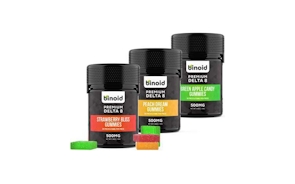
Want to explore the relaxing side without committing to dabs? Binoid’s Delta 8 THC Gummies Bundle is an easy entry point. It’s available in 3-pack or 6-pack options that save you money over single jars (the 6-pack even throws in an extra gummy free). They use premium Delta 8 THC in vegan flavors like Green Apple Sour Candy, Strawberry Bliss, and Peach Dream.
Important: Restricted to adults 21+. Hemp cannabinoid laws vary by state and change frequently—confirm the rules where you live and that the retailer ships to you before ordering.
Do Delta 8 and Delta 10 Have Any Similarities?

Photo by Yash Lucid
Yes, Delta 8 and Delta 10 share many similarities, which is why they’re so often compared. Beyond their near-identical chemistry, they overlap in origin, legality, and general category. Here’s where they line up:
- Same formula: both are C21H30O2, differing only in double-bond position
- Both hemp-derived: typically converted from hemp-derived CBD
- Same legal gray area: both sold under the Farm Bill framework; legality is disputed federally and varies by state
- Both milder than Delta 9: neither hits as hard as traditional THC
- Both THC isomers: chemical variations of the same core compound
- Both show on drug tests: your body metabolizes each like THC
The takeaway is that these two are far more alike than different on paper. They come from the same source, sit in the same legal category, and belong to the same chemical family. The real divergence is in how they feel, relaxing versus energizing, which is the deciding factor for most people.
For another great Delta 8 option, Moonwlkr’s Mango Kush Delta-8 Gummies are a standout at 625mg per jar (25mg per piece). They pair juicy mango sweetness with earthy OG Kush undertones for a smooth, fruit-forward edible. These gummies are a solid choice for relaxation or winding down at night. Made with hemp containing less than 0.3% Delta 9 THC under the current federal standard, which changes in November 2026.
Important: Restricted to adults 21+. Hemp cannabinoid laws vary by state and change frequently—confirm the rules where you live and that the retailer ships to you before ordering.

Delta 8 vs Delta 10: Safety and Legality

Herb
Both Delta 8 and Delta 10 sit in the same legal gray area. The 2018 Farm Bill legalized hemp compounds containing less than 0.3% Delta 9 THC, and both cannabinoids have been sold under that framework—a federal appeals court has held that Delta 8 products fall within it.
But the DEA’s position is that cannabinoids produced by chemical conversion in a lab don’t qualify as hemp, and a growing number of states restrict or ban them outright. And since the state-level rules keep shifting for both Delta 8 and Delta 10, the Delta 8 vs 10 legal answer can differ depending on where you live.
The bigger change is on its way. On November 12, 2026, a new federal definition of hemp takes effect, replacing the Delta 9-only threshold with a total-THC standard, capping finished products at 0.4mg of THC per container, and excluding lab-converted cannabinoids. Analysts expect it to remove the large majority of intoxicating hemp products from federal legality, including most Delta 8 and Delta 10 products currently on shelves.

Polina tankilevitch / Pexels
Frequently Asked Questions
Is Delta 8 or Delta 10 stronger?
Delta 8 is stronger than Delta 10. It produces a more intense, body-heavy high that sits closer to Delta 9, while Delta 10 is milder and more energizing. If raw potency is your priority, Delta 8 is the pick, though neither is as strong as traditional Delta 9 THC.
What's the difference between Delta 8 and Delta 10?
The main difference between Delta 8 and Delta 10 is the effect. Delta 8 is relaxing and indica-like, while Delta 10 is uplifting and sativa-like. Chemically, they’re nearly identical, differing only in the position of one double bond. That small structural change is what sends their effects in opposite directions.
Does Delta 8 and 10 show up in a urine test?
Yes, both Delta 8 and Delta 10 can show up in a urine test. Your body metabolizes them into the same THC compounds standard drug tests screen for, so they can trigger a positive result. If you have a test coming up, it’s safest to avoid both.
The Bottom Line
Elsa Olofsson / Unsplash
So, Delta 8 vs Delta 10: which wins? Neither, really, because it depends entirely on the vibe you want. Delta 8 is your relaxing, mellow, wind-down cannabinoid, and Delta 10 is your bright, energizing, daytime one. They’re nearly identical in chemistry, legal footing, and origin, with the effects being the real dividing line. Whichever way you lean, buy lab-tested products from trusted brands, check your state’s laws first, and start low to find your sweet spot.
Herb Recommended Products:
READ MORE